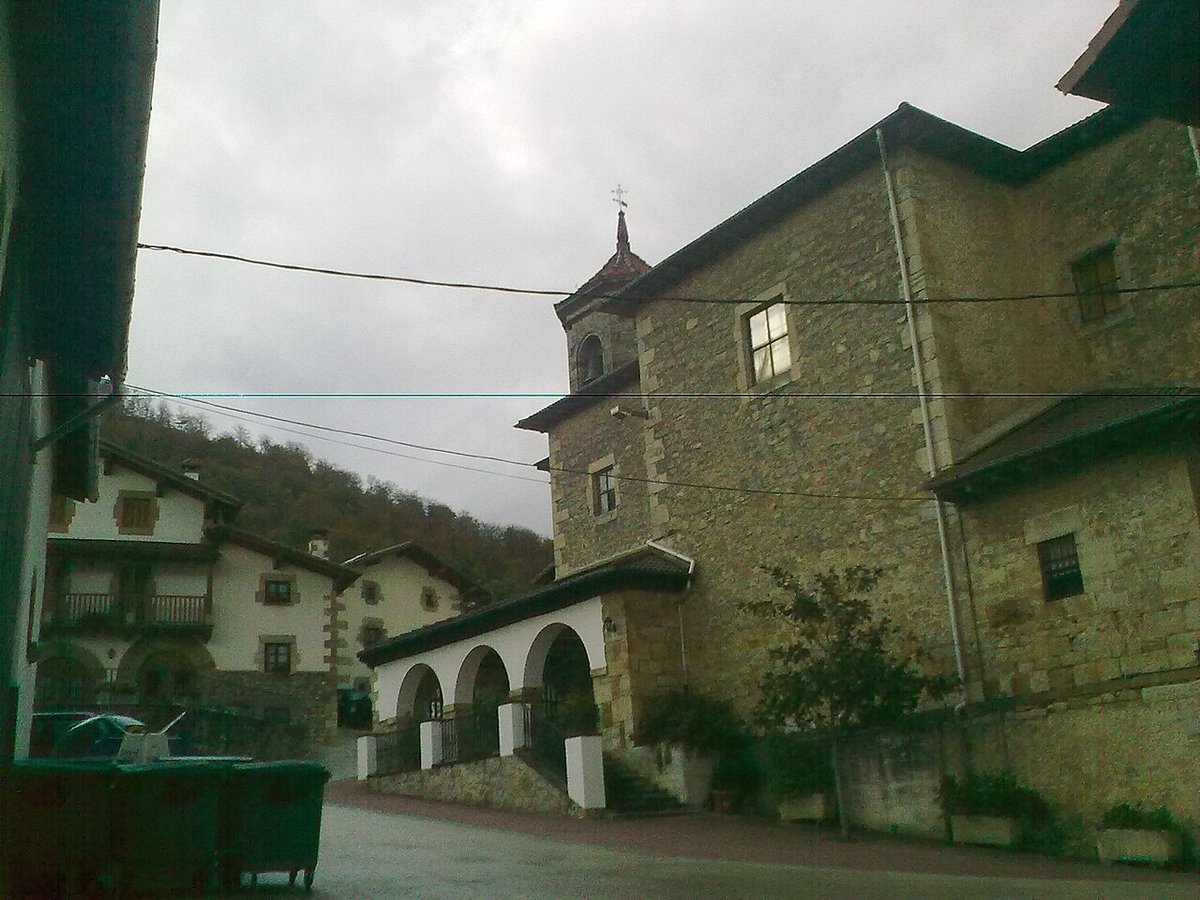
Vista aérea de Odieta
Instituto Geográfico Nacional · CC-BY 4.0 scne.es
Navarra · Kingdom of Diversity

Odieta

Five hundred metres above sea level, the morning air in Odieta still carries a nip long after Pamplona’s plain has warmed up. The village’s single ...

367 inhabitants · INE 2025
515m Altitude

Why Visit

Church of San Juan Hiking

Best Time to Visit

summer

Valley Festival (August) agosto

Things to See & Do
in Odieta

Heritage

  • Church of San Juan
  • Natural surroundings

Activities

  • Hiking
  • Rural tourism

Festivals
& & Traditions

Fecha agosto

Fiestas del Valle (agosto)

Las fiestas locales son el momento perfecto para vivir la autenticidad de Odieta.

Full Article
about Odieta

Cattle-farming valley north of Pamplona; landscape of green hills and small rural hamlets

Ocultar artículo Leer artículo completo

Five hundred metres above sea level, the morning air in Odieta still carries a nip long after Pamplona’s plain has warmed up. The village’s single main street tilts gently downhill, water runs in a stone channel beside the pavement, and every second doorway frames a view of someone’s vegetable plot rather than a gift shop. At this height the Pyrenean foothills feel close enough to touch, yet the snowline stays a safe 40-minute drive north, which means Odieta gets the drama of big mountains without the winter lock-in that paralyses higher hamlets.

Stone, Cabbage and Silence

Most visitors arrive on the NA-178, a slender road that wriggles over from the A-15 motorway near Tafalla. The final approach is a lesson in scale: wheat terraces shrink to garden-sized plots, the verges turn from crash-barrier concrete to dry-stone wall, and mobile-phone reception flickers out just as the 30 km/h sign appears. Park where the tarmac widens by the frontón court; anything further risks blocking a tractor.

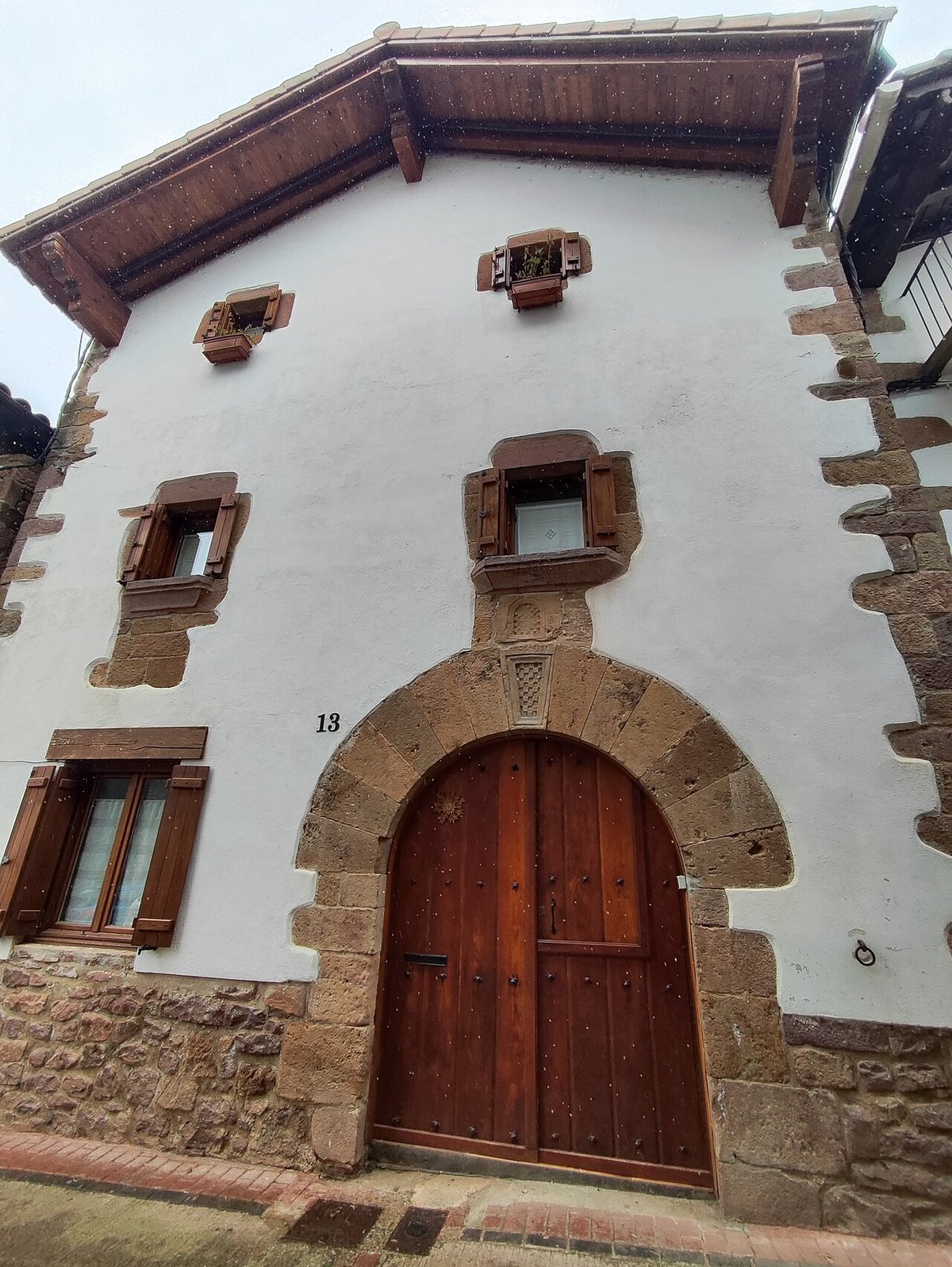
The village blueprint hasn’t shifted much since the 18th century. Houses are shoulder-to-shoulder, two storeys high, roofed with red clay half-pipes that clang like cowbells when workmen replace them. Granite quoins mark the corners, not for ornament but because the stone outlasts the softer limestone quarried farther down-valley. Notice the wooden balconies: they sit on stubby iron brackets forged in Pamplona, yet the timber comes from local oak, cut when the moon was waning—an old rule that carpenters still quote to prevent warping.

There is no ticket office, no interpretive centre, no brown sign pointing to “casco histórico”. Instead you get a 15-minute loop that takes in the parish church, two stone fountains and a communal washhouse whose water runs so cold that locals claim it keeps lettuce crisp for a week. The church door is usually open; inside, the air smells of candle wax and the stone floor dips where centuries of boots have worn a shallow groove. Drop a euro in the box and the caretaker—who lives opposite—will appear to switch on lights so you can see the 17th-century retablo painted in ox-blood red and tobacco brown.

Walking Without Way-markers

Odieta sits on a low saddle between the Barranco de Odieta and the Salado valley, which makes it a natural crossroads for farm tracks rather than a hub of signed footpaths. That suits the handful of British walkers who come looking for somewhere quieter than the Pyrenean refuges. Head east on the lane towards Goñi and you’ll share the track with a farmer who moves his sheep at the same time every morning; the dogs eye strangers but keep their distance if you stand still. After 25 minutes the hedge-lined path opens onto a ridge where the land falls away towards the river Arga, 300 m below. On a clear day you can pick out the wind turbines above Puente la Reina, 25 km south-west.

The going underfoot changes with the weather. In April the soil is brick-hard and pale; by October the same stretch can be ankle-deep in rust-coloured mud that clogs walking boots like wet concrete. Waterproof gaiters are worth packing outside high summer, and poles help on the slippery clay. None of the routes is long—five to eight kilometres round-trip—so you can be back in the plaza before the bar opens at eleven.

If you want a bigger day, drive ten minutes north to the end of the valley and leave the car by the abandoned San Pedro mill. From there an old mule trail climbs 400 m to the col of Belate, crossing from Navarra into Gipuzkoa. The summit is only 8 km from the border with France, which explains the concrete bunkers half-hidden among the beech trees—civil-war positions later reused against possible WWII invasion. The concrete is scrawled with 1940 dates and the odd English surname left by British volunteers who strayed this way on leave.

What Passes for Lunch

Odieta has no restaurants in the conventional sense. What it does have is the Bar-Asador Izar, a corner premises with three tables inside and another two on the pavement when the weather behaves. The menu is written on a chalkboard propped against the espresso machine; if the chalk is smudged, ask what the mother of the house has cooked that day. Expect lamb chops from animals that grazed on the surrounding slopes, served with piquillo peppers and chips cut from potatoes grown in the garden you walked past earlier. A three-course lunch with wine runs to about €18; they don’t take cards, so bring cash. Arrive after two o’clock and the food may be gone—local builders eat early and heartily.

Should Izar be closed (Tuesdays outside summer, most of January), the fallback is to buy supplies in the tiny Ultramarinos Lourdes, three doors down. Stock is random: one week there might be local chorizo, the next only tinned tuna and stale baguette. Treat it as a picnic opportunity and walk to the laundry green where benches sit under a walnut tree. From here you can watch the village’s delivery routine: bread van at ten, milk tanker at eleven-thirty, postwoman just after noon in a Renault Clio that needs new shock absorbers.

Seasons at Two Speeds

Spring arrives late at this altitude; cherry blossom appears in early April, three weeks behind the Ebro valley. The upside is that nights stay cool, so you can walk all day without wilting. Wild asparagus sprouts along the field edges—locals carry a penknife and snap off the tender stems, but visitors should ask first; the same plots belong to someone’s grandmother.

Summer brings day-trippers from Pamplona escaping the 35-degree heat of the plain. Numbers are still modest—perhaps 30 cars on a Sunday—but the single bar can feel overwhelmed. Best strategy is to start walking at eight, return for an early coffee before the Spanish families appear, then head off to nearby Olite or Ujué for the afternoon.

Autumn is the photographer’s friend. Morning mist pools in the valleys while the higher ground stays clear, giving layers of green, gold and pale blue. Beech woods on the northern slopes turn copper, and the smell of crushed chestnut leaves hangs in the lanes. By mid-October the first firewood smoke drifts from chimneys; villagers stack logs in precise rectangles against house walls, each pile capped with old roof tiles to keep rain off.

Winter is when altitude bites. Frosts can be sharp from late October onwards, and snow is not unusual after Christmas. The NA-178 is kept open as far as Odieta because a dairy farm outside the village needs daily access, but beyond here the road becomes a track used only by tractors with snow-chains. Daylight is short—sun disappears behind Sierra de Andia soon after four—but the compensation is silence so complete you can hear the river running two kilometres away.

Getting There, Staying Over

Pamplona airport is 45 minutes by car; Bilbao is two hours on fast motorways. There is no bus service on Sundays, and Saturday departures from Pamplona finish at lunchtime. A taxi from Tafalla (25 km) costs around €35, so car hire works out cheaper for anyone travelling without wheels.

Accommodation inside Odieta amounts to two rural houses: Casa Garayo, a 19th-century stone townhouse sleeping six, and Casa Manterola, a smaller cottage at the upper edge of the village. Both are self-catering, booked through the regional Navarra Rural website, and cost between €90 and €130 per night for the whole property. Heating is by wood-burning stove; instructions are in Spanish, but the caretaker’s son studied in Leeds and will WhatsApp you an English translation if asked.

If you prefer a hotel, the nearest options are in Olite (30 km, 25 minutes’ drive), where the three-star Hotel Merindad de Olite has doubles from €75, including underground parking and a rooftop bar that looks onto the royal palace battlements.

The Honest Verdict

Odieta will never make anyone’s “Top Ten” list—there are no epic viewpoints, no Michelin stars, no ancient ruins to speak of. What it offers instead is a place where time is still measured by church bells and tractor engines, where a stranger saying “buenos días” is answered with the same courtesy locals extend to the priest. Come prepared for limited choices and the odd closed door, and the village repays with something increasingly scarce: a slice of working rural life that hasn’t been polished for the coach-party trade. Bring walking boots, a sense of rhythm slower than the guidebook schedule, and enough cash for coffee and lamb. The mountains will still be there tomorrow; in Odieta, that feels like information rather than a promise.

Key Facts

Region
Navarra
District
Valles
INE Code
31186
Coast
No
Mountain
No
Season
summer

Livability & Services

Key data for living or remote work

2024
Connectivity5G available
TransportTrain 10 km away
HealthcareHospital 11 km away
Housing~5€/m² rent · Affordable
CoastBeach nearby
Sources: INE, CNMC, Ministry of Health, AEMET

Planning Your Visit?

Discover more villages in the Valles.

View full region →

More villages in Valles

Traveler Reviews