Full Article
about Ultzama
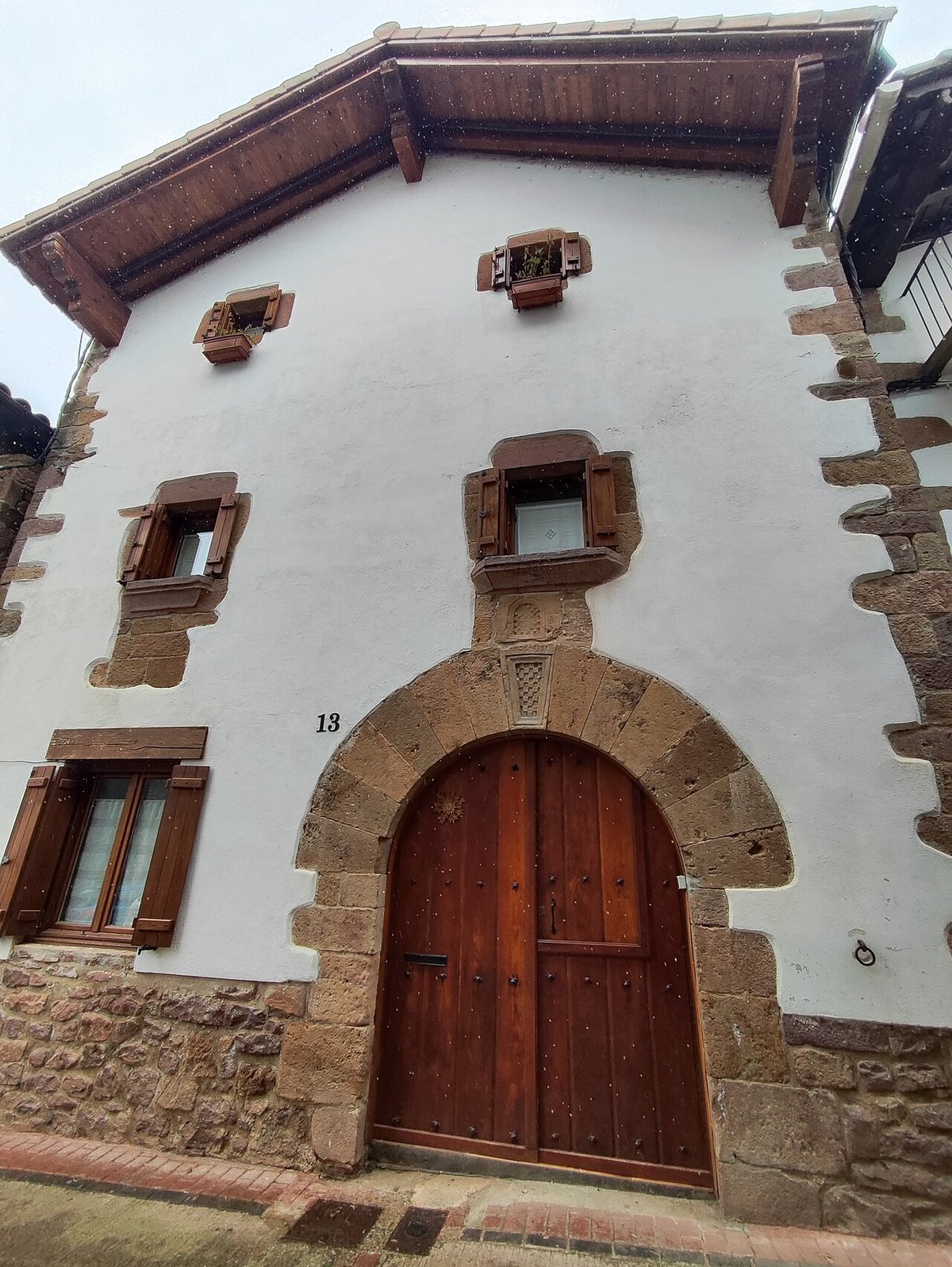
Green valley, postcard-famous for its cuajada and the Bosque de Orgi; grand farmhouses decked with flowers.
Hide article Read full article
The shape of Ultzama valley
North of Pamplona, the Ultzama valley forms part of the Valles region, a humid transition between the basin and the first Pyrenean foothills. The territory is not defined by a main town. It is a collection of small concejos, a traditional Navarrese form of local council, scattered across meadows and oak woods. The population, around 1,600, is distributed among them. This administrative structure explains the dispersed feel of the place.
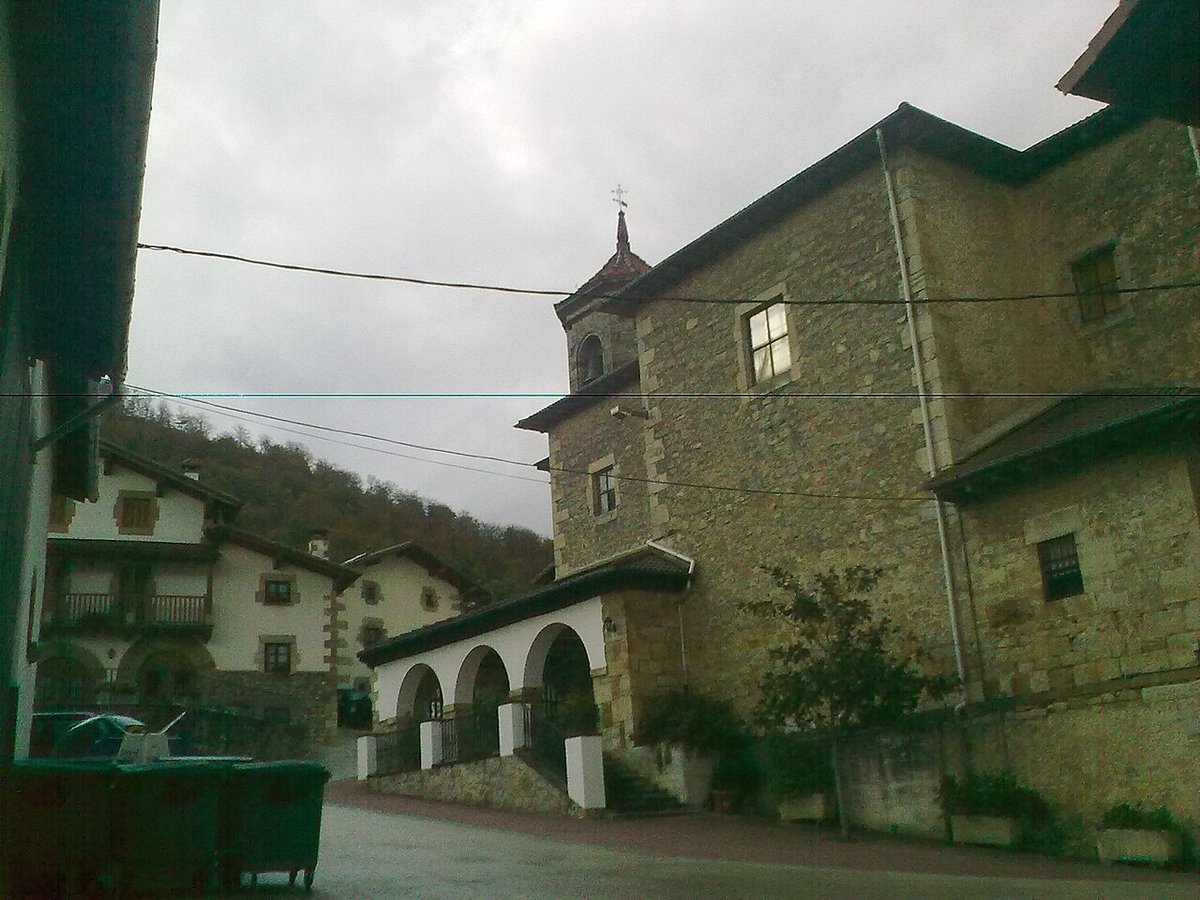
Life here has long been organised around livestock. You see it in the fields still grazed by cows and in the caseríos, the stone farmhouses with their steep roofs and ground-floor stables built for long winters. Each village clusters a church and a few homes before yielding to open land again. Larrainzar, Gerendiain and Lizaso hold most of the valley's services, connected by narrow roads that follow the damp ground.
Churches and a older landscape
Historical markers here are subtle and spread out. You find them by looking at the villages themselves.
The parish church of San Esteban in Larrainzar dates from the 16th century, though its interior was later refurbished. It houses a Baroque altarpiece of modest scale, typical of rural Navarrese churches built for community use, not spectacle.
In Gerendiain, the church of the Asunción shows Romanesque traces in its simple portal and overall volume. It sits low among the houses, integrated into the village line. These buildings are pieces of a wider pattern.
A much older pattern exists on the slopes. Several megalithic monuments remain, like the Aitzibita dolmen near Larrainzar. Reached by a farm track, it sits in a meadow still used for grazing. The site makes a point: prehistoric ritual, centuries of pastoral life, and the current landscape occupy the same layer.
On foot in oak woods and river meadows
The most frequented natural site is the Orgi oak forest, an area of pedunculate oak on a damp plain. It is a managed, lowland woodland, not wild mountain terrain. Wooden walkways cross its wettest parts, making it accessible for a short walk. The character shifts with the season—deep green shade in summer, a carpet of brown leaves in autumn. Its proximity to Pamplona accounts for its popularity.
For a more demanding route, some walkers aim for the summit of Saioa. The climb from the valley is sustained and the weather can change quickly; fog is common.
The Ultzama river flows through meadows lined with poplars. The paths along its banks are often farm tracks, used for moving machinery or livestock. Walking them means sharing space with the valley's daily work.
That work extends to foraging in autumn. Mushroom picking is a traditional practice here, though it has become a local point of discussion due to pressure on certain woods. If you go, consult current regulations and tread carefully.
A kitchen tied to the land
What is eaten in Ultzama comes directly from its surroundings. The basis is lamb, cheese from Latxa sheep, honey, and garden vegetables. Small-scale producers in various villages sell their surplus directly. There is no restaurant hub. Instead, you find a scattered network of farmhouses and local shops. The food reflects this: it is straightforward and seasonal.
If your time is limited
With a few hours, walk one of the shorter loops in the Orgi forest. Afterwards, drive to Larrainzar to see the layout of a concejo and its church.
Half a day allows you to include the walk to the Aitzibita dolmen. The track there provides a clear view of the valley's proportions: small villages set within a broad, green expanse of fields and rounded hills.
A note on moving through the valley
Many lanes shown on maps are agricultural tracks leading to private farms or gated fields. They are not always intended for visitor traffic. It is wise to avoid driving down them unless they are clearly signposted as public through-routes.