Full Article
about Larraga
Town known for its monumental church and the Vaca Brava festival; farming and livestock tradition.
Hide article Read full article
A morning that begins with bells
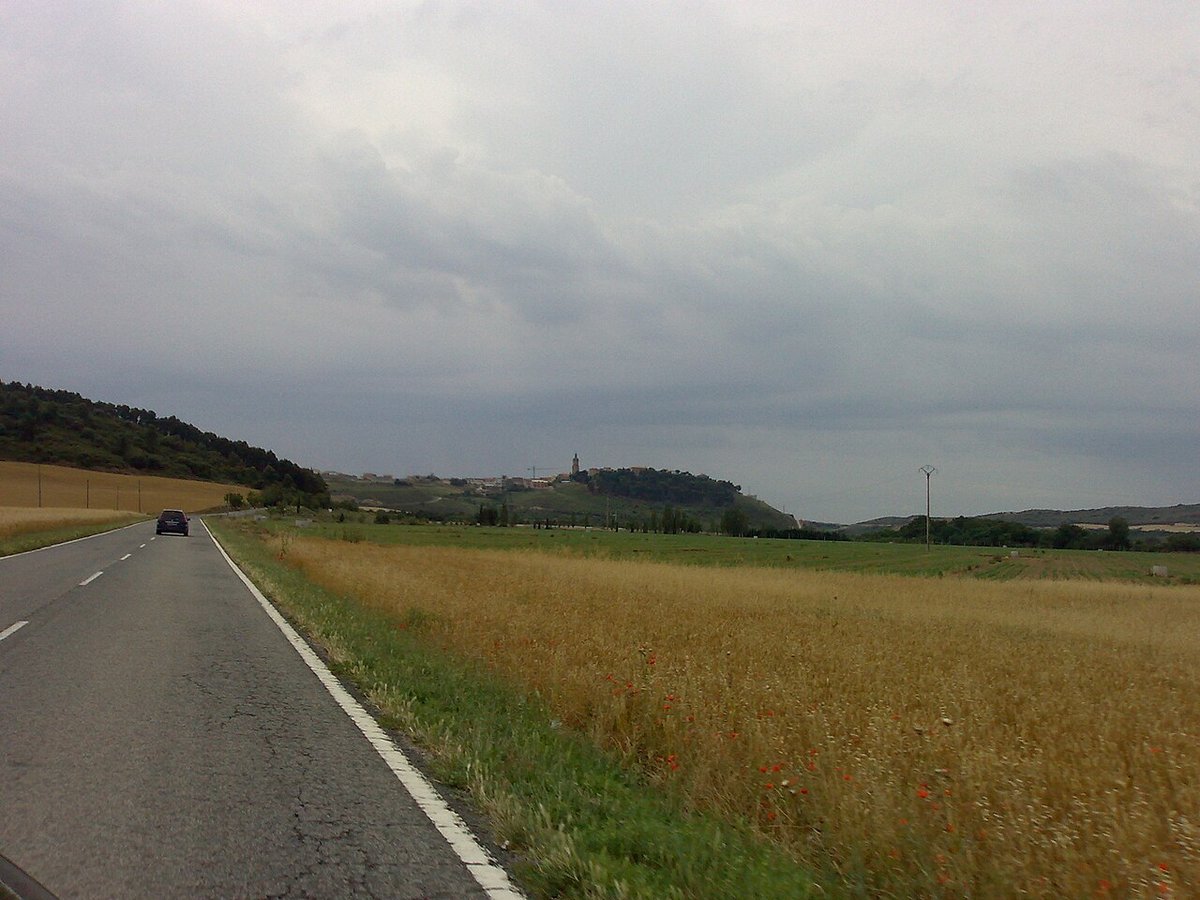
The bells of San Miguel strike eight while the sun is still taking its time to rise. From the main square, the first light begins to reach the fields around Larraga, plots of cereal that turn into a patchwork of green in spring and shift towards gold as summer advances. Tourism in Larraga starts in that quiet moment, with the sense of an unhurried morning in a place that does not rush into the day.
At that hour, Calle Mayor carries the smell of a lit oven. A door opens here and there, someone steps out with a cloth bag tucked under their arm and pauses to exchange a few words with a neighbour. Spanish is what you hear most, though now and then a word in Euskera slips into conversations among older residents.
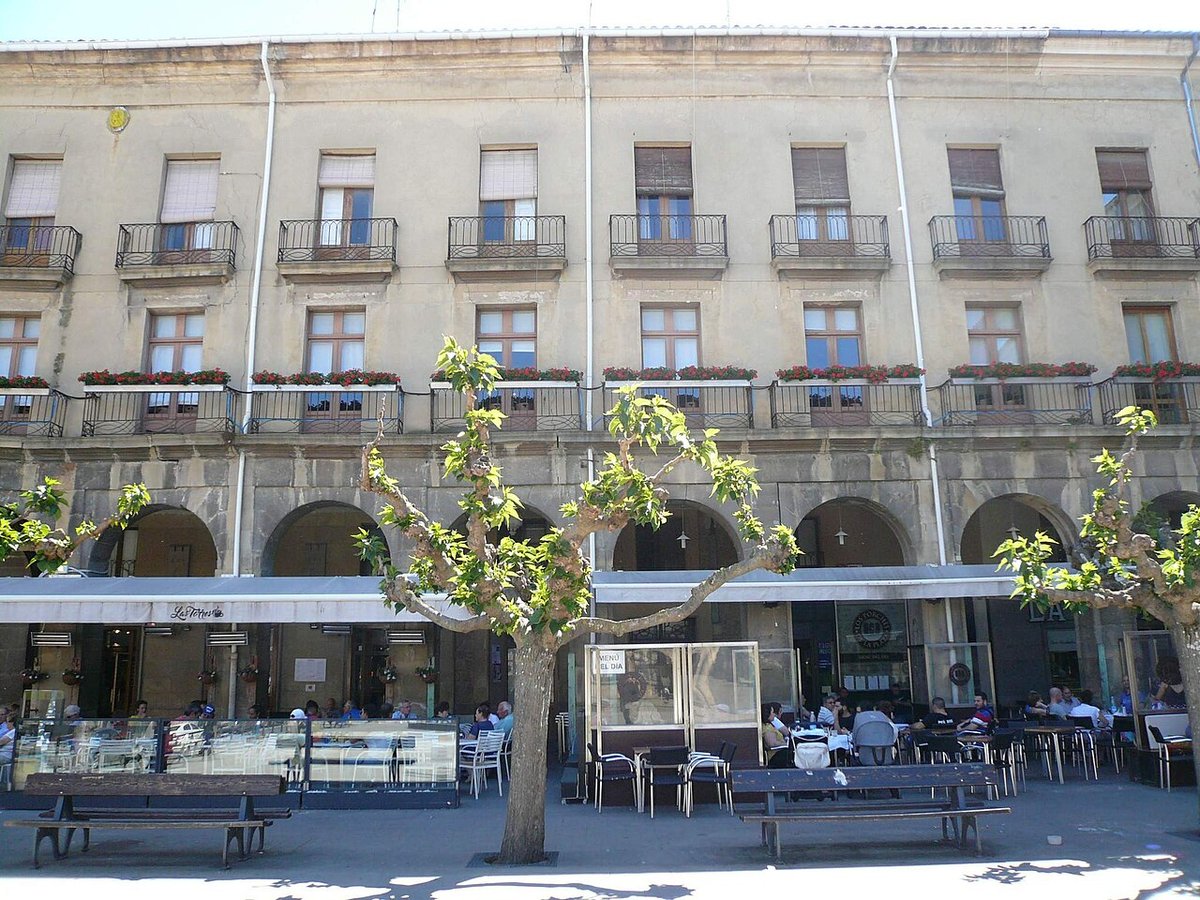
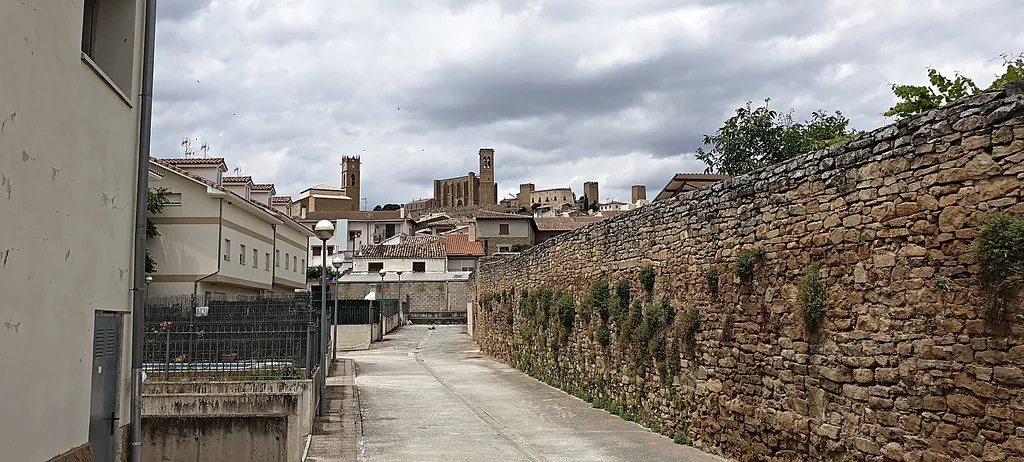
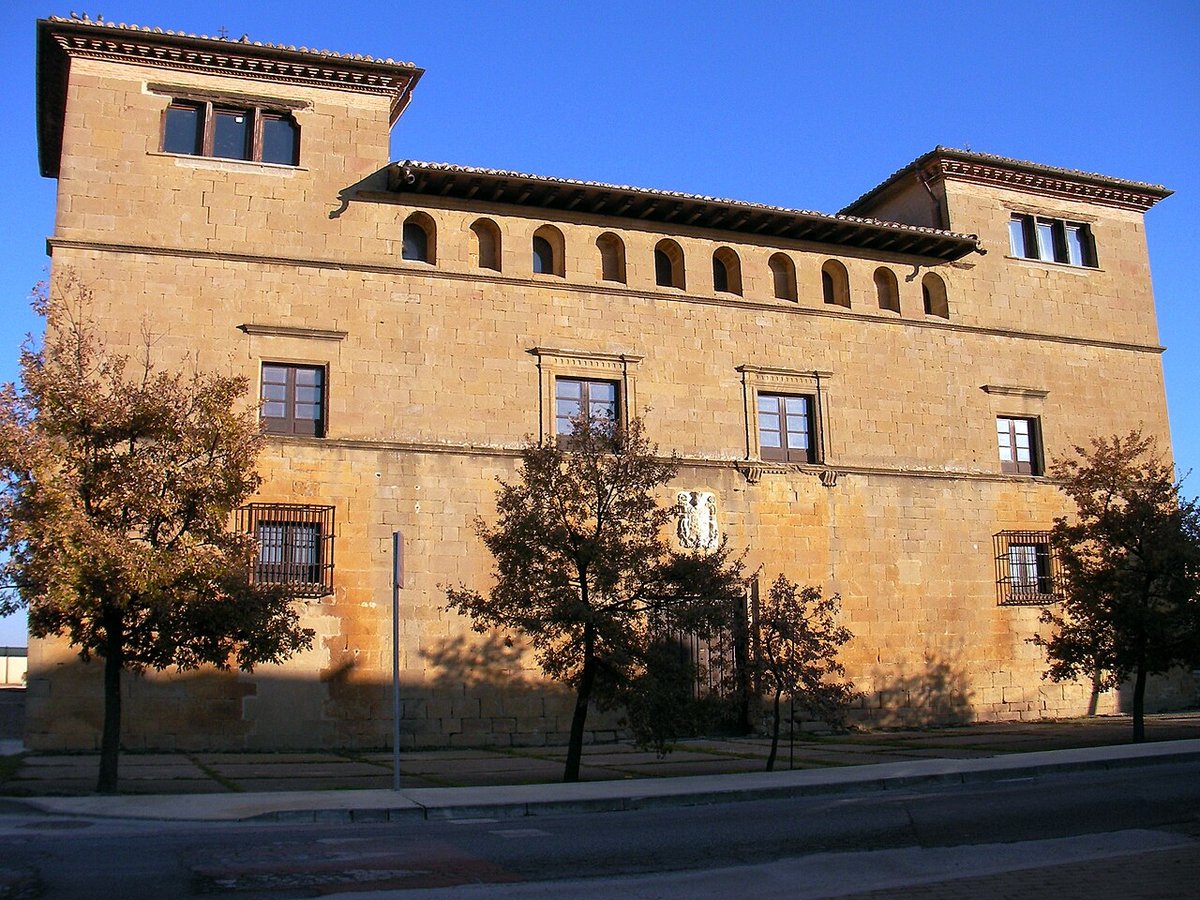
The village slopes gently down the hillside. Many of the houses are built in warm-toned stone, following the incline with a certain irregular rhythm: wide doorways, balconies with dark iron railings, and pots of geraniums watered early before the heat sets in. In some windows, sheets still hang out to dry, moving slowly when a breeze rises from the valley.
Where the Arga bends through the valley
A short walk downhill from the centre brings you to the River Arga. Here it does not run straight. It curves, opens out and narrows again in meanders that trace a slow, winding line through the fields. A prepared walking path follows one of these bends for several kilometres within the municipality.
In spring, the poplars burst into leaf almost all at once, and the water is usually clear. From the path, the rounded stones on the riverbed are visible, and on a calm day the sound of the current becomes the only thing breaking the silence. After lunch, it is common to see local residents strolling at an easy pace, taking a short loop before heading home.
Nearby is the Bejeras trail, a small peri-urban park stretching just over a couple of kilometres. At weekends, families appear with small bicycles, footballs and bags filled with snacks. Picnic areas fill with long conversations while children move back and forth along the gravel path.
San Miguel above the rooftops
The church of San Miguel stands at the highest point of the town. From below, its tower rises above the rooftops, and as you make your way up the slope, the building comes into view all at once, with the solid presence typical of many churches in Navarra.
Its origins date back to the 16th century, although additions from later periods have gradually shaped what can be seen today. Inside, the structure blends that late Gothic base with later expansions, alongside a richly detailed Baroque altarpiece. Its gilded surfaces catch the light in the afternoon as it filters through the high windows.
The church also preserves a historic organ that is still used for celebrations and occasional concerts. When it plays, the sound lingers beneath the vault for a moment longer than expected.
In one of the side chapels stands the Santo Cristo del Socorro, an old carving that has formed part of local devotion for centuries. It is the kind of image residents refer to in an unassuming way, as something that has always been there.
Vine nurseries beyond the town
Leaving Larraga along the surrounding roads reveals a different landscape, less visible from within the town itself: large expanses of vine nurseries. Row upon row of young plants grow here before eventually being replanted in vineyards across various wine-producing regions.
From a distance, these areas stand out through their greenhouses and pale coverings that catch the sunlight. This activity has been closely linked to the town for decades and helps explain the movement seen at certain times of year, with lorries travelling in and out along agricultural tracks.
Walking without hurry
The best way to experience Larraga is simply to walk, without a fixed plan. The town centre is not large, and the slopes naturally slow your pace, making it easier to notice small details that might otherwise go unnoticed: a heavily worn wooden door, the sound of an open workshop, the smell of firewood in winter.
Spring is often a good time to visit. The fields are green, and the walk along the Arga feels especially pleasant compared with the height of summer. August can be intense, as the heat lingers between the streets and the town grows quieter around midday.
If arriving in the afternoon, it is worth waiting until the sun begins to dip behind the church. The stone of the houses shifts in colour, and the square gradually fills with neighbours stepping outside for some fresh air. It is an everyday scene, yet it says a great deal about how time is lived in a place like Larraga.