Full Article
about Mendigorría
Site of the Roman city of Andelos; a charming town with a renowned classical music festival
Hide article Read full article
First light over the Zona Media
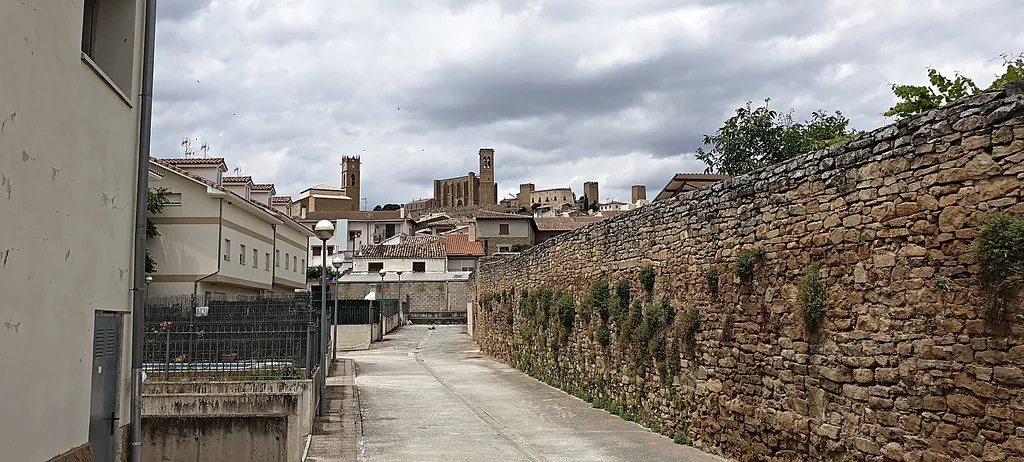
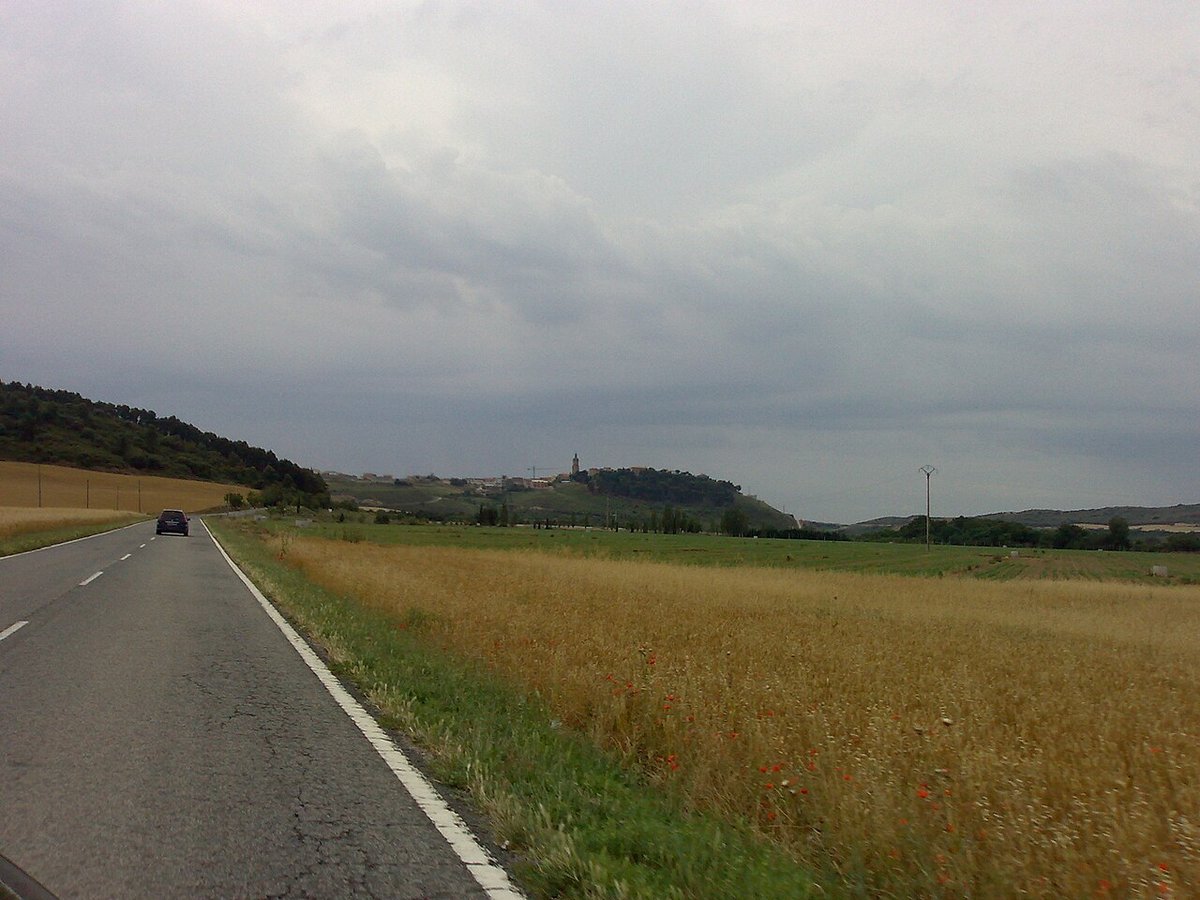
Early in the day, before traffic picks up, Mendigorría sounds like shutters being raised and the occasional creak of a garage door. Light falls sideways across façades of stone and brick, picking out textures that disappear later on. Damp patches from the night linger at street corners. From the higher part of the village, the landscape opens out: cereal fields, reddish soil and, further down, the valley of the river Arga.
Mendigorría sits in the Zona Media of Navarra and has around 1,200 residents. The village rests on a modest rise, just enough for the agricultural surroundings to appear suddenly once you pass the last houses. In spring, when the wheat is still green, the whole area seems wider than it really is. The horizon stretches in a way that feels almost deceptive, as if the land had quietly expanded overnight.
San Pedro and the shape of the streets
The tower of the church of San Pedro marks the centre of the village. The current building dates from the 16th and 17th centuries and reflects a style often found in rural Navarra: pale stone, firm lines and very little decoration.
The church usually opens only for mass or religious events. If the door happens to be open, it is worth stepping inside for a moment. The light is subdued and filtered, and the silence is more noticeable than outside, where there is almost always a car passing on its way to the fields.
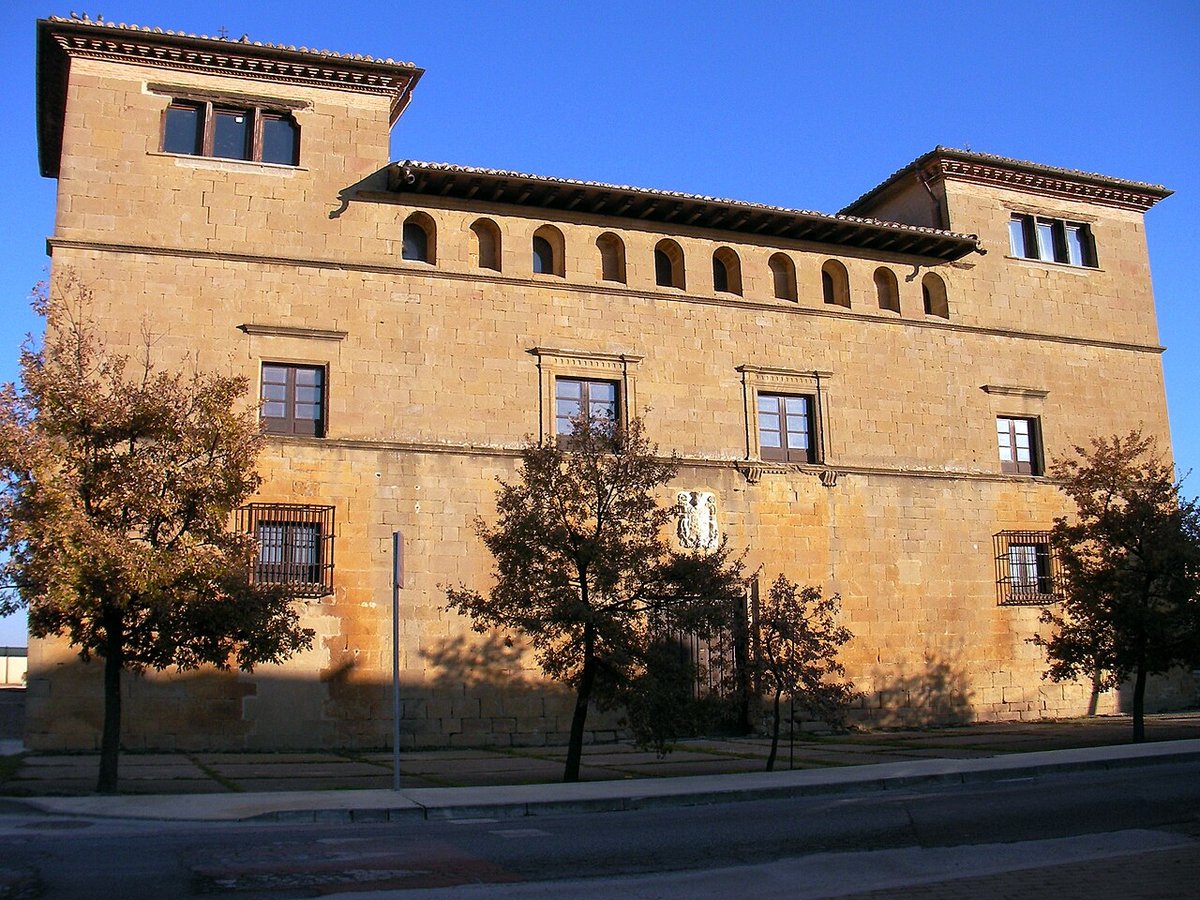
Around the church, the streets are fairly straight. This is not a maze-like historic quarter. Houses combine older stonework with more recent updates, and the mix is visible from one doorway to the next. Some entrances still display carved coats of arms, while dark iron balconies overlook the street. On sunny days, it is common to see doors left open and tractors parked in inner courtyards, a reminder that daily life here remains closely tied to the surrounding land.
Down to the Arga and towards Andelos
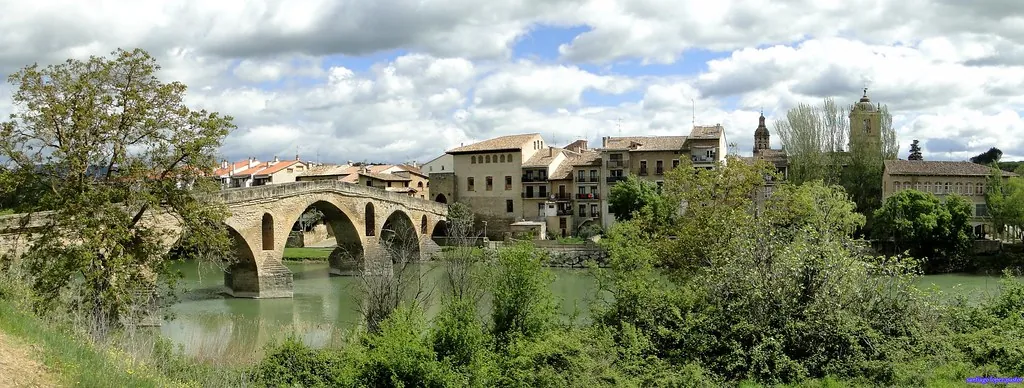
Heading down towards the river, the air changes. Poplars and willows begin to appear, and the sound of water blends with birds from the riverbanks. The Arga flows calmly through this stretch, bordered by gravel edges and dense vegetation in summer.
Nearby lie the remains of Andelos, an ancient Roman settlement best known for its hydraulic system. The site is a short distance from the village. The Roman presence in this part of the valley helps explain why the area mattered centuries ago: access to water and fertile land made it a practical place to settle.
Paths along the river are not always marked as official routes. Many are agricultural tracks or informal trails used by local people. It makes sense to walk with care and step aside when farm vehicles pass, especially during busy periods in the agricultural calendar.
Spring and autumn tend to be the most comfortable times for a walk here. In summer there is some shade, but it is not continuous, so stretches in the open can feel exposed.
Food, seasons and village rhythm
Everyday cooking in Mendigorría stays closely linked to the vegetable garden and seasonal produce. Local vegetables, meat, and wine from the Navarra Media shape what appears on the table, with nearby wine-producing towns such as Olite or Tafalla providing part of that context. There is no loud or showy dining scene. Meals follow the pattern found across many villages in the area: straightforward dishes and generous portions.
The main festivities usually take place at the end of June, around San Pedro. During those days, the rhythm of the village shifts noticeably. There is music in the streets, local groups known as peñas bring energy to public spaces, and there is more movement than usual at all hours.
August also brings celebrations linked to the Asunción. Outside these dates, Mendigorría returns to a quieter pace. Autumn is shaped by the agricultural cycle, which becomes visible in the activity around the fields. By December, life draws inward. Gatherings are smaller and more domestic, and the village feels more contained.
Getting there and finding the right moment
Mendigorría lies about 25 kilometres southwest of Pamplona. Most people arrive by car, following roads that cross the Zona Media through open countryside. Public transport does exist, but services tend to be infrequent, so it is worth checking in advance if travelling without a vehicle.
Parking is generally straightforward. It can become slightly more difficult during festivals or at specific moments when events are taking place at the church.
The most favourable light for walking through the village usually comes in the morning or towards the end of the afternoon, when the sun drops lower over the fields. In July and August, midday heat can be intense, and paths between crops offer very little shade, so carrying water and avoiding the hottest hours is sensible.
Mendigorría is best understood slowly. A walk through the centre, a descent towards the Arga, and some time spent looking out over the valley from the edges of the village are enough to form a clear picture of how life works here. Agriculture surrounds everything, the river is always close, and the village continues to function first and foremost as a place to live rather than a stop designed for visitors.