Full Article
about Olóriz
Valdorba municipality rich in heritage and nature; includes Echagüe and other hamlets.
Hide article Read full article
A small village in Navarra’s farming landscape
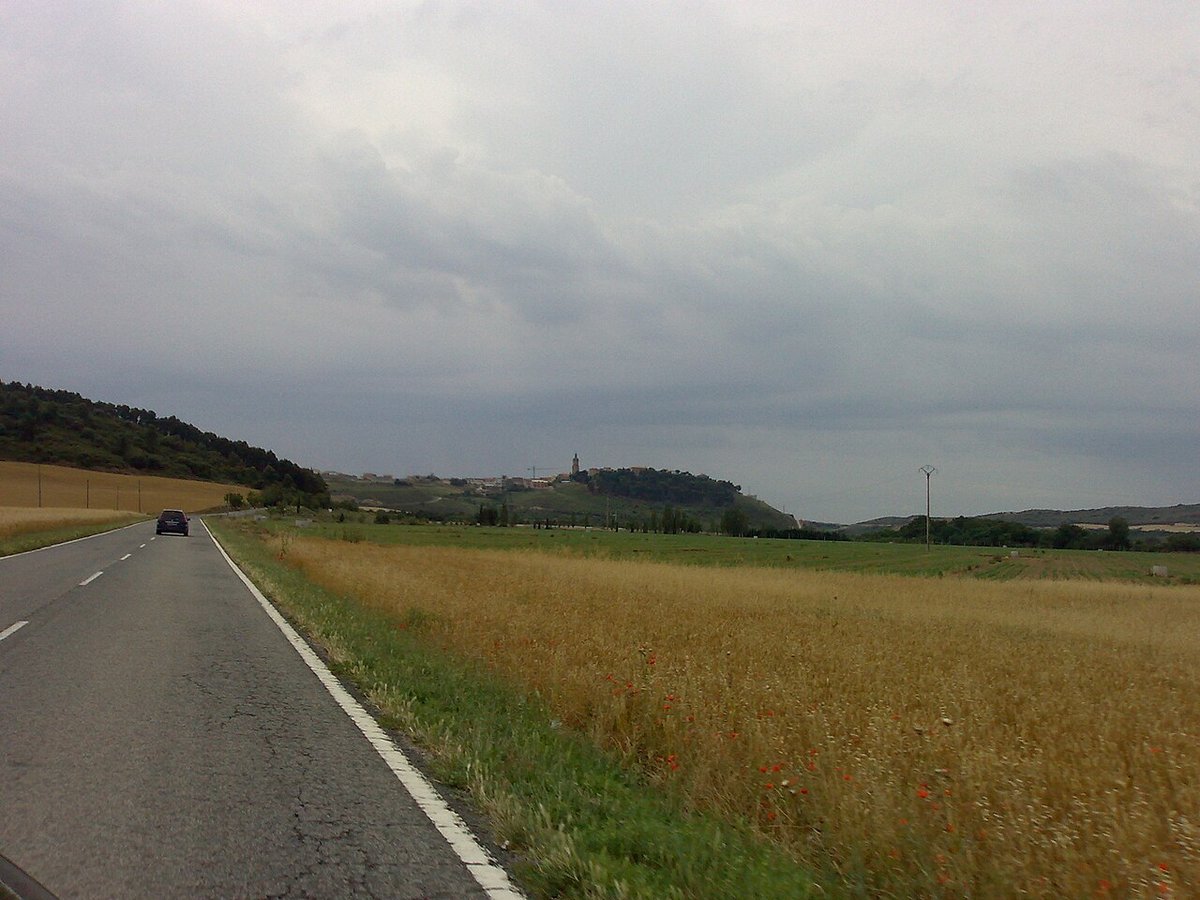
Tourism in Oloriz makes more sense when seen within the wider landscape of the Zona Media of Navarra, a central belt of the region known for agriculture and small settlements. The village sits a few kilometres from Tafalla, surrounded by cereal fields and vineyards, in an area where the land is still closely tied to farming life.
With just over two hundred registered residents, Oloriz functions first and foremost as a place to live rather than a tourist destination. Visitors tend to arrive in passing or as part of a wider route through the comarca. It is not a place built around attractions or infrastructure for travellers, but one that reflects everyday rural life.
The village layout and the church of San Andrés
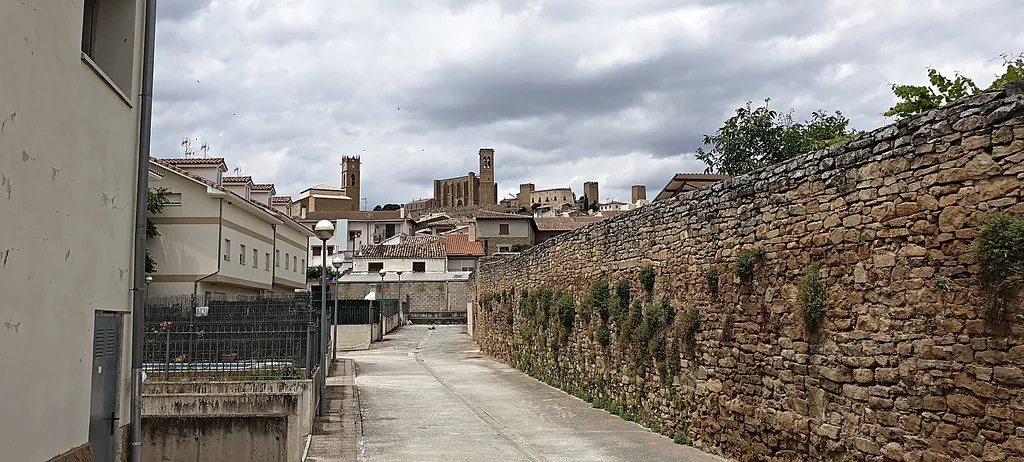
The centre of Oloriz is organised around its main square and the parish church of San Andrés. The current building stands on a 16th-century structure that was later modified, a common pattern in rural churches across Navarra. The stone construction contrasts with a brick bell tower that can be seen from the surrounding fields.
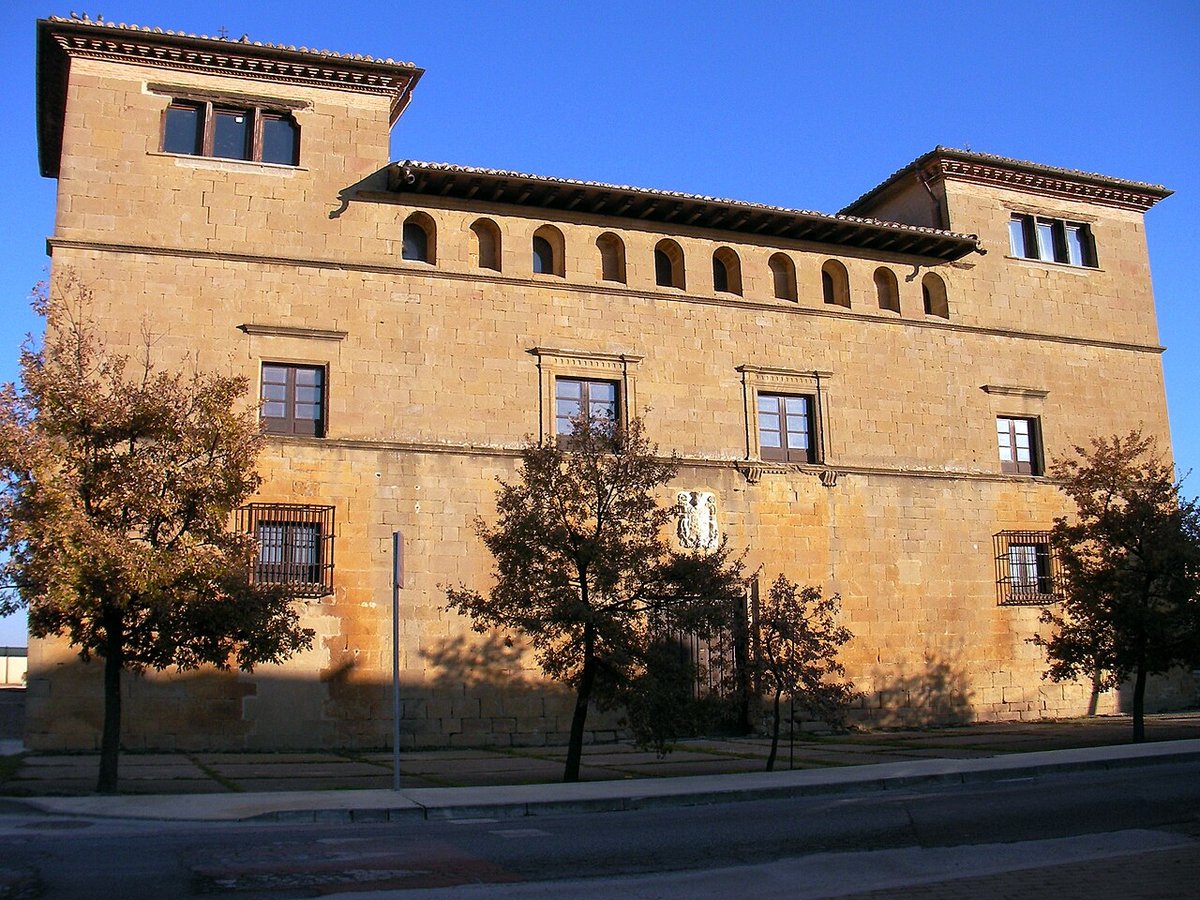
Around the square and along Calle Mayor, the houses follow a restrained architectural style. Rubble-stone walls, wide entranceways and curved tile roofs define many of the buildings. Their original agricultural purpose is still visible in features such as large gateways, courtyards or former storage areas for tools and equipment. Some façades display coats of arms, a sign that certain households once held a degree of importance within the village.
The side streets are shorter and narrower. From them, it is easy to glimpse interior courtyards, small vegetable plots and, at the edges of the built-up area, the fields that begin almost immediately beyond the last houses.
A settlement shaped by the land
Oloriz occupies a slightly elevated position above the surrounding terrain, which makes it easier to take in the character of the Zona Media. The landscape is made up of gentle hills, broad plots of land and a patchwork of crops that shifts noticeably with the seasons.
The local economy has traditionally revolved around cereal and vine cultivation, something that still defines the immediate surroundings. Daily life moves at a slow pace and, outside specific moments in the festive calendar, activity tends to centre on the square and the church.
The main celebrations are dedicated to San Andrés and usually take place in November, as in other Navarrese villages that share this patron. Throughout the year there are also smaller events linked to the religious calendar or to summer festivities, although the programme can vary depending on the year and the level of local participation.
Walking through Oloriz and beyond
Oloriz can be explored quickly. In less than an hour it is possible to walk around the square, along Calle Mayor and through the side streets that make up the compact centre.
For those interested in traditional architecture, it is worth paying attention to the stone doorways and the wooden entrances that are still preserved in some houses. Several buildings display inscriptions or carved dates in the stone, usually marking renovations or extensions carried out at different points in time.
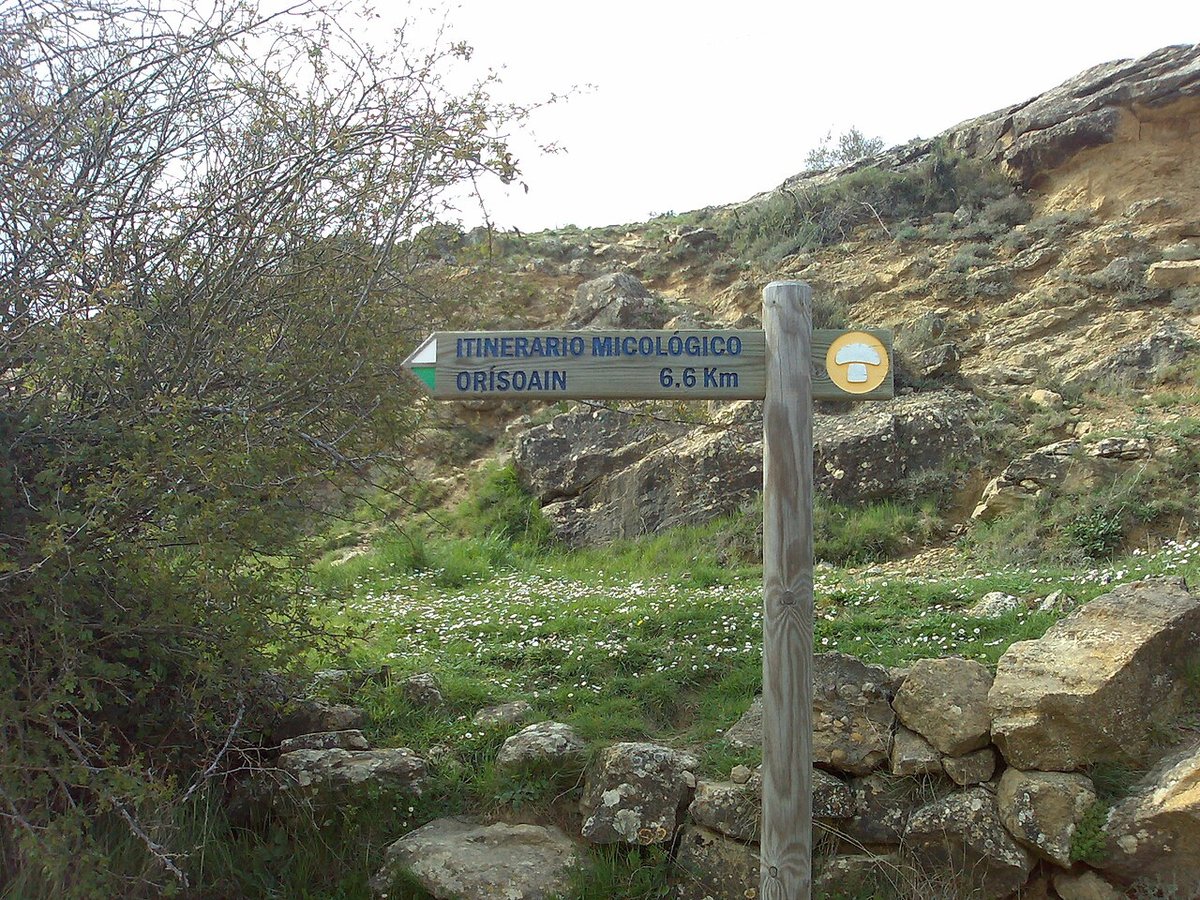
After seeing the village itself, it makes more sense to head out along the agricultural tracks that surround it. These are not marked as formal walking routes, but they are the same paths used by farmers to reach their fields. From here, the scale of the landscape becomes clearer: open fields, vineyards and low hills forming a soft horizon.
The appearance of the land changes with the seasons. In spring, cereal crops cover much of the area in green. By late summer, the tones shift towards ochres and yellows. These are straightforward walks, though there is very little shade along the way.
Practical notes for visiting
From Pamplona, the drive takes roughly three quarters of an hour. The route first follows main roads towards the Zona Media and then continues along local roads in the direction of Tafalla and nearby villages.
The final stretch is along a narrow secondary road that is nevertheless in good condition. Within the village, cars can be left in the square or on nearby streets, taking care not to block entrances to properties or garages.
Anyone planning to walk along the agricultural tracks should wear comfortable footwear. After several days of rain, some of these paths can become muddy quite easily. In summer, the sun falls directly on the fields, so it is better to go out early in the day or later in the afternoon.