Full Article
about San Martín de Unx
Terraced medieval town known for its rosé wines and its Romanesque church with crypt
Hide article Read full article
When the Light Settles on the Stone
Towards the end of the afternoon, when the sun drops in from the side of the vineyards, the stone of San Martín de Unx shifts to a tone somewhere between honey and dust. The streets grow quiet. Now and then a car climbs slowly uphill, and footsteps echo against the cobbles. That is when the pace of the village becomes clear.
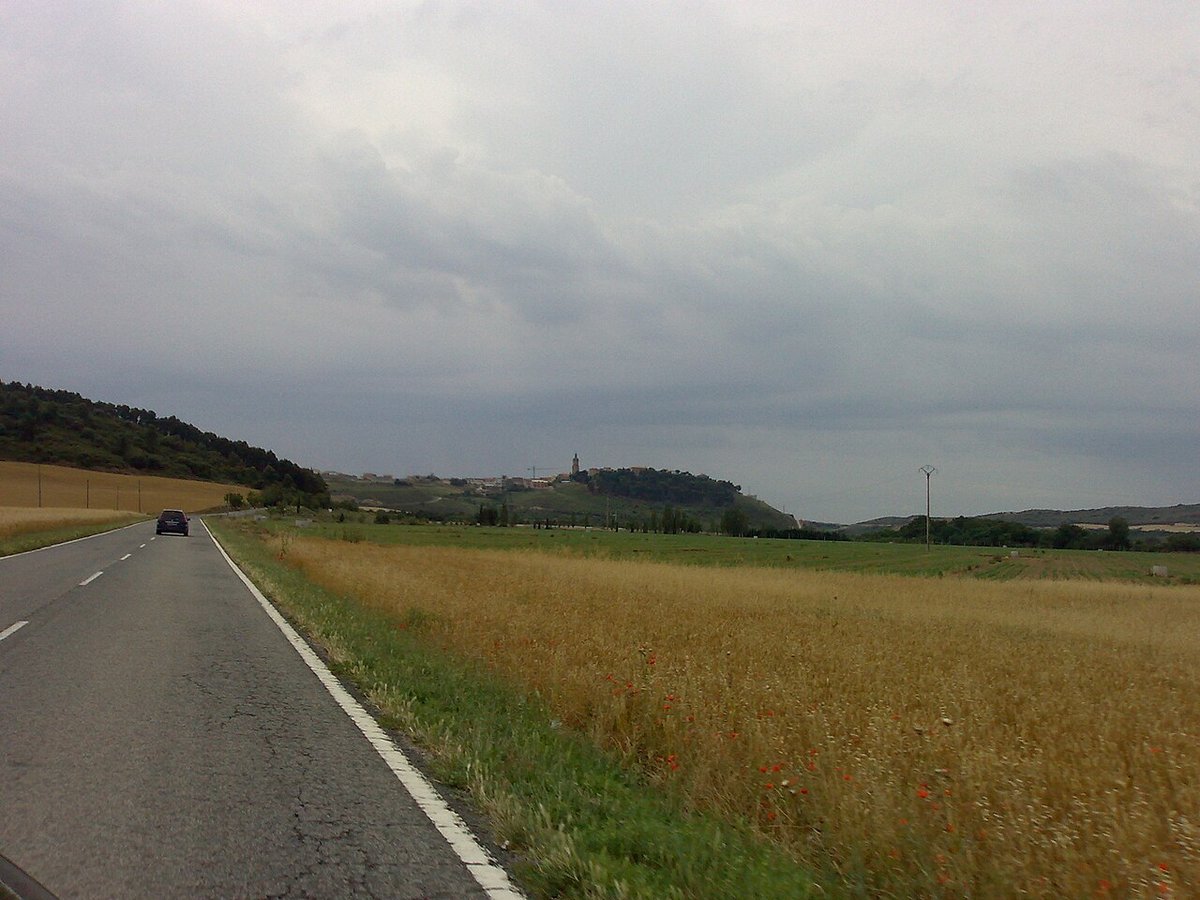
A visit to San Martín de Unx often begins just like that, walking without hurry through a small old quarter that clings to the slope. Around it stretches Navarra’s Zona Media, a landscape of vineyards, cereal fields and soft hills that change colour with the months. In autumn the tones turn ochre and red. In spring, after the rain, everything brightens into green.
The Romanesque Church Above the Village
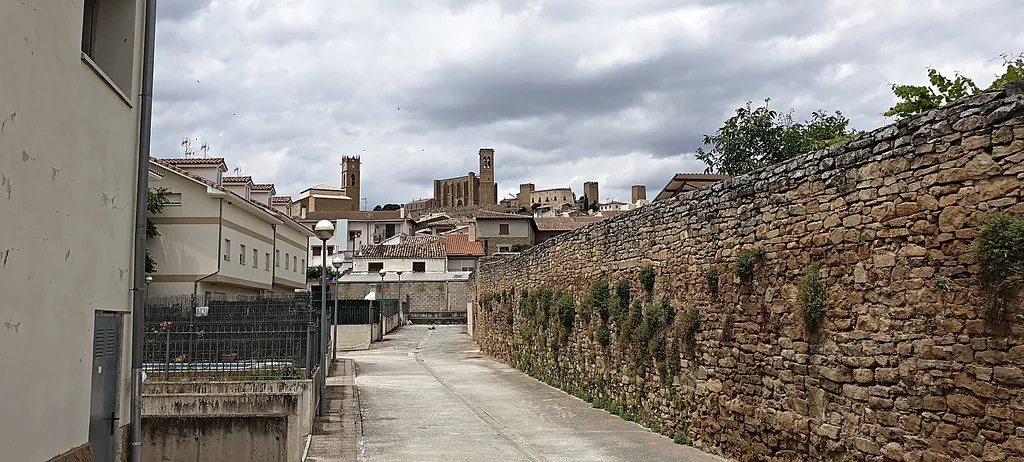
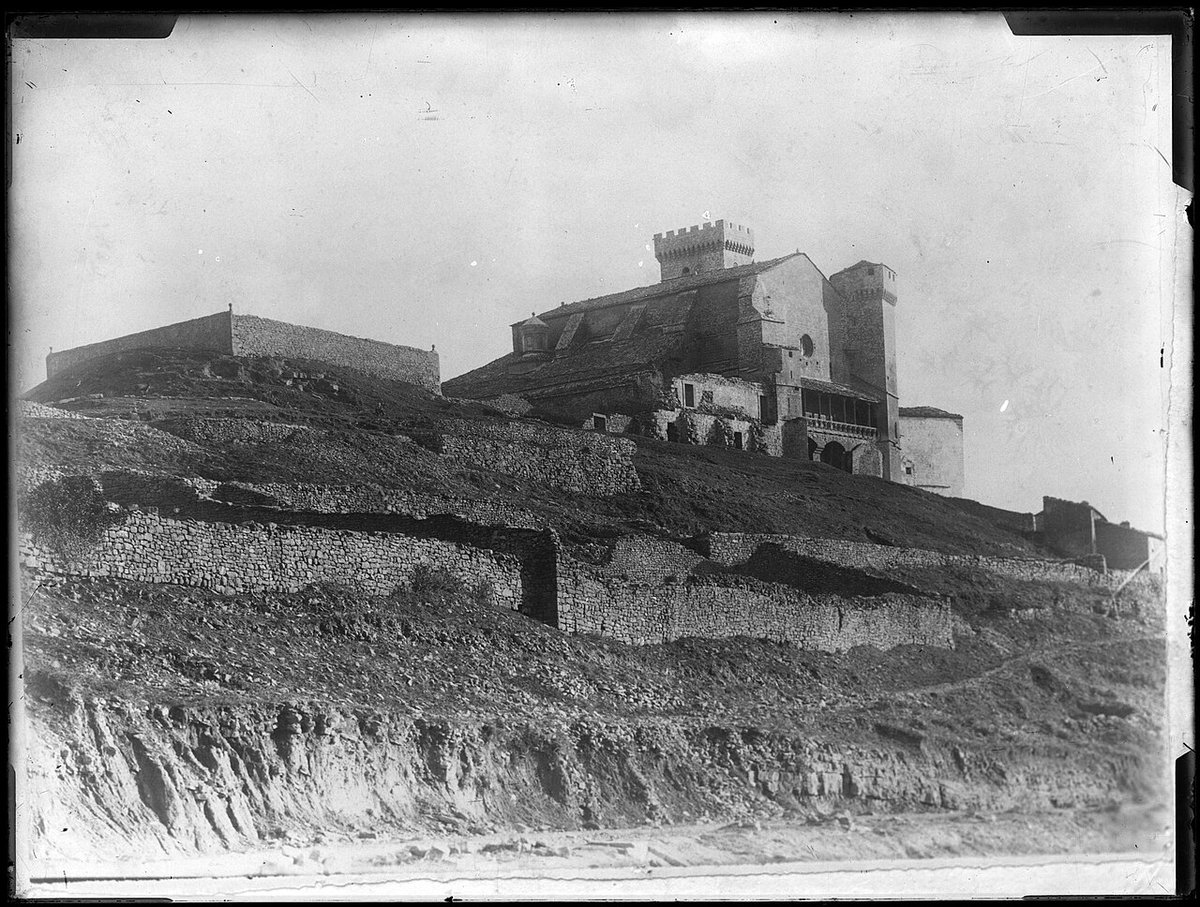
The church of San Martín de Tours appears suddenly as the streets rise. It is solid, built from thick stone, with the almost defensive feel found in some Romanesque churches across Navarra. Its tower stands over the houses and can be seen from several points in the valley.
The original structure dates back to the 12th century, though later additions altered its form. Inside, Romanesque remains sit alongside a large Baroque altarpiece added centuries afterwards. The contrast is clear in the materials. The walls keep their austere stone, while the altar introduces carved and gilded wood.
It is not always open. In a village of this size, access depends on the time of day or whether someone with a key happens to be nearby.
Streets That Follow the Slope
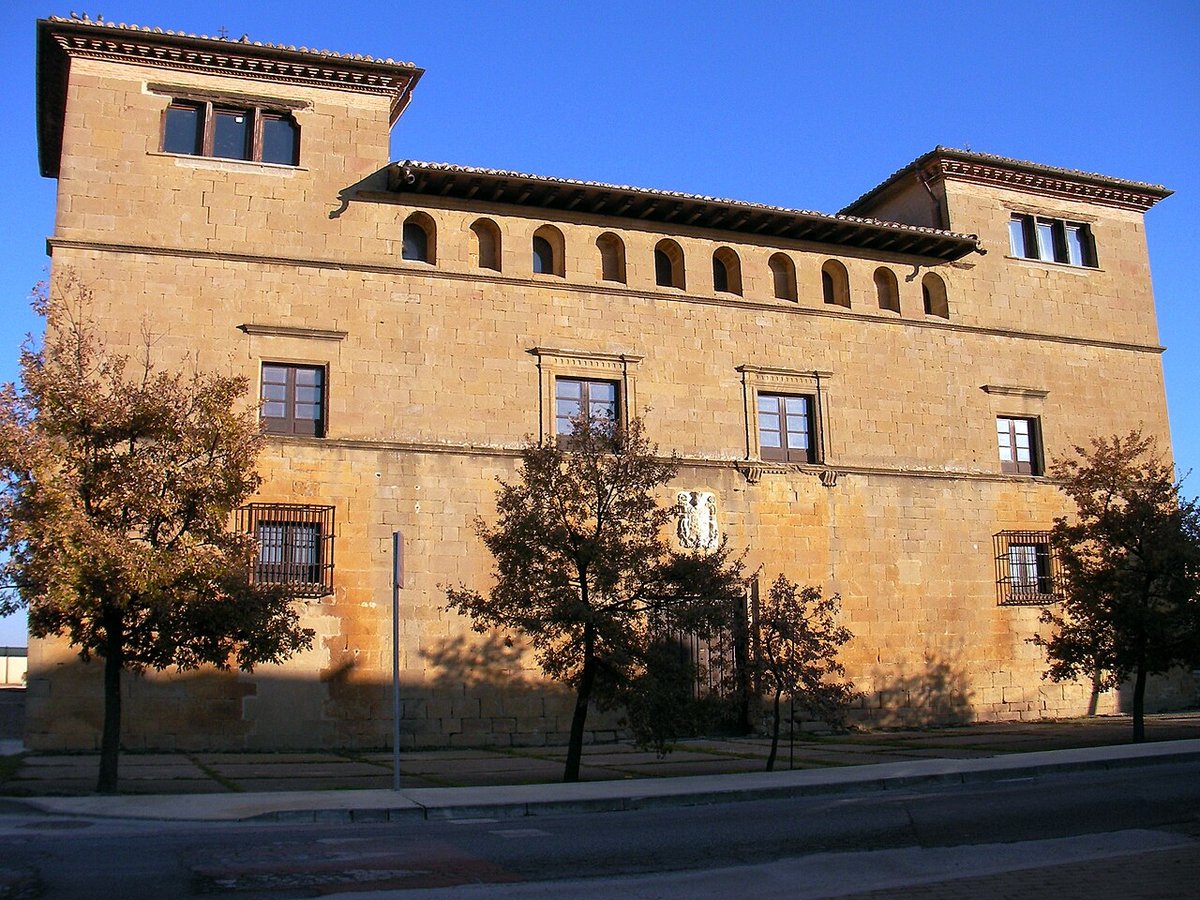
The old quarter keeps an irregular layout, with streets that climb and turn according to the hillside. Houses are built close together. Many still display coats of arms on their façades or stone doorways with carved lintels.
Looking up, there are narrow iron balconies and wooden eaves darkened by time. It is not a grand monumental setting, but it feels consistent. Everything seems shaped by the same practical logic, to shelter from the wind and make use of every metre of the slope.
Walking slowly helps. The cobbles are uneven in places, and some inclines are steeper than they appear from below.
San Miguel and the Edge of the Village
A few minutes outside the centre stands the hermitage of San Miguel. It is small and simple, also with Romanesque origins. Its walls show layers of repair, the kind that build up over centuries in buildings that have never fallen out of use.
From here, the landscape opens out. Vineyards surround the village in several directions and define the local economy. During the grape harvest, there is more movement along the agricultural tracks, with tractors coming and going.
The spot works best as a quiet viewpoint rather than a long excursion.
Walking Between Vineyards and Fields
Several rural paths lead out from San Martín de Unx. Some follow the edges of vineyard plots, others pass through cereal fields that turn almost golden in summer.
Not all of these routes are formally signposted. Even so, a short walk along any of them gives a clearer sense of the Zona Media landscape. The smell of dry earth in summer and the stillness of the countryside at dusk become part of the experience, just as much as the village itself.
Wine is a constant presence in the area. The winemaking tradition here goes back a long way and continues to shape the agricultural calendar.
A Short Walk Through the Village
San Martín de Unx can be covered in a short time. A simple way to begin is by heading gradually uphill towards the church, then wandering through the streets that circle the upper part of the village.
From different corners, views open over the surrounding fields. There are no large, signposted viewpoints. Sometimes it is just a gap between two houses or the end of a street that suddenly reveals the landscape.
An hour or two is enough to walk the whole urban area at an unhurried pace.
Before You Go
The village has slopes and plenty of uneven stone underfoot, so sturdy footwear makes a difference.
If arriving by car, it is usually easier to leave it in the lower part or near the access points and continue on foot. The central streets are narrow, and manoeuvring can be awkward.
One small detail changes the feel of the place. Early in the morning or late in the afternoon, there is less movement, and the light across the stone façades brings out textures, cracks and muted colours. At those times, San Martín de Unx invites a slower look.