Basque Country: industry, cuisine, and a language older than Rome
Euskera and the farmstead landscape
Euskera (Basque) has no proven relationship to any other living language. About 33 % of the Basque population — around 750,000 speakers — use it daily, with the highest concentration in Gipuzkoa, where it exceeds 50 % in districts like Goierri and Tolosaldea. The baserri (farmstead) is the basic unit of the rural landscape: a stone-and-timber building with a gabled roof, combining farm and dwelling under one structure. An estimated 25,000 still stand, many converted into rural guesthouses.
Guggenheim, pintxos, and new Basque cuisine
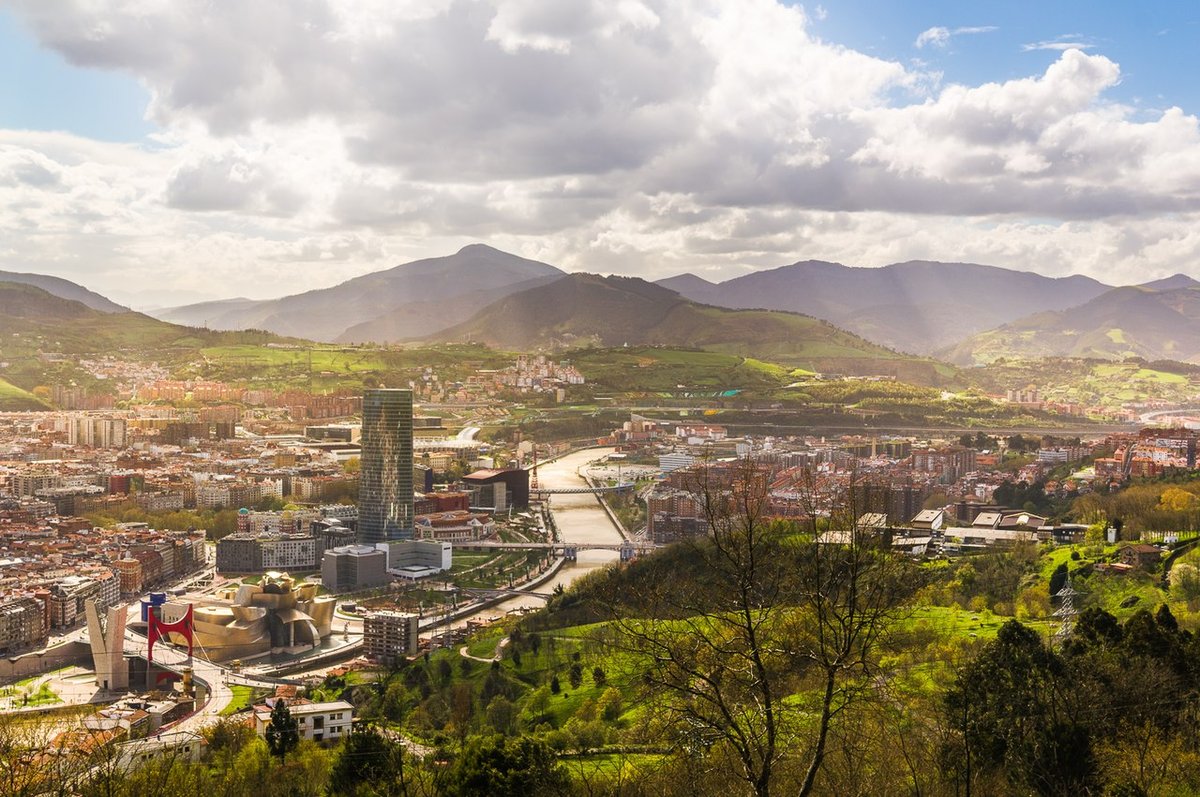
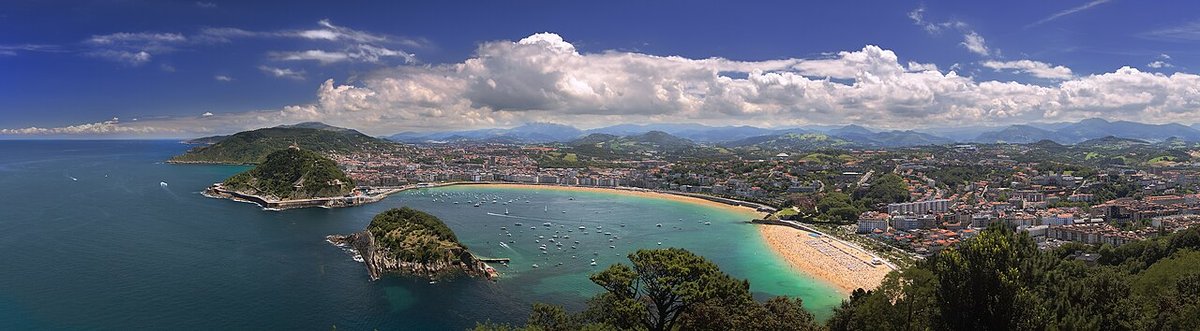
The Guggenheim Museum Bilbao (Frank Gehry, 1997) drew 1.17 million visitors in 2023. In San Sebastián, the density of Michelin stars per square metre is among the highest in the world: the city and its surroundings count 10 starred restaurants. The pintxo — a small portion on bread secured with a toothpick — differs from the tapa in its elaboration: along the bars of San Sebastián's Old Town, each counter competes with creations that apply fine-dining technique at miniature scale.
Iron, fishing, and reinvention
The left bank of the Nervión estuary (Barakaldo, Sestao, Portugalete) was one of Europe's most powerful steel-producing zones until the 1980s. The Vizcaya Bridge (1893), a transporter bridge with a 160-metre span, is the oldest of its kind still in operation and a World Heritage Site since 2006. Along the coast, ports like Getaria — birthplace of Juan Sebastián Elcano — keep an active inshore fleet landing white tuna, anchovies, and mackerel between May and October.