Full Article
about Arantzazu (Aránzazu)
Valleys and hamlets a stone’s throw from Bilbao, buzzing with local life.
Hide article Read full article
Arriving without a checklist
Some places come with a clear plan: viewpoint, photo, coffee, then move on. Arantzazu doesn’t quite work like that. The road up from Oñati winds through the hills and, by the time you arrive, it becomes obvious that this is not somewhere designed for ticking things off. It is a place that asks you to slow down and take in where you are.
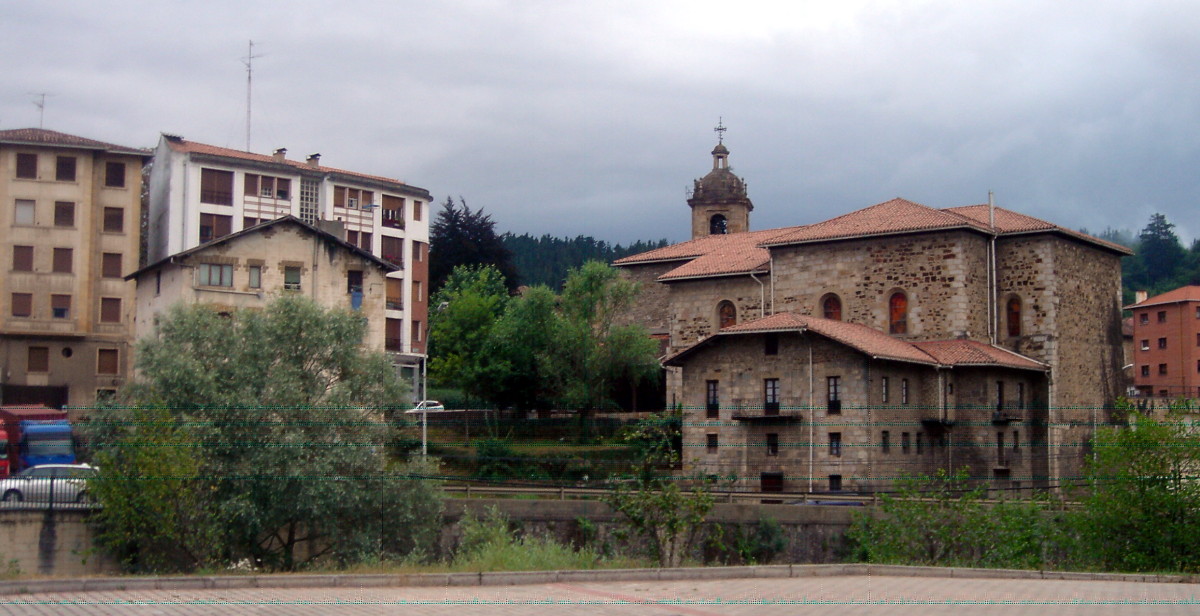
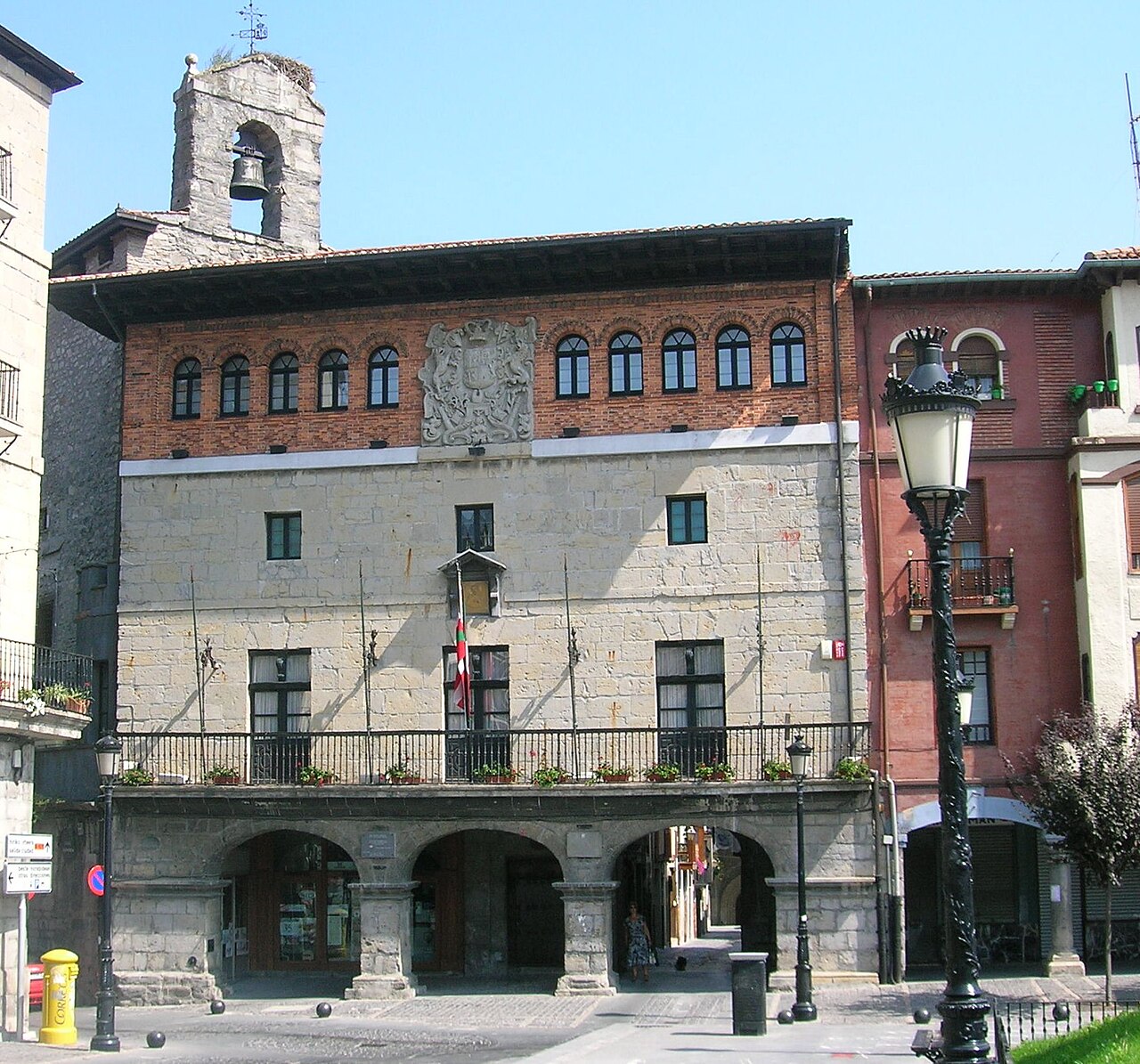
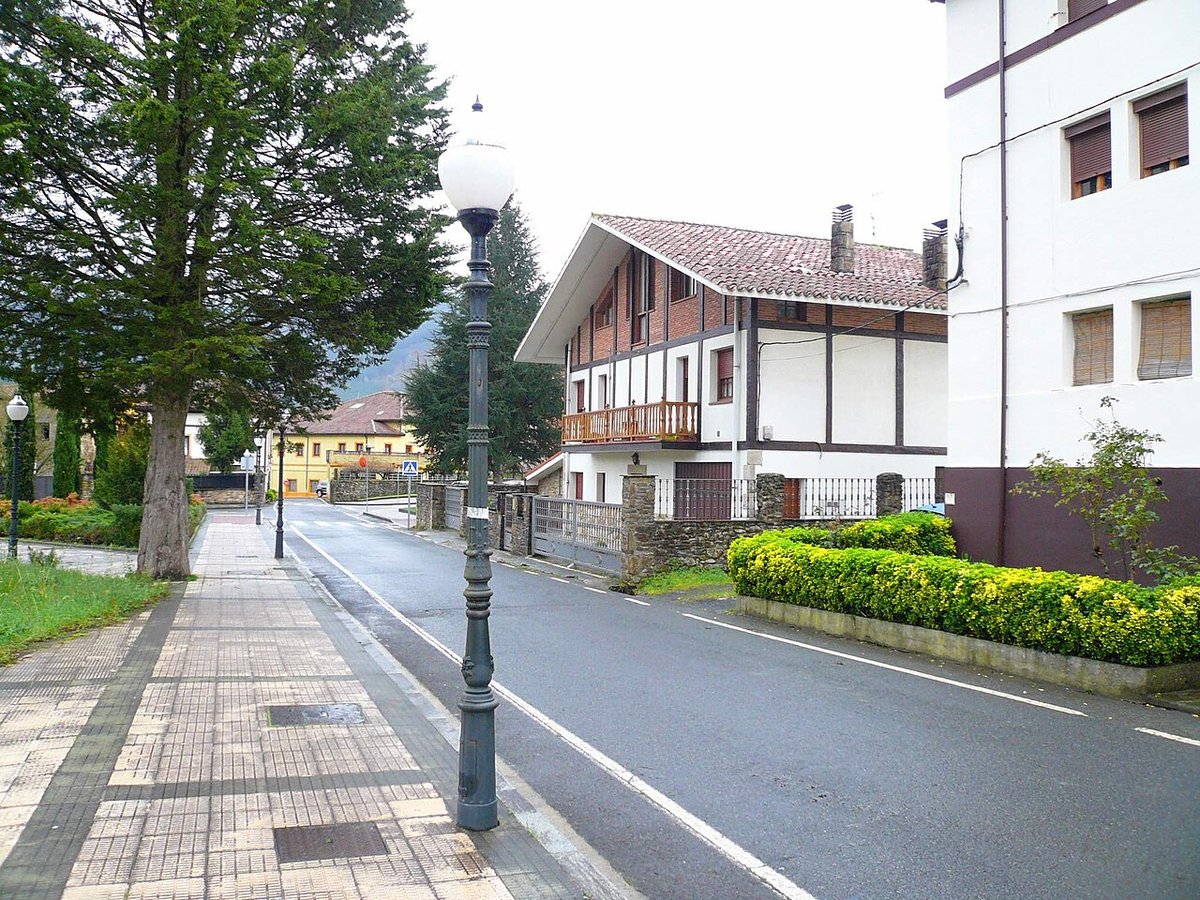
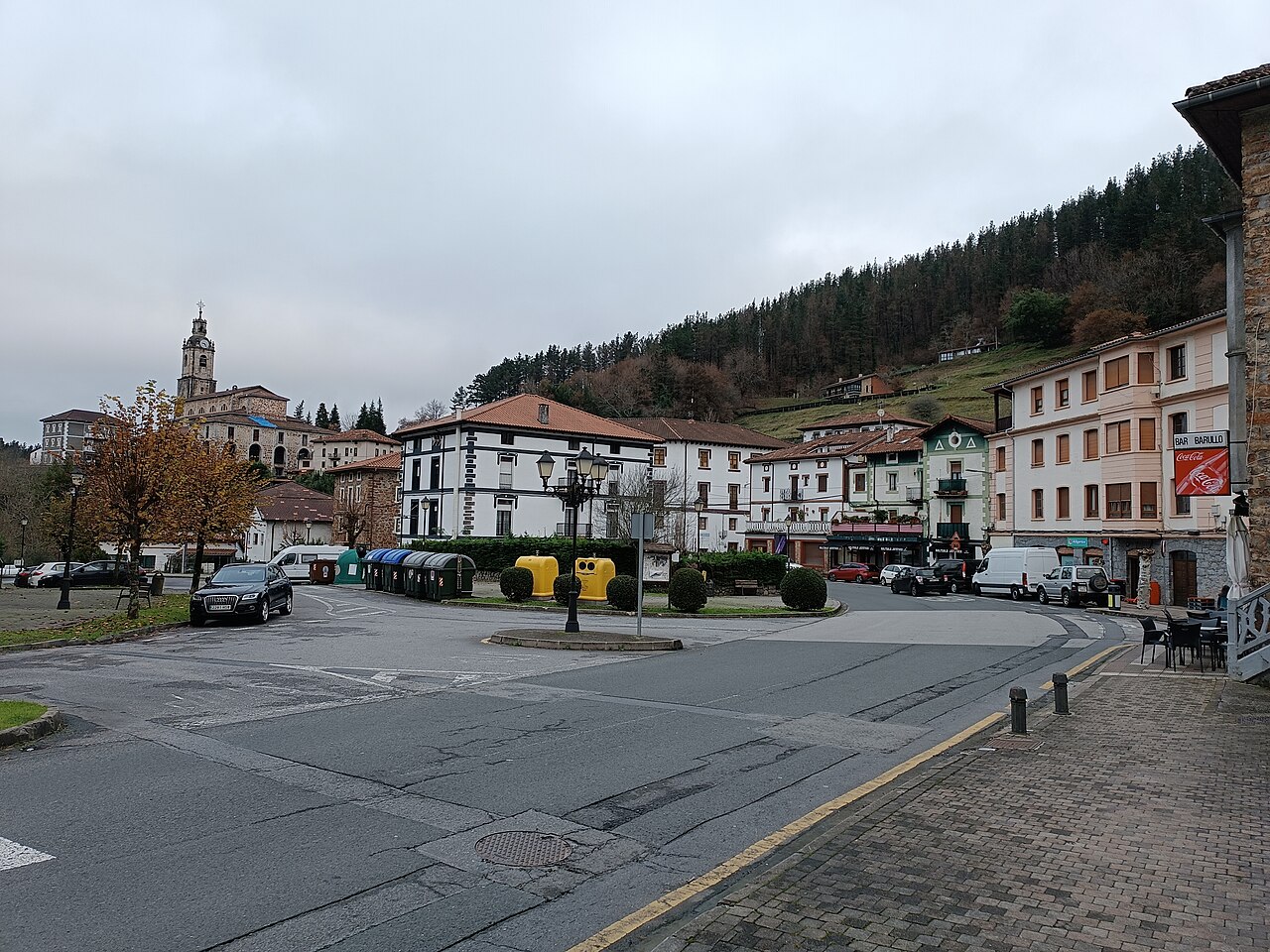
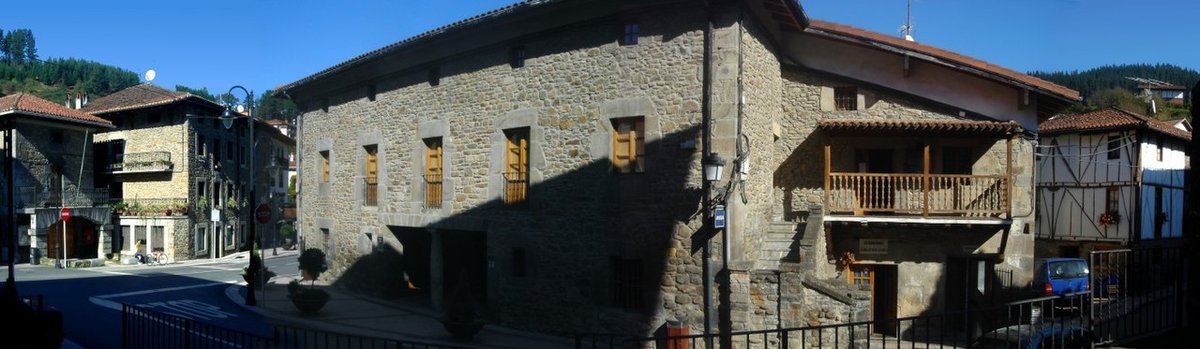
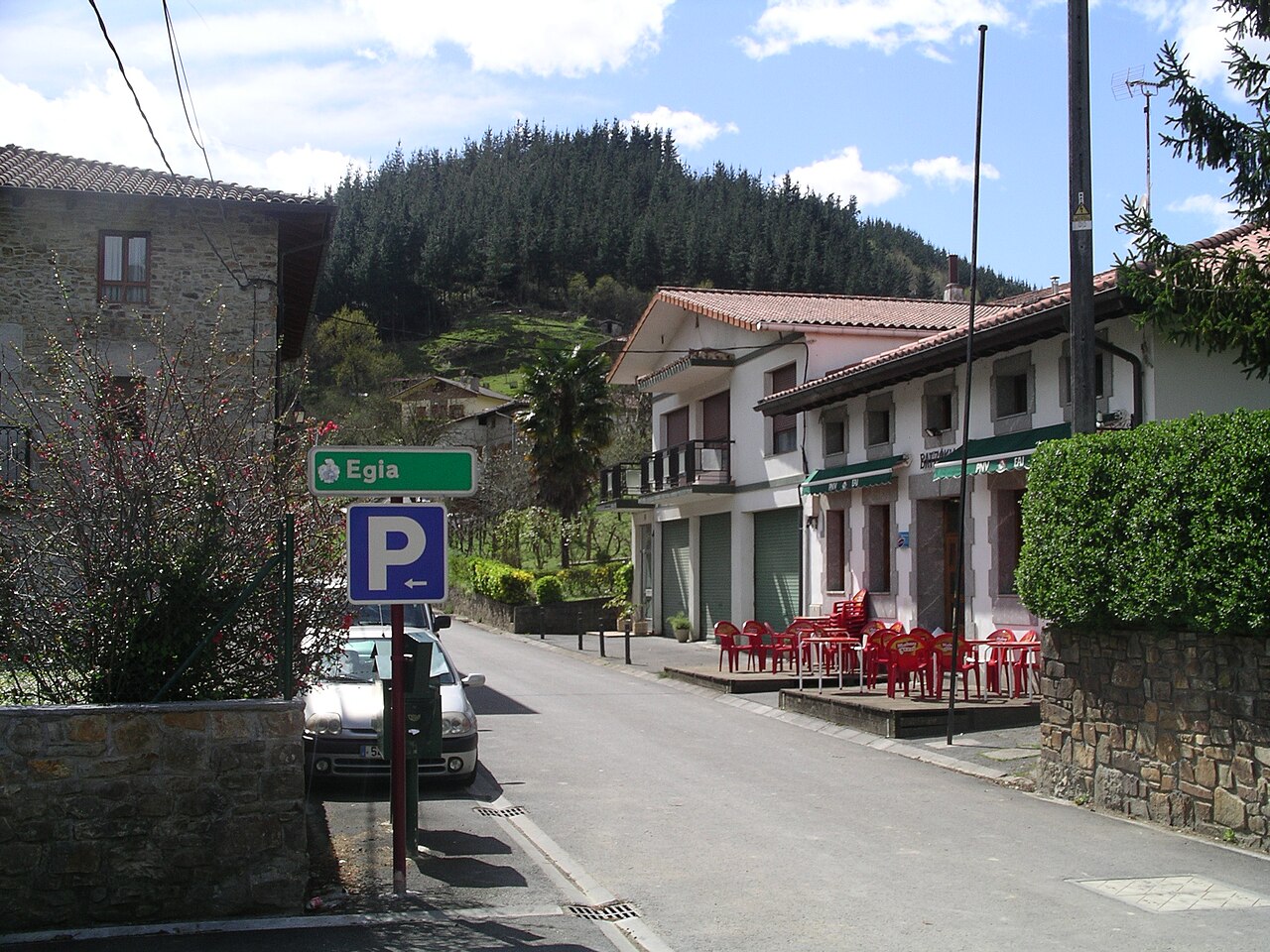
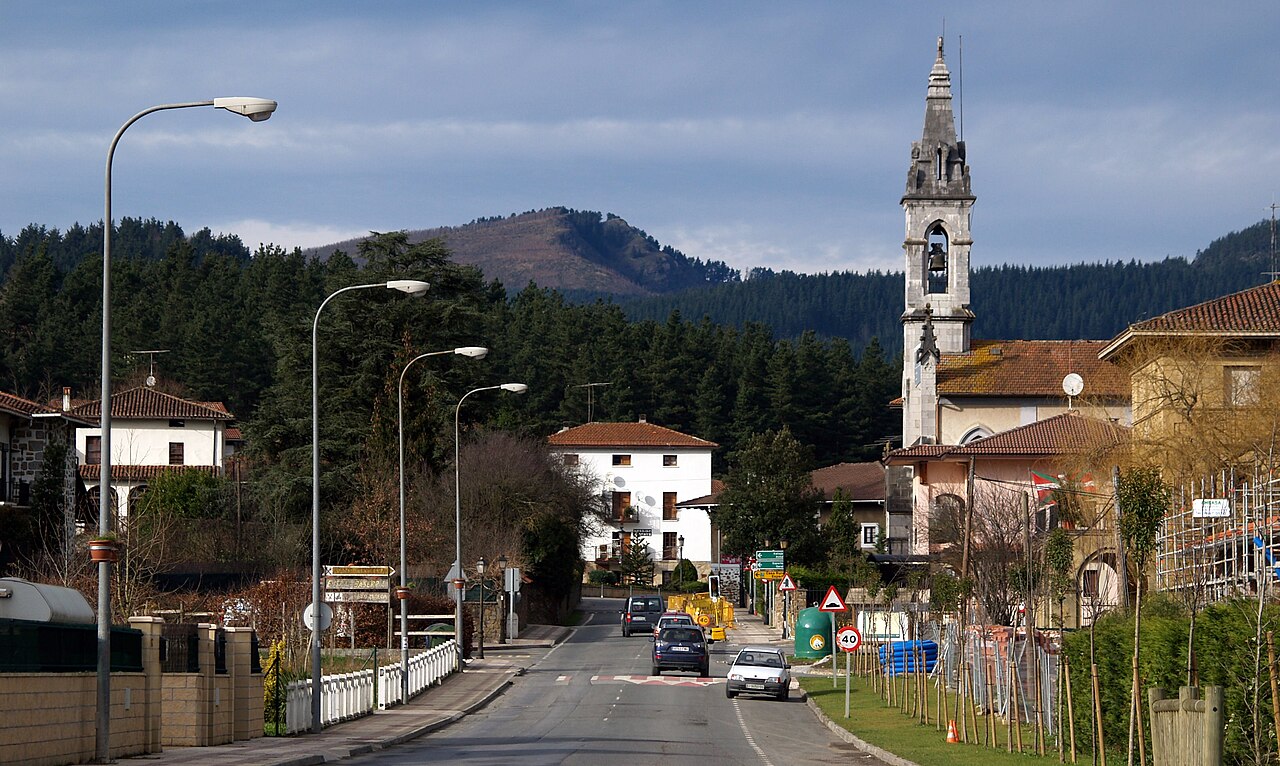
There is no large town centre and no long list of landmarks. Instead, Arantzazu is a small cluster of buildings arranged around a simple square where most of the limited daytime activity happens. Stone houses, metal balconies, walls shaped by decades of rain. Nothing flashy, yet very familiar to anyone who has spent time in inland parts of the Basque Country.
A small, quiet centre
You can walk the heart of Arantzazu in minutes. Within ten, the layout makes sense: a square, a handful of houses, and paths leading off in different directions.
At certain times of day, there is barely any noise. A car arriving, someone crossing the square with shopping bags, and little else. The quiet is not staged or designed for visitors. Life simply moves at a different pace here. Sit near the fountain or lean against a wall for a while and the rhythm becomes clearer. People going in and out of farmhouses, vans carrying tools, the occasional tractor passing along a narrow street. That is what keeps the place going.
Paths leading out into the valley
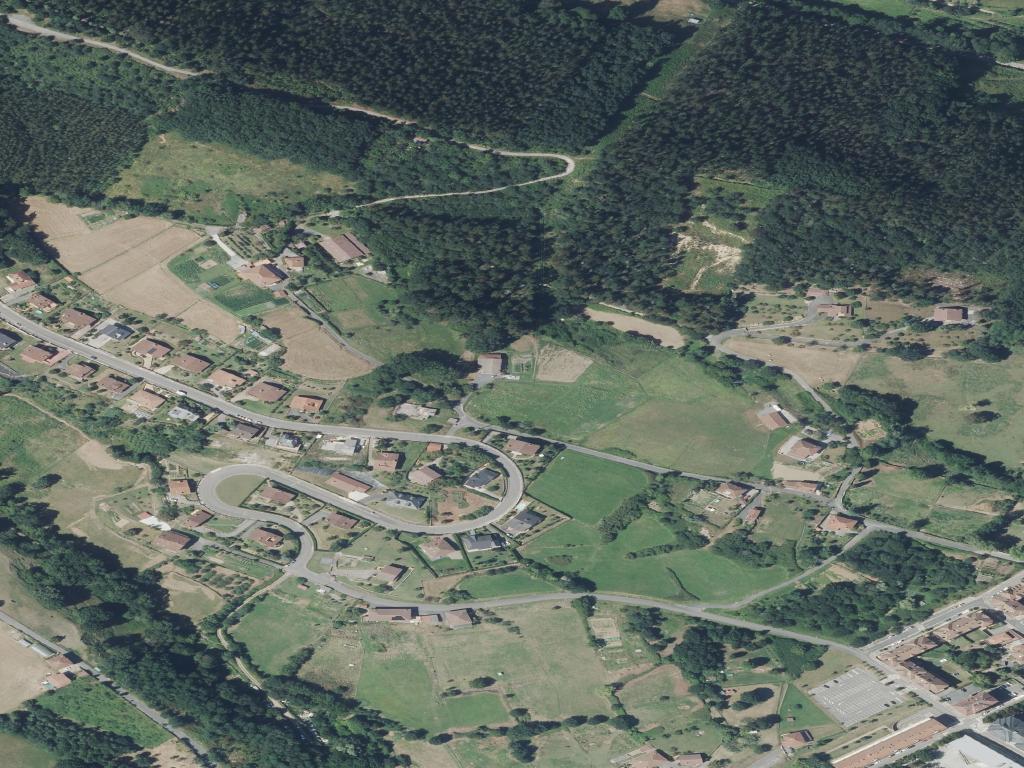
From the village itself, several tracks and footpaths head into the surrounding valley. Some are marked, others are simply local routes running between meadows and farmhouses.
There is one thing worth keeping in mind, common across this part of the Basque Country. Many of these paths pass close to private land. They are generally used without issue for walking, but it is best to respect gates, acknowledge anyone working nearby, and avoid entering enclosed fields. This is a living rural environment, and it feels that way. Livestock, small-scale farming, and machinery are all part of daily life.
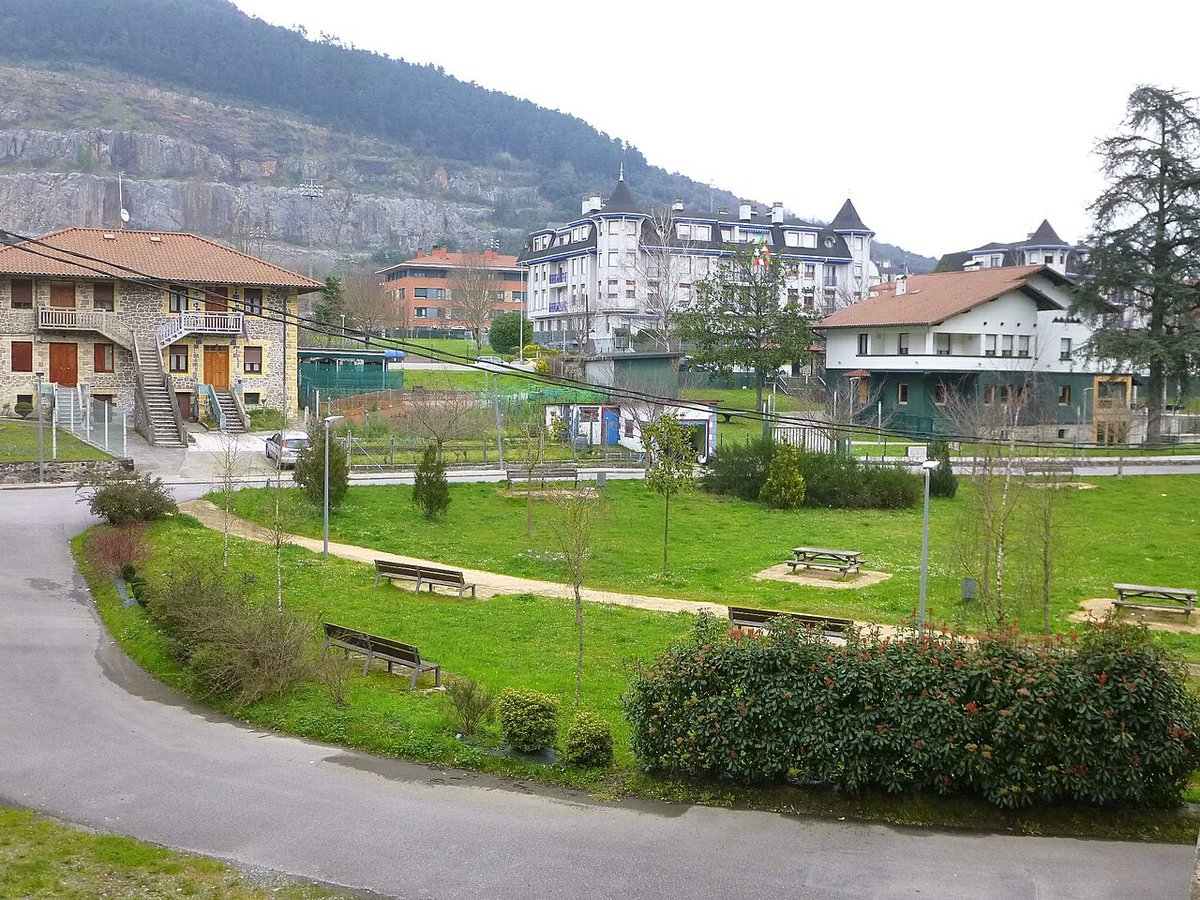
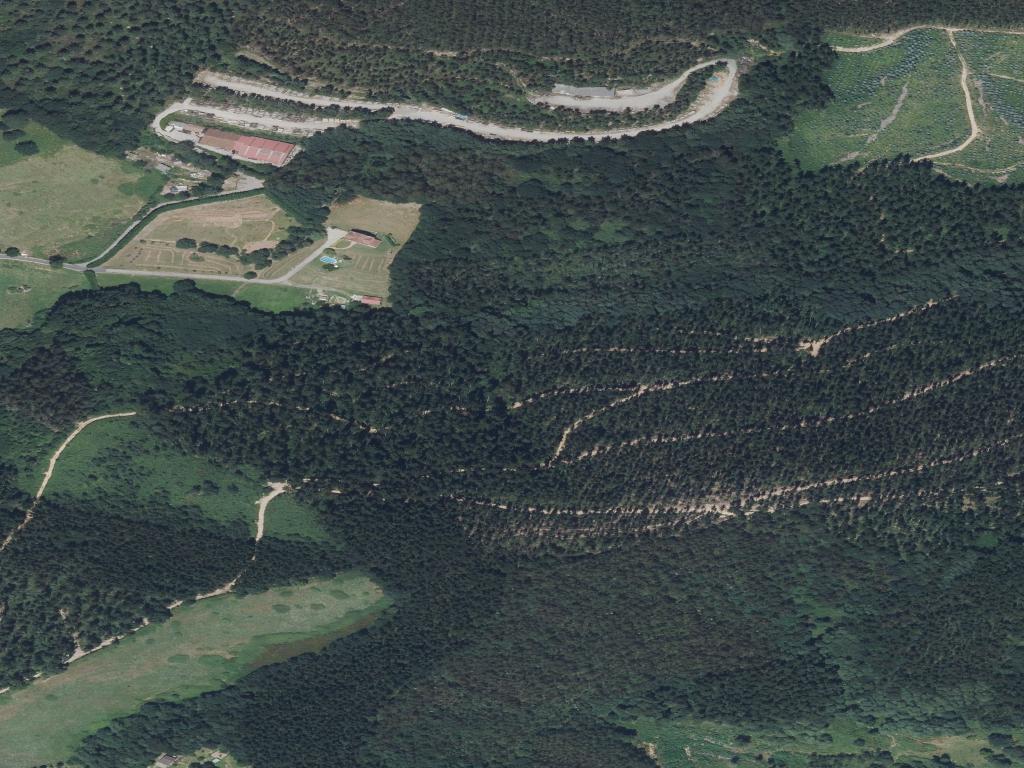
The landscape matches what you might expect in Bizkaia and Gipuzkoa: very green meadows, patches of woodland with beech, oak or chestnut trees, and small streams flowing down the slopes. These are not routes built around dramatic peaks or striking viewpoints. They are the kind of paths you follow while talking as you walk, without much urgency.
The landscape around Arantzazu
Beyond the village, the terrain opens into gentle slopes and pastureland. When the weather cooperates, which is not always the case, it is easy to spot grazing animals and scattered farmhouses across the hills.
Small streams cross the fields before heading down into the valley. Walk for a while and you will hear water somewhere, even when you cannot see it. That steady background sound becomes part of the setting, along with the wind and the distant bells worn by livestock.
For those who enjoy mountain biking or walking without steep climbs, there are plenty of dirt tracks in the area. Some can be uneven or muddy after rain, and rain is fairly common here, so conditions change quickly.
A rural life that continues
One of the first things you notice in Arantzazu is that it does not depend on tourism. The main activity remains what it has long been: farmhouses, vegetable plots and livestock.
Behind many houses there are small cultivated areas with cabbages, peppers, cauliflowers or whatever is in season. These are not decorative gardens but working plots. Sheep and cows are often visible in nearby fields.
In this part of the Basque Country, sheep’s milk cheese has long been tied to farmhouse life, and there are producers in the surrounding area who continue that tradition. They are not always open to visitors, but the connection between farming and the landscape is clear.
Eating in the area
If you are planning to eat nearby, expectations should stay simple. This is not a place for elaborate menus or refined dining. In villages like this, the usual offering is hearty, home-style cooking: legumes, meat, stews, and generous portions.
Outside weekends or busier periods, some places reduce their opening hours or close earlier than you might expect in a city. It is worth checking in advance or having a basic alternative in mind.
A practical note before you go
The weather here changes quickly. A walk that starts with clear skies can end with low cloud rolling in within half an hour. Carrying a light waterproof jacket is a sensible choice, even if the day looks settled.
It also helps not to arrive with an overpacked plan. Arantzazu works best when taken slowly. A short walk through the village, another along the nearby paths, some time spent looking out over the valley. That is usually enough.
Is it worth the visit? Yes, as long as you understand what it offers. This is not a destination built around major attractions. It is the kind of place where you spend a while, breathe in the mountain air, walk without rushing, and then move on.