Full Article
about Bedia
Valleys and hamlets a stone’s throw from Bilbao, buzzing with local life.
Hide article Read full article
A change of pace near Bilbao
Some places seem to exist simply to make you ease off the accelerator. Not because they are spectacular, but because the landscape shifts and sets a different rhythm. That is what happens in Bedia, in the Arratia‑Nervión valley. You leave the movement of Bilbao behind and, in less than half an hour, you are among farmhouses, meadows and narrow roads where it makes sense to slow down.
Tourism in Bedia is not about monuments or streets designed for photographs. It is closer to everyday life continuing as it always has. Small-scale farming, vegetable plots behind houses, neighbours who know each other by name. For visitors, that means there is nothing staged or packaged. What you see is simply what is there.
Santa María: the village anchor
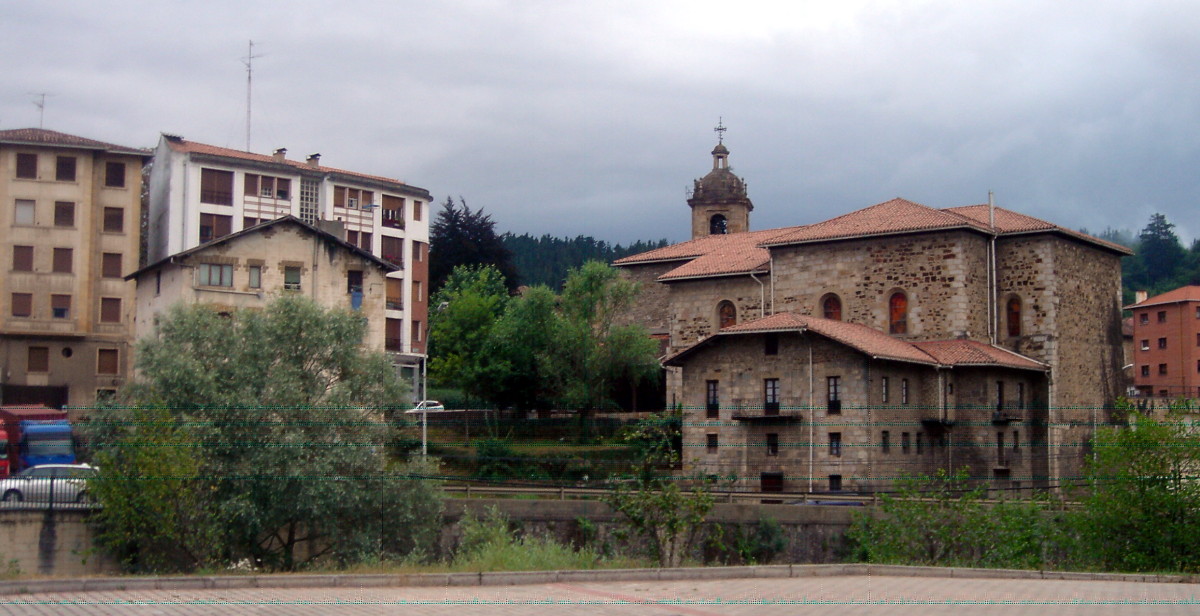
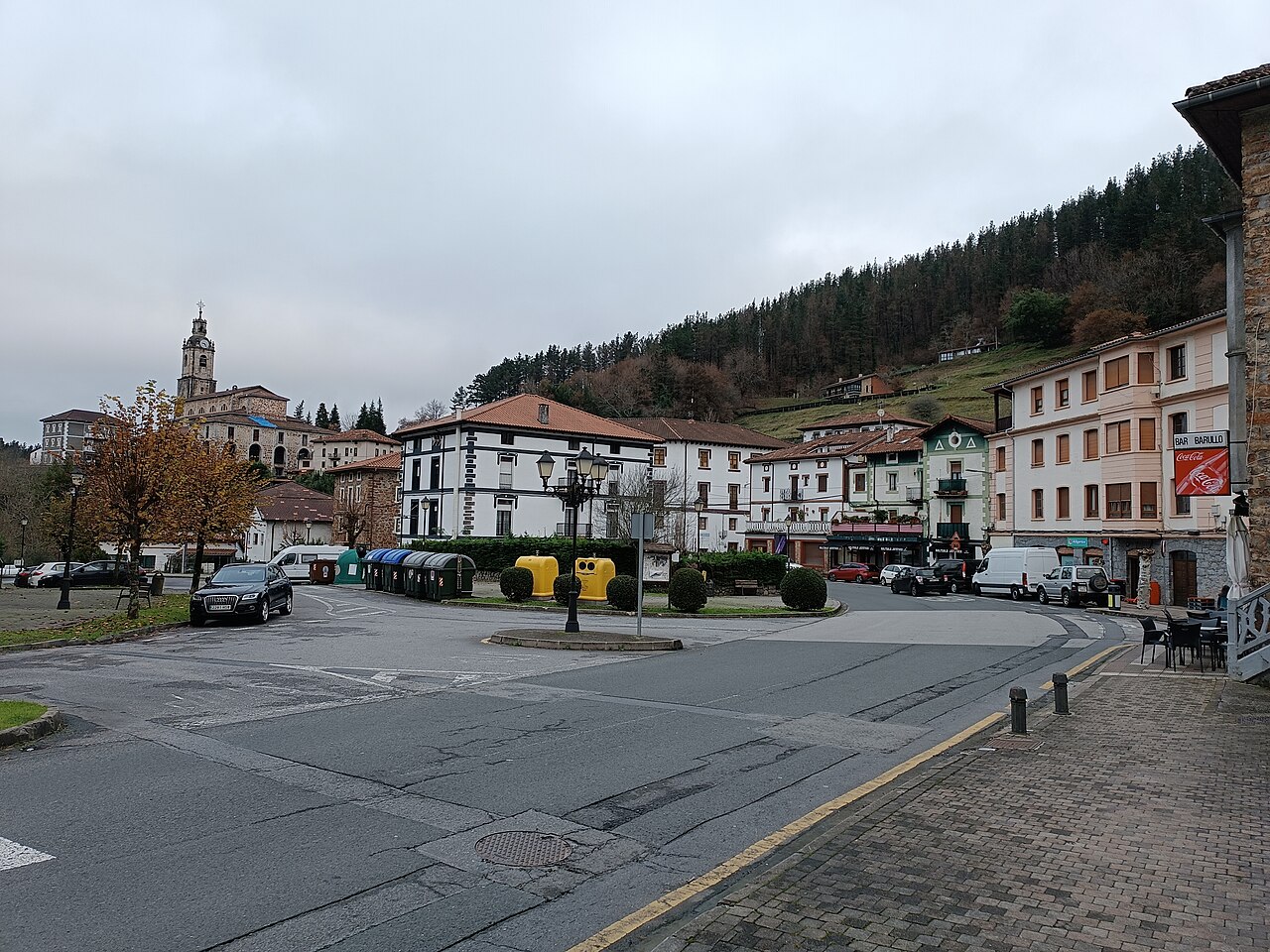
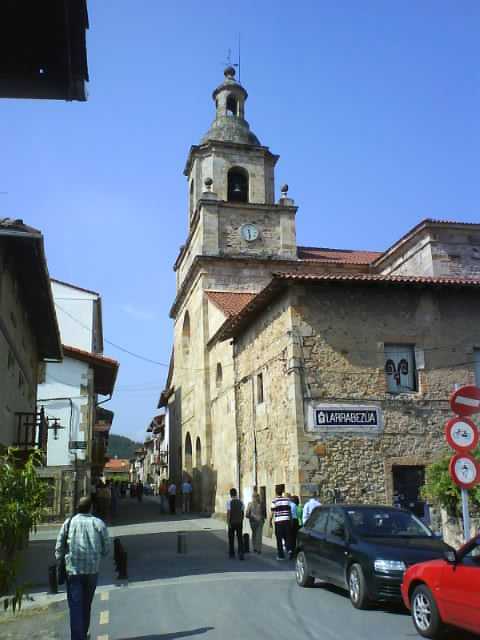
If one building gives the village its structure, it is the collegiate church of Santa María. The current construction is usually placed in the 15th century, built over an earlier church. Its dark stone and restrained lines fit naturally with the surroundings. It is not a grand or imposing temple. It feels more like something built to last quietly.
When the door is open, it is possible to step inside. The space is silent, with a broad nave and little in the way of decoration. The main altarpiece offers a sense of how local workshops worked centuries ago. No specialist knowledge is needed to notice the character of it. Everything appears solid and practical.
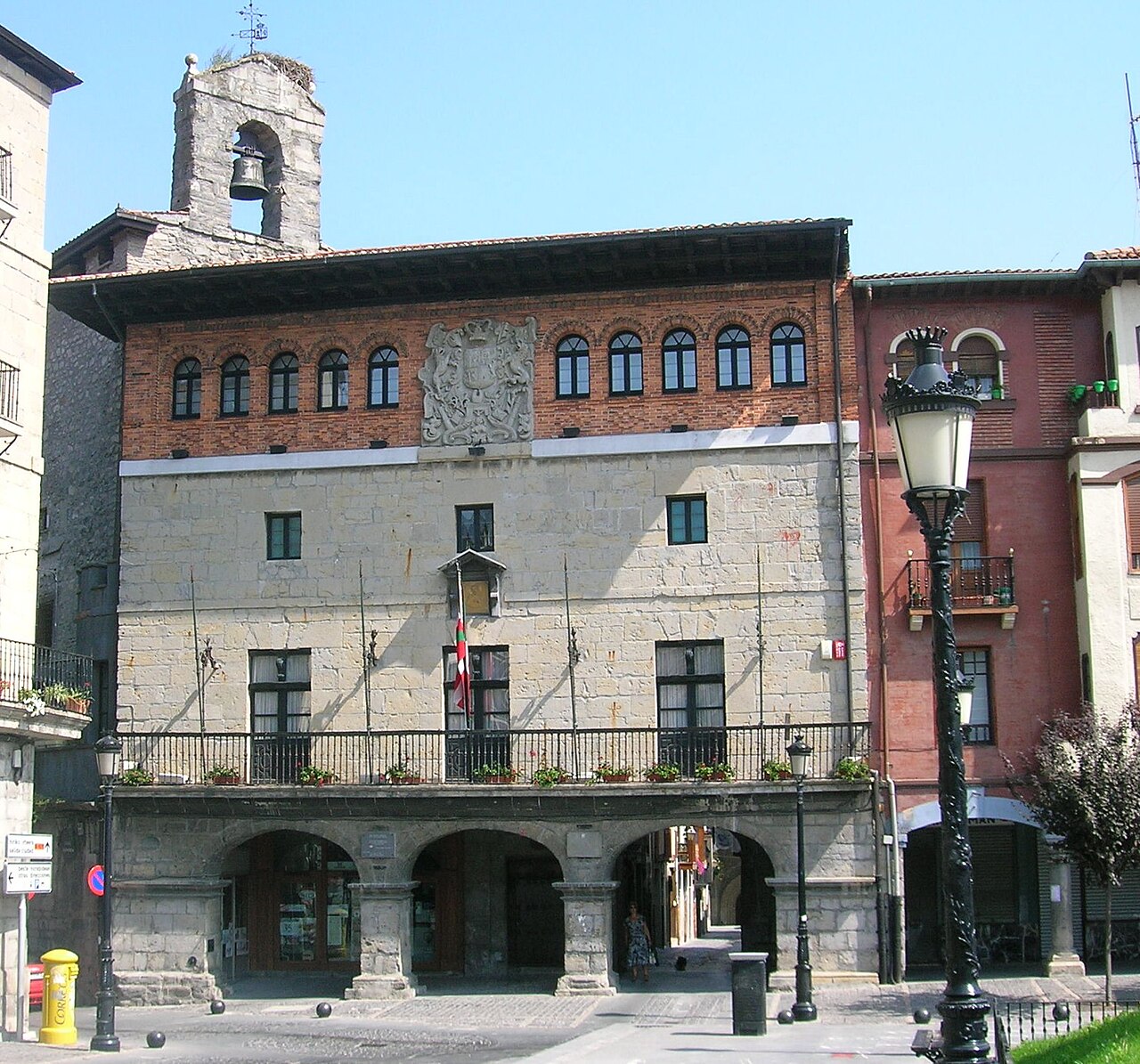
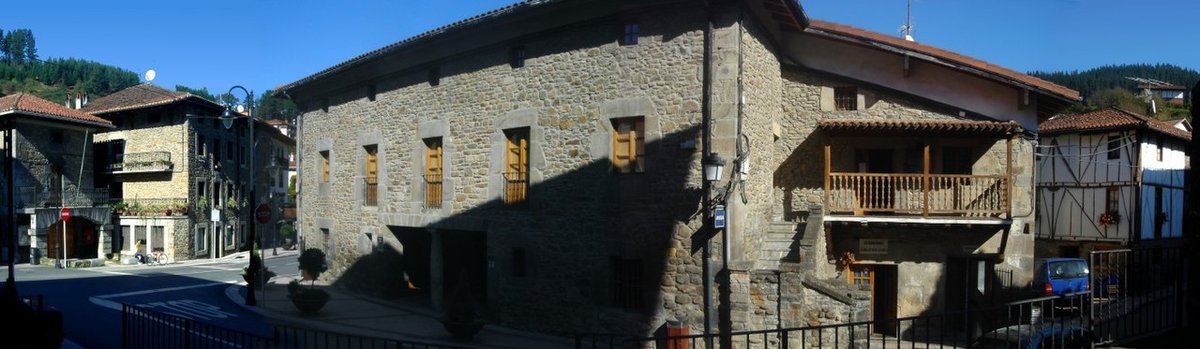
In front of the church, a small square acts as the centre of Bedia. A handful of houses stand around it, with red-tiled roofs and stone walls that have seen many winters. From here, local roads lead out towards scattered neighbourhoods spread across the surrounding meadows.
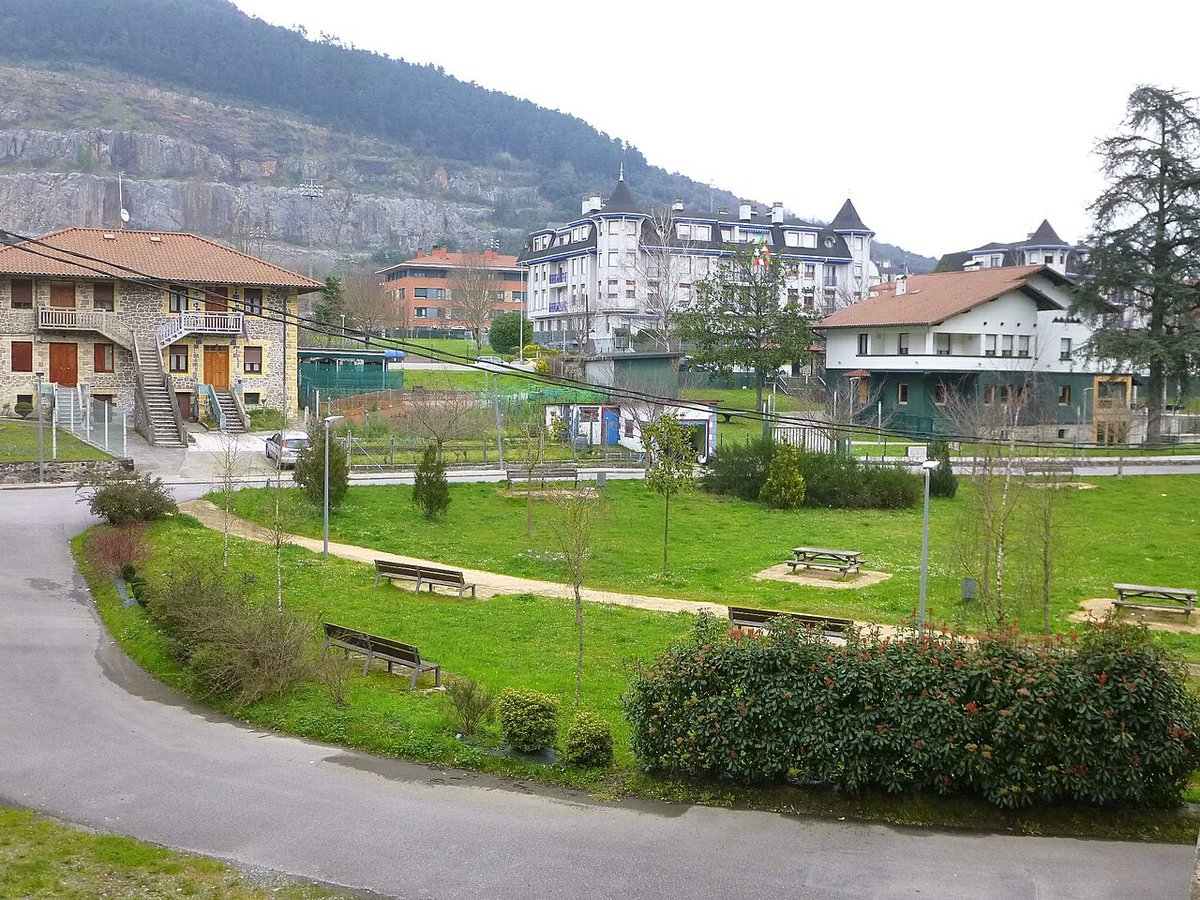
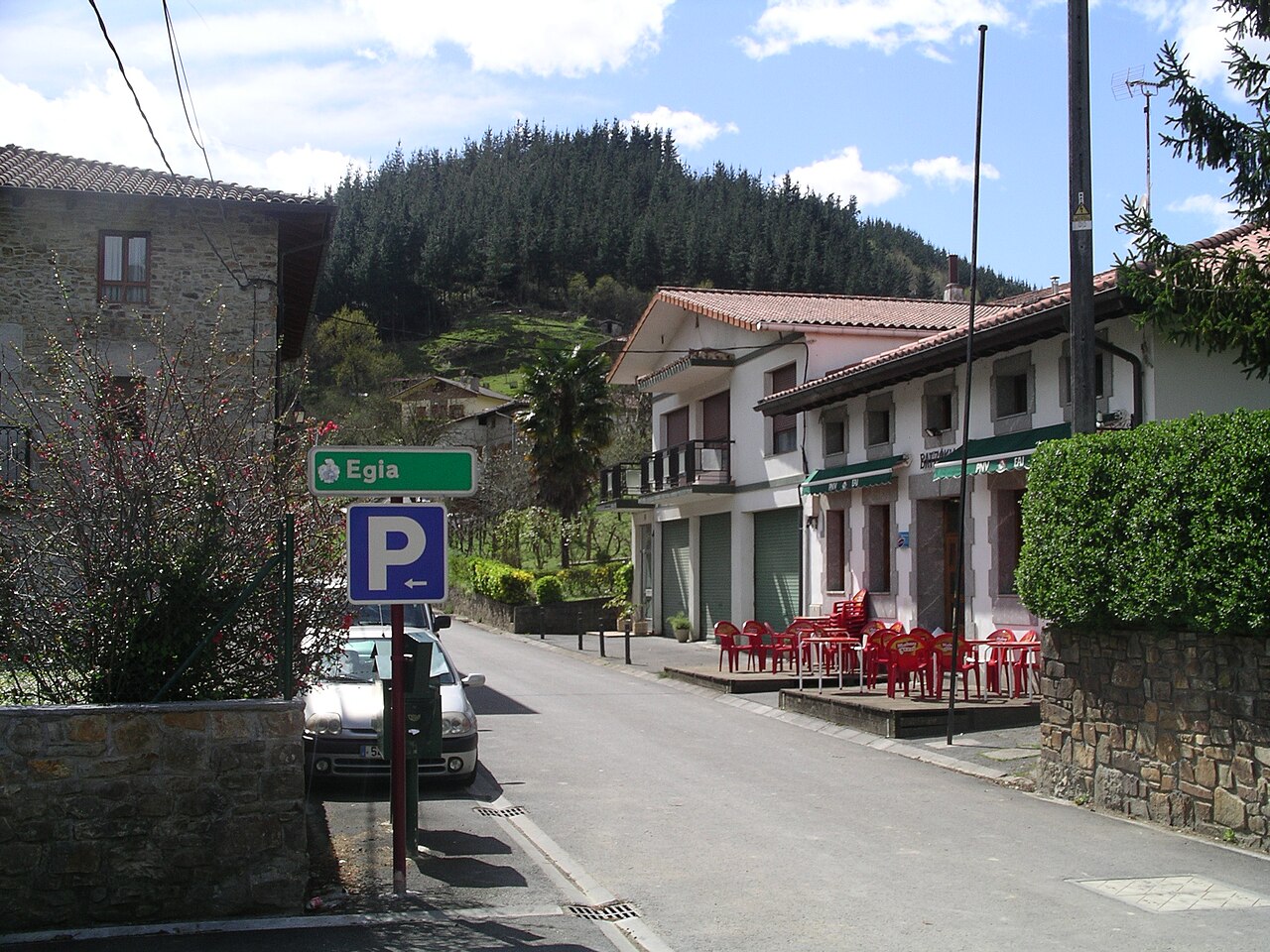
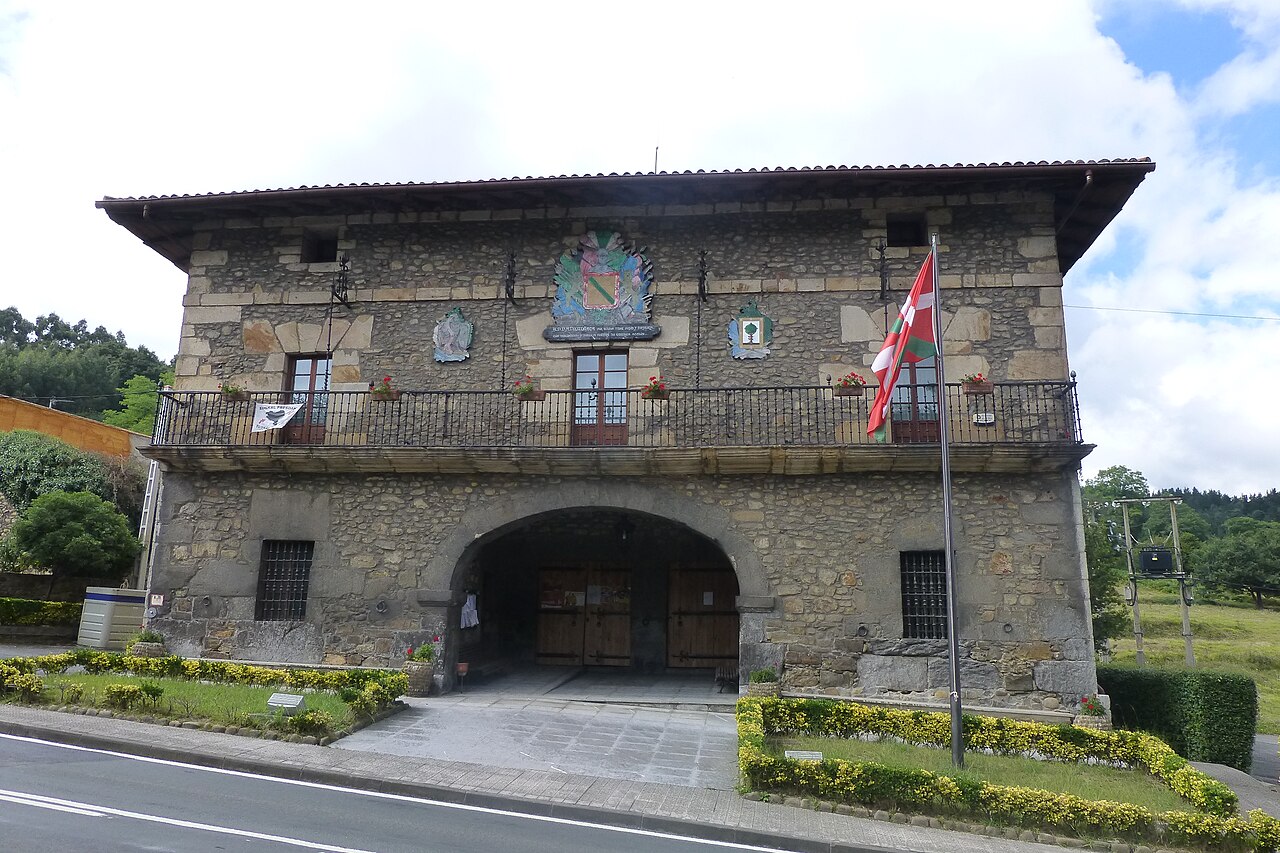
The rest of Bedia follows that same pattern. Farmhouses are set apart rather than clustered tightly together. Some have livestock nearby. Others have vegetable plots where seasonal produce still appears. There are no museums or curated spaces explaining rural life. Life here is not displayed, it simply continues.
Walking without complication
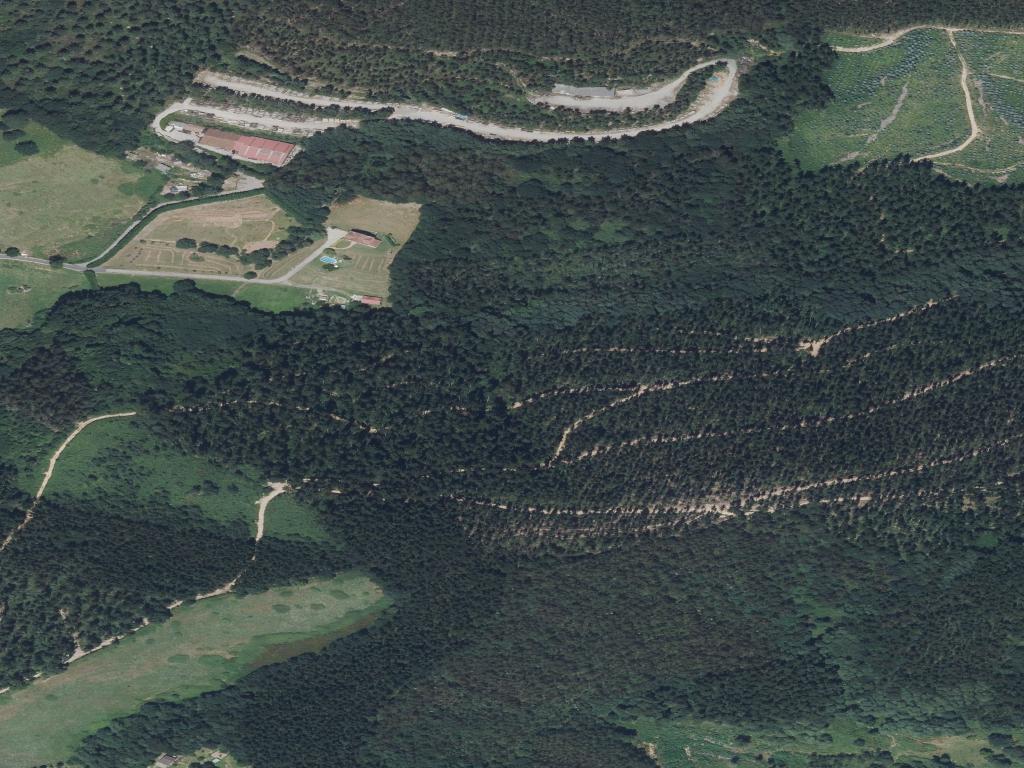
The most natural thing to do in Bedia is to head out on foot along the paths that leave the village centre. These are not demanding routes. They are short walks across meadows, along farm tracks or quiet secondary roads where traffic is light.
A gentle loop might bring encounters with free-roaming chickens, the distant sound of a tractor, or views of the valley opening towards the course of the Nervión river and a few smaller streams. These walks do not take long. In less than an hour, it is easy to cover a satisfying stretch.
Weather plays a part in how these paths feel. After rain, which is frequent in Bizkaia, some sections turn into deep mud. Light footwear is not ideal in those conditions. Walking can become a careful exercise in avoiding puddles and soft ground.
For those travelling by car, Bedia also works as a stopping point between other villages in the Arratia‑Nervión valley. From here, nearby municipalities are within easy reach, where longer routes and more mountainous areas can be found.
What to keep in mind
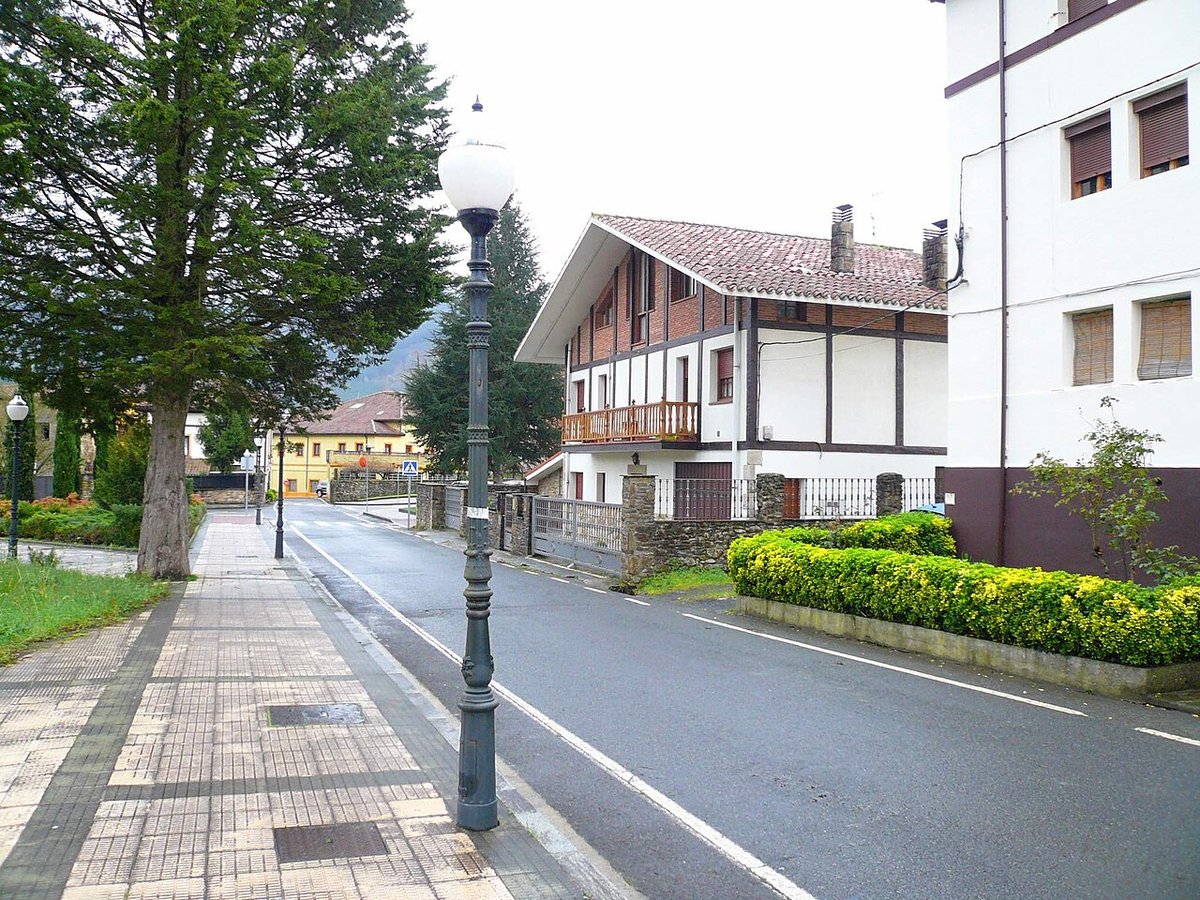
It helps to arrive with the right expectations. Bedia is not set up as a tourist destination. There are no shopping streets or sequences of historic buildings. It is a small village where people live and work.
The climate has a strong influence on any visit. After several days of rain, paths become slippery and farm tracks gather mud. In summer, temperatures are usually mild, though the changeable sky is part of the landscape throughout the year.
This is a place where conditions shape the experience. A clear day and a muddy one can feel quite different, even if the setting remains the same.
When to pass through
Spring and early autumn tend to be good moments for walking through the valley. The countryside is green, and the air has more movement than during the still days of winter.
Even so, Bedia can be understood in any season. Low cloud or mist does not take away from it. If anything, it reinforces something typical of valleys in Bizkaia: damp meadows, nearby hills and a quiet that settles in when traffic is far away.
How long to spend
Bedia is quick to see. If you are passing through, a walk around the square by the collegiate church and a short wander into the surrounding paths are enough to form a clear impression.
With more time, it is easy to extend the walk along rural tracks and then continue exploring the valley. It suits those brief stops during a journey that turn out to be the most rewarding part of the day. You stretch your legs, take in the surroundings for a while, and return to the car with the sense of having seen something unvarnished and real.