Full Article
about Ugao (Miravalles)
Valleys and hamlets a stone’s throw from Bilbao, buzzing with local life.
Hide article Read full article
A slow morning by the Nervión
Tourism in Ugao begins early, when the town is still half quiet and the only constant sound is the Nervión moving past with its dark water. On some days, stalls appear in the square and the air fills with the smell of fresh bread and vegetables still damp from the rain. Euskera is heard between the crates, conversations unhurried, far removed from the pace of nearby cities. An older man counts coins slowly while a child bites into something just fried, still too hot.
Ugao, also labelled Miravalles on many maps, sits tucked into the valley a few kilometres from Bilbao, though it follows a different rhythm. The mountains close in more tightly here, and morning light arrives later, filtered by the surrounding slopes.
The station and the shape of the valley
The railway station still marks one edge of the town. The building is restrained, from another era of rail travel, when the Nervión valley functioned as a corridor for industry, with minerals and goods moving up and down towards Bilbao. At certain moments, the train is heard before it is seen, a low hum that bounces between the hillsides.
From the station, a short walk leads to the Usila bridge. Its mix of stone and iron crosses the river with a sense of calm that contrasts with the water below when it runs high. In winter, the Nervión tends to flow dark and fast, and the sound of water striking the pillars carries along the riverside path.
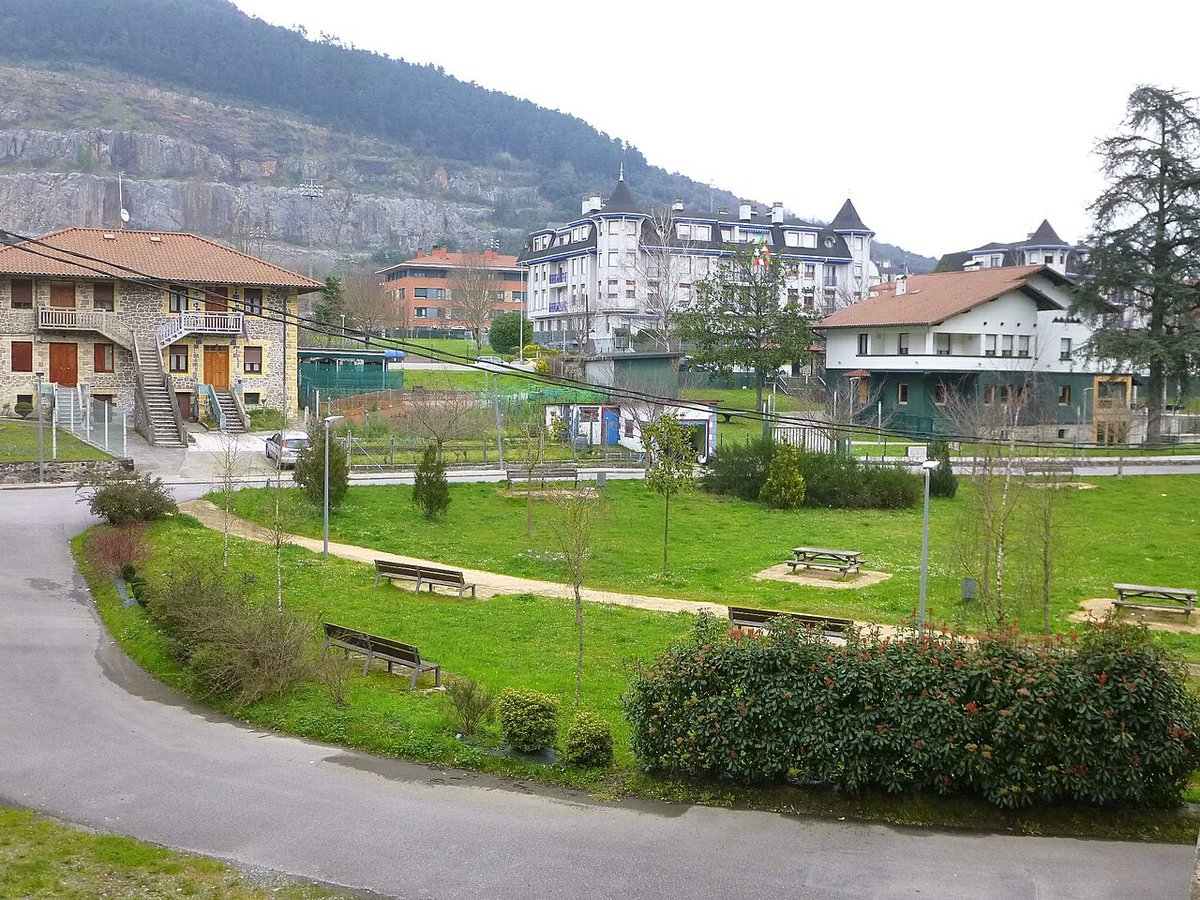
It is a place that invites a pause. The valley opens out: low houses, small vegetable plots, and the railway line tracing the river’s course.
Marks left on the hillsides
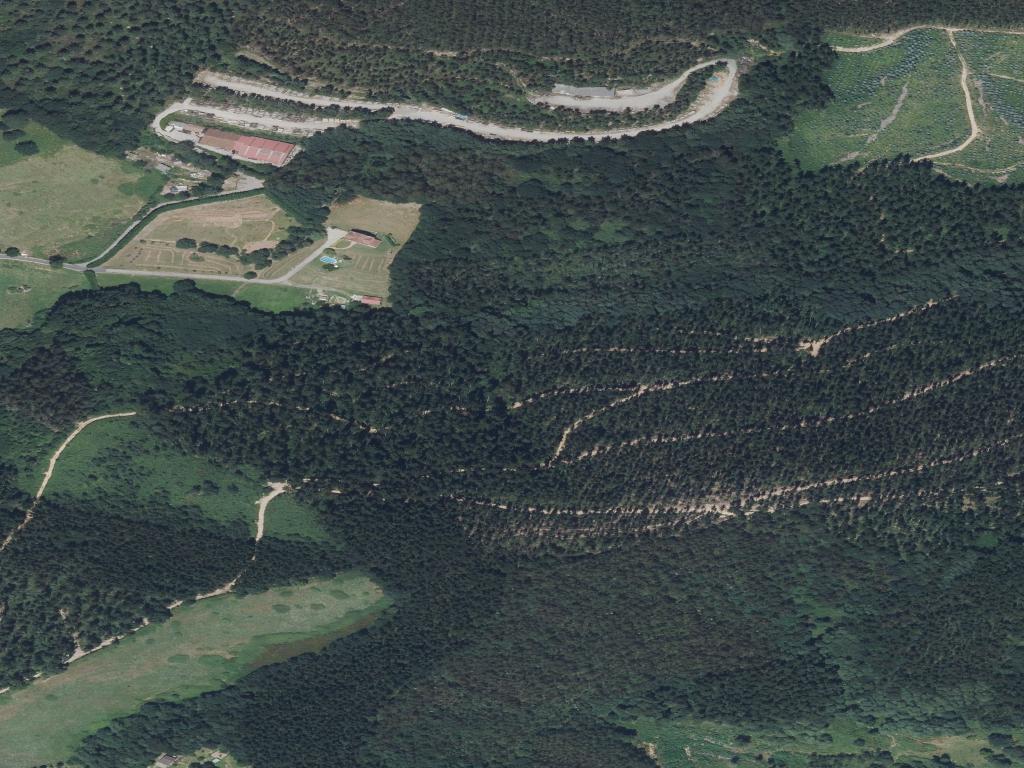
On the slopes around Ugao, traces of defensive positions linked to the Iron Ring remain. This system of fortifications was built to protect Bilbao during the Spanish Civil War. They are not always easy to spot. Some look like simple earth embankments or low walls covered in moss.
Walking uphill towards the higher neighbourhoods, among houses and gardens, one of these fortifications appears. Through its openings, the entire valley comes into view: the river, the compact town pressed close to the road, and the mountains closing off the horizon.
Foggy mornings are common. The town disappears beneath a white layer, leaving only the highest rooftops visible. When the sun lifts the mist, the landscape suddenly becomes clear and the strategic position of Ugao makes sense at a glance.
San Bartolomé and the centre of town
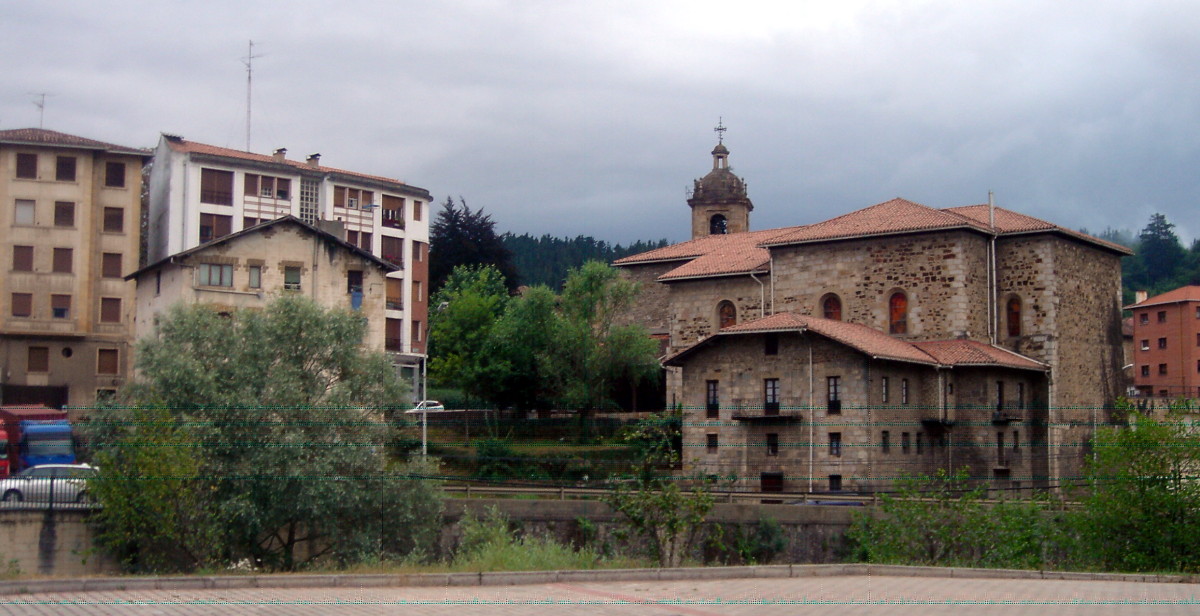
The church of San Bartolomé stands above the old centre on a small rise. Local tradition places the origin of the town in a founding charter granted in the 14th century, linked to the infante Don Juan. Since then, the church has grown and been altered over time.
Inside, the passing centuries are easy to read: dark wood, cold stone, and a gilded altarpiece whose shine is no longer even. Some areas have dulled, while others, restored, catch the light more brightly than the rest.
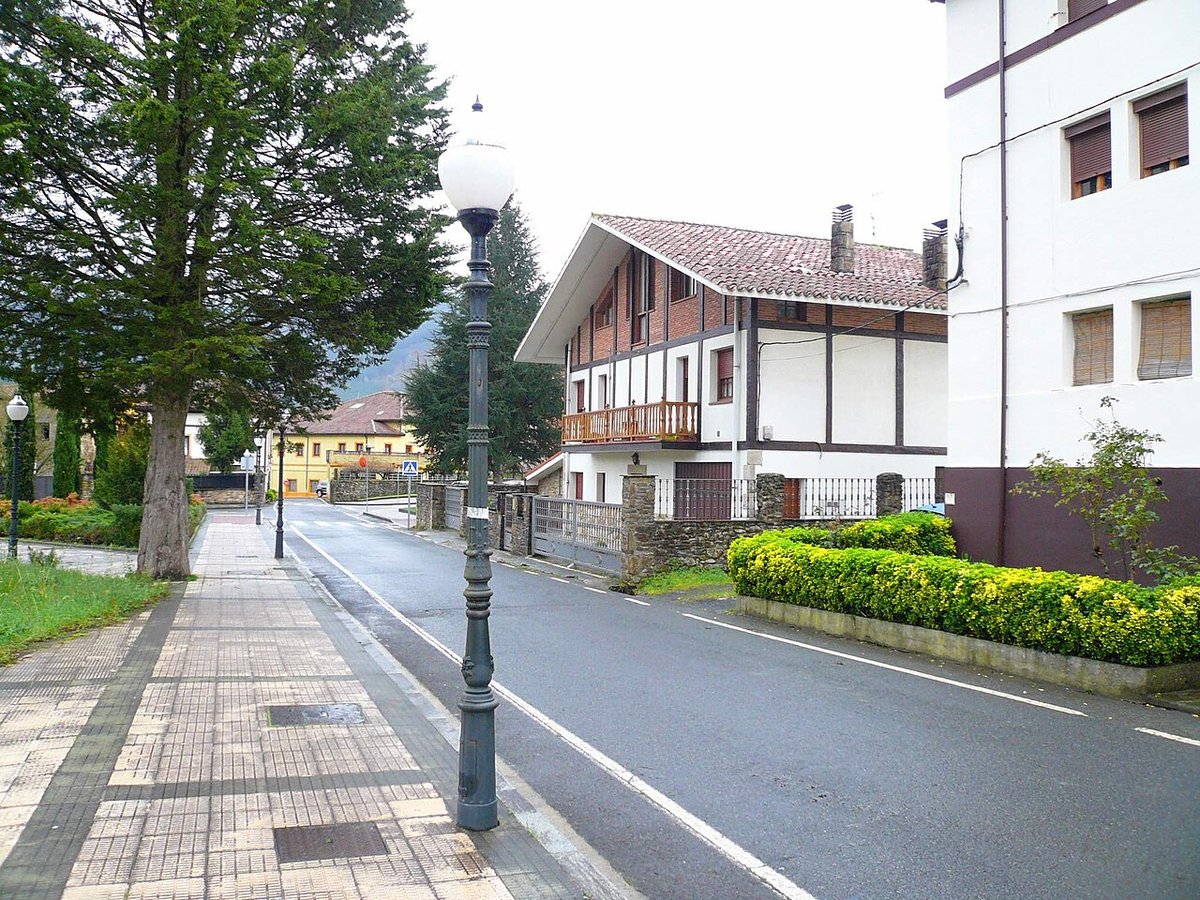
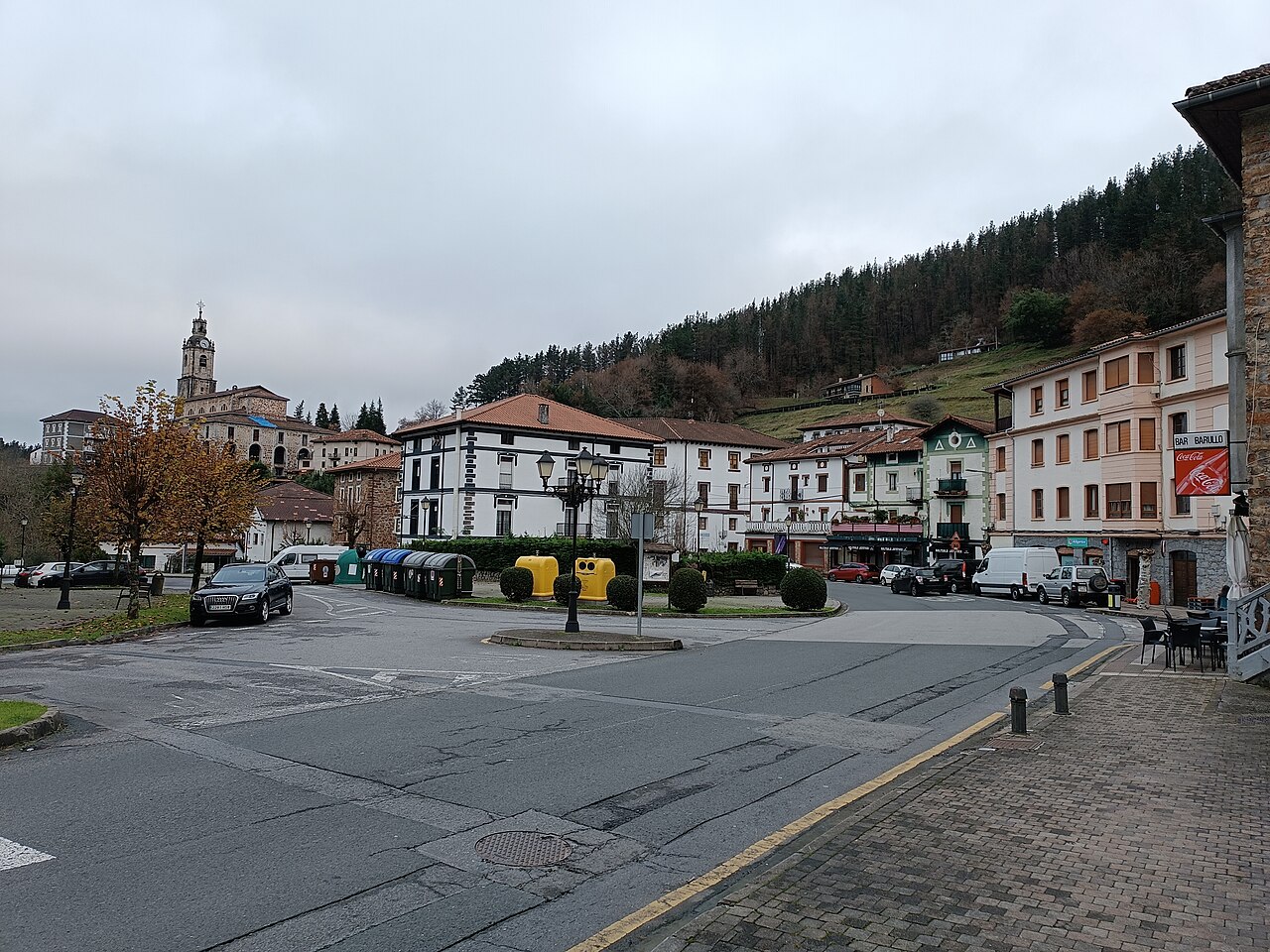
From the atrium, the centre of Ugao spreads out below. The streets are short, houses are close together, and the steady sound of cars moving through the valley is never far away.
At the end of August, the festivities of San Bartolomé take place. The atmosphere gathers around the square and the frontón, the traditional Basque court used for pelota, a fast-paced ball game played against a wall. Food is eaten in the street, and matches are played before or after religious events. The smell of chorizo and cider mixes with the incense drifting out from the open church doors.
Everyday cooking
Ugao does not revolve around a single dish that appears in every guide. Cooking here is closer to what is found in many homes in inland Bizkaia: slow stews, potatoes, peppers, eggs, and bread used to finish what remains on the plate.
Potato omelette, tortilla de patatas, appears on most bars’ counters by mid-morning. It is usually soft in the centre, with well-cooked onion and large pieces that barely hold together when cut. By then, the town is already in motion. People arrive from the train, neighbours pause briefly before continuing with their day.
When to go and what to expect
During the week, the pace of Ugao is easier to understand. In the late afternoon, as the light drops into the valley, the square fills with children and the sound of conversations spills out from open doorways.
Summer weekends bring a noticeable change. People arrive from surrounding areas, and the shift is felt quickly in a place of this size.
Rain is common for much of the year. It rarely falls heavily. Instead, it settles in for hours, fine and steady. When it stops, the smell of damp earth rises from the riverbanks and chimneys begin to release thin streams of smoke.
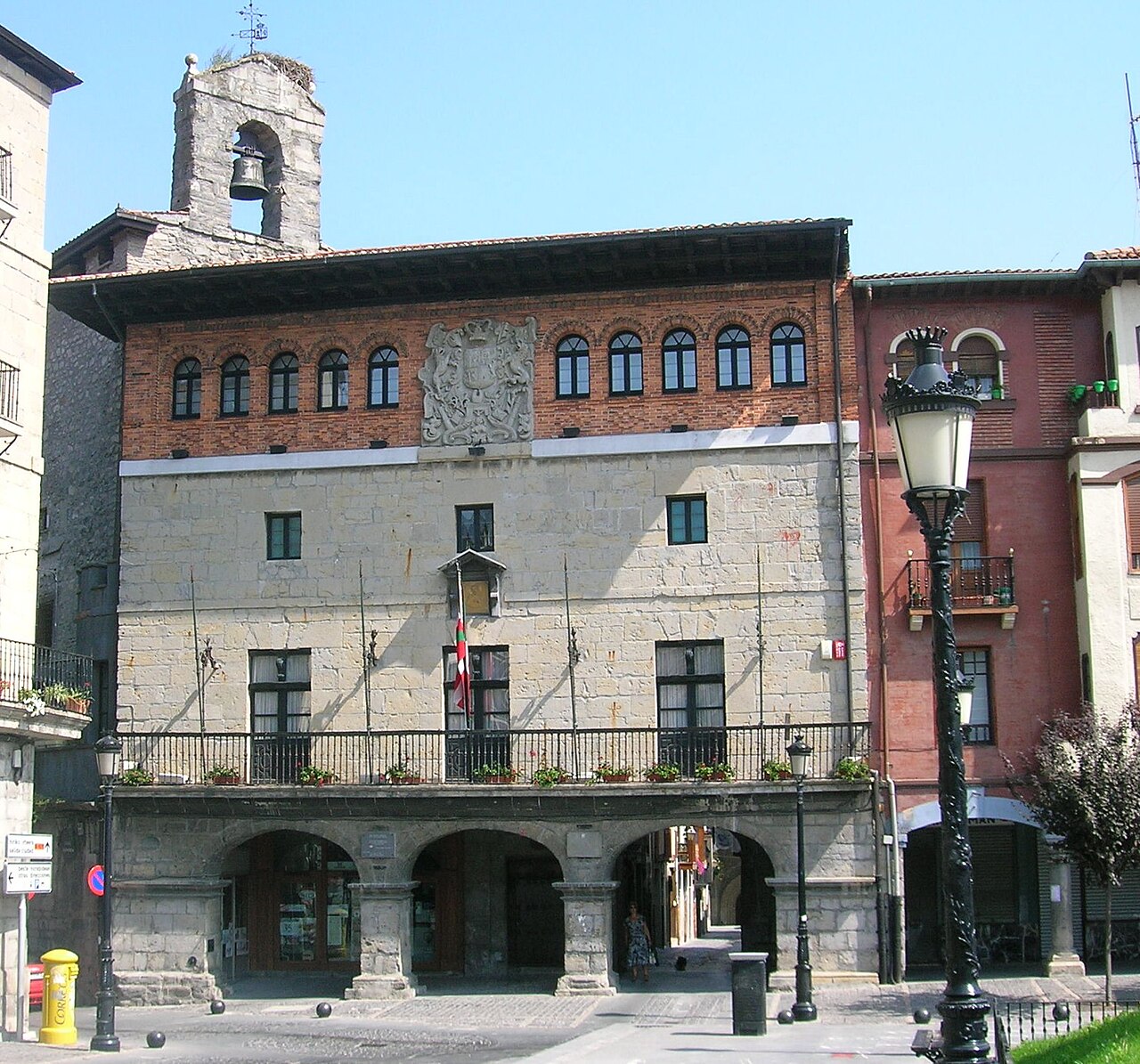
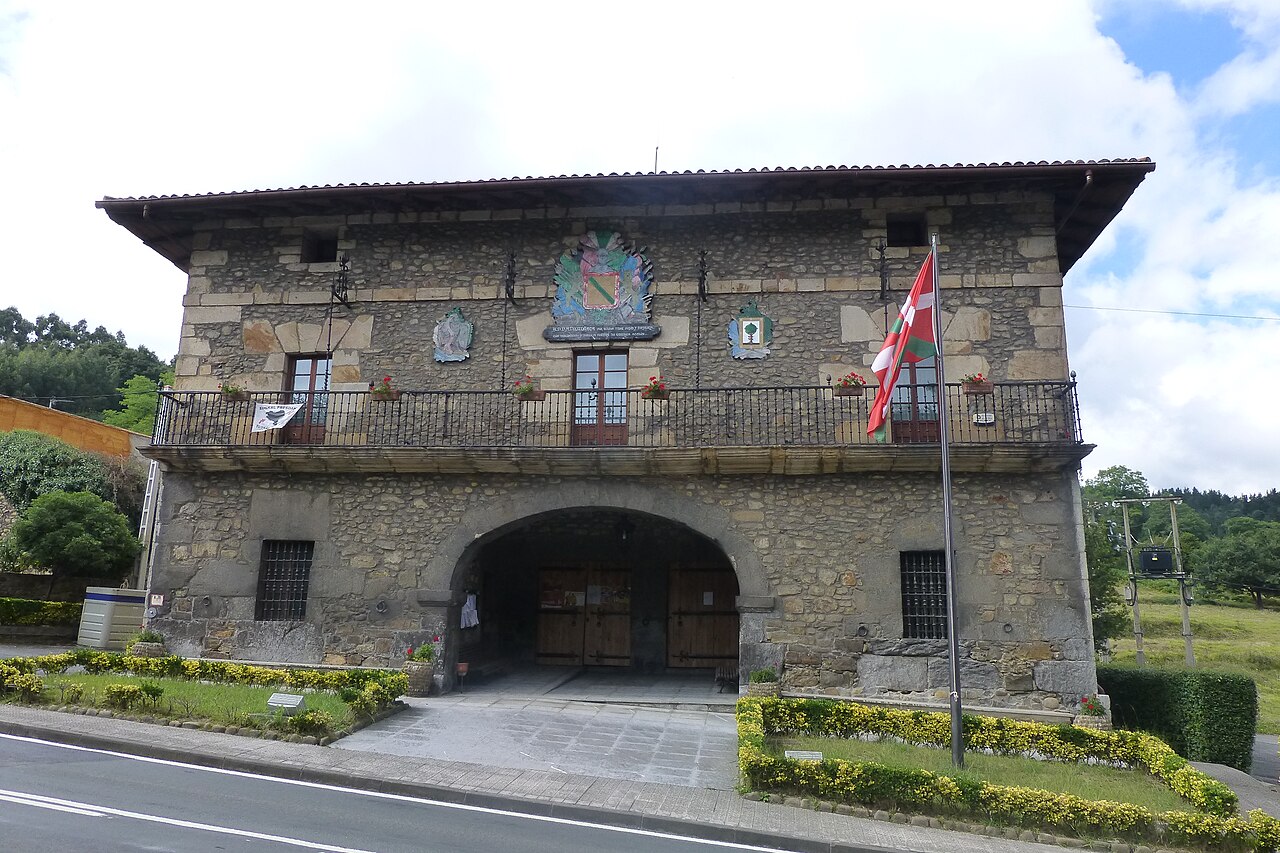
In one of the municipal buildings in the centre, a small space is dedicated to local history. It preserves documents linked to everyday life in the town, including an old system said to have been used to choose certain positions: several names placed inside a container, with chance deciding the outcome. The wooden urn is still there, its lid slightly warped by time and use.