Full Article
about Urduña (Orduña)
Valleys and hamlets just outside Bilbao, full of local life.
Hide article Read full article
Where the train leaves you
The wind from the plateau pushes through the gorge and hits straight on as soon as you step off the train. It is nine in the morning, the platform at Urduña is almost empty, and the sound of sparrows feels louder than expected for a station. The stone of the building keeps that golden tone that only comes with clear mornings. The town begins almost immediately, without any transition: cross the road and you are already heading towards the historic centre.
There is no slow introduction. No outer ring easing you in. One moment you are at the station, the next you are walking into streets that feel older, more contained, already shaped by the slope beneath them. It sets the tone for everything that follows.
The town that should not be here
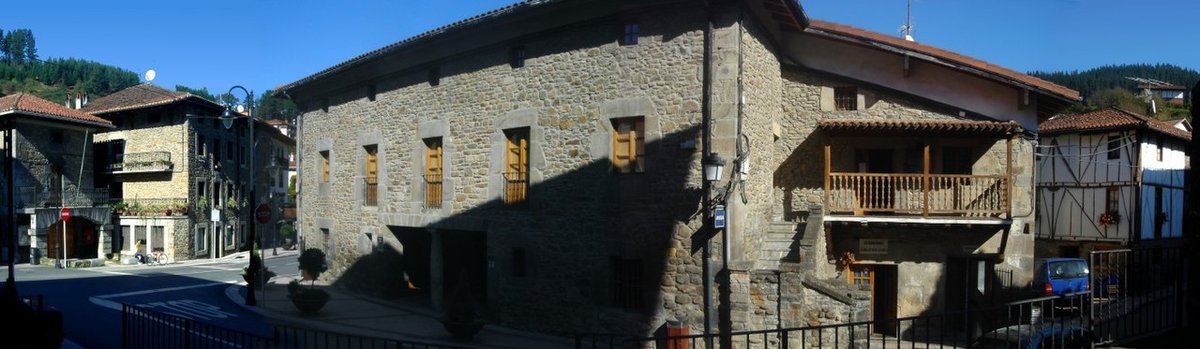
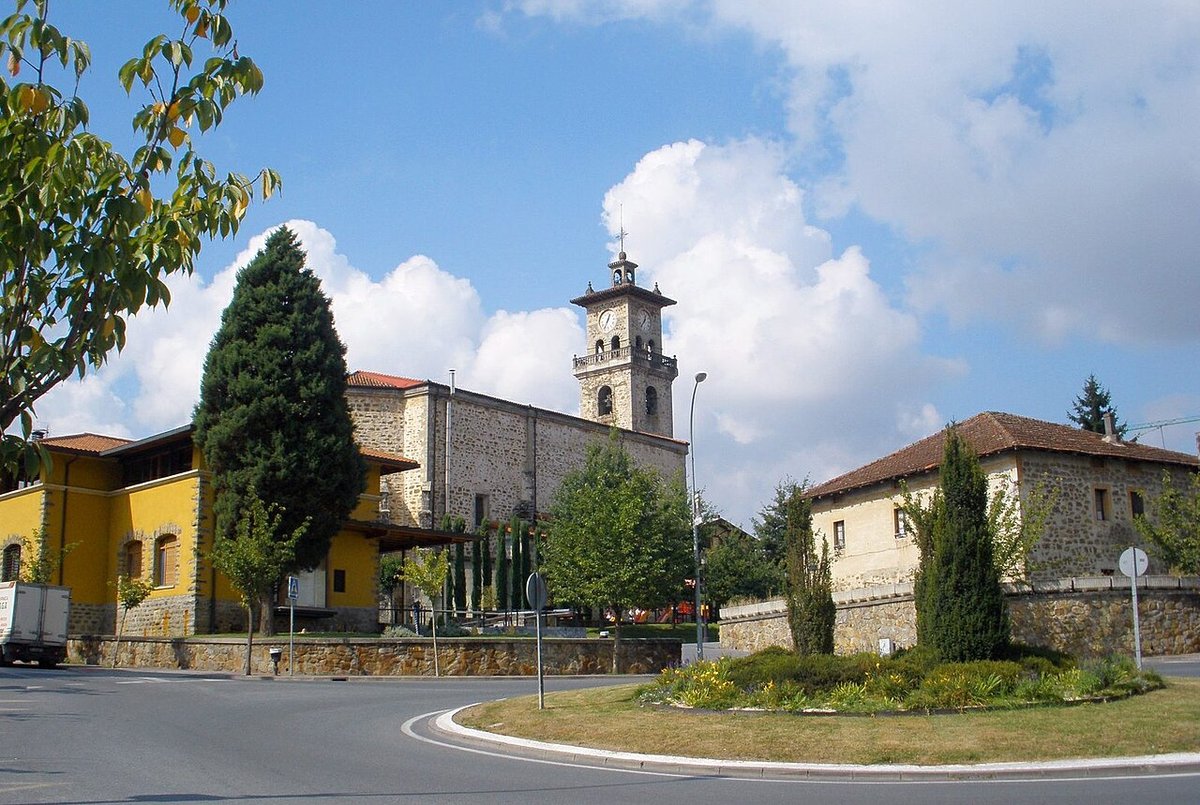
Five minutes on foot are enough to realise how unusual this place is. Urduña appears as a compact cluster of houses on a hill, surrounded by land that belongs to Álava and, a little further on, Burgos, even though administratively it is part of Bizkaia. It is the kind of location that makes you check the map twice.
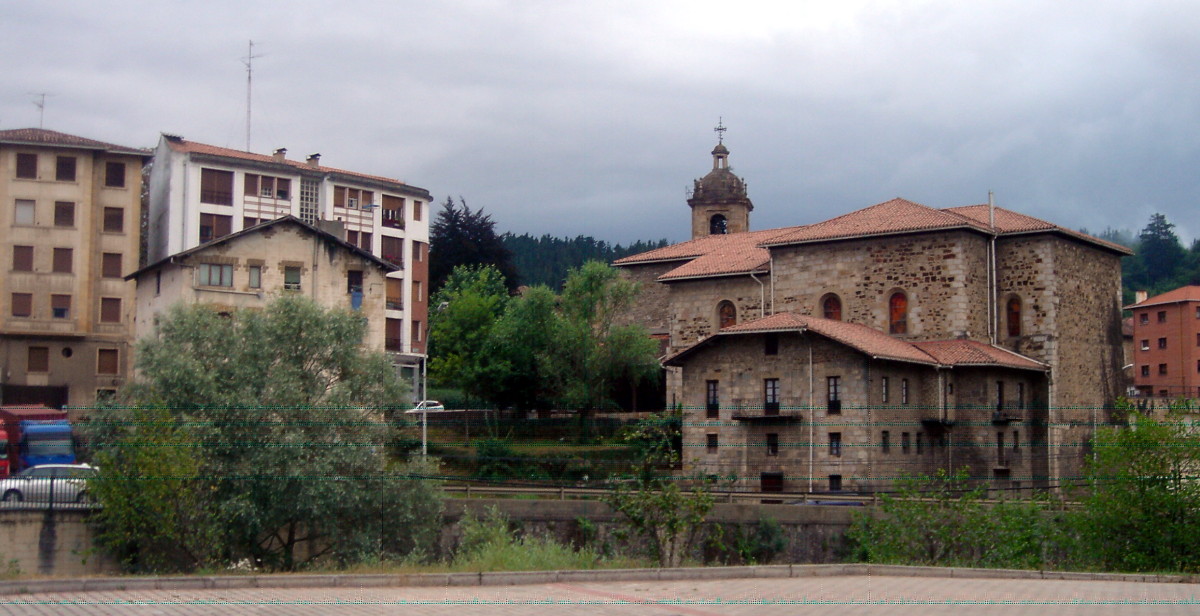
The streets climb directly upwards, with gradients that make themselves felt in your calves. At the top, sections of the medieval wall still cling to the hillside. It is not a continuous structure, but there is enough to walk along parts of it and get a sense of how the town was once defended. The parapet reaches roughly waist height, and from there the valley opens out suddenly: fields shifting colour with the seasons, low clouds moving quickly when the wind blows in from inland.
That sense of exposure is constant. Everything seems arranged around the edge, around what can be seen from above. Even without knowing the history in detail, the position explains itself.
The smell of wood-fired ovens
Around midday, the air changes. The scent of firewood begins to mix with that of roasting lamb. There are no signs pointing it out. It is enough to look up and notice the smoke rising from a few chimneys. In Urduña, the wood-fired oven is still part of long Sundays.
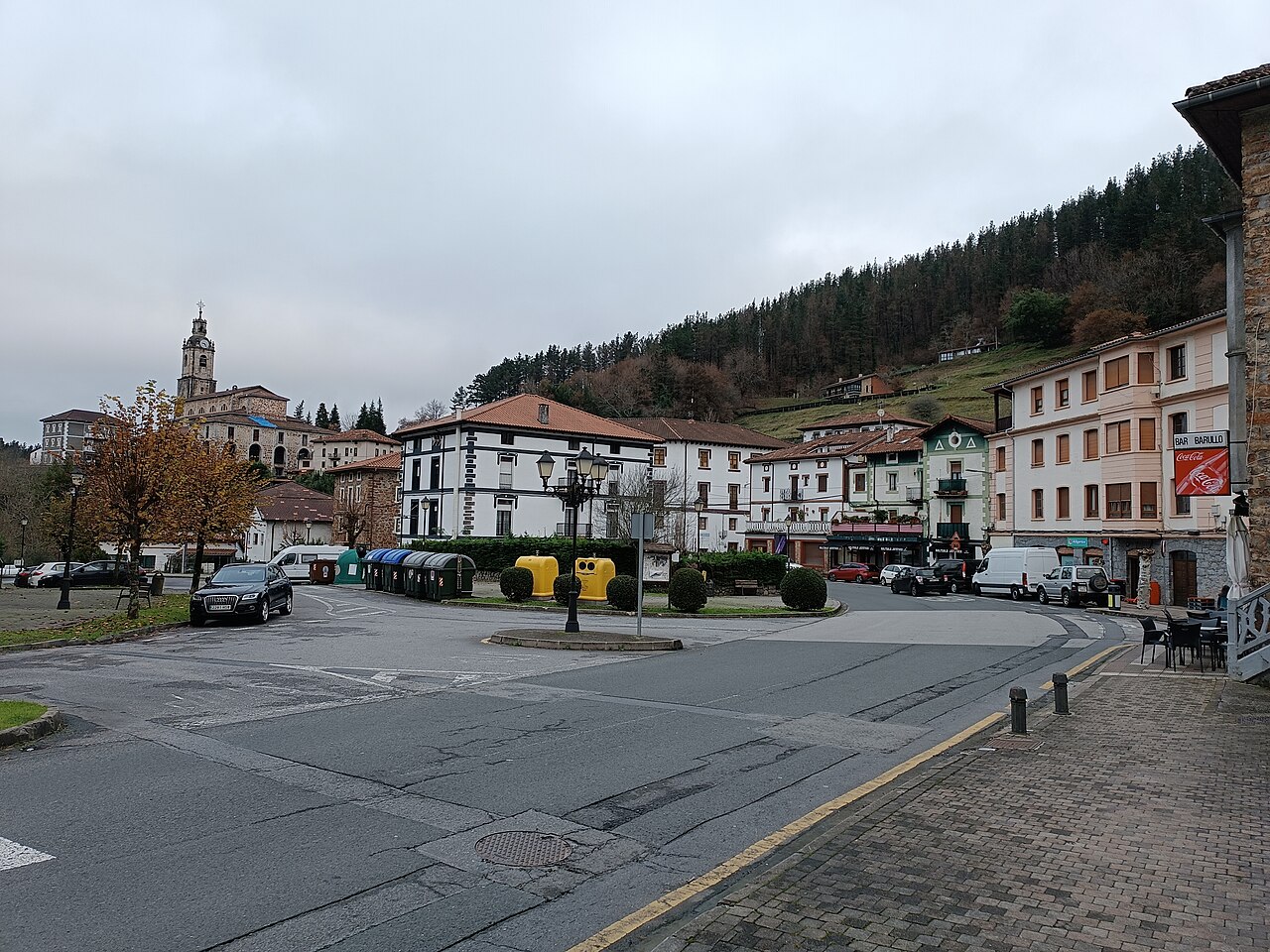
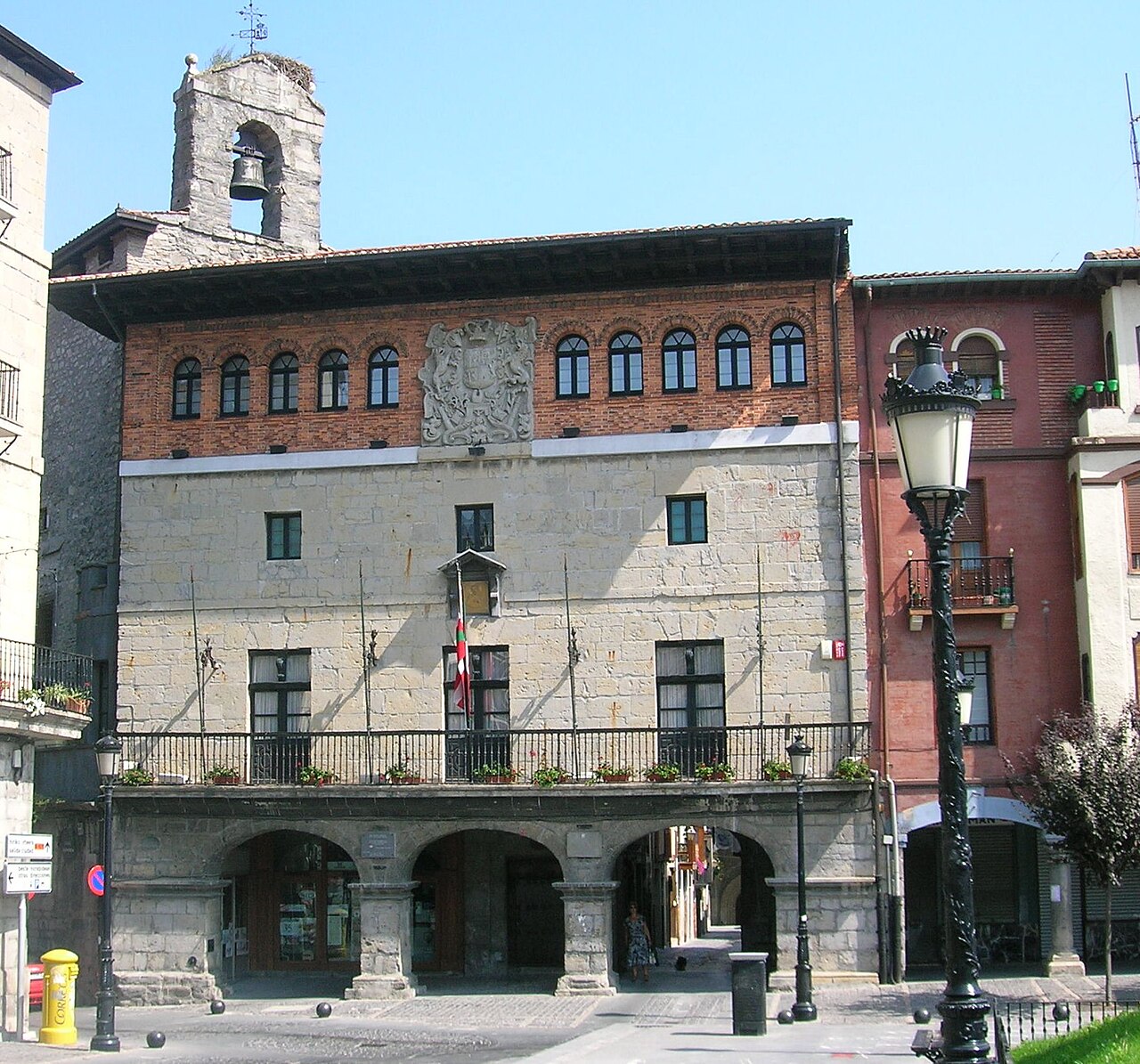
Plaza de los Fueros acts as a meeting point. It is one of the few completely flat spaces in the historic centre, and it fills with groups of friends, families, and conversations that move easily between Euskera, the Basque language, and Spanish. No one seems to think about the switch; it simply happens.
From time to time, someone mentions the Santuario de la Antigua, set on top of a nearby hill. From there, the entire valley can be seen. Inside, according to local accounts, there is an old carving of the Virgin that has been linked to the town for centuries. It is one of those references that circulates naturally in conversation, as if the place remains present even when it is out of sight.
When the fog takes the valley
There are afternoons when fog rises from the bottom of the valley and becomes trapped around the hill. At those moments, Urduña looks like a stranded ship in the middle of a cloud. Roofs stand out, along with the church tower, and little else.
Sound shifts as well. Footsteps on stone carry further, and the water running through the gorge seems closer. It is a good time to walk towards the section of wall behind the Palacio de los Velasco. If the sun has been out in the morning, the stone still holds a trace of warmth.
From that edge, the station can be seen below, small in scale, and the railway line entering and leaving the tunnel. Looking out across the valley pass, it becomes easier to understand why this place held strategic importance at different moments in history. Whoever controlled this point was watching over a natural route between the plateau and the interior of Bizkaia.
Nothing about it feels exaggerated. The geography does the explaining.
The moment to head down
By evening, the wind usually eases. Street lamps cast a yellowish light over the cobbled streets, and the historic centre becomes noticeably quiet.
Walking back down to the station is little more than a gentle descent. The platform carries the smell of damp grass and the treated wood of the sleepers. The train connecting to Bilbao runs several times a day, so there is little need for careful timing. It is enough to sit for a while on the bench and watch the track disappear into the tunnel while, above on the hill, Urduña settles into silence.
Getting there and when to go
There is a direct train from Bilbao to Urduña, something not especially common for a town of this size. During the week, the atmosphere is fairly calm. At weekends, especially in good weather, quite a few day-trippers arrive.
In winter, it is worth coming prepared for the cold. The wind that descends from the plateau enters through the gorge and cuts through the streets without warning. It is more noticeable here than in other nearby towns.