Full Article
about Hondarribia (Fuenterrabía)
Cantabrian Sea, cliffs, and seafaring flavor in the heart of the Basque Country.
Hide article Read full article
A town made for walking
Tourism in Hondarribia is, above all, about walking. The historic centre is compact, and a car quickly becomes a nuisance. The simplest approach is to park outside the walls and head in on foot. San Sebastián Airport sits just across the river and quite close; many people arrive from there by walking for a few minutes.
Summer calls for an early start. By mid-morning the access points to the old quarter fill up, and finding somewhere to leave the car becomes difficult.
Inside the walls
Driving into the historic centre rarely works well. Streets are narrow, residents come and go, and space is limited. Leaving the car outside and walking up one of the പ്രവേശ ramps is far more practical.
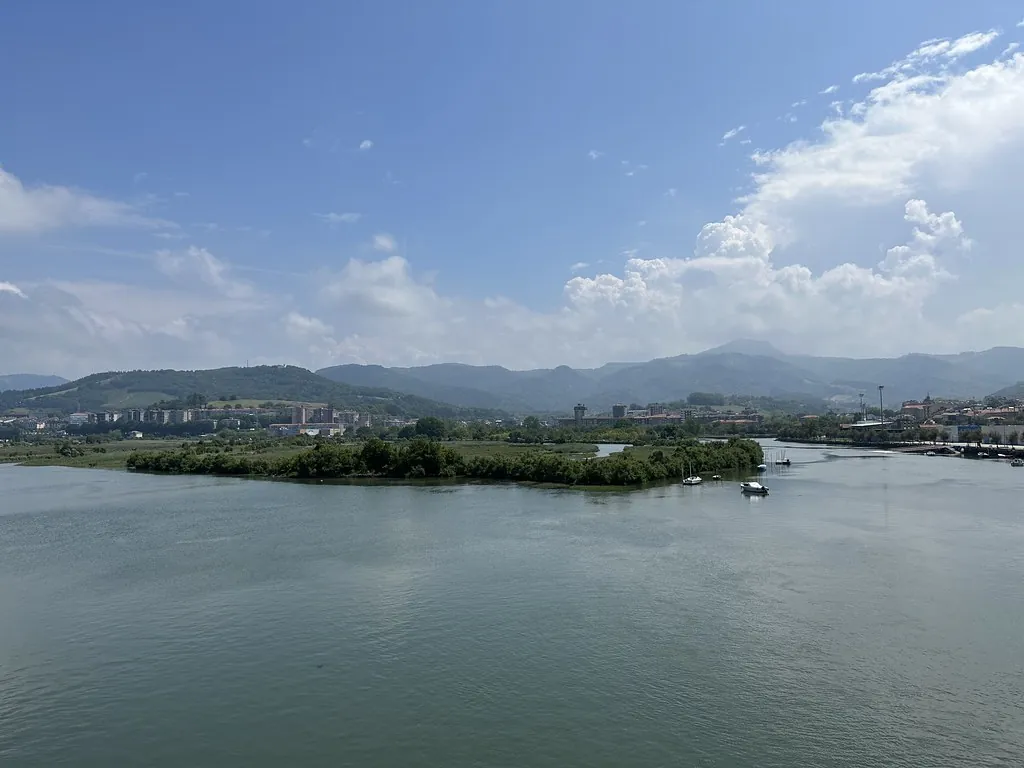
The wall encloses the entire old town. A short walk runs along its edge, with stops at the bastions. From there you can look out over the Bidasoa and see Hendaya directly opposite, across the border in France. The contrast is clear: taller blocks on that side, lower houses and red roofs on this one.
Inside, the layout is simple, almost a grid. There is little need for a map. Plaza de Armas acts as the centre, with arcades, the town hall and a steady flow of people, especially at weekends.
The church of Santa María stands right beside the wall. The current building dates from the late Middle Ages, although it has been rebuilt more than once. The area has seen repeated sieges over the centuries, which explains some of those changes.
At one corner of the enclosure sits the old castle, now used as a public hotel. Its thick walls dominate the square. Some accounts say that Garcilaso de la Vega passed through here during imperial campaigns, although it is not always clear which parts of that story can be confirmed.
Eating without wasting time
Hondarribia has a strong food culture, though it is not a cheap destination. The old town is packed with bars serving pintxos, the small bites typical of the Basque Country, and there are usually people around at any hour.
Certain dishes appear again and again in the area: txangurro gratinado, kokotxas in green sauce, and grilled fish. Portions are rarely small, so sharing tends to be the norm.
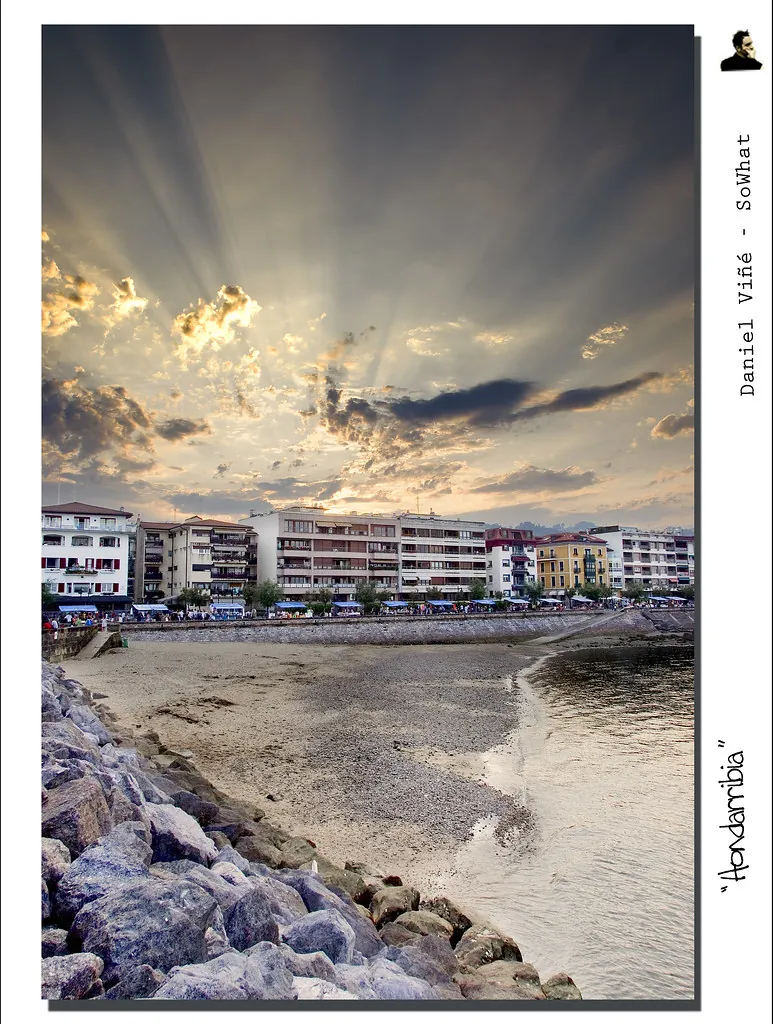
If the historic centre feels too crowded, the Marina district offers an alternative. Colourful houses and arcades line the streets, and many places to eat and drink are concentrated here. The atmosphere is usually more relaxed in the evening.
Jaizkibel above, the coast below
For those who want a longer walk, Monte Jaizkibel rises above the town. Wide tracks start from the outskirts and make the climb manageable without much difficulty. Allow several hours to go up, take in the views and return.
From the top, the geography becomes clear. You can see the mouth of the Bidasoa, the coastline stretching along Gipuzkoa, and, on a clear day, a large part of the western Pyrenees.
A calmer option follows the coast towards Cabo Higuer. The path passes Hondarribia beach and continues on to the lighthouse. The terrain is easy and mostly flat.
The beach itself is wide, with rather coarse sand. The water here is rarely warm, even in August.
When to come, and when to avoid
August is the busiest month. Visitor numbers rise, traffic slows on the approaches, and accommodation prices go up.
In early September, the Alarde takes place, a traditional parade that is very well known in the town. Streets fill from early in the day, and moving around the historic centre becomes complicated.
Outside the main season, everything changes. Winter can bring very quiet days, with winds from the Cantabrian Sea pushing into the estuary and fewer places open.
A simple plan
Hondarribia can be seen in a single day without rushing. Park outside, enter through the walls, walk through the old quarter, then head down to the Marina.
With more time, extend the walk to Cabo Higuer or make your way partway up Jaizkibel.
One thing is clear: trying to drive into the historic centre is not worth it.