Full Article
about Irun
Between mountains and sea, Basque tradition and good food in every square.
Hide article Read full article
A city that never quite stops
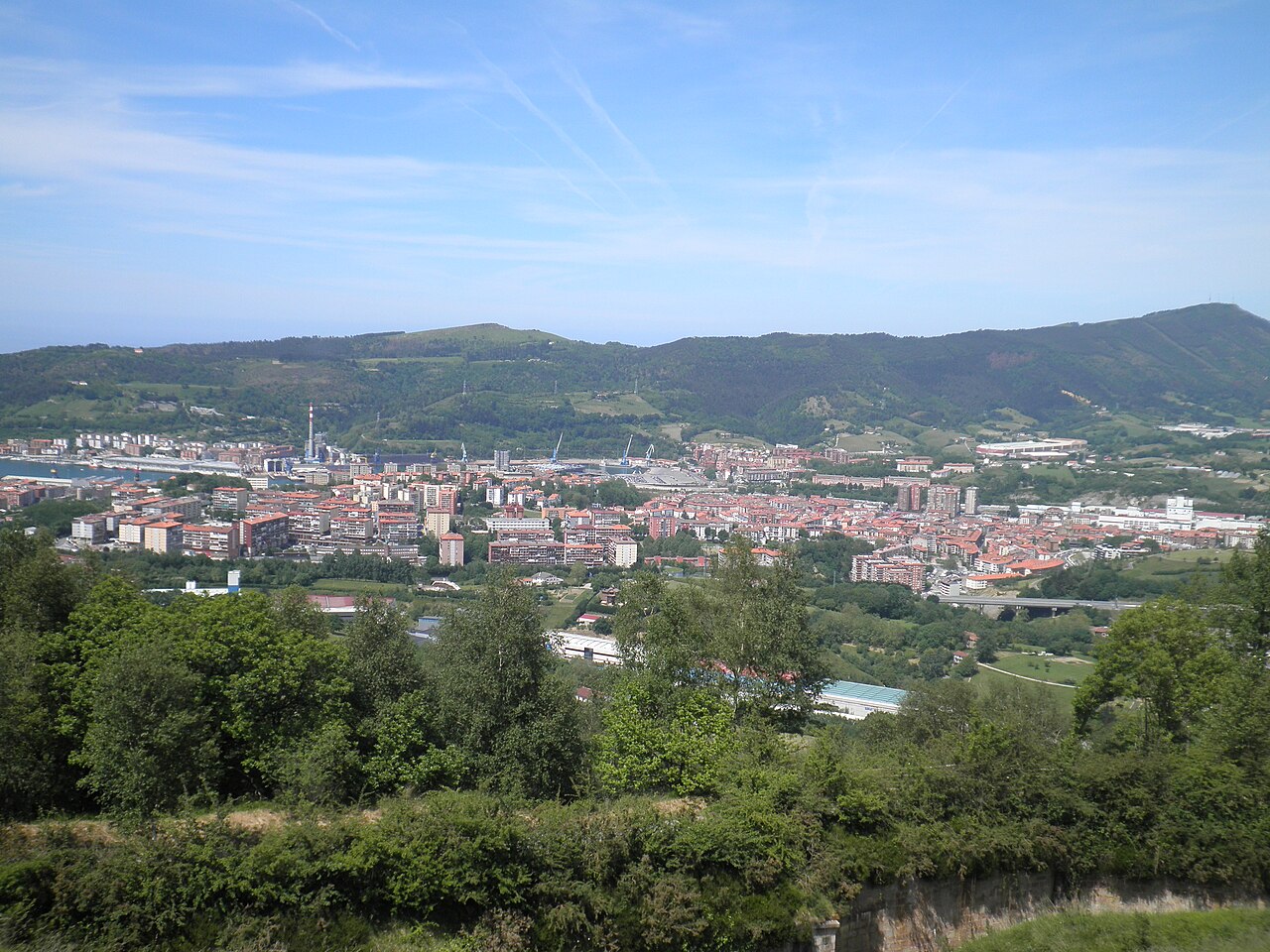
Tourism in Irun works differently. Most people are passing through. Trains arrive at odd hours and the first thing in the air is the Bidasoa. Not the river itself, but the paper factory beside it. This is a border city. Cars with French number plates sit half on the pavement along the avenue, and signs switch between Euskera, Spanish and French without warning. People cross quickly, as if even the pedestrian crossing were another border to get through.
Irun does not present itself in a neat, packaged way. It feels more like a place in motion, shaped by people coming and going. That sense of movement never quite settles, and it is part of what defines the place.
Where to begin
If you arrive on a Saturday, it is easier to leave the car in one of the large car parks in the commercial area. On-street tickets do not last long and cars are regularly towed.
The old quarter begins at Plaza de San Juan Harria. A column stands in the centre, marking the fact that Irun was a town long before it became a border crossing. Just a few steps away is the Museo Oiasso. It is small and quick to visit. Inside, it explains that this was once a Roman port connected to Britannia. One of the most striking pieces is a mosaic with sea figures that looks like it could have been lifted from the wall of a swimming pool. It is the sort of place where a short visit is enough before moving on.
Traces of earlier times
The Iglesia del Juncal took more than a century to build, and that shows. Gothic elements sit alongside later additions. From the outside it resembles a large warehouse more than a church. Inside, there is an old Romanesque Virgin and a vast Baroque altarpiece. Unless that sort of detail appeals, it may not leave much of an impression.
More unusual is the Ermita de Santa Elena, near the stadium. It is probably the oldest temple still standing in Gipuzkoa. Roman funerary urns were found beneath the floor. The space is small, and it is sometimes closed, so a visit depends on timing.
These places do not try to impress in obvious ways. They are fragments of different periods, layered without much effort to smooth the transitions.
The Alarde and the rhythm of the town
Everything shifts on 8 September. The Alarde commemorates a 16th-century battle against French troops. Thousands of locals take part, marching through the centre in uniform with drums setting the pace. There is an ongoing debate about who takes part and how, and it has not been resolved. Even so, the entire city revolves around that day.
If you happen to be there that morning, arrive early. The main streets fill quickly and moving around becomes difficult.
That same energy carries into the bars in the centre throughout the year. Food here follows the pattern of the wider Gipuzkoa region. The approach is simple, with straightforward portions. Txangurro, spider crab, often appears when available, baked and served in its shell. Kokotxas, the tender parts of hake or cod, are prepared in green sauce. Pastel vasco, a traditional cake, changes depending on who makes it and what ingredients they have to hand.
It is not about elaborate presentation. It is about familiar dishes done without much fuss.
Stepping out of the city
When traffic starts to wear thin, there are two quick ways out.
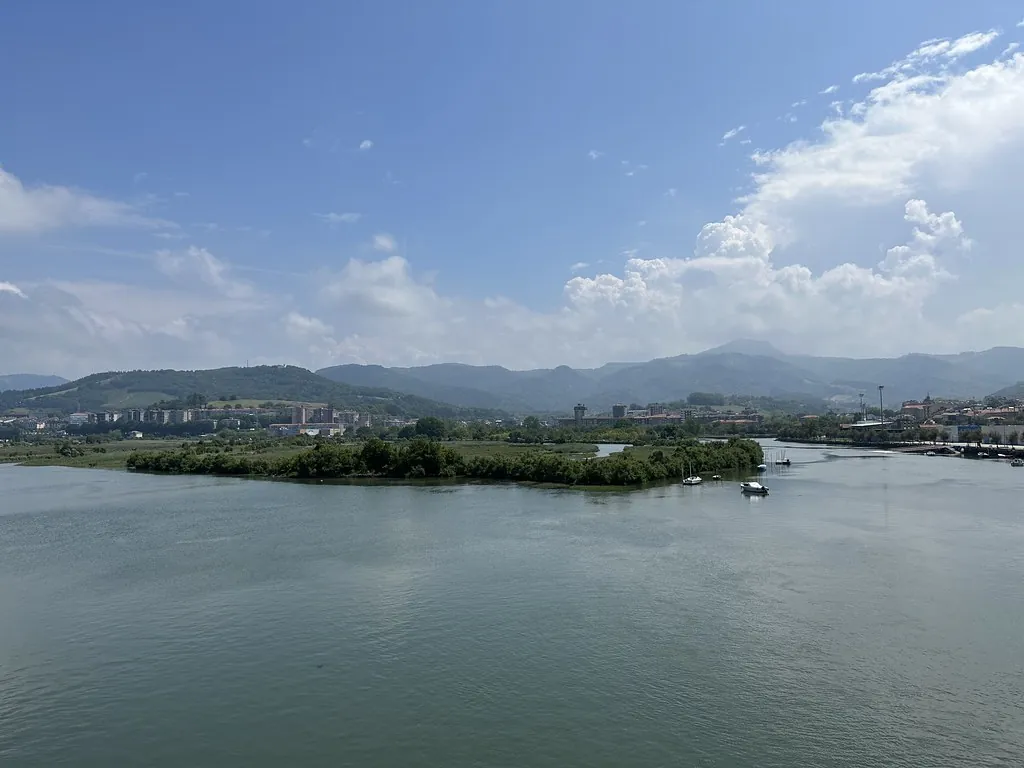
The Bidasoa path begins in Behobia and follows the river towards the coast. It is almost completely flat, used by cyclists and runners alike. At times, herons can be seen along the bank.
Irugurutzeta offers something different. Old mining furnaces lie hidden in the hills, with dark stone remains and short tunnels scattered along the route. It is an easy walk, suitable if you are with children.
For something more demanding, head towards Aiako Harria. From some of the higher points, the Cantabrian Sea appears in the distance.
These routes shift the pace. Within a short distance, the urban feel gives way to open paths and quieter surroundings.
A place to base yourself
Irun works better as a base than as a long destination. It is a place to stay while moving along the coast or crossing into France within minutes.
In the evening, the centre takes on a different tone. People return from work in Hendaia or from the surrounding industrial areas. Sit down for a small beer, a zurito, and listen for a while. The mix of languages and accents says a lot about how this city functions.
It is a place defined less by sights and more by movement, by crossings, and by the sense that everything is just slightly in transit. Spend a little time in that flow and the character of Irun becomes clearer.