Full Article
about Ajangiz (Ajánguiz)
Valleys and hamlets a stone’s throw from Bilbao, buzzing with local life.
Ocultar artículo Leer artículo completo
The road bends sharply left after Gernika, climbing past a tractor shed that smells distinctly of silage and sheep. Within three minutes, the traffic thins, the verges grow lusher, and the sat-nav politely loses the plot. You have entered Ajangiz, a parish of scattered farmsteads that prefers to be discovered at 25 km/h rather than ticked off a list.
Working Countryside, Not a Theme Park
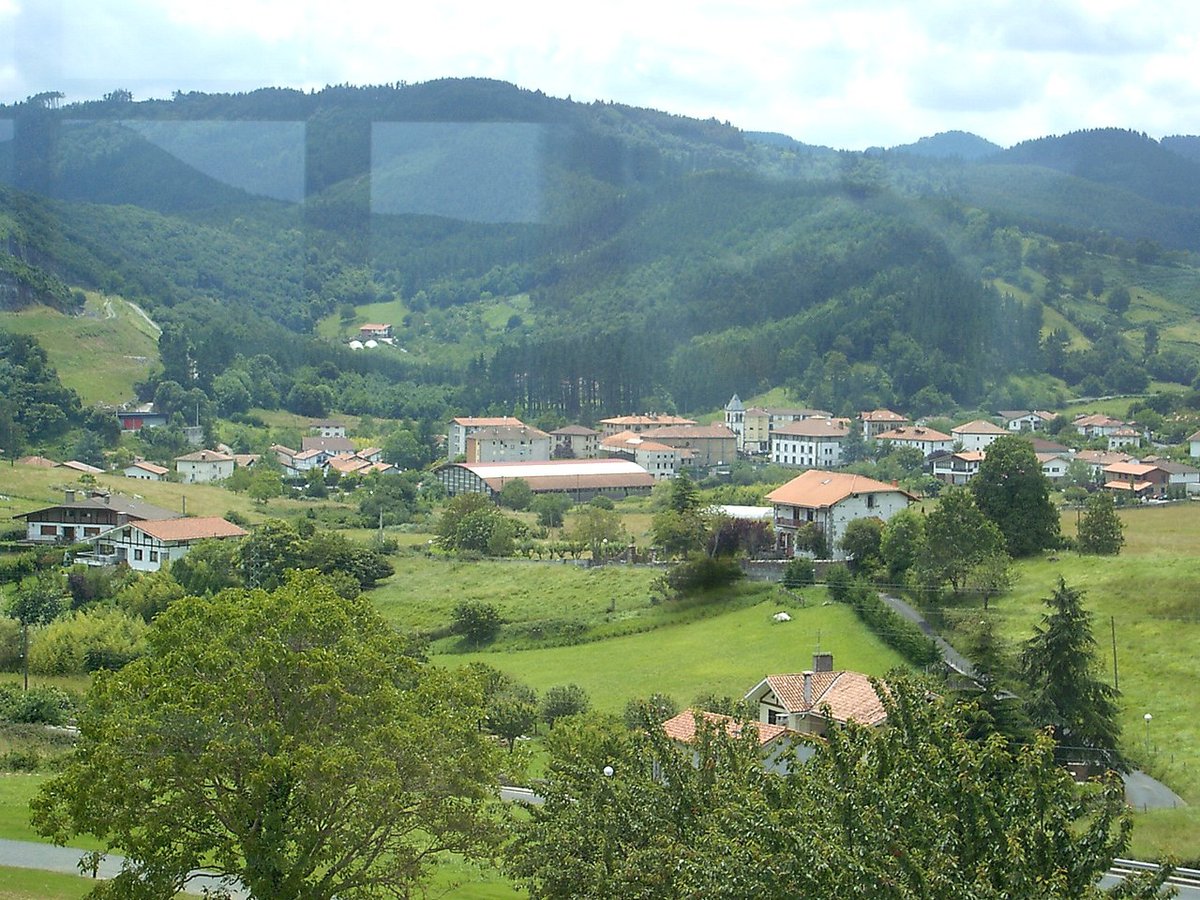
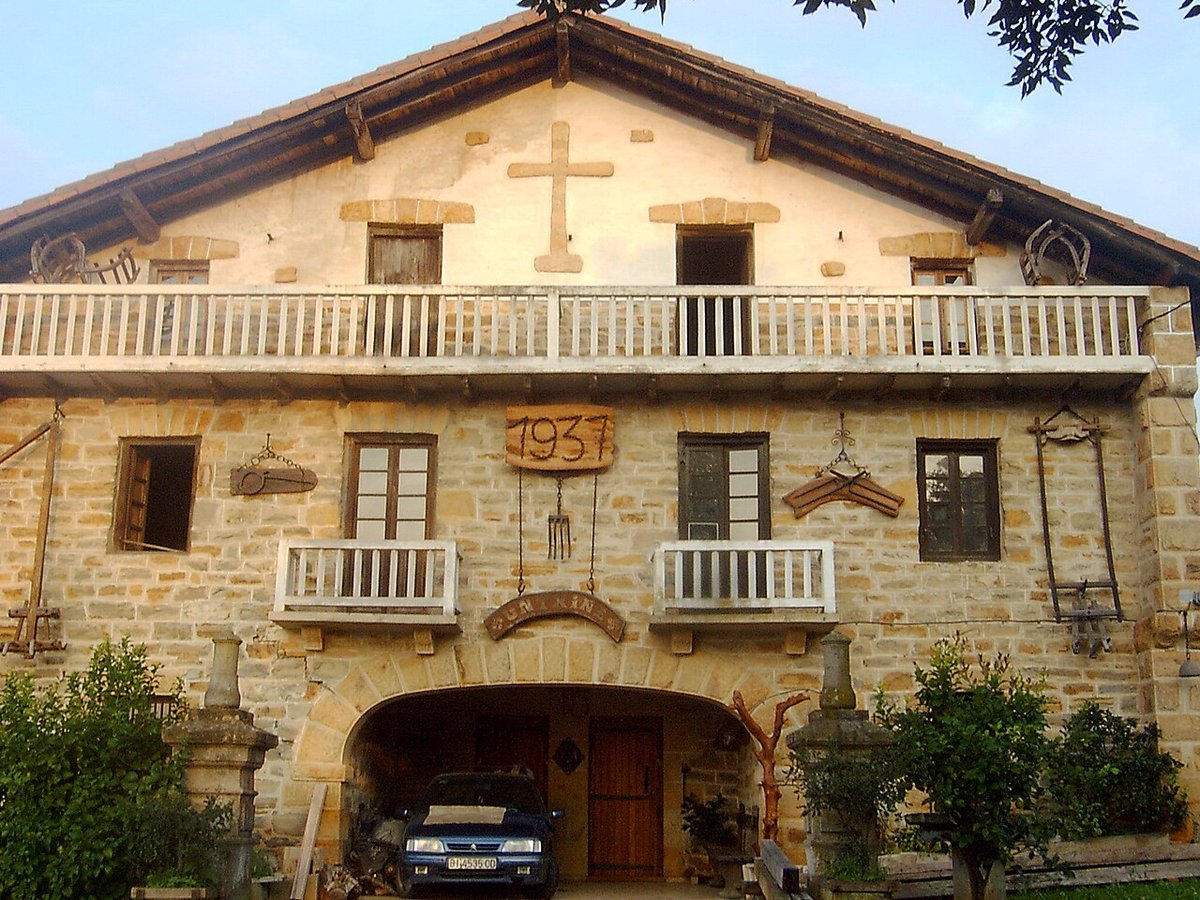
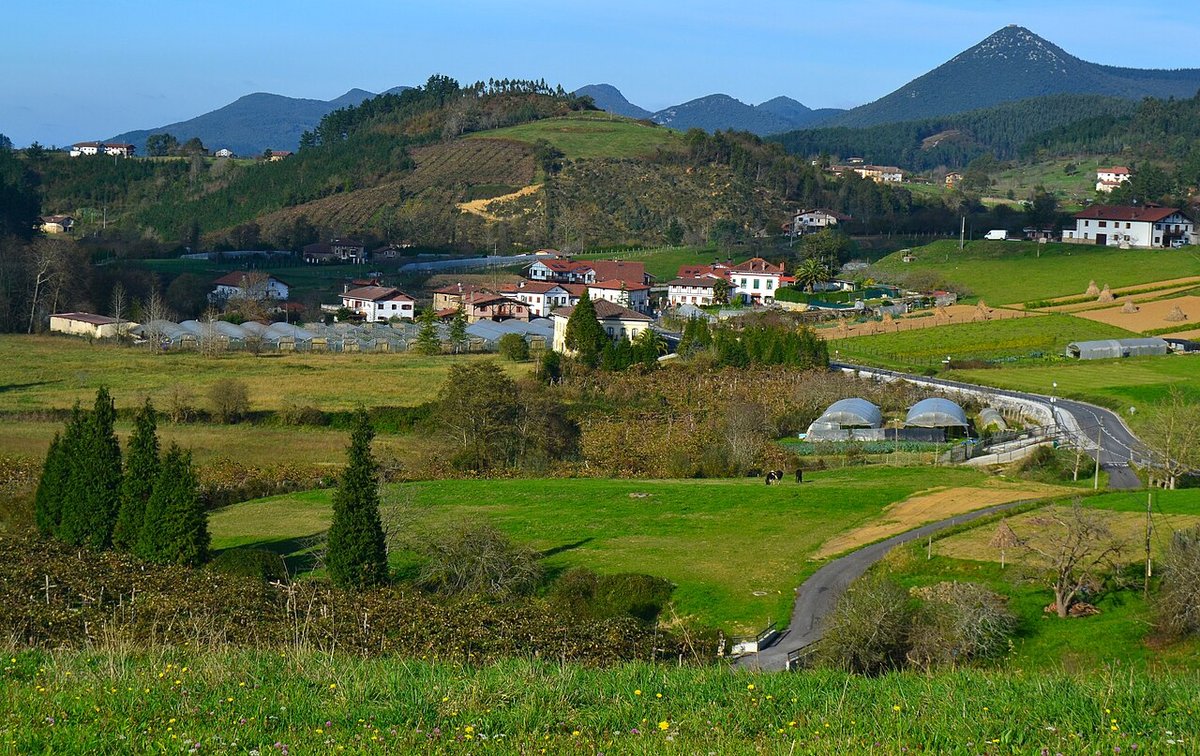
458 residents, countless cows, and no postcard centre. The village spreads across shallow folds of the Busturialdea valley, its houses (baserriak) planted wherever the slope flattens enough for a vegetable patch. Slate roofs angle steeply for the 1,200 mm of rain that arrive most years; eaves overhang by almost a metre so winter gales can whistle underneath without lifting tiles. Granite thresholds are worn concave by generations of clogs, boots and wellies – proof that this is still a working landscape, not a museum.
Because settlement is dispersed, the only way to read Ajangiz is to move through it. Drive slowly, hazard lights on when you pause, then walk the final stretch of track. The tarmac stops abruptly; beyond lies a lattice of stone lanes where mud, loose gravel and the occasional cowpat test the tread of your shoes. Leave the suede trainers at home.
What Passes for Sights
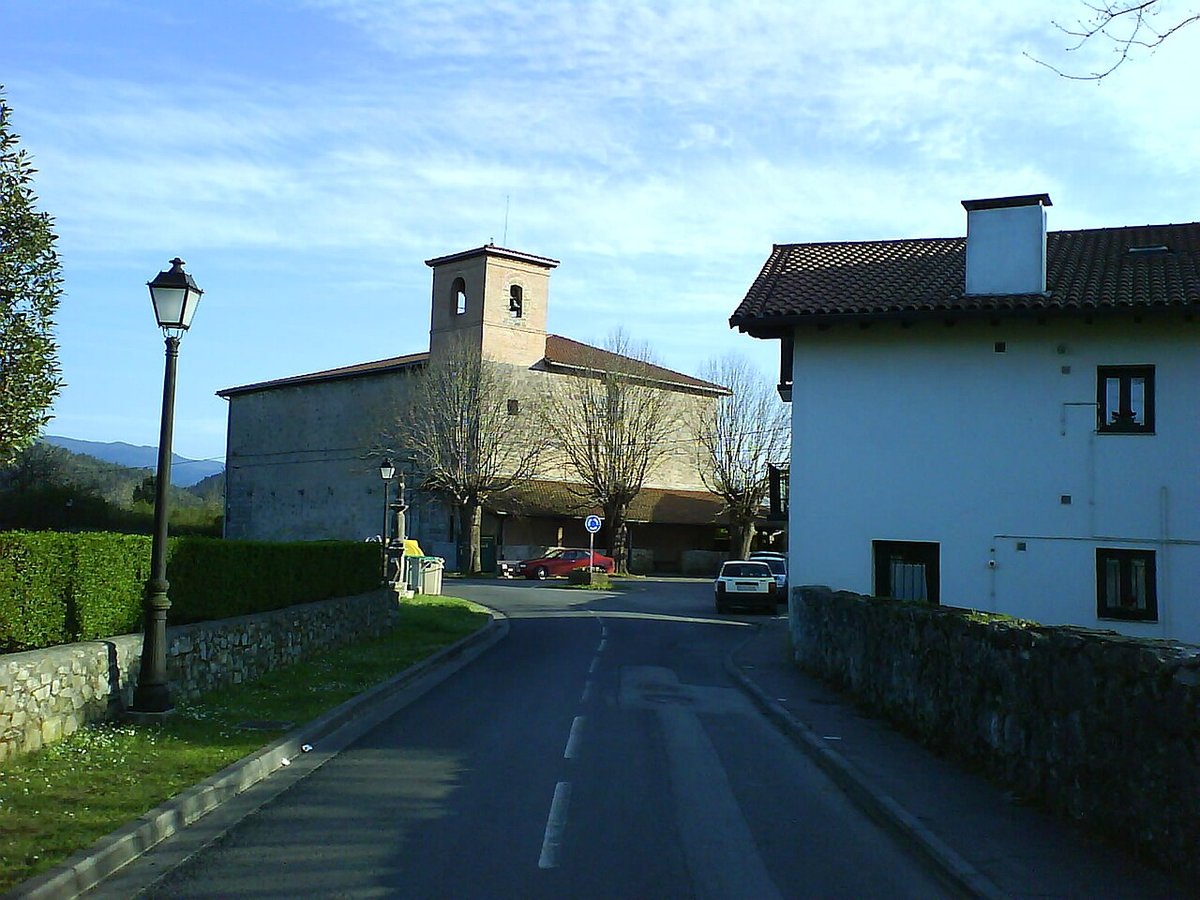
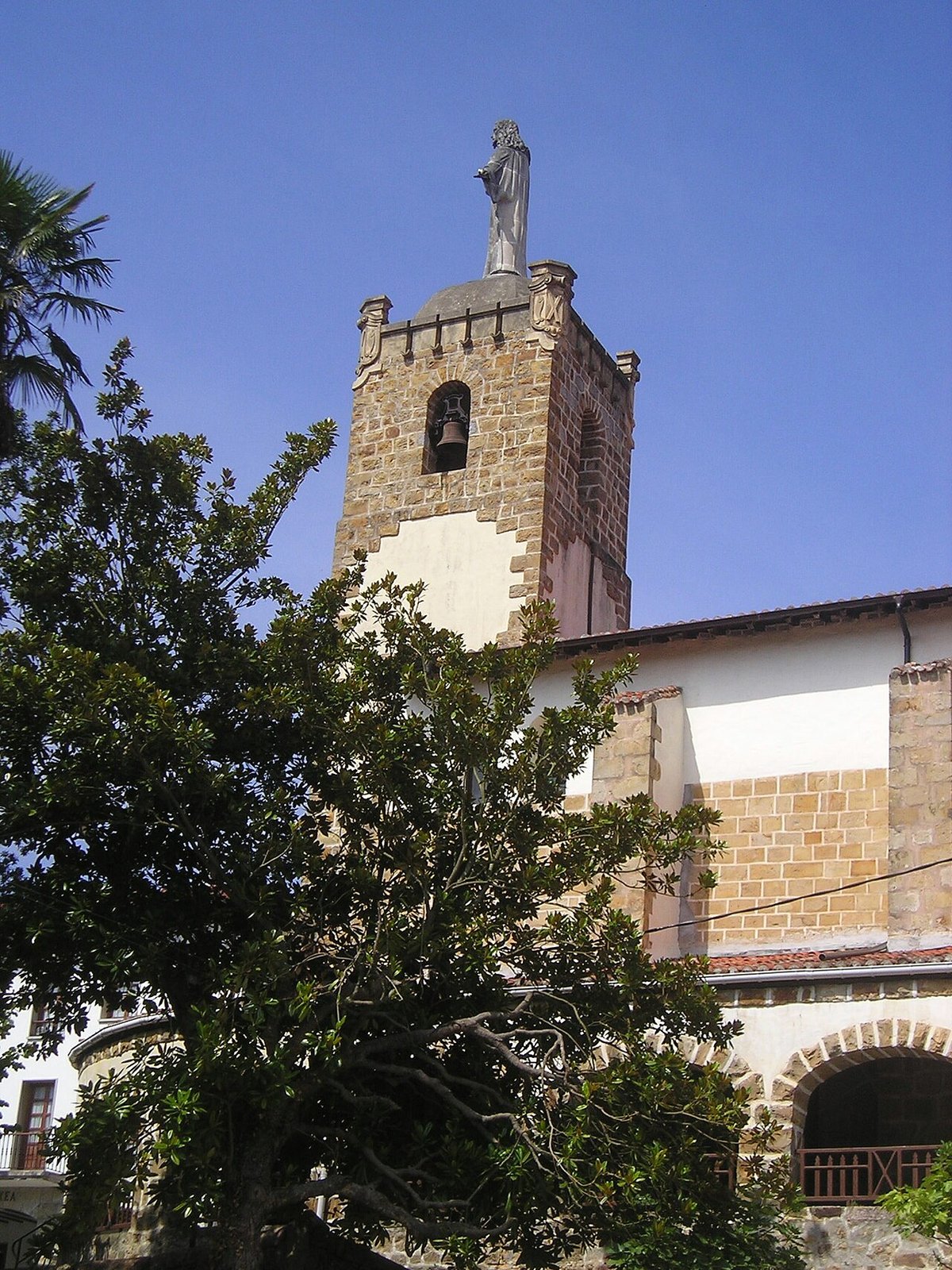
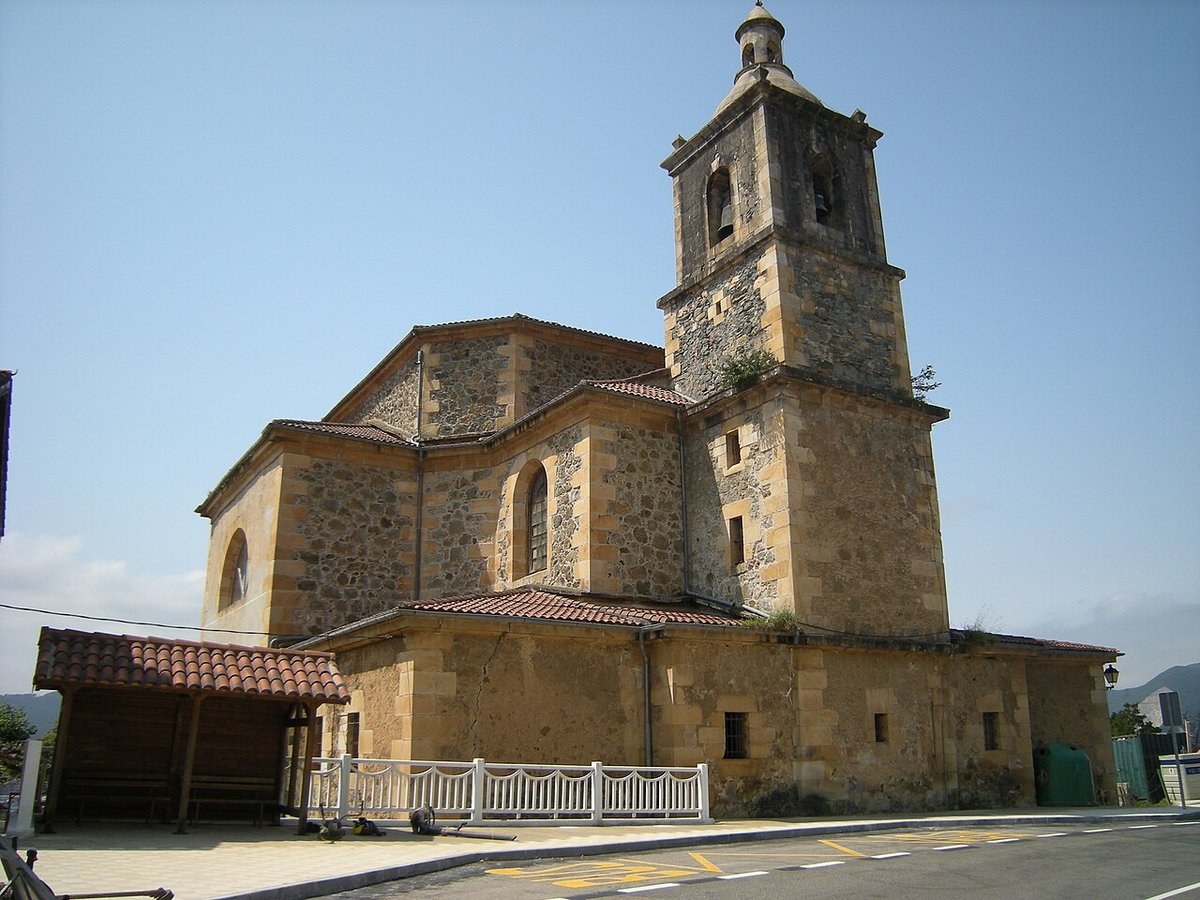
The sixteenth-century church of San Juan Bautista sits on a slight rise – less a plaza than a widening in the lane. Its bell turret doubles as a dovecote; look up and you'll notice holes drilled just below the cornice for the resident pigeons. Inside, a single Baroque retable glints with gold leaf recently restored by subscription; the donor list on the north wall reads like a local phone book.
Opposite, the fronton (pelota wall) is freshly painted but chipped at the base where stray balls connect. Matches are Thursday evenings and Sunday mornings; spectators lean on cars, cider corks pop, and betting is conducted in whispers. Visitors are welcome, provided they stay behind the yellow line and applaud both sides impartially.
Walking Without Summit Fever
Ajangiz will never feature in glossy hiking catalogues, and that is precisely its appeal. A lattice of farmer's tracks loops through tiny neighbourhoods – Goikoerrota, Kurpide, Arteaga – each separated by no more than a ten-minute stroll. waymarking is minimal: occasional splashes of yellow paint on gateposts. Distances are short but surfaces change quickly; after rain the clay holds water like a sponge and even gentle gradients become slick. Stick to grassy verges or invest in boots with a Vibram sole.
One easy circuit starts at the cemetery gate, follows the hedge-lined track south to the derelict watermill at Artekabe, then cuts back along the stream. Total distance: 3.5 km, elevation gain 70 m, highlights include kingfishers and the smell of freshly cut hay. If you crave loftier views, continue uphill to the radio mast on Txarlazo (298 m); on a clear day you can trace the sinuous estuary of Urdaibai all the way to the Atlantic, 12 km distant.
Eating, Sleeping and the Art of Low Expectations
The village itself offers no bars, no cash machine and only one sporadic pintxo pop-up run by the women's rural society on feast days. Plan accordingly. Most visitors base themselves in neighbouring Gernika-Lumo, five minutes down the BI-631, where supermarkets, chemists and cashpoints cluster around the market square. Accommodation does exist inside Ajangiz, but it is self-catering or nothing.
Hotel Aresti-Etxea occupies a converted caserío in the Kanpantxu quarter. Doubles from €85, including what one January guest called "the best breakfast I've had in Europe for a long time": think still-warm talo (cornflat cake) with Idiazabal cheese, and apple jelly made on site. Rental alternatives include Burgo Goikoa, a seventeenth-century farmhouse split into two apartments, each with a wood-burning stove and a terrace that faces directly into sunset over the valley.
When Green Turns to Grey
Spring and autumn deliver the classic Basque palette: luminous grass, scarlet poppies, ox-eye daisies along every ditch. Light is soft until 20:30 in June, perfect for photographers who don't mind the odd shower. Summer can feel muggy; temperatures reach 28 °C but humidity hovers at 80%, so walking is best attempted before 11:00. Winter brings Atlantic fronts sweeping in off the bay: expect 14 days of rain a month, mud that will happily confiscate a welly, and roads where tractor ruts freeze into ridges overnight. Snow is rare at 160 m above sea level, yet the passes east of Bilbao close at the first flake; carry chains if you're travelling between December and February.
Combine, Don't Commute
Ajangiz functions as a comma rather than a full stop in an Urdaibai sentence. Pair it with world-famous destinations a short drive away:
- Gernika-Lumo (6 km): assembly house and Picasso's studies for Guernica in the Peace Museum, €8 entry, closed Mondays.
- Mundaka (18 km): left-hand rivermouth wave beloved by surfers; board rental €25 for three hours.
- San Juan de Gaztelugatxe (26 km): the "Game of Thrones" islet – arrive before 09:00 or share the stone staircase with 500 other pilgrims.
The One-Hour Rule
If time is scarce, park near the church, allow thirty minutes to circumnavigate the lanes, another twenty for coffee you remembered to bring, and leave. That is enough to absorb the rhythm: a tractor reversing, a woman hanging washing who nods "kaixo," the lowing of cattle drifting across dew-soaked grass. Stay longer only if you enjoy the absence of agenda.
How to Get Here without Tears
Bilbao airport sits 35 km east; collect a hire car, take the BI-631 towards Gernika, fork right at the Lur supermarket roundabout, and follow signs for Ajangiz. Journey time: 35 minutes on a weekday, double that when the Santurtzi ferry disgorges its Friday rush hour. Public transport demands patience: ride the Lurraldebus A3513 from Bilbao to Gernika (55 min, €2.55), then pre-book a taxi for the final 5 km – Radio Taxi Gernika on +34 94 625 11 11 charges roughly €12.
Parting Shots
Ajangiz will not change your life, but it might recalibrate your speedometer. Come with waterproof shoes, modest ambitions and a full tank of patience, and the valley repays you with silence, the smell of wet earth, and a front-row seat at a pelota match where the competitors arrive straight from milking. Expect nothing grander, and you'll leave understanding why many Basques still measure wealth in hectares of pasture rather than Instagram likes.