Full Article
about Busturia
Cantabrian Sea, cliffs and seafaring flavor in the heart of the Basque Country.
Hide article Read full article
Busturia, entre la ría y los caseríos
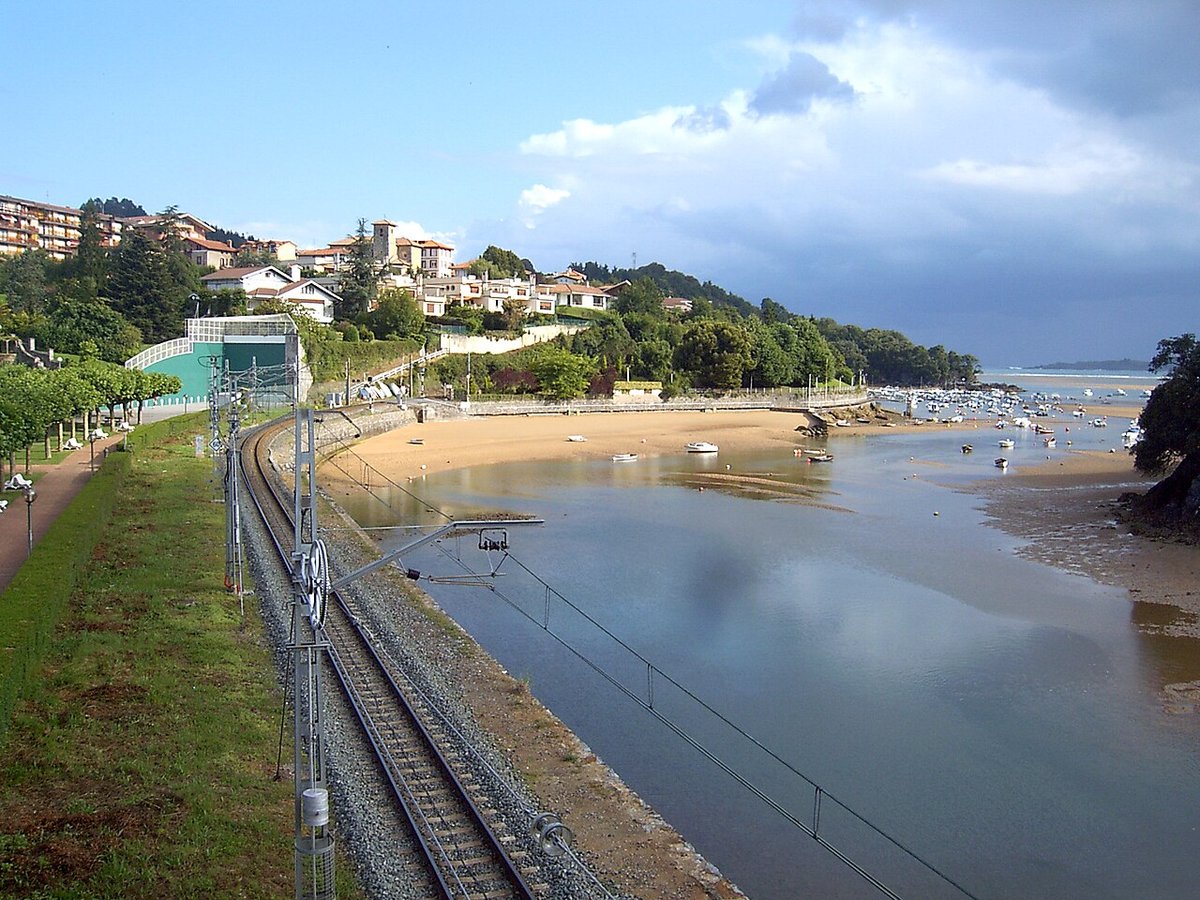
Busturia aparece en documentos antiguos como una de las anteiglesias de la merindad homónima, una división administrativa del señorío de Bizkaia. Su territorio se organiza en torno a la ría de Oka, el estuario que se abre hacia Mundaka y que durante siglos marcó el ritmo de la vida en esta parte de Urdaibai.
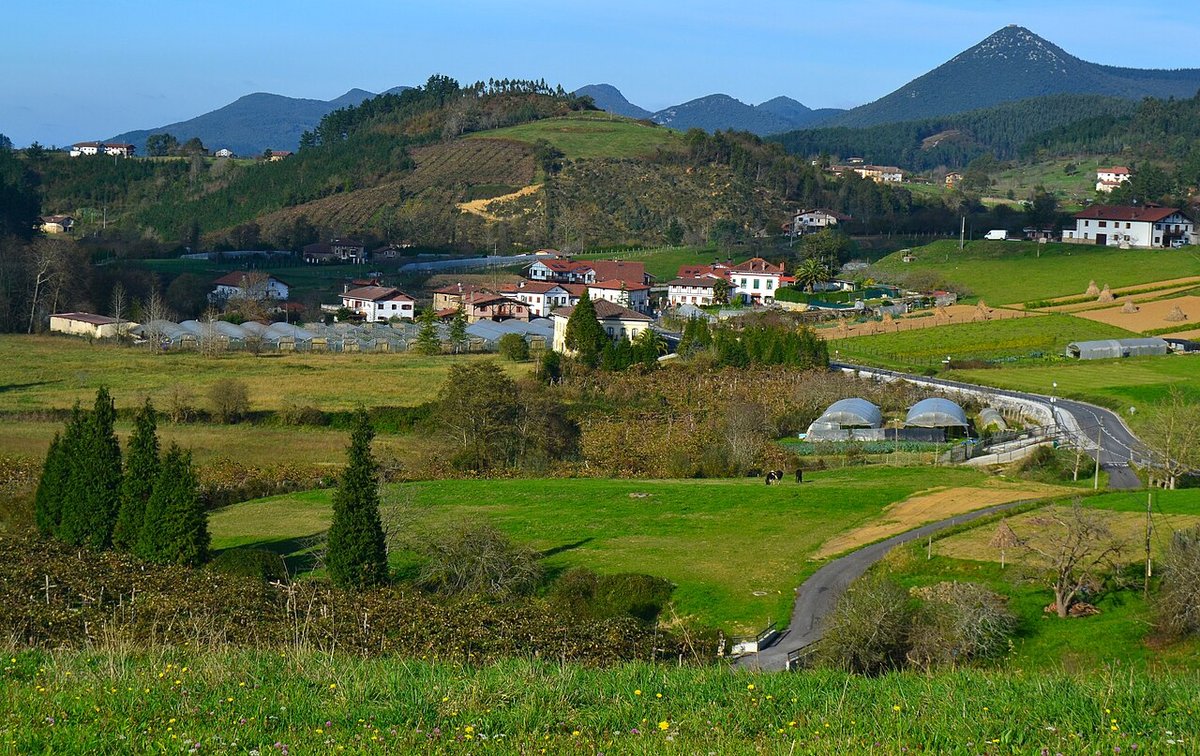
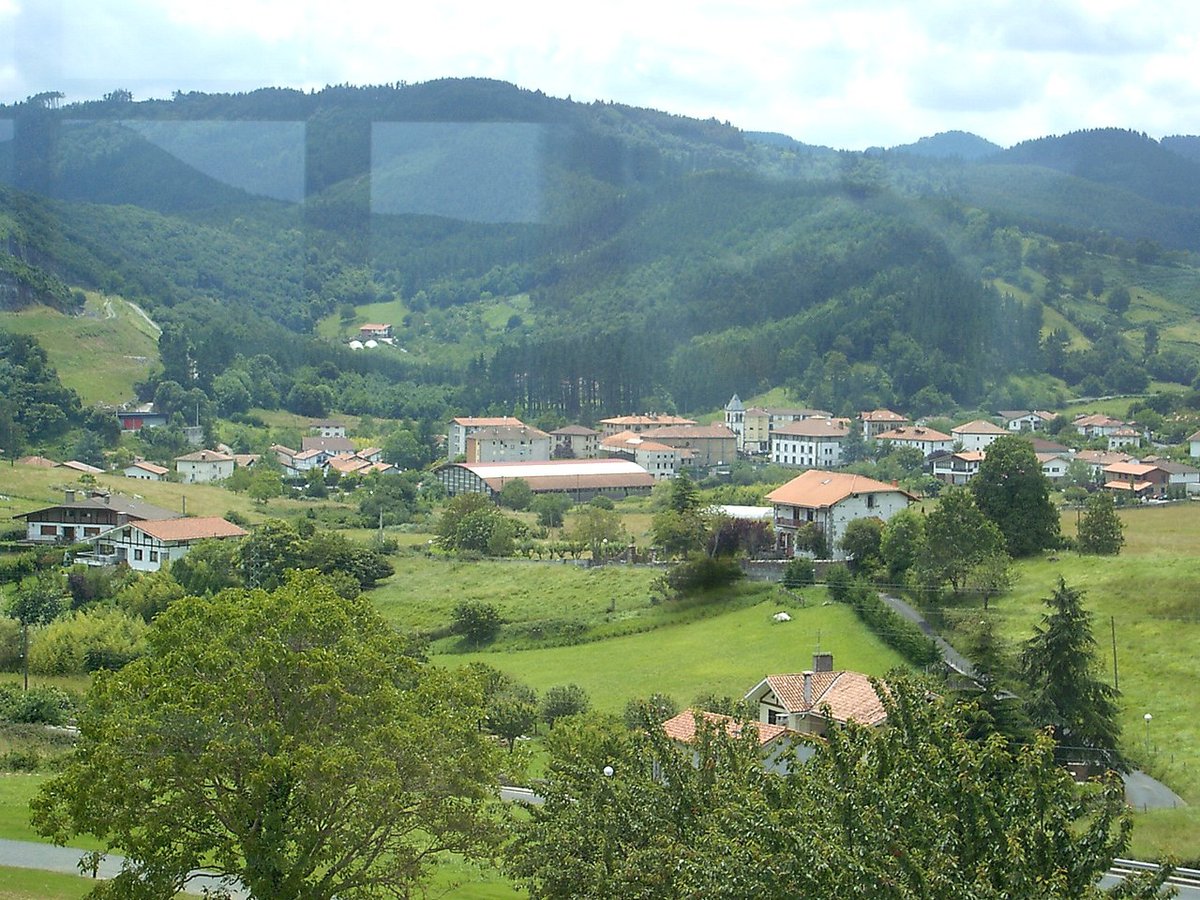
La geografía no permitió un núcleo urbano compacto. Marismas, prados y lomas bajas determinaron el poblamiento. Los caseríos se dispersaron, se ganaron campos al agua y los caminos unen barrios, no conducen a un centro único. Esa estructura aún define Busturia.
El municipio se incluye en la Reserva de la Biosfera de Urdaibai, pero este paisaje no es una creación reciente. Generaciones trabajaron estas vegas fértiles, criando ganado y cultivando en relación directa con las mareas. El euskera se habla en la vida cotidiana, como es habitual en la comarca, y muchos apellidos y topónimos conservan formas antiguas.
No hay un monumento que domine el lugar. Busturia se entiende mejor a través de la relación entre sus caseríos, los caminos rurales y la ría cercana. Un paseo breve basta para ver cómo se organizaba la vida: viviendas separadas entre sí, agricultura a pequeña escala y rutas que siguen trazados establecidos hace tiempo.
La ermita de San Miguel de Ereñozu
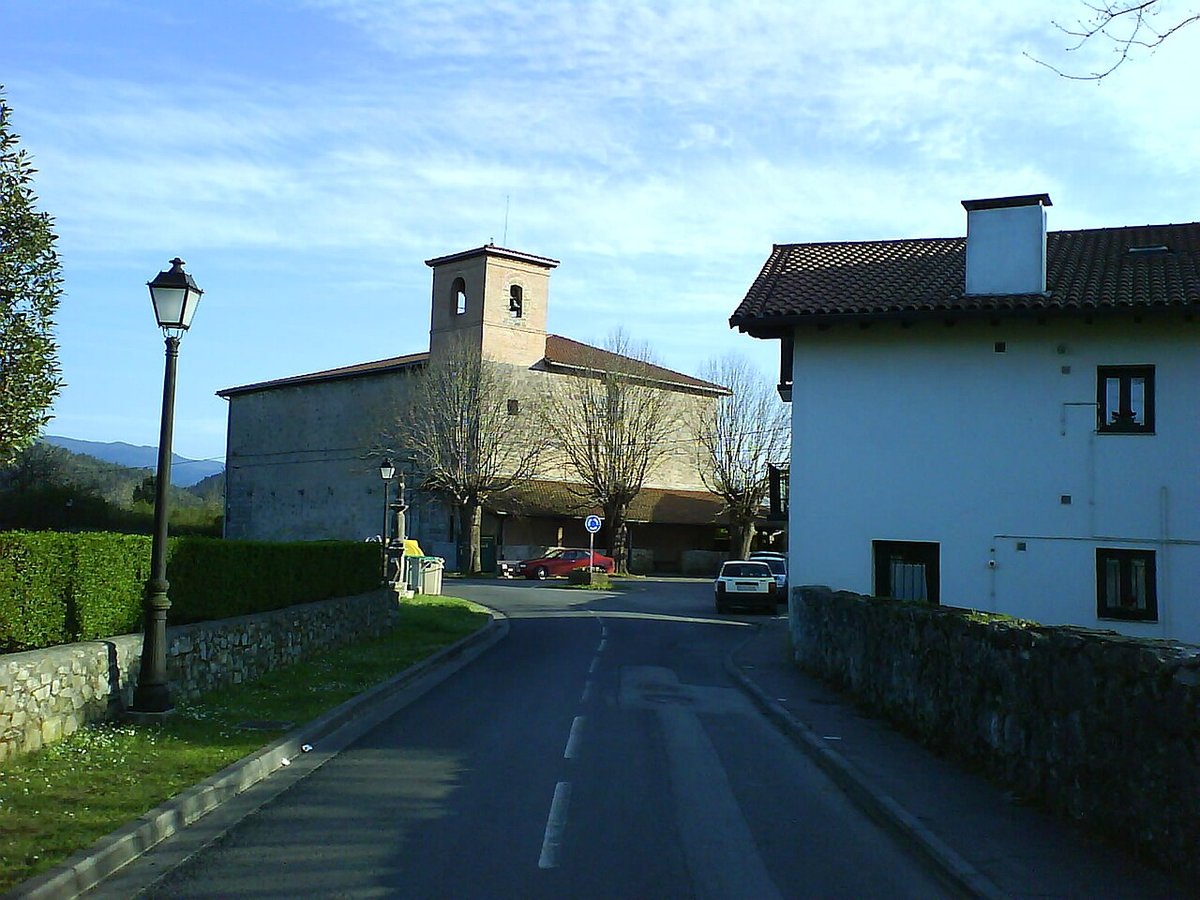
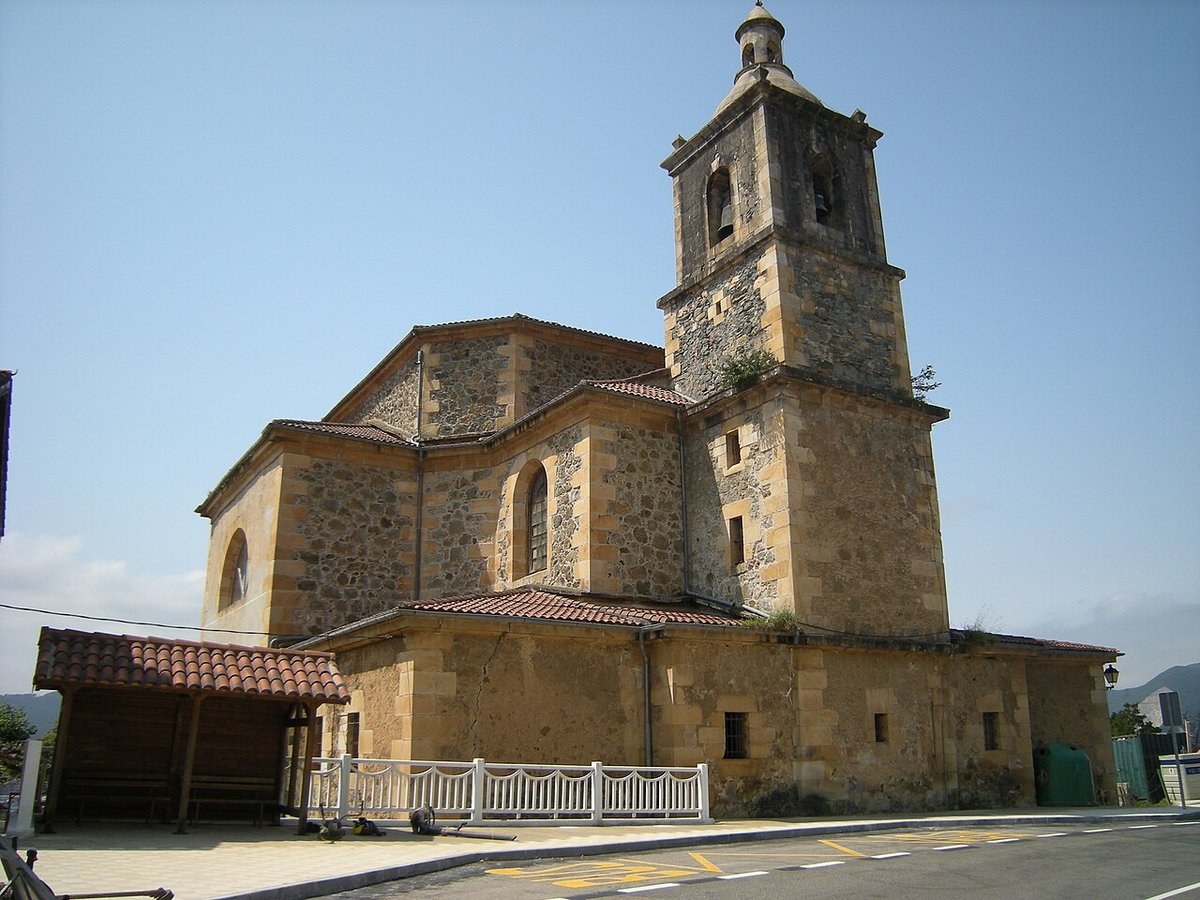
Sobre una loma dentro del término municipal se encuentra la ermita de San Miguel de Ereñozu. La construcción actual suele datarse en época moderna, probablemente levantada sobre un lugar de culto anterior, algo común en las ermitas rurales de Bizkaia. Como ocurre con muchas iglesias dedicadas a San Miguel, ocupa una posición elevada y es visible desde varios barrios.
La estructura es modesta, de piedra y pequeña. Su interés está en el emplazamiento. Desde los alrededores se comprende la geografía de Busturia. La ría de Oka se extiende hacia Mundaka, las marismas cambian con la marea y los prados rodean los caseríos.
Durante siglos, estos puntos altos funcionaron como referencias visuales en el territorio. Ayudaban a orientarse en tierra y también guiaban a quienes navegaban por el estuario. El entorno permanece tranquilo. No es un mirador espectacular, pero permite leer con claridad el paisaje agrario y la red de barrios dispersos.
Caminos, caseríos y tierra de labor
La red de caminos rurales de Busturia forma parte de una estructura antigua. Muchas de estas vías comenzaron como conexiones entre caseríos familiares y pequeñas parcelas de cultivo. Algunas discurren por los límites de las vegas fértiles de la ría; otras suben hacia las laderas donde se asentaron los caseríos más antiguos.
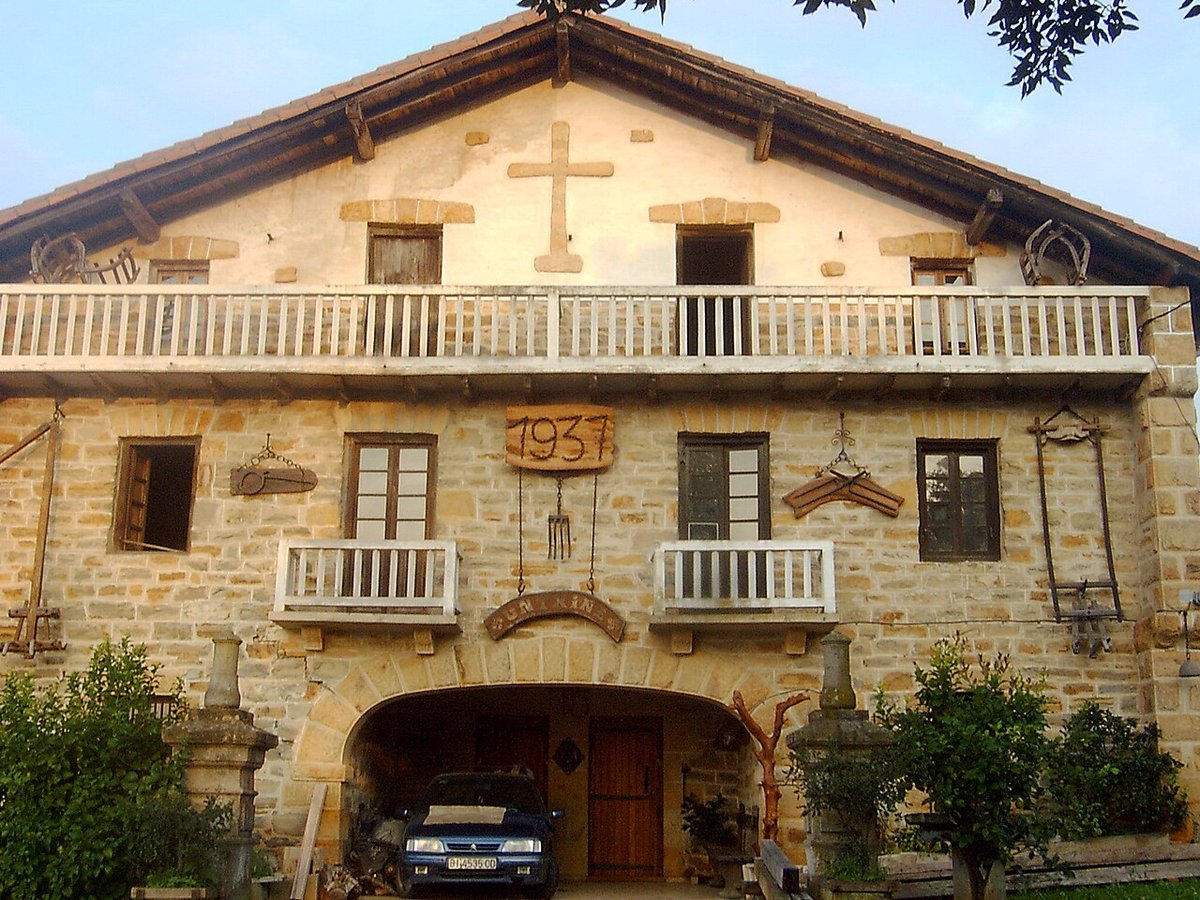
Caminar por estos trazados acerca a la arquitectura rural típica de Bizkaia. Los caseríos combinan muros de piedra con ampliaciones posteriores, tejados a dos aguas y espacios reservados para el ganado. En varias propiedades, cercados de madera o piedra siguen delimitando los pastos.
La agricultura y la ganadería continúan, aunque a menor escala que hace décadas. Vacas de leche, huertos familiares y prados ocupan aún gran parte del terreno alrededor de los barrios. La sensación de un paisaje en uso no ha desaparecido, aunque su intensidad haya cambiado.
Aves en el estuario de Urdaibai
Las orillas de la ría forman parte de uno de los humedales más conocidos de la costa cantábrica. Las marismas de Urdaibai han sido punto de paso para aves migratorias desde mucho antes de que el área obtuviera su actual estatus de protección.
Con la marea baja, aparecen lodos intermareales que atraen a aves limícolas, garzas y cormoranes. Lo que puede observarse varía con la estación y con el estado de la marea. No siempre están presentes las mismas especies, pero suele haber actividad si se dedica tiempo a observar.
Varios puntos dentro del municipio tienen caminos que se acercan al agua, permitiendo vistas del estuario sin alejarse mucho de las zonas habitadas. Conviene actuar con cuidado. Muchas áreas siguen siendo terreno de labor agrario o espacio protegido; observar en silencio ayuda a preservar ambas cosas.
Vida cotidiana y conexiones locales
Con menos de dos mil habitantes, Busturia mantiene una escala reducida. La vida diaria se reparte entre sus distintos barrios y caseríos, no se concentra en un centro urbano definido. Las fiestas patronales y las celebraciones locales siguen siendo momentos importantes para la comunidad, como ocurre en muchos pueblos de Bizkaia.
La cercana Gernika ha influido históricamente en Busturia. Durante siglos funcionó como centro mercantil y lugar de reuniones políticas del señorío, celebradas bajo su árbol conocido, situado a pocos kilómetros. Esa relación aún condiciona los movimientos cotidianos en la zona.
Para recorrer Busturia conviene tomarse tiempo, enlazando caminos entre barrios y acercándose a la ría donde el terreno lo permita. La zona de Ereñozu sirve como punto de referencia útil para comprender el conjunto del municipio.
Los caminos rurales pueden estar embarrados tras varios días de lluvia; es recomendable calzado adecuado.