Full Article
about Gernika-Lumo (Guernica y Luno)
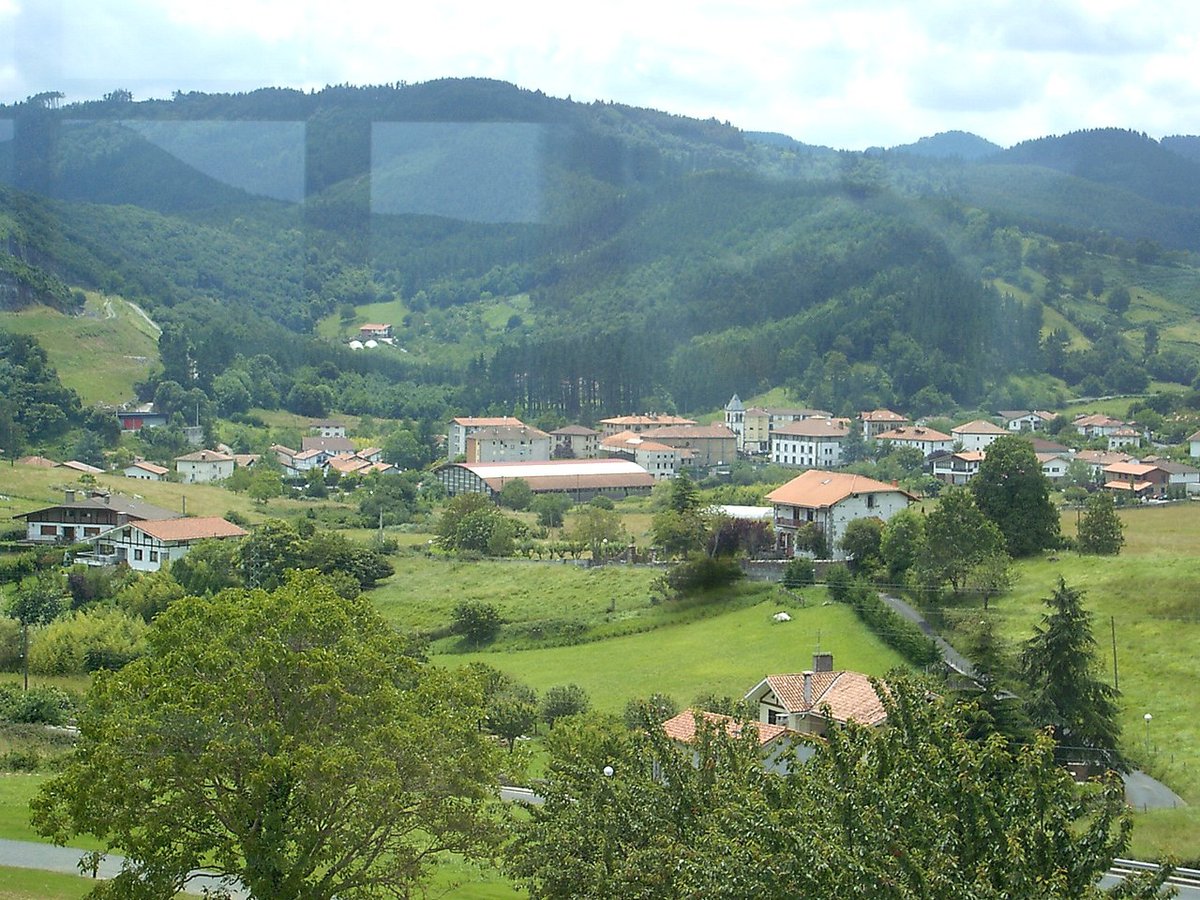
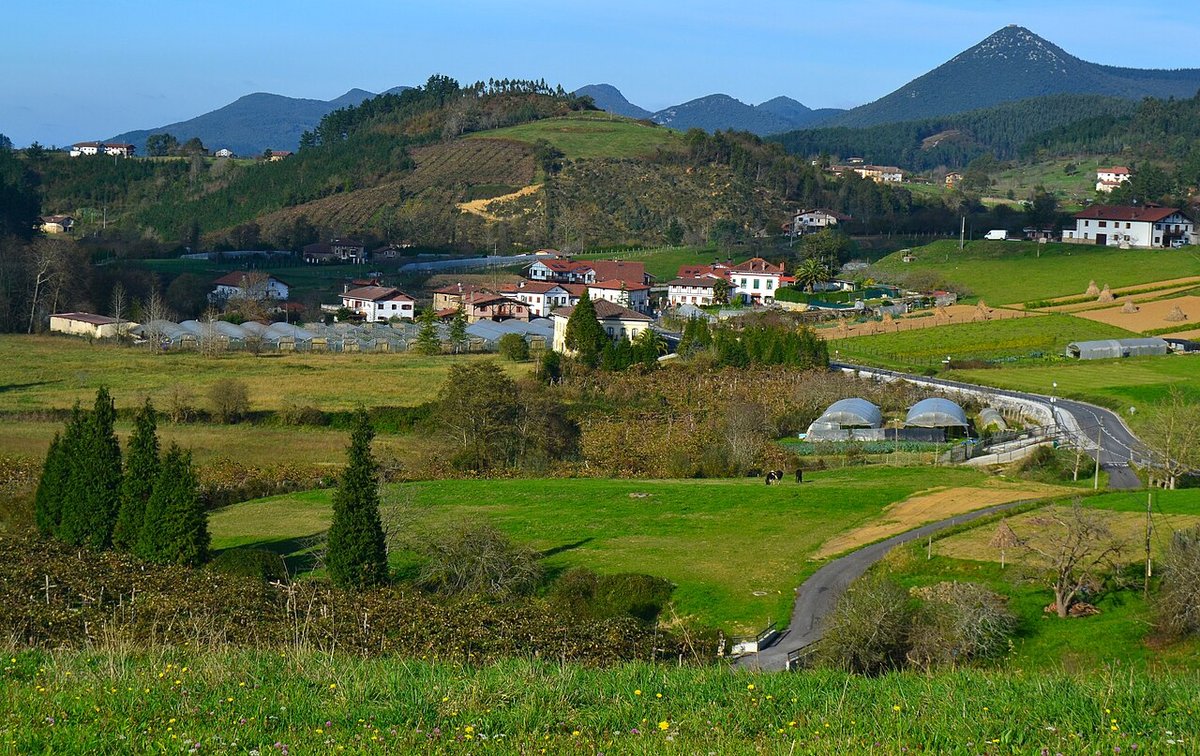
Valleys and hamlets a short hop from Bilbao, buzzing with local life.
Hide article Read full article
A Monday that smells like the sea
Monday is market day in Gernika Lumo, and it sets the tone for the whole place. By late morning, the square fills with stalls and the air carries the smell of txistorra and the sea. It feels a bit like when a street back home is closed for a fair, except here the focus shifts from books or trinkets to cheese and dried cod.
Traders spread out across much of the square. A piece of Idiazabal might appear in your hand before you even think to ask for it. Someone might mention the old saying, “Lunes gernikés, ni un golpe,” suggesting that Mondays in Gernika move without rush or friction. The pace proves the point. Nobody seems in a hurry. Even the politicians stepping out of the Casa de Juntas look unbothered, ties slightly loosened.
The centre is compact, easy to cross in a short walk, and the market gives it a steady rhythm rather than a frantic one. It is the kind of place where you pause without planning to.
The town Picasso painted without visiting
Any mention of tourism in Gernika Lumo tends to circle back to one date: 26 April 1937. During the Spanish Civil War, German aviation bombed the town, leaving many buildings in ruins. Pablo Picasso captured the destruction from Paris, painting in stark black and white with fractured figures. The artwork became more widely known than the town itself.
Today, the Museo de la Paz explains what happened. The approach is calm and measured. Testimonies, photographs and clear panels guide visitors through the events without turning the experience into something overwhelming. Children often follow the story without losing track of it.
The atmosphere does not feel heavy in the way some historical museums can. It resembles a large classroom focused on memory and coexistence. A quick visit can be brief, while reading everything extends the time naturally. The museum leaves space for reflection without forcing it.
An oak that continues through time
A short walk away stands the Árbol de Gernika, one of the most recognisable symbols in the Basque Country. The tree you see today is not the original. It belongs to a line of oaks that have been replaced over the years. When one falls, a descendant takes its place. The idea is continuity rather than permanence.
Under these branches, representatives of Bizkaia once gathered to swear to uphold their traditional laws, known as fueros. The scene is easy to picture: figures in cloaks debating matters outdoors, rooted in ceremony yet exposed to the elements.
Right beside it sits the Casa de Juntas. The building is restrained in style, white and somewhat reminiscent of a small theatre. Inside, wood dominates the space, alongside historic coats of arms. The lehendakari, the Basque president, still takes the oath of office here.
The interior can feel familiar in an unexpected way. It brings to mind an assembly hall at a school, though layered with far more history and a quieter atmosphere. Nothing about it is grand in an excessive sense, yet its meaning is clear.
Between the square and the frontón
Distances in Gernika Lumo are short. A walk from the Casa de Juntas to the Jai‑Alai frontón takes only a few minutes. The building makes an impression up close. It is vast, and for years it has been described as the largest frontón in the world.
Nearby streets gather much of the town’s day-to-day life. Places to eat line the route, with counters displaying pintxos. Tortilla de bacalao often appears soft and moist, while Idiazabal with walnuts shows up frequently too. For groups, chuletón is a common choice at the table. Those passing through alone can stop briefly with a pintxo and a small beer, known locally as a zurito.
Conversation flows in Euskera all around. At first it can feel difficult to follow, the rhythm quick and unfamiliar. After a while, the ear adjusts. The language starts to sound like a conversation that runs just slightly ahead of you, always moving with a certain pace.
Painted trees in the Urdaibai landscape
After eating, the surroundings invite movement. A few kilometres from the town lies the Bosque de Oma, within the Urdaibai reserve. Artist Agustín Ibarrola painted many of the tree trunks here years ago. The images only come together when viewed from specific points.
The walk leads through pine trees, with colour appearing in fragments at first. Then, suddenly, shapes align. Faces emerge, animals take form, geometric figures settle into place. The effect resembles those children’s books where an image shifts depending on how you look at the page.
The route takes time, both on the way in and back out. There are no kiosks or machines along the path, just forest and trail. Bringing water makes sense here. The setting remains simple and uninterrupted.
On clear days, the sea appears in the distance, framed by the landscape of Urdaibai. The shift from town to nature feels quick but distinct.
A place that works at its own pace
Gernika Lumo does not lend itself to a packed schedule. It works better when taken slowly. A walk through the centre, a pause at the market, a short visit to the Casa de Juntas, then perhaps an afternoon stretched into the hills or towards the Oka area.
One practical idea circulates locally: leave the car at the upper part of town and walk down into the centre. The square sits only a few minutes away on foot. From there, the day can unfold without much planning. Market first if it is Monday, then decide whether to linger over food or head out towards the surrounding landscape.
The town leaves a particular impression. Picasso depicted it in greys, shaped by destruction and pain. The reality today is very different. Green dominates the surroundings, and daily life carries on in a steady, ordinary way. That contrast stays with you more than any single monument.