Full Article
about Kortezubi (Cortézubi)
Cantabrian Sea, cliffs and seafaring flavor in the heart of the Basque Country.
Hide article Read full article
A valley without a centre
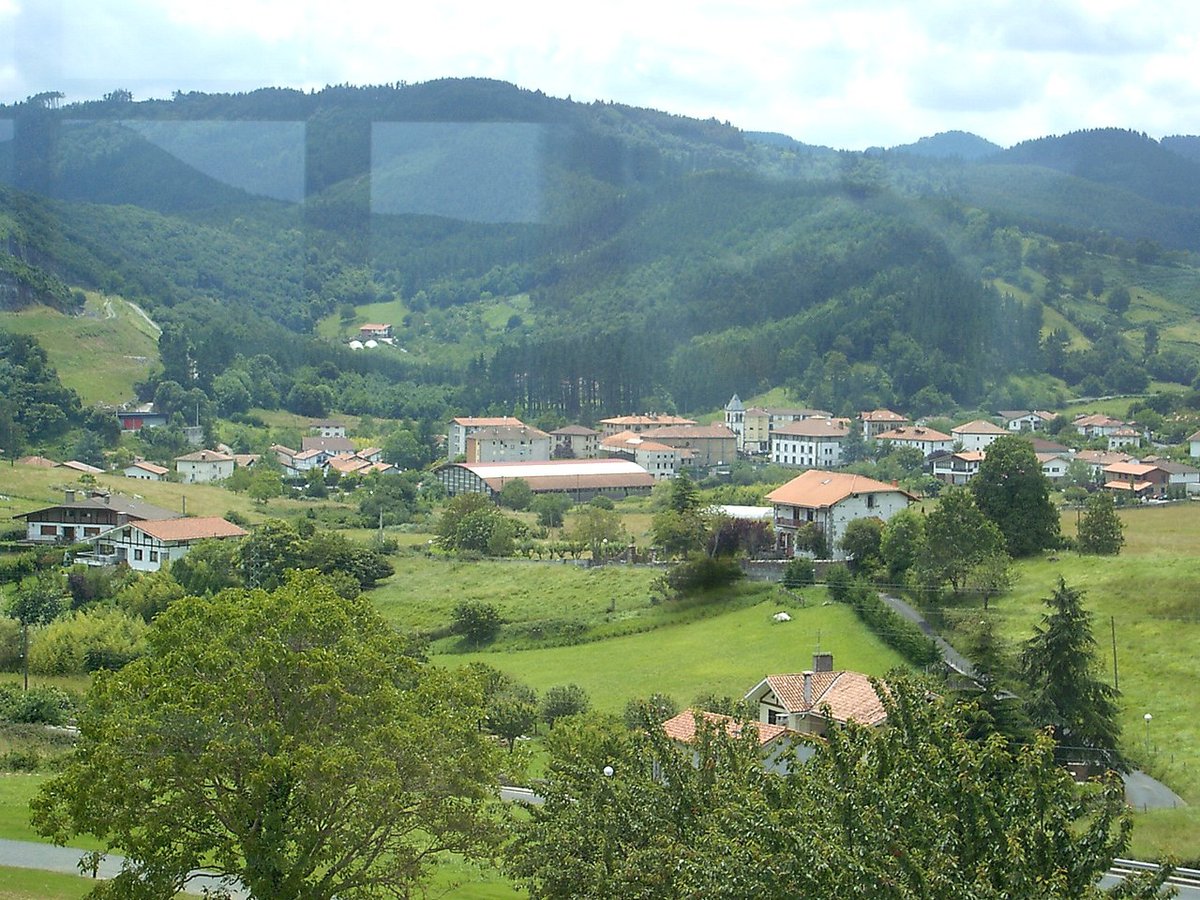
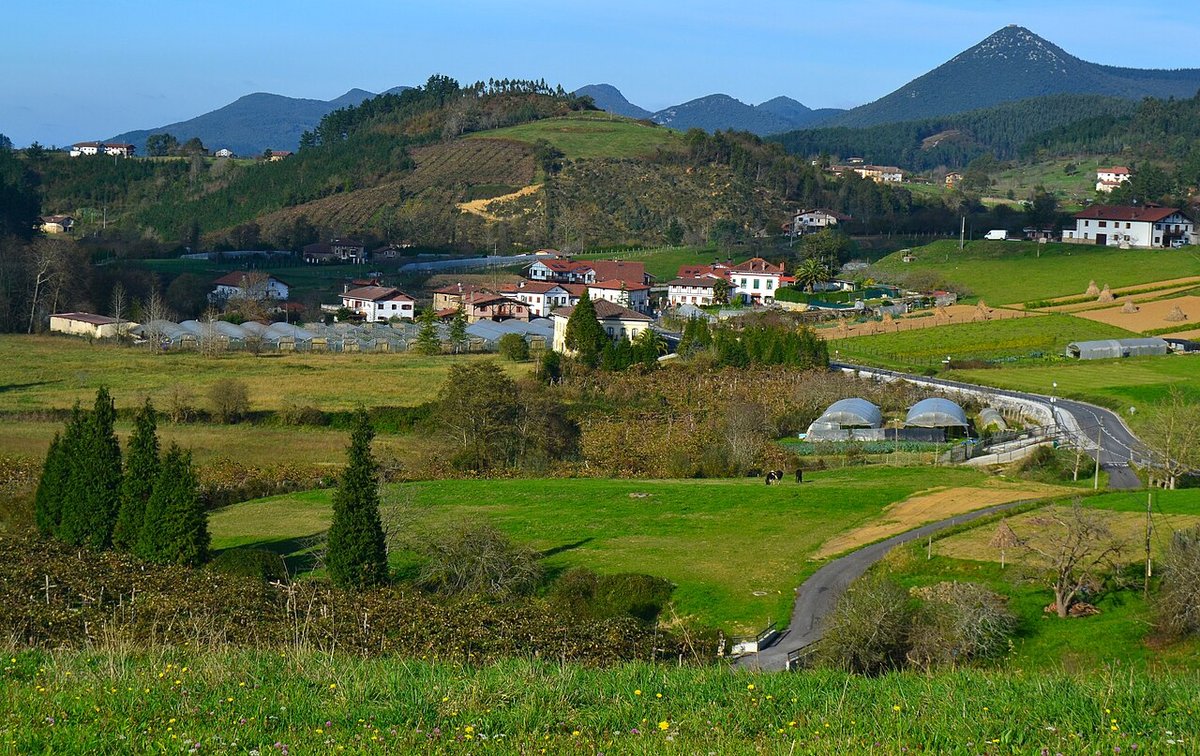
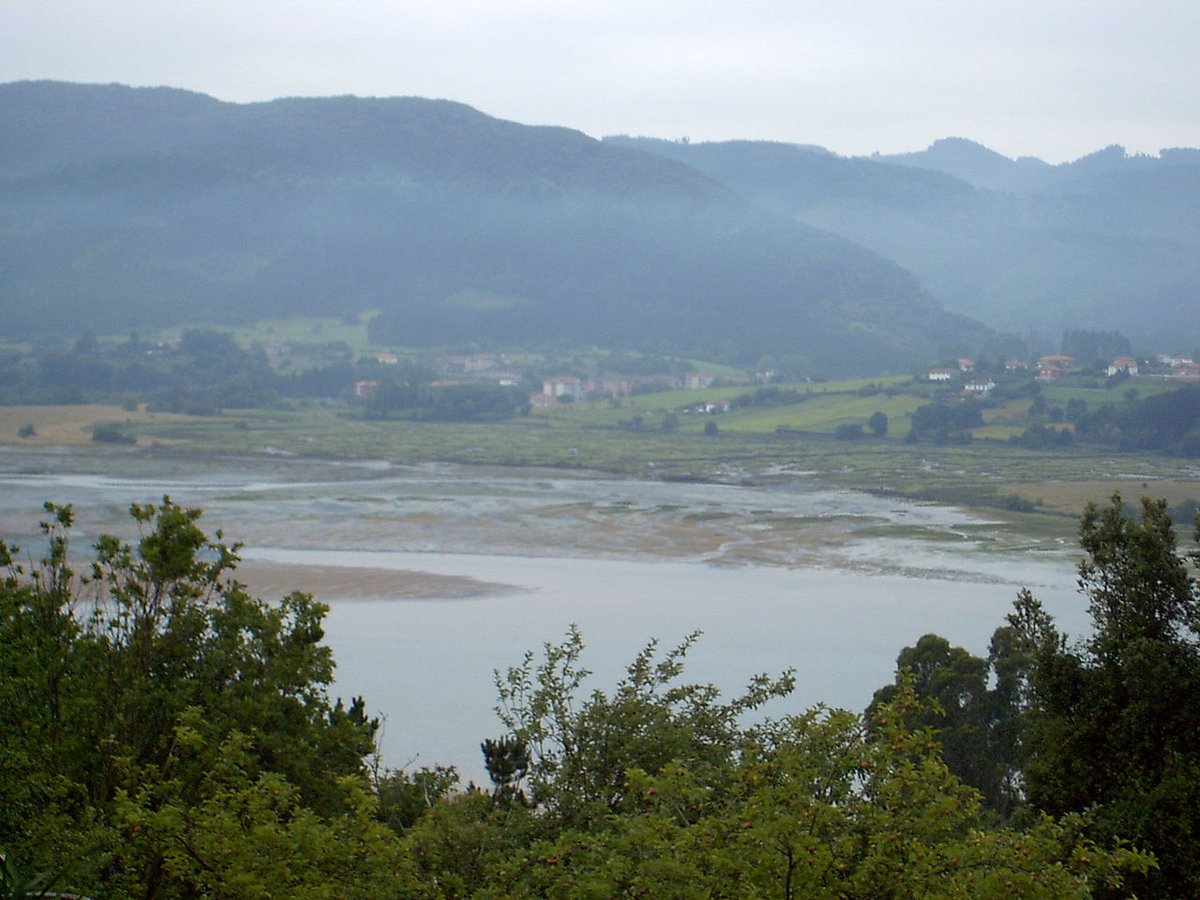
Tourism in Kortezubi often starts with a simple question: what draws people to such a small municipality in one of the most recognisable landscapes of Urdaibai? The answer lies less in a single landmark and more in how the place is laid out. Kortezubi sits in the Busturialdea area, across gentle slopes between marshland, Cantabrian holm oak woods and scattered rural holdings.
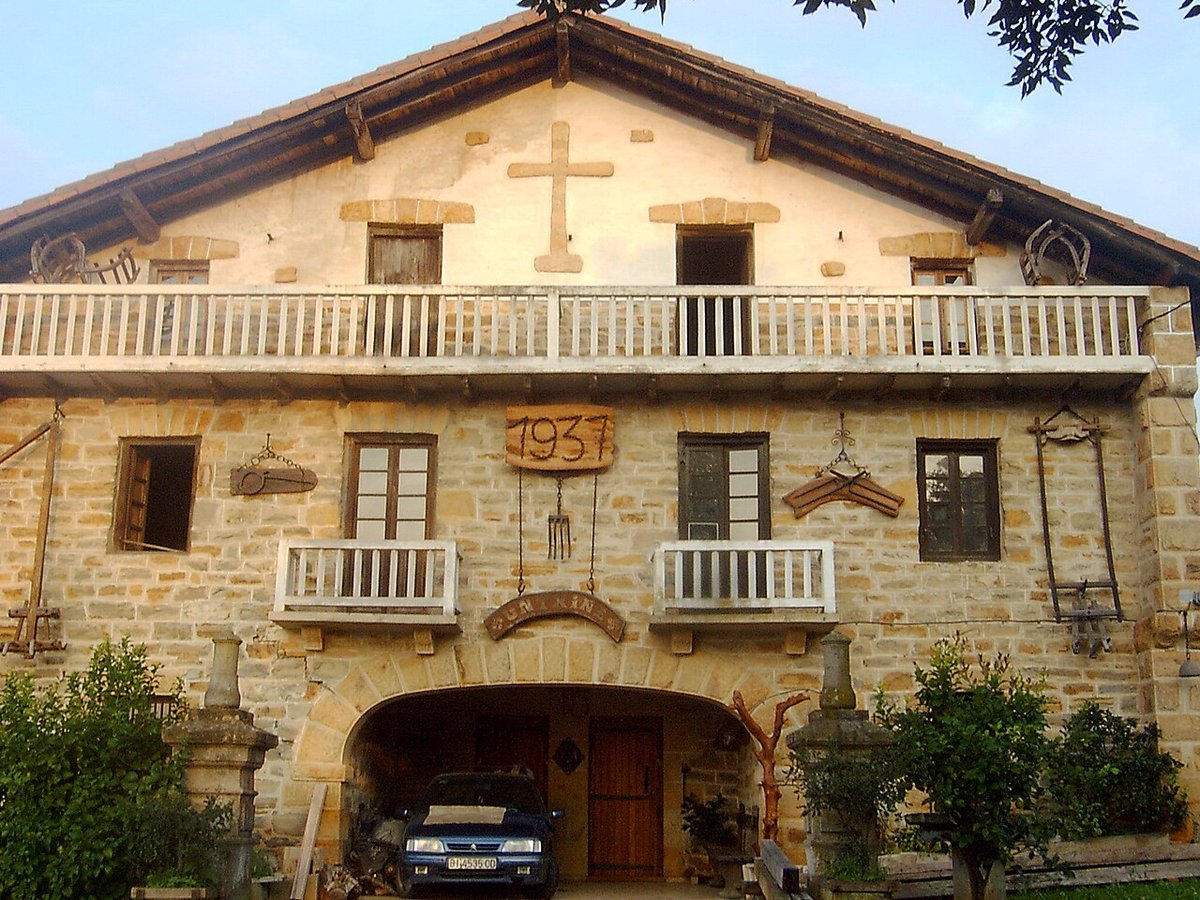
There is no compact town centre. Instead, houses are spread across the valley, reflecting a long-standing way of organising land tied to the caserío, livestock farming and small agricultural plots. This pattern has shaped daily life for centuries and still defines how visitors experience the area today.
As a result, a visit is not built around a main square or a single street. Interest is distributed across several locations within the municipality. The best known of these is the Cueva de Santimamiñe, one of the most important prehistoric sites in the Basque Country.
Santimamiñe and the prehistoric landscape
The Cueva de Santimamiñe forms part of a group of caves with Palaeolithic rock art recognised by UNESCO. Inside, representations of bison, horses and other animals were created thousands of years ago, during the Upper Palaeolithic.
To preserve these paintings, access to the decorated chamber is restricted. Visits now take place through an interpretation centre located beside the cave. This space explains the archaeological context of the site and outlines how human groups once lived here. It is worth checking in advance how the visit system works and what availability looks like, as access is usually regulated.
The setting helps explain why the cave was used for so long. Its entrance opens onto a hillside with a clear view over the valley and, further away, the Urdaibai estuary. That combination of shelter and outlook would have been significant for the people who occupied it.
Painted trees in the Bosque de Oma
A short distance from Santimamiñe lies the Bosque de Oma, an artistic intervention begun by Agustín Ibarrola in the 1980s. In this wooded area, pine trunks were painted with geometric shapes, eyes, animals and human silhouettes. These images are not meant to be seen all at once. Many only come together visually when viewed from specific points along the route.
The work has always been closely tied to the forest itself. Over time, disease affecting the pines and natural ageing have led to changes in how the route is organised. The walk still exists today, though it is sensible to check beforehand where access currently begins and how the visit is arranged.
The path follows forest tracks and earth trails. Rain is frequent in this part of the Basque Country, and wet conditions can make sections more difficult. Mud and exposed roots are common, even when the weather seems settled.
Hermitages and the rural fabric
Beyond these two well-known spots, Kortezubi is primarily rural landscape. Caseríos appear scattered across the slopes, each surrounded by small orchards, grazing land and patches of Cantabrian holm oak that survive on steeper ground.
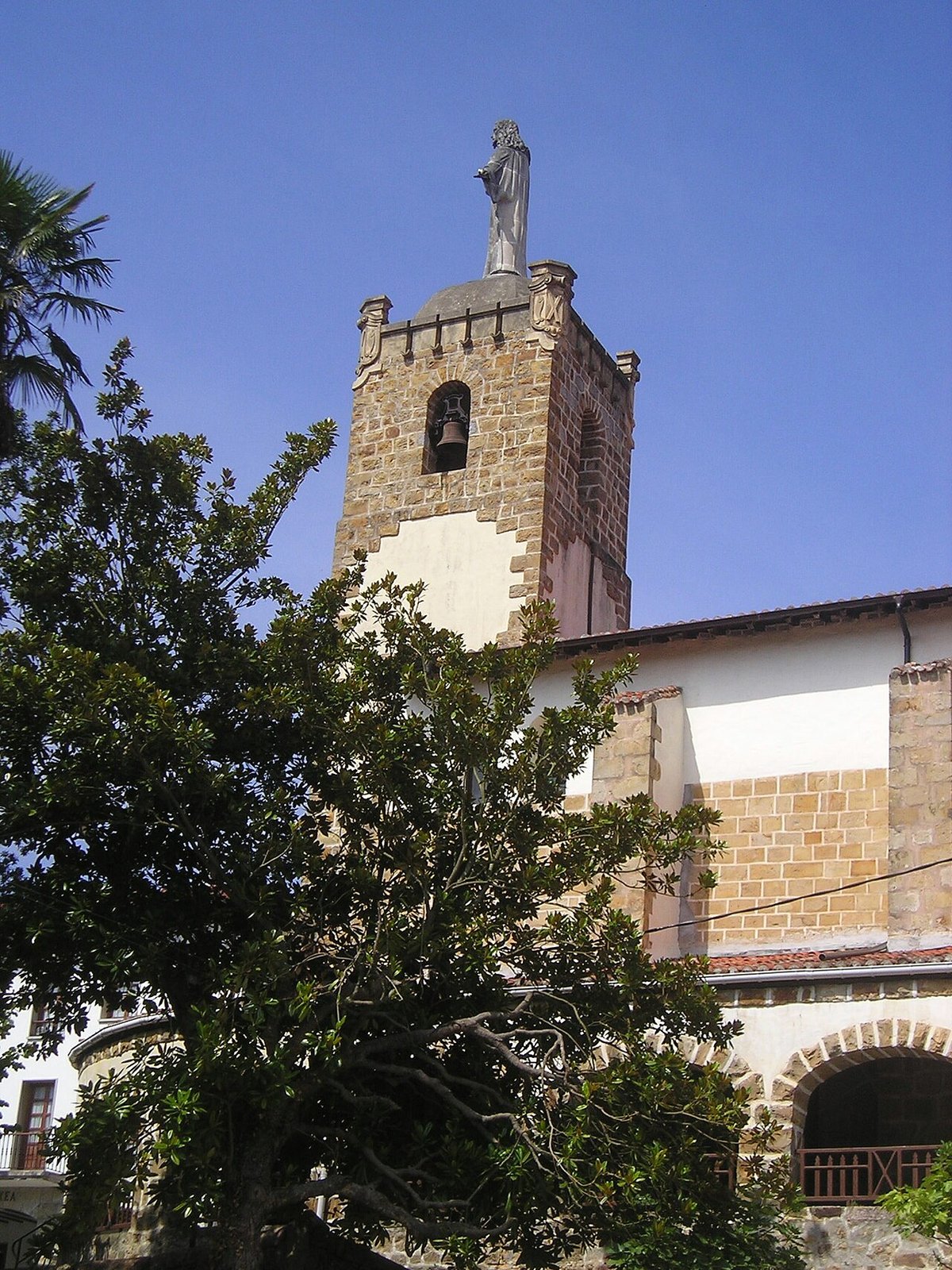
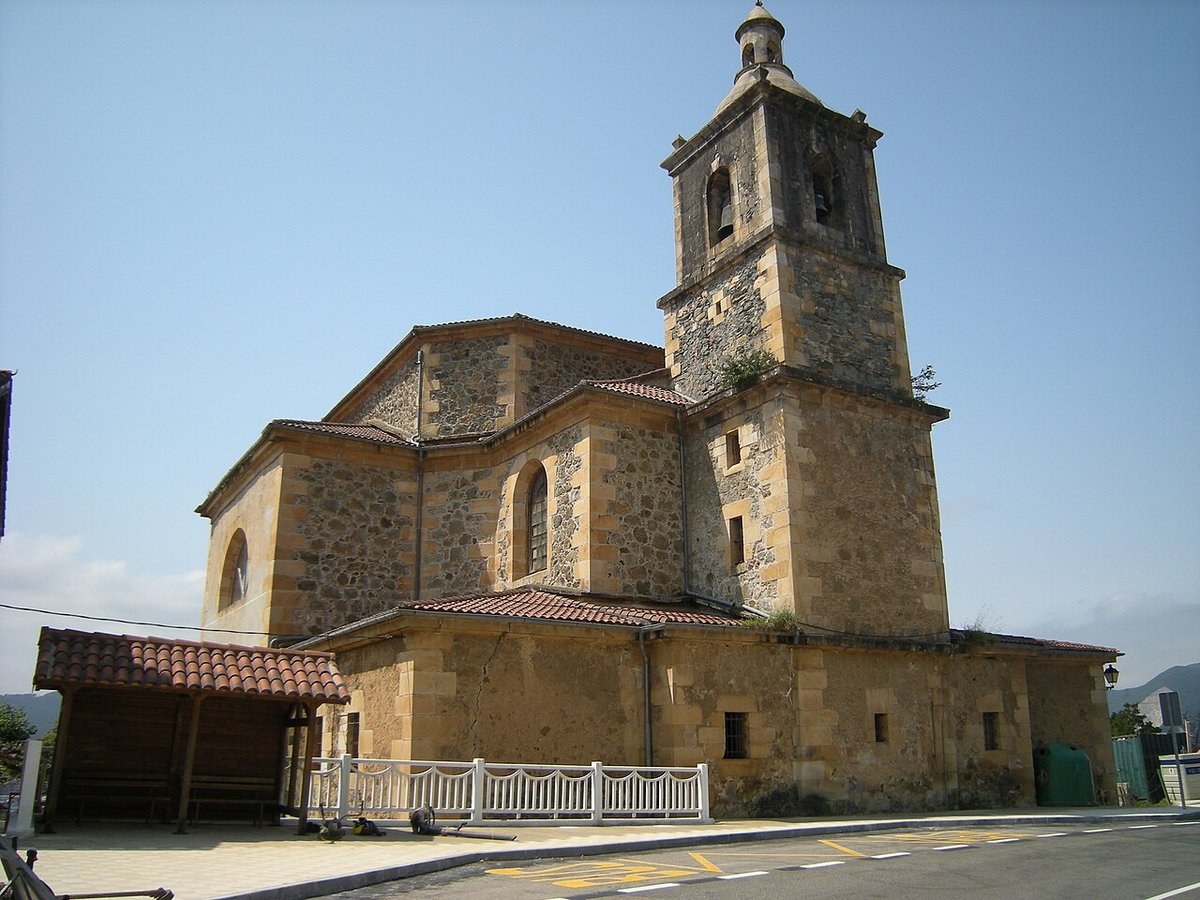
Small hermitages stand on various rises, including the Ermita de San Cristóbal. These are not monumental buildings, yet they offer insight into how local life was structured. They often mark meeting points linked to old paths, rural neighbourhoods or natural boundaries within the valley.
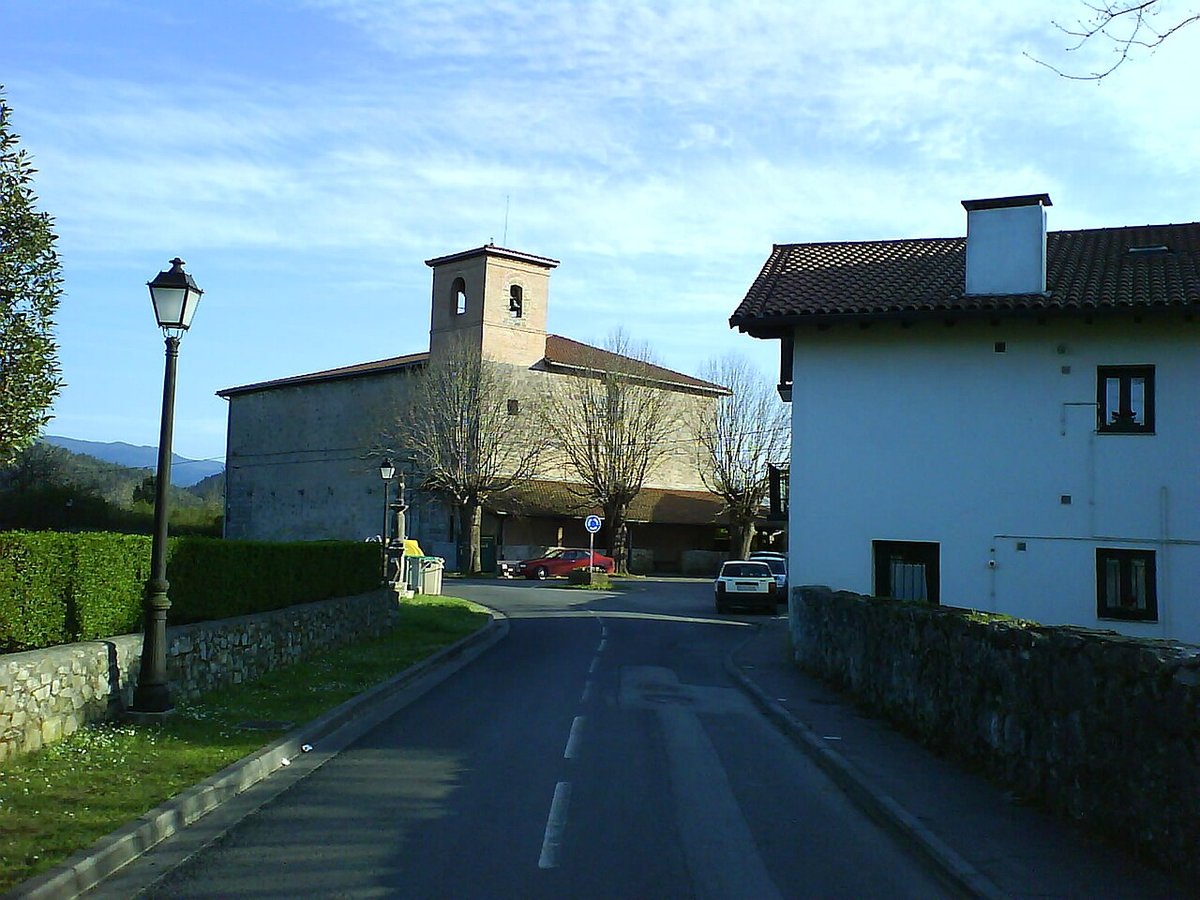
Traditional architecture here is practical rather than decorative. Buildings tend to have thick walls and broad roofs, with orientations chosen to reduce exposure to the north wind and make the most of available sunlight. This functional approach reflects both the climate and the agricultural focus of the area.
Getting around and planning a day
Most visits combine Santimamiñe with a walk through the Bosque de Oma or along nearby paths. Everything is relatively close but spread out, so travelling by car between points can save time.
Kortezubi itself has limited services, which is typical for a municipality with fewer than five hundred inhabitants. Many visitors continue on to other parts of Urdaibai afterwards, including the marsh areas or the coast.
Two common mistakes are worth avoiding. One is arriving at Santimamiñe without first checking how visits are organised. The other is underestimating the terrain. In Urdaibai, moisture is part of the landscape, and forest paths can be muddy even when it is not raining.
Kortezubi is not explored like a town of streets and squares. It makes more sense as a small valley within Urdaibai where points of interest are spread between prehistoric remains, contemporary art in the forest and a rural setting that remains largely intact.