Full Article
about Erriberagoitia (Ribera Alta)
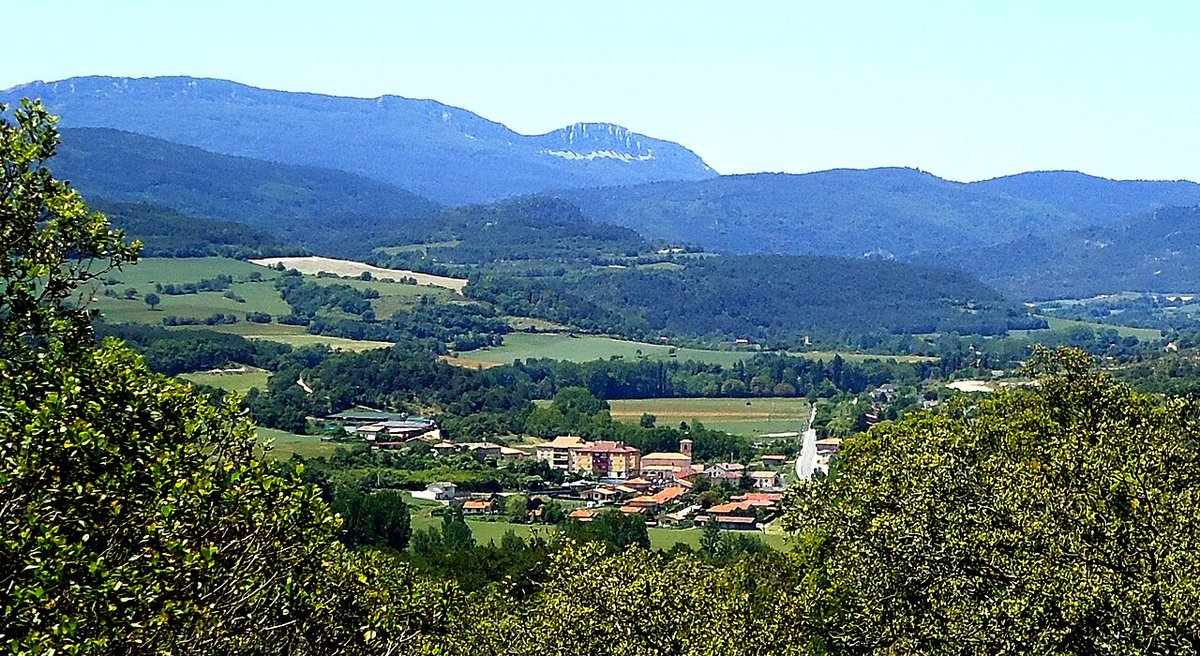
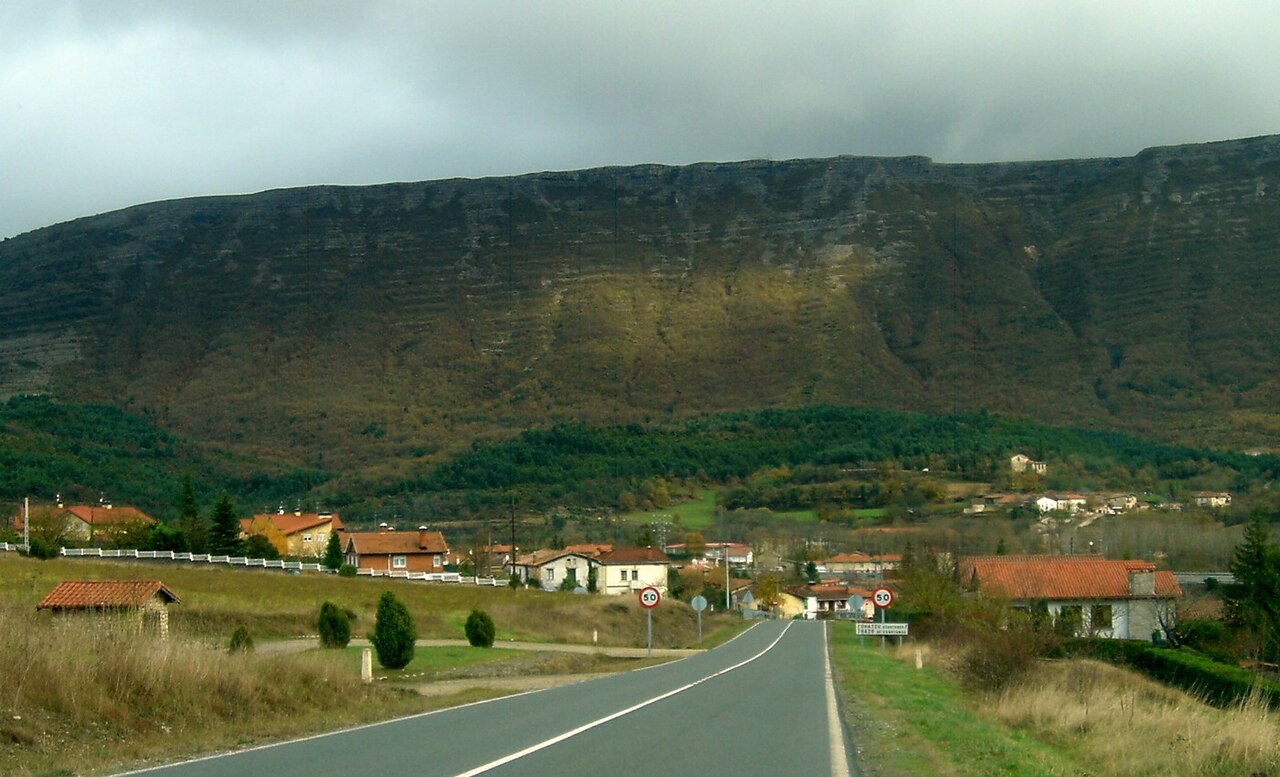
Deep green, farmhouses and nearby mountains with trails and viewpoints.
Ocultar artículo Leer artículo completo
The frontón stands empty at eleven o'clock, its white wall reflecting the morning sun onto the neighbouring church porch. Nothing happens here for twenty minutes. Then an elderly man appears with a shopping bag, sits on the lowest step, and begins shelling peas. This is Erriberagoitia's version of rush hour.
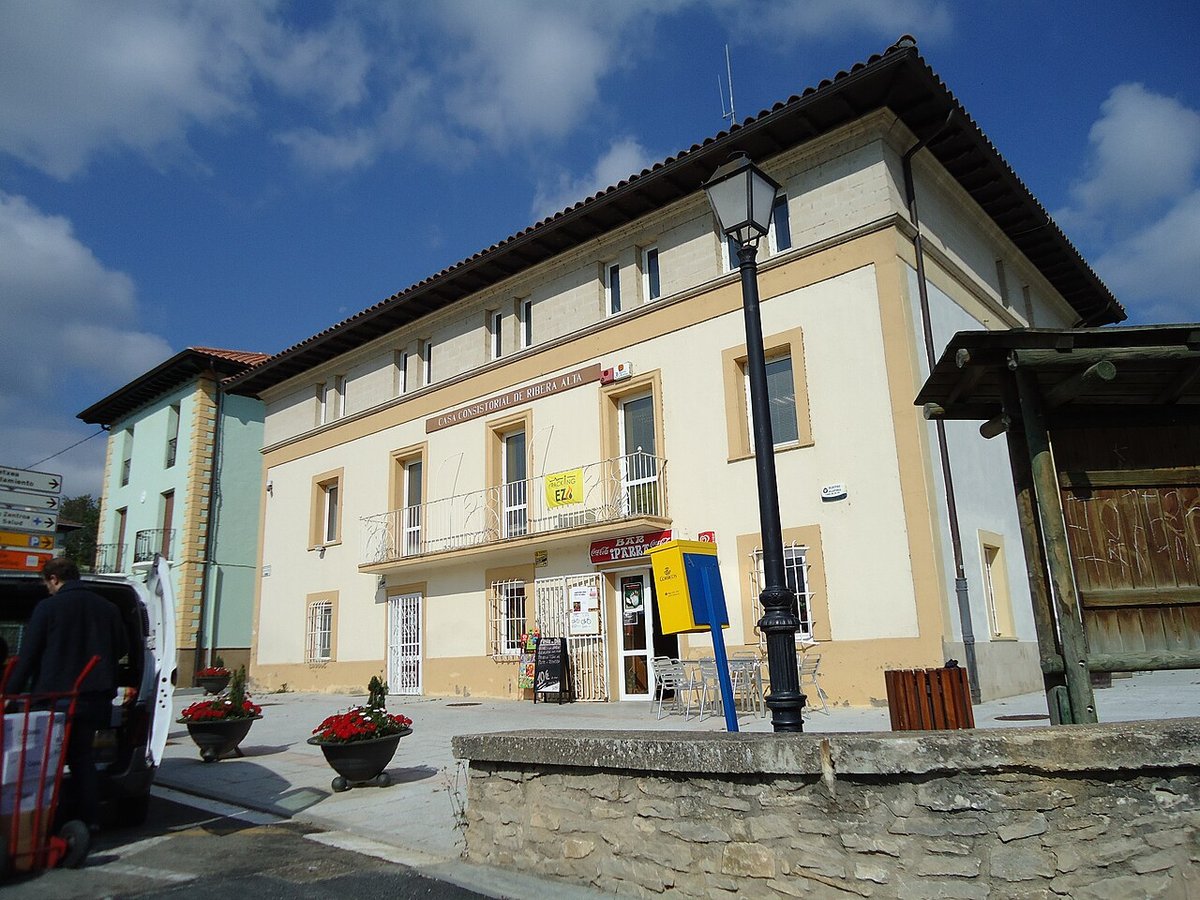
Erriberagoitia—Ribera Alta in Castilian—refuses to behave like a normal village. Instead of clustering around a single plaza, it spreads itself across a shallow valley south of Vitoria-Gasteiz, scattering farmsteads and hamlets across ten square kilometres of Basque countryside. The municipality contains roughly five thousand souls, yet you'd struggle to find more than a dozen in any one place. It functions less as a destination and more as a state of mind: slow driving, slower walking, and the acceptance that closed church doors matter less than the view from the cemetery gate.
Learning to Read the Dispersed Map
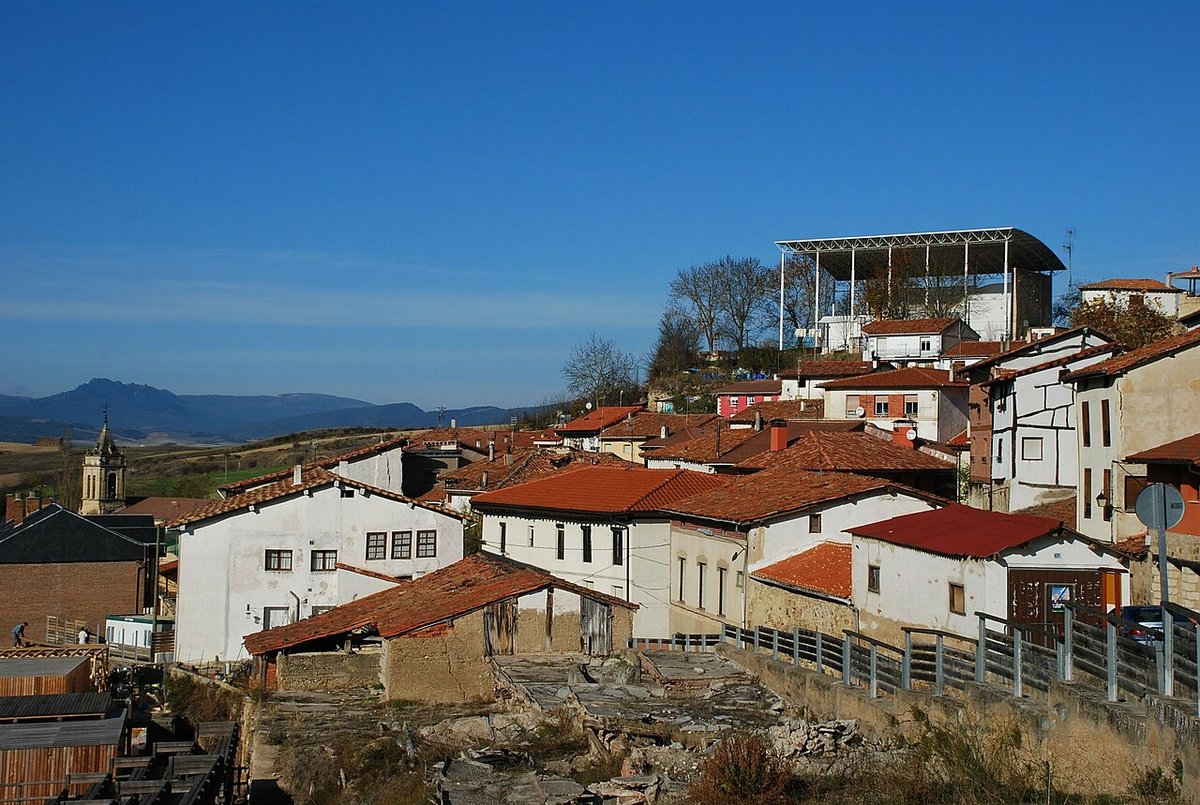
British visitors expecting a chocolate-box centre will scan the horizon in vain. Erriberagoitia comprises a string of minor nuclei—Lermanda, Ollávarre, Ozaeta—linked by lanes that dip and rise like a gentle roller-coaster. The official population figure is misleading; each hamlet might house only thirty permanent residents, their houses set back from the road behind vegetable plots and wire fences that sag under the weight of climbing roses. Satellite navigation occasionally gives up, directing drivers onto farm tracks that turn to mud after the first autumn storm.
A car remains essential. Public buses exist but stick to the main road, leaving walkers three kilometres from whichever cluster they intended to reach. Cycling works if you enjoy grinding up 12-percent gradients between pastures; the reward is freewheeling down the other side with only sheep for spectators. Distances feel trivial on paper—two kilometres separate Lermanda from the church at Santa María—yet the lane twists enough to double the journey time. Allow an hour to cover what the map insists takes fifteen minutes.
Stone, Mortar and the Art of Closed Doors
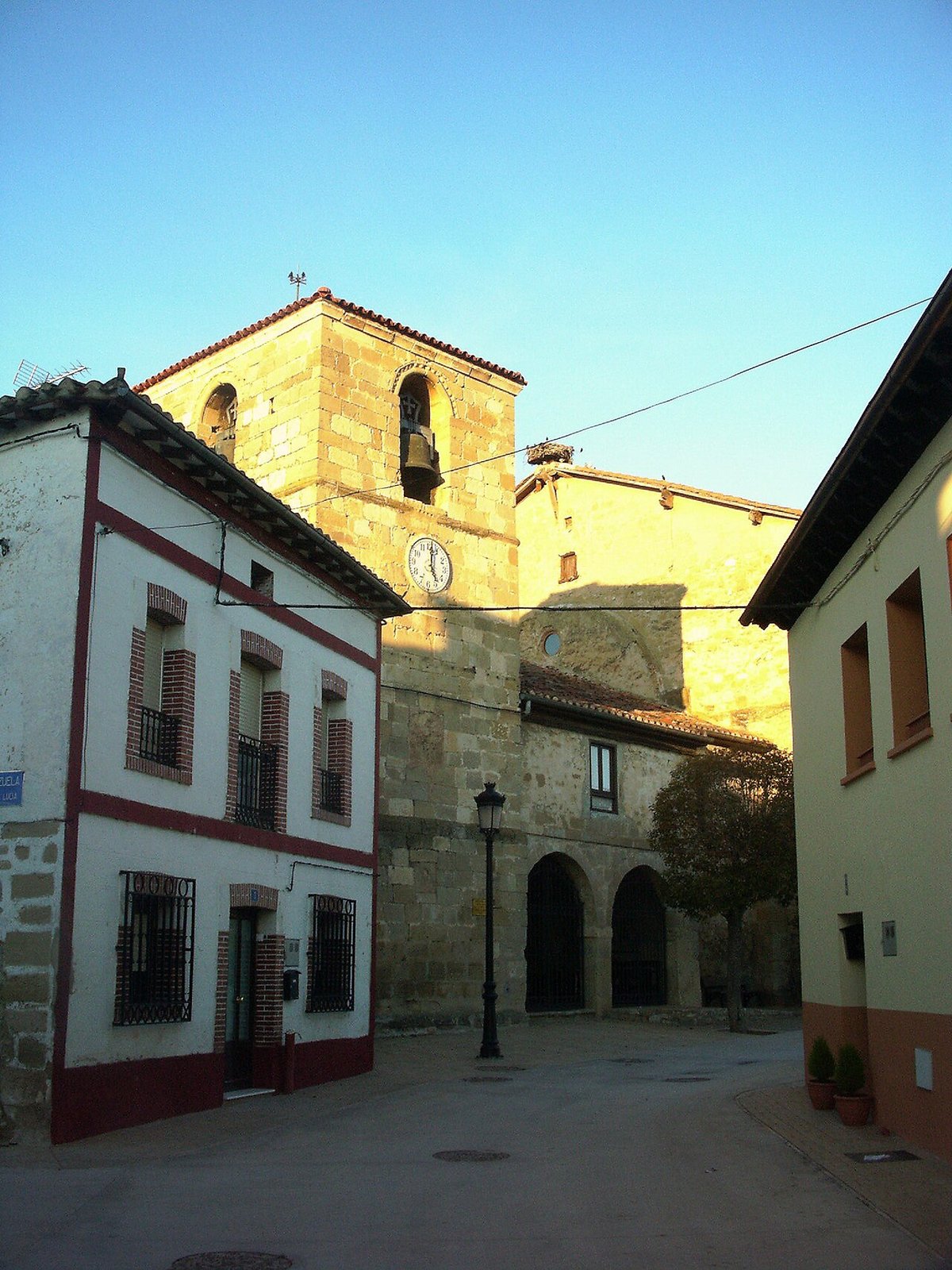
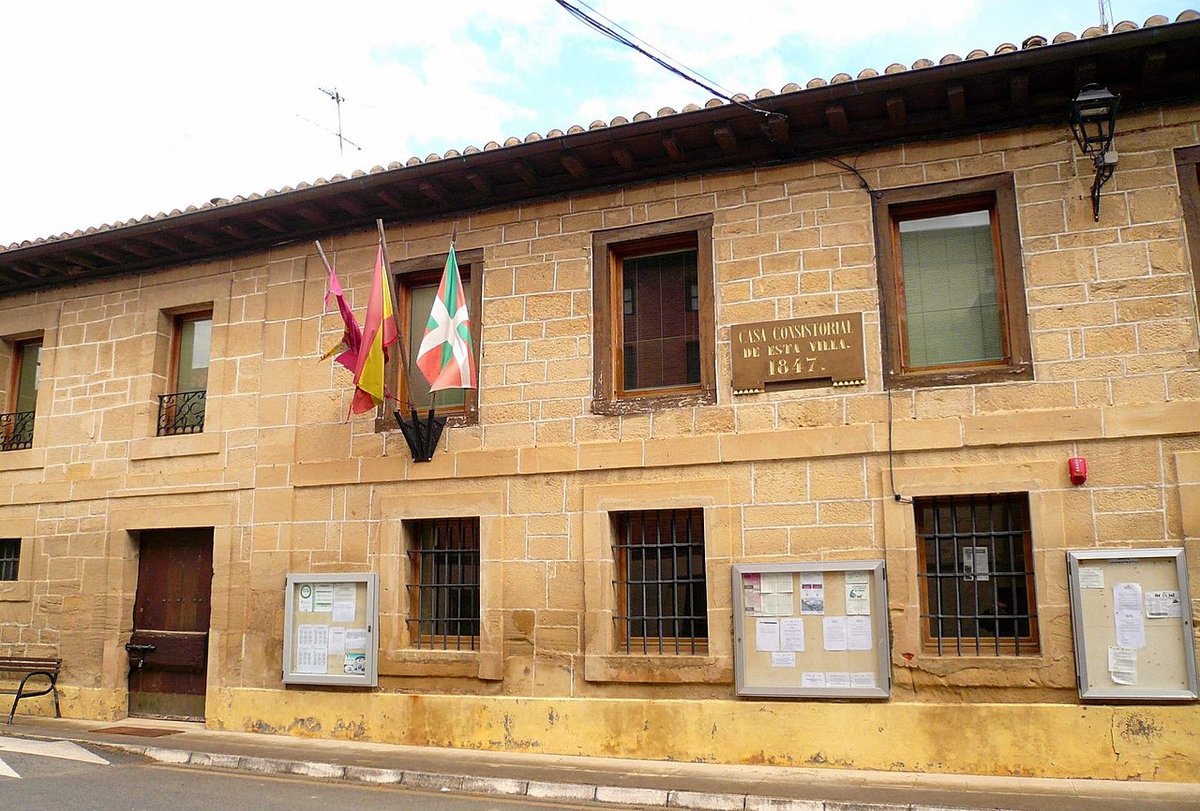
The parish churches date from the sixteenth and seventeenth centuries, built from the same honey-coloured limestone that keeps houses cool in July and bitter in January. Architectural historians might enthuse over the Romanesque fragments embedded in later rebuilds; everyone else notices the stork's nest balanced on the bell-tower at Ozaeta and the way swallows dive through broken arches at dusk. Interiors remain locked except for Sunday mass at eleven, but the surrounding graveyards offer better vantage points anyway. From the cemetery wall at Lermanda the valley floor spreads northwards towards the salt pans of Añana, terraces glinting white after harvest.
Frontóns demand equal attention. These single-walled pelota courts appear beside almost every church, their concrete scored by decades of rubber balls. Match schedules are taped to the door: Saturday evening for adult league, Tuesday after school for youngsters. Turn up ten minutes early and someone will explain the rules, delighted that a foreigner bothered. Photography is fine; joining in requires nerves of steel and health insurance.
Weather that Changes the Route
Spring arrives late at 600 metres above sea-level. April brings luminous green wheat and orchards foaming with cherry blossom, but night frosts can linger until early May. Autumn delivers the most reliable walking weather: bronze beech woods on the upper slopes, threshing machines working late into the evening, wood-smoke drifting from farmhouse chimneys. Summer midday heat feels fiercer here than on the coast; there is no sea breeze and shade remains scarce until the sun drops behind the Sierra de Árcena. Start walks at eight, rest between twelve and four, resume at five when the light turns golden and stone walls release stored warmth.
Winter strips the landscape to essentials. Mist pools in the valley bottom, occasionally thick enough to cancel school buses. Roads ice over without warning; the council grits only the main route to the A-2622. On clear days the air tastes metallic, and views stretch south to the Montes de Vitoria. Locals swap greetings in Euskera—"eguraldi ona" on fine mornings, "hotz egina" when the cold bites—then retreat indoors to linger over stew and Rioja Alavesa.
How to Fill Two Hours Without Trying
Park beside the frontón at Ollávarre. Walk south past the last house, following the concrete farm track that becomes a footpath across pasture. After fifteen minutes the hamlet sits below like an architectural model: terracotta roofs, church tower, allotments laid out in rectangles. Continue for another kilometre to the ruined water-mill at the stream; herons sometimes fish here at dawn. Return via the minor road, stopping to read the Basque-only information panel about medieval iron workings. Total distance: 3.5 km, barely 100 m of ascent, yet enough to justify coffee and sponge cake at the only bar—open sporadically, knock loudly.
If the bar is shut, drive five minutes to the viewpoint above Salinas de Añana. The salt terraces cascade down the opposite hillside like giant rice paddies, their white geometry a startling contrast to Erriberagoitia's soft curves. Entry to the salt valley costs four euros and includes a guided tour, but the panorama from the lay-by is free.
Where to Sleep and What to Eat
Accommodation options within the municipality amount to three self-catering farmhouses booked through the regional tourism board. Expect stone floors, wood-burning stoves, Wi-Fi that flickers whenever it rains. Prices hover around ninety euros per night for two, minimum stay two nights in high season. Breakfast provisions—eggs, honey, loaf—are left on the kitchen table; stronger coffee needs a run to the Eroski in Nanclares de la Oca, ten minutes by car.
Restaurants exist only in the neighbouring town of Valdegovía, five kilometres west. Mesón El Palomar serves a fixed-price weekday menu for eighteen euros: vegetable soup, grilled pork shoulder, wine from a plastic jug. Vegetarians receive tortilla and sympathetic shrugs. Weekend dinners require advance booking; the chef is also the waiter and may close early if his daughter has a pelota match.
The Honest Verdict
Erriberagoitia will not change anyone's life. It offers no single "must-see" monument, no souvenir shops, no evening entertainment beyond the occasional concert in the church—advertised on a handwritten sheet taped to the presbytery door. What it does provide is space to recalibrate speed: lanes that force twenty-mile-an-hour progress, villagers who measure time in seasons rather than minutes, a landscape that looks best when you stop expecting it to perform.
Come if you already have a hire car and a loose itinerary through Álava. Combine it with the salt valley in the morning, a vineyard visit after lunch, perhaps the prehistoric caves at Praileaitz if energy persists. Treat the place as punctuation between louder experiences, not as the sentence itself. And when the frontón fills with teenagers shouting in Euskera while their grandparents keep score on a chalkboard, stay for one game. You still won't understand the rules, but you'll grasp why nobody here measures time by the clock.