Full Article
about Okondo (Oquendo)
Stone, history and Atlantic landscape in the Basque interior.
Ocultar artículo Leer artículo completo
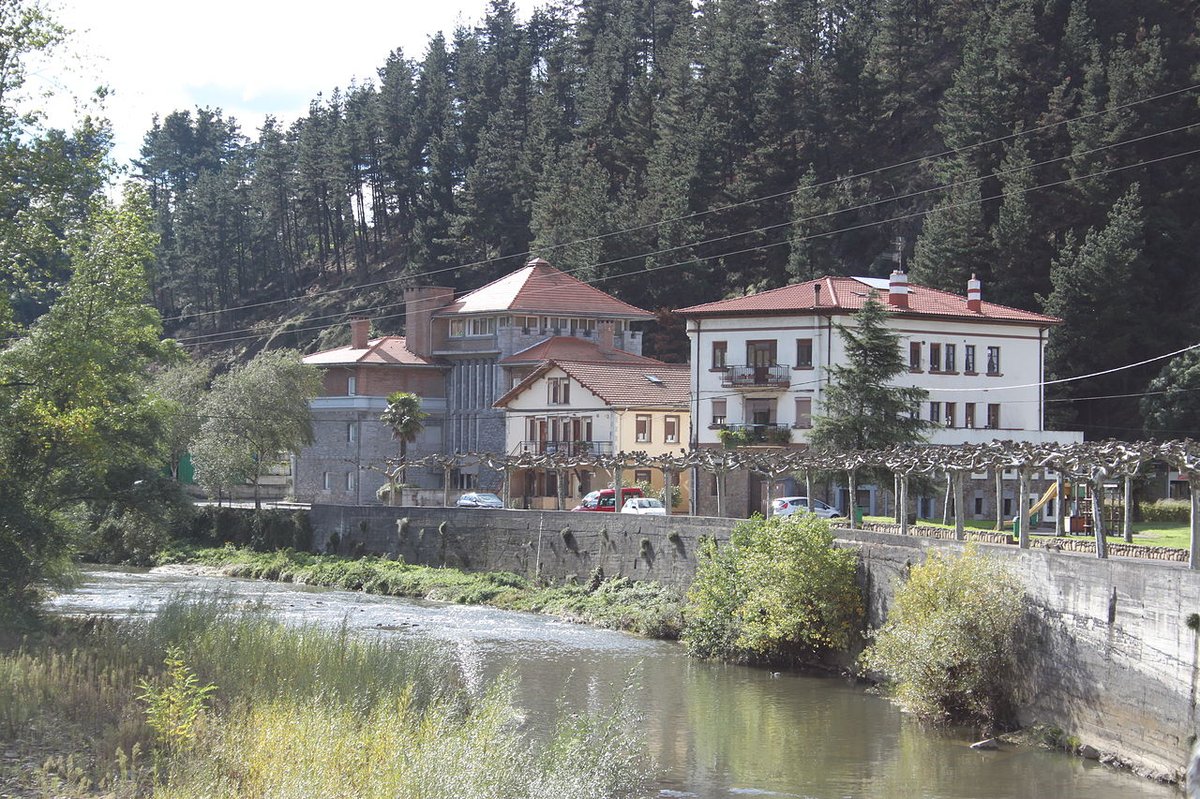
The first thing you notice is the sound of water everywhere. Not crashing waves or dramatic waterfalls, but the constant murmur of streams threading between stone farmhouses, under narrow bridges, and alongside the single main road that winds through Okondo's valley. It's the kind of place where locals still nod hello to strangers, where the church bell marks time more reliably than any watch, and where the green – that particular Basque Country green that photographers never quite capture – presses in from every side.
Learning to Read a Working Valley
Okondo sits at just 140 metres above sea level, making it one of the lower valleys in the Cuadrilla de Ayala region. Don't expect dramatic mountain vistas here; instead, the landscape unfolds gently, revealing itself through small discoveries. The traditional caseríos (farmhouses) appear around each bend, their stone walls thick enough to keep out winter's Atlantic chill, their wooden balconies draped with washing that flutters like prayer flags against the hillsides.
The village proper numbers barely a thousand souls, though the municipality spreads across several dispersed neighbourhoods. There's no medieval centre to tick off, no castle ruins or Renaissance squares. What you get instead is a living lesson in how water shapes human settlement: old irrigation channels still feed vegetable plots, stone washing troughs sit beside every stream, and the occasional rusted iron wheel hints at long-abandoned mills that once ground the valley's corn.
Architecture buffs might find themselves studying doorways rather than façades. The massive wooden portals, often studded with iron and bearing the wear of centuries, tell their own stories. Some still have the original stone benches built into the walls where grandparents once sat shelling beans, watching the world go by at a pace that hasn't much changed.
Walking Without a Destination
The best way to understand Okondo is to abandon any idea of sightseeing. Pick a lane – any lane – and walk. Within ten minutes you'll be between hedgerows, hearing only your footsteps and the occasional tractor grinding its way to fields that have been worked since before Columbus sailed west. The PR-BI 102 footpath links several hamlets in a gentle 8-kilometre loop that takes about two and a half hours, passing through pockets of oak and beech forest where wild boar root for acorns.
Serious hikers can tackle the Camino de Santiago variant that passes through on its way from Portugalete to Santo Domingo de la Calzada. The yellow arrows appear on walls and fence posts, though here they serve more as gentle suggestions than markers of pilgrimage infrastructure. Most days you'll have the path to yourself, save for the odd local walking their dog or checking on livestock.
Cyclists appreciate the secondary roads that climb steadily but never punishingly towards neighbouring valleys. The BI-2225 towards Gernika offers particularly satisfying riding: smooth asphalt, minimal traffic, and views that open up gradually until you can see the Cantabrian range shimmering in the distance on clear days. Just remember that Spanish drivers take mountain bends enthusiastically – keep tight to the verge and don't trust that they'll slow down for you.
Eating What the Valley Gives
Food here follows the seasons with refreshing simplicity. Spring brings tender white asparagus from nearby Gernika, served simply with mayonnaise or vinaigrette. Summer means tomatoes that actually taste of sunshine, sliced thick and dressed only with local olive oil and a pinch of salt. Autumn is wild mushroom season – if you're lucky, you might spot locals returning from dawn forays with baskets of níscalos (saffron milk caps) that will appear on menus that evening.
The valley's signature dish is marmitako, a hearty tuna and potato stew that fishermen originally cooked on boat decks using the day's catch. At Casa Julian, the village's main restaurant (and yes, there's essentially just one), it arrives in a clay pot, the chunks of bonito tuna still pink in the centre, the potatoes holding their shape despite long simmering with peppers and onions. A portion easily feeds two hungry walkers for €14.
Weekend lunch is when the real business happens. Families drive up from Bilbao for chuletón – enormous T-bones carved tableside, cooked over charcoal until the exterior chars while the interior stays ruby-red. Order it "poco hecho" if you like it rare; anything more and the waiter will look at you with the same suspicion a British barman reserves for someone ordering warm beer. The house Idiazabal cheese, made from raw sheep's milk and aged in the valley's cool cellars, has the nutty sweetness that makes even cheese-sceptics reconsider their position.
The Practical Stuff Nobody Mentions
Getting here requires either patience or a hire car. Public transport exists but operates on Basque Country time: the Bizkaibus from Bilbao's Termibus station runs once or twice daily, takes two hours, and costs €4.80. The last bus back leaves at 17:45 sharp – miss it and you're looking at a €70 taxi ride to Gernika. Car hire from Bilbao airport takes 55 minutes via the A-8 and BI-2225, with the final approach through winding lanes where GPS signals occasionally vanish.
Accommodation is limited to a handful of rural houses and one small hotel. Casa Karmelo, a converted 17th-century farmhouse, offers five rooms from €65 per night including breakfast featuring their own hens' eggs and homemade jam. Book directly – they're not on Booking.com and prefer phone calls to emails. The single ATM in the main square works sporadically and most bars prefer cash; the nearest reliable machine is a 15-minute drive towards Gernika.
Weather can catch out the unprepared. The valley's low altitude means mild winters but frequent Atlantic showers that turn footpaths to mud. Proper walking boots aren't showing off – they're essential after rain. Summer brings humidity that makes the greenery almost tropical, though temperatures rarely exceed 25°C. Spring and autumn offer the best balance: wildflowers in April, golden beech woods in October, and enough daylight for proper exploration.
When to Cut Your Losses
Okondo isn't for everyone. If you need constant stimulation, museums, or nightlife beyond a single bar where the television inevitably shows football, you'll be bored within an hour. The village rewards those comfortable with their own company, happy to spend an afternoon watching clouds drift across valley slopes or following a stone wall simply to see where it leads.
Come here when you've had enough of Spain's greatest hits, when you can embrace the possibility that the most memorable part of your trip might be a conversation with an 80-year-old farmer who insists on sharing his homemade patxaran (sloe gin) despite your protestations about driving. Okondo offers something increasingly rare: a place where tourism hasn't become the local industry, where life continues whether visitors come or not, and where you might – if you're very lucky – remember how to be still.