Full Article
about Gasteiz (Vitoria)
Deep green, farmhouses and nearby mountains with trails and viewpoints.
Ocultar artículo Leer artículo completo
The cathedral roof is 1,300 years old and still leaking. That’s the first thing the guide tells you as she hands out hard hats, before leading the group down a narrow stone stair into the foundations. Above ground, Vitoria-Gasteiz feels like a modest provincial capital – clean squares, sensible bike lanes, locals who greet the baker by name. Below ground, you’re walking through layers of collapsed chapels, Visigothic bricks and 11th-century waterproofing that never quite worked. The contrast sums up the city rather well: solid, unshowy, but full of surprises for anyone who bothers to look twice.
At 520 metres above sea level, Gasteiz sits on a low ridge where the Cantabrian rainfront meets the dry Alavesa plateau. The altitude keeps summers bearable – temperatures rarely top 30 °C – but it also means the wind can knife through streets in February. Bring a proper coat in winter; the Basque damp creeps upwards through the cobbles, and café terraces empty fast when the clouds roll in. Spring and early autumn are the sweet spots: daylight long enough for an evening lap of the Anillo Verde, mild enough to linger over a glass of cosechero without wishing for a radiator.
Medieval Grids and Green Rings
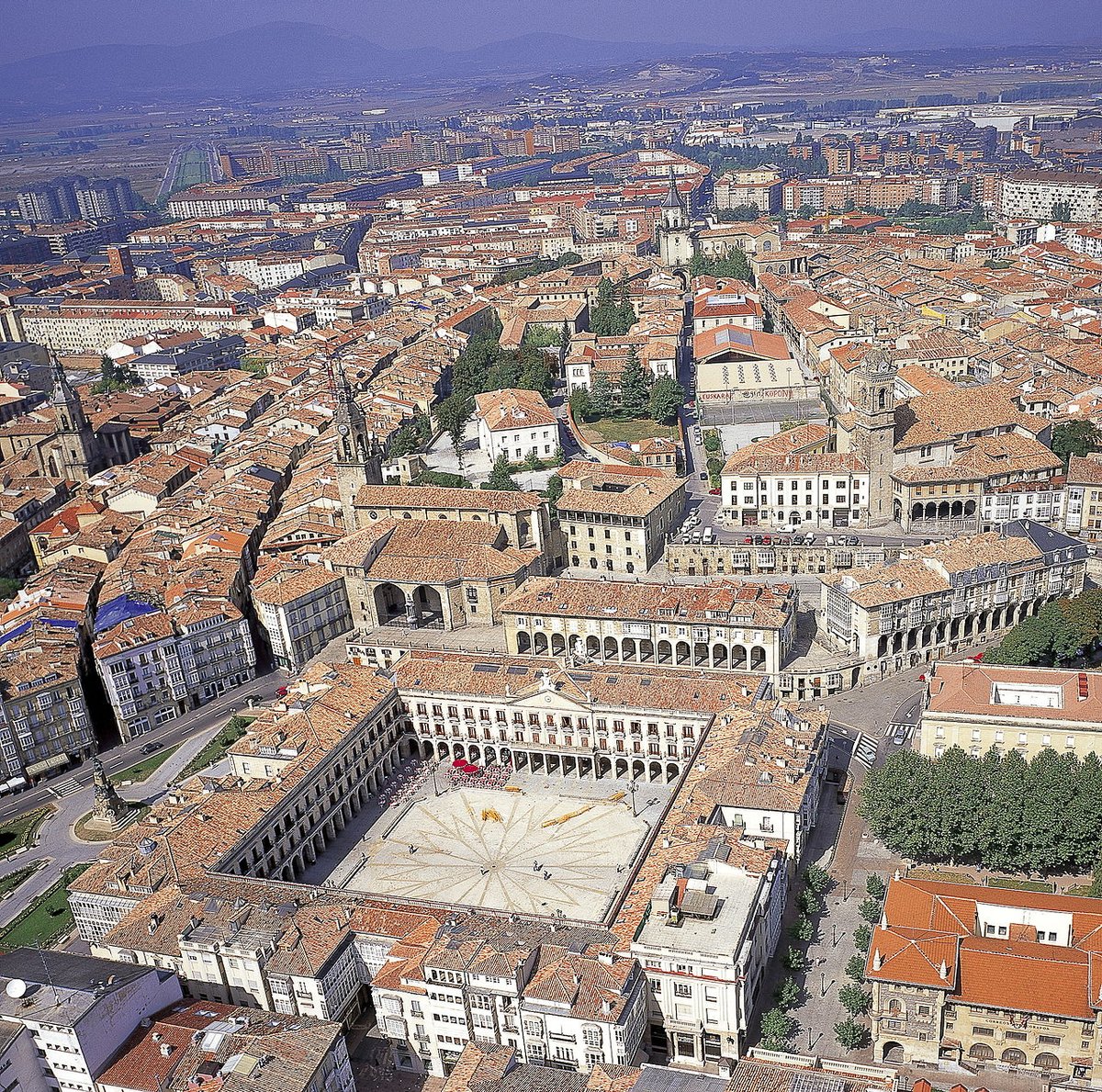
The old town is built on an almond-shaped hill, a shape still visible from the bell tower of San Miguel. Three parallel streets run east–west, linked by short, steep alleys that can turn a gentle stroll into an unplanned calf workout. Stone portals lean overhead, their coats of arms half-eroded by five centuries of Atlantic drizzle. You can cover the whole casco in twenty minutes, but that misses the point. Better to duck under the wooden arcade of Plaza de la Virgen Blanca at 11 a.m., order a cortado at Café Iruña and watch the city organise itself: delivery vans unloading hake, teenagers rehearsing Basque folk songs for the next fiesta, retired men arguing about football in a dialect that sounds like Spanish with the edges sanded off.
Five minutes downhill, the stone suddenly stops and the park begins. The Anillo Verde is a 33-kilometre loop of wetlands, oak scrub and cycle paths that circles the centre like a moat of foliage. Pick up the free map from the tourist office on Plaza España – signposts are sporadic and the city app drains your battery – then walk clockwise for half an hour. You’ll pass Salburua wetlands, where red-crested pochards paddle between reeds, and the Ataria visitor centre, which explains how the old flood-meadows saved the city from smelling like a medieval drain. Cyclists whirr past, but numbers are thin on weekdays; you’re more likely to share the track with dog-walkers and a lone runner pushing a pram uphill, something that looks harder than any cathedral tower.
Between Pintxo Bars and Pil-pil Sauce
Food here is less theatrical than in San Sebastián, and cheaper. A txalupa – mushroom, prawn and cheese brochette – costs around €2.20 around Plaza de la Virgen Blanca, and you’ll be offered it in every fourth bar. Order one alongside a zurito (a quarter-pint of lager) and you’ve staged your own miniature tapas crawl without leaving the square. If you sit down, head to Calle del General Álava for bacalao al pil-pil: olive oil, garlic and guindilla chilli shaken until the juices emulsify into a pale gold sauce that tastes of sea and smoke. The cod arrives bone-free, reassuring for anyone still haunted by a choking incident in Santander circa 2009. Vegetarians do better than expected: roasted piquillo peppers stuffed with idiazabal sheep’s cheese appear on most menus, the cheese nutty rather than farmyard-pungent.
Lunch service ends at 3 p.m. sharp; turn up at 3:07 and you’ll find the chef sweeping the floor. Spaniards eat late, but Gasteiz runs on municipal office hours. Plan museum visits for 10–1 or after 4, otherwise you’ll be stranded outside the Archaeological Museum staring at a locked door and a poster about Roman pottery.
Wind, Water and the Winter Question
August belongs to the Fiestas de la Virgen Blanca: nine days of fireworks, parades and temporary bars that spill onto the ring-road. Accommodation prices jump 40 % and earplugs become essential if your hotel faces any square. July and August evenings are idyllic – daylight until 10 p.m., terrazas full of families – but the city empties in the siesta hours and some smaller restaurants simply close until September. Winter visitors get lower hotel rates and misty sunrises over the wetlands, but they also get short days and horizontal rain. If you come between November and March, build indoor stops into the route: the Artium contemporary gallery, the restored 17th-century arsenal, the cardamom-scented interior of the Gothic cathedral. Or do as locals do: retreat to a frontón and watch pelota matches where the ball ricochets off granite walls at 150 kph. Entry is usually free; stand at the back until you work out which colour jersey is winning.
Getting Out, Getting Back
The train from Bilbao takes 50 minutes through tunnels and apple orchards; a return ticket is €12.55 if you book a day ahead. Drivers should leave the car at Salburua park – parking is free, and a riverside path brings you into the centre in ten minutes. Once inside the medieval grid, the city rewards aimless walking. Head north on Calle Fray Zacarías and you’ll reach the 19th-century extension: wide boulevards, wrought-iron balconies, the smell of fresh bread from a bakery that still stamps its name into the crust. Keep walking and the houses thin out into beech woods that climb towards the 1,000-metre line. The PR-BI 203 footpath starts beside the university campus: a two-hour loop through oak and heather, muddy after rain but never remote. You’re unlikely to meet anyone except a local jogger and perhaps a shepherd moving his flock between pastures, the bells clanking like loose change in a tumble-dryer.
Back in town, the evening light catches the sandstone of the cathedral tower and the whole ridge glows amber. Tourist brochures call Gasteiz “the green capital of Europe” – it won an EU award in 2012 – yet the phrase feels too polished for a place where waiters still apologise if the tortilla took five minutes longer than expected. Stay a night, maybe two. Cycle the wetlands in the morning, climb the tower at noon, eat chuletón for lunch and nap through the siesta. You won’t tick off blockbuster sights, but you will leave with the quiet conviction that living well doesn’t require a coastline or a souvenir fridge magnet. Just a sturdy umbrella, a working knowledge of uphill shortcuts, and the willingness to look up from the menu long enough to notice the rainclouds building over the Cantabrian hills.