Full Article
about Mutriku (Motrico)
Cantabrian Sea, cliffs and seafaring flavor in the heart of the Basque Country.
Ocultar artículo Leer artículo completo
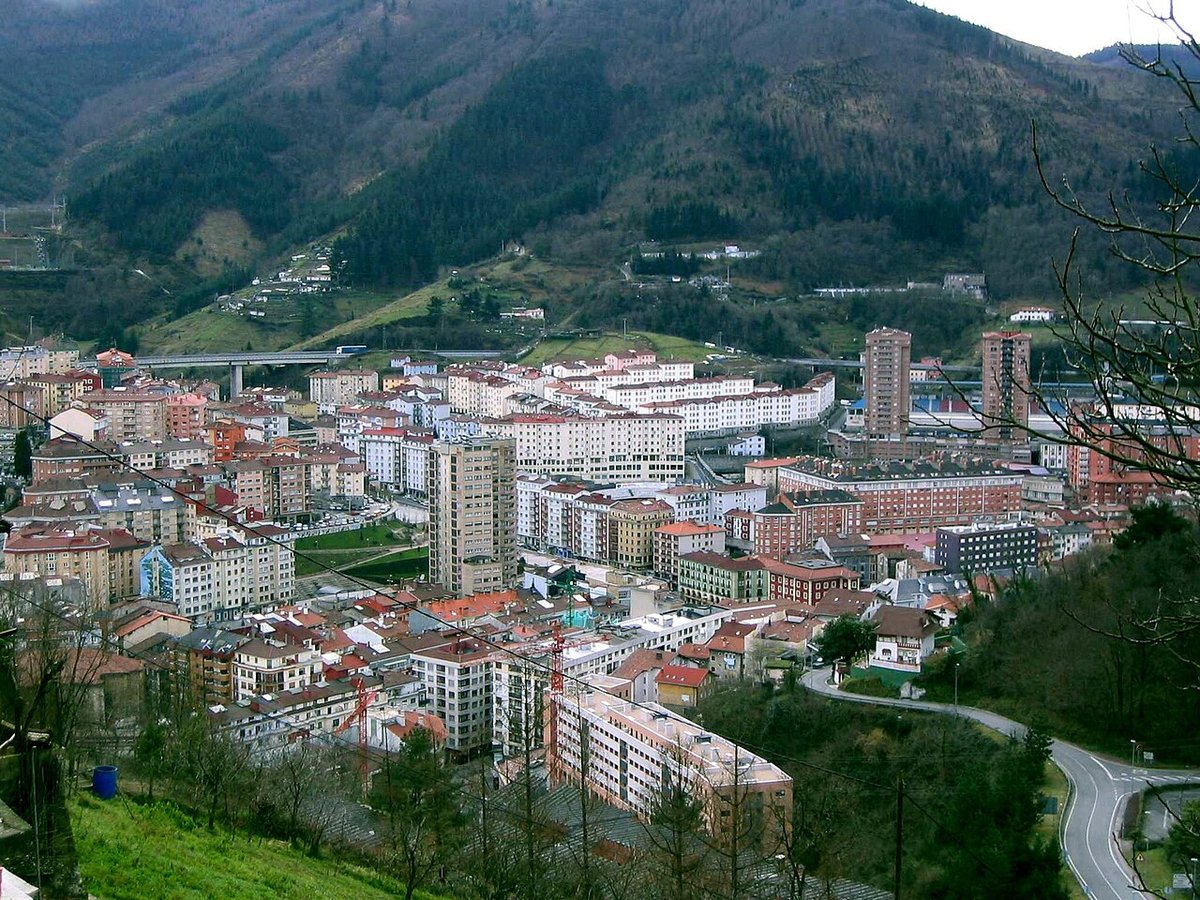
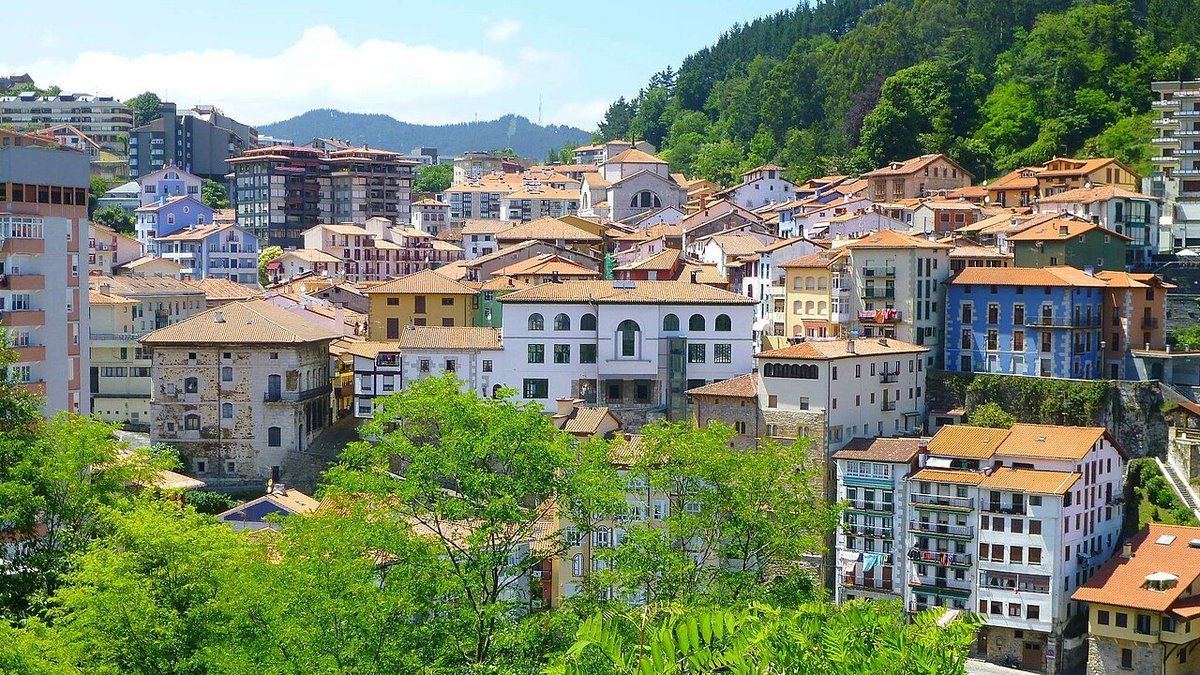
The first thing you notice is the smell of diesel mixing with seaweed. It drifts up the stone lanes from the harbour where a dozen red-and-white trawlers idle against the quay, their crews hosing down decks at 11 a.m. sharp. Above them, the old town climbs so steeply that house backs are taller than their fronts; washing lines dangle six metres above your head, pegged with fluorescent oilskins instead of T-shirts. This is Mutriku, 4,500 souls wedged between the Cantabrian Sea and a wall of beech-covered hills, 45 minutes west of San Sebastián. It earns its living from fish, not photographs, and the difference shows.
Stone, Slope and Saltwater
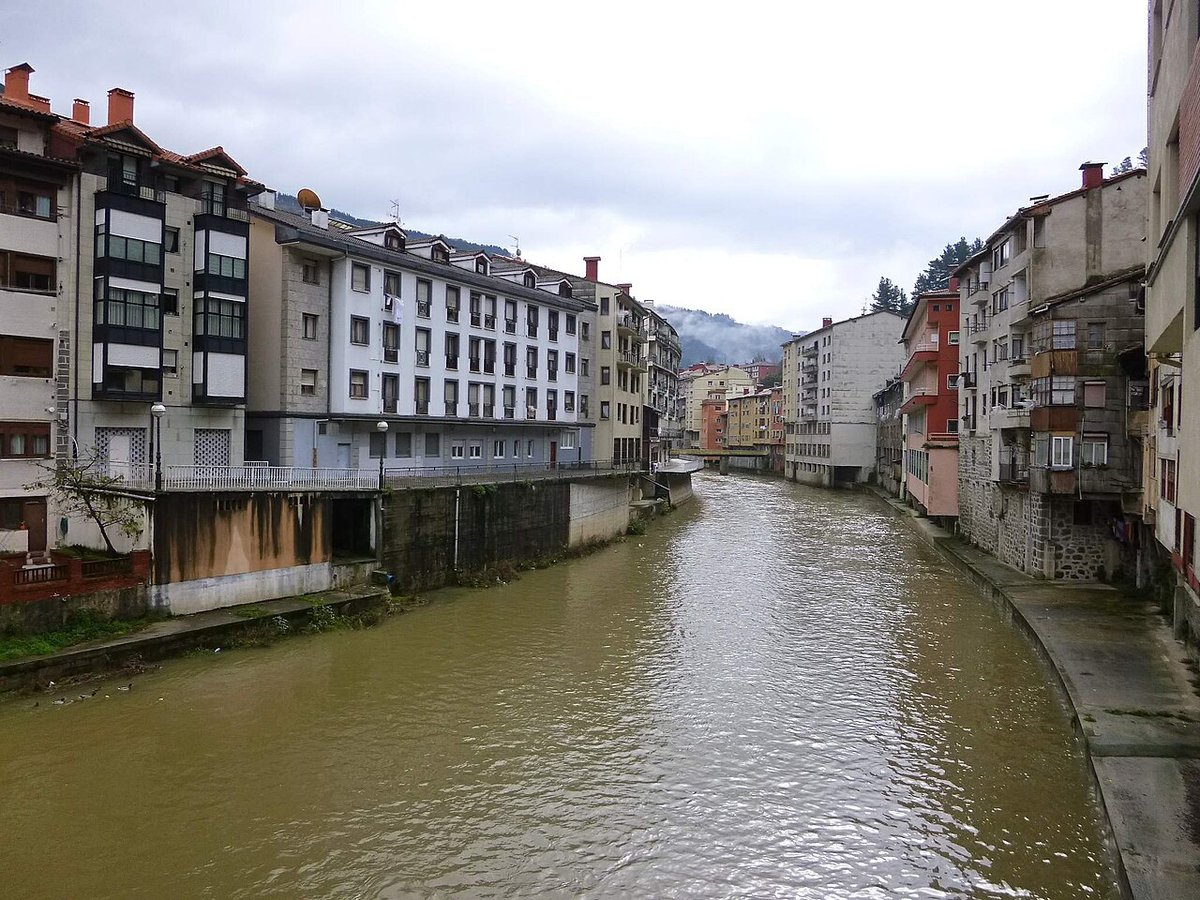
Mutriku’s medieval grid was laid out long before comfort was invented. Calle Narrika, the main artery, tilts at roughly the gradient of a black-run exit; polished limestone channels in the centre were once drainage gutters for fish guts. Walk downhill and every doorway exhales cool, sour air: cider barrels in cellars, last night’s hake heads in compost bins. Half-timbered houses painted ox-blood, pistachio and Wedgwood blue lean together like gossiping neighbours, their wooden balconies knitted with drying nets. A brass plate on number 14 marks the birthplace of Cosme Damián Churruca, the 18th-century navigator whose charts helped Nelson; locals still call him “the man who taught the English where to anchor.”
At the bottom the lane spits you onto the marina breakwater where the tide slaps against 14th-century ashlar. The working fleet lands tuna, squid and txitxarro (local mackerel) before lunchtime; auction bells ring at 1 p.m. sharp in the lonja building. Visitors can watch from a glass mezzanine—no ticket required, just climb the metal stairs opposite the ice plant. Prices flash on an LED board in euros per kilo; the action is over in seven minutes, after which gulls descend on the scales like feathery bookies.
Lunch Comes Straight Off the Boat
Forget tasting menus. The daily set lunch (€14, served 13:30–15:00 in most bars) changes according to what the skipper of Berria 4 couldn’t shift at auction. Expect chipirones en su tinta—baby squid stewed in its own ink, the sauce darker than Marmite but milder than Guinness—or txangurro, spider-crab gratin topped with breadcrumbs soaked in txakoli wine. If you’re hesitant, try the tortilla de txaka: thick egg and hake omelette, no spice, child-friendly. Bread arrives in hacked-off chunks; butter is unheard of. Drink sidra natural, the flat, sharp Basque cider waiters pour from head height to “wake up” the apple sediment. One bottle equals three small glasses; pace yourself or the 12 % creeps up before the bill.
Tables fill with dockers in orange overalls first, tourists second. English is scarce—download the Google Translate camera app and photograph the wall-mounted menu. Sunday lunchtime everything shuts; arrive before 11 a.m. or after 4 p.m. or you’ll stare at rolled-down shutters.
The Sea That Pays the Rent
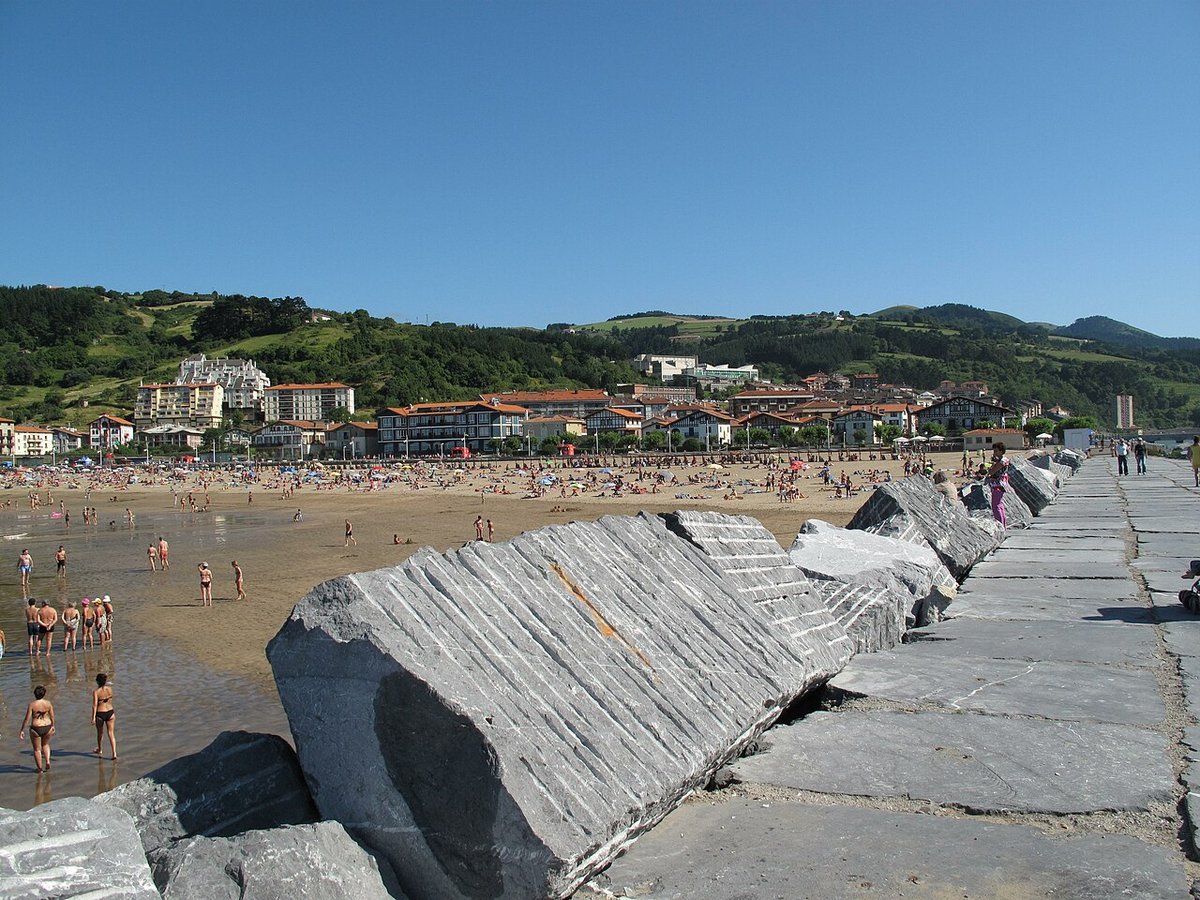
Mutriku’s beach credentials are honest but limited. Burumendi cove, 200 m south of the port, is a pocket of shingle protected by a stone jetty—fine for a paddle when the Cantabrian is in a mellow mood. When it’s not, waves explode over the breakwater and the council chains the steps. Real sand lies 4 km away at Saturraran, a 45-minute cliff walk or five-minute drive. Even there, Atlantic swells can turn the bay into a washing machine; lifeguards raise red flags more often than yellow. Body-boarders love it, bucket-and-spade families sometimes leave early.
Back in town, the world’s first commercial wave-energy plant hums beneath the promenade. A line of red articulated arms, each the size of a single-decker bus, sways with the swell and feeds the grid—enough juice for 250 homes. Interpretation panels explain the physics in Spanish and Basque; the takeaway is simpler: the ocean here is employer, landlord and research lab rolled into one.
Walking It Off
If lunch sits heavy, follow the green-and-white bootprints of the GR-121 that skirts the headland towards Ondarroa. The first 3 km roll past fishermen’s allotments, bramble hedges and stone benches carved with lovers’ initials. Cliff-top views open west to the emerald ramparts of Aketx island, then drop suddenly to tiny inlets where only cormorants and the odd nudist venture. Wear shoes with grip—after rain the schist turns into a slide. Turn round at the concrete bunker left over from the Civil War; from here it’s 40 minutes back to the port, just in time for coffee.
Evening options are limited, deliberately. The last cidery closes at 11 p.m.; the single late bar, Txiriboga, shuts when the owner’s mother rings to ask where he is. Nightlife is what you bring.
When to Come, When to Stay Away
April–June and September–October give you 20 °C afternoons, wildflowers on the slopes and parking spaces without tears. July and August double the population; day-trippers queue for harbour selfies and the saturday market runs out of tortilla by 10 a.m. If you must come in summer, arrive before 9 a.m., nab a space in the signed eastern car park (€1.20 all day) and leave once the coach parties appear around noon.
Winter is a gamble worth taking. Storm fronts sweep in every other afternoon, blackening the sky and firing spray over the lighthouse. The old town empties, fires roar in tavern grates and hotel rates drop by half. Bring a waterproof and rubber soles—cobblestones become ice-rinks when wet.
Beds, Bills and Buses
There are no chain hotels. Hotel Zumalabe, a converted 18th-century tower on Plaza de la Constitución, has 14 rooms with sloping floors and beams you’ll bump your head on—€70 mid-week, breakfast included. Two rural houses in the upper lanes offer self-catering studios from €55; keys are left in a coded box, so late arrivals don’t panic the neighbours. Public transport exists but tests patience: one daily Bizkaibus (line A3924) links Bilbao airport at 15:15, reaching Mutriku at 17:48. Trains stop at Deba, 8 km inland; a taxi from there costs €18. Having wheels helps, provided you don’t try to drive them inside the walls—streets narrow to 2.1 m and GPS happily sends estate cars down staircases.
What You Won’t Find—and Might Not Miss
Gift shops flogging fridge magnets. A sandy promenade stroller-friendly for pushchairs. Craft-ale bars with board games. Instead you’ll get engine oil on your jeans, a cider buzz at 2 p.m. and the sight of octopus tentacles twitching in a bucket. Mutriku offers half a day of curiosity, a full day if you lace up boots and add Saturraran. String it with nearby Deba’s flysch cliffs or Lekeitio’s Gothic basilica and you have a coast that still answers to the tide, not TripAdvisor. Come for the diesel-and-seaweed perfume, stay for the tortilla, leave before the church bell tolls five—unless you’ve volunteered to help mend nets.