Full Article
about Aretxabaleta (Arechavaleta)
Deep green, farmhouses and nearby mountains with trails and viewpoints.
Hide article Read full article
A valley setting
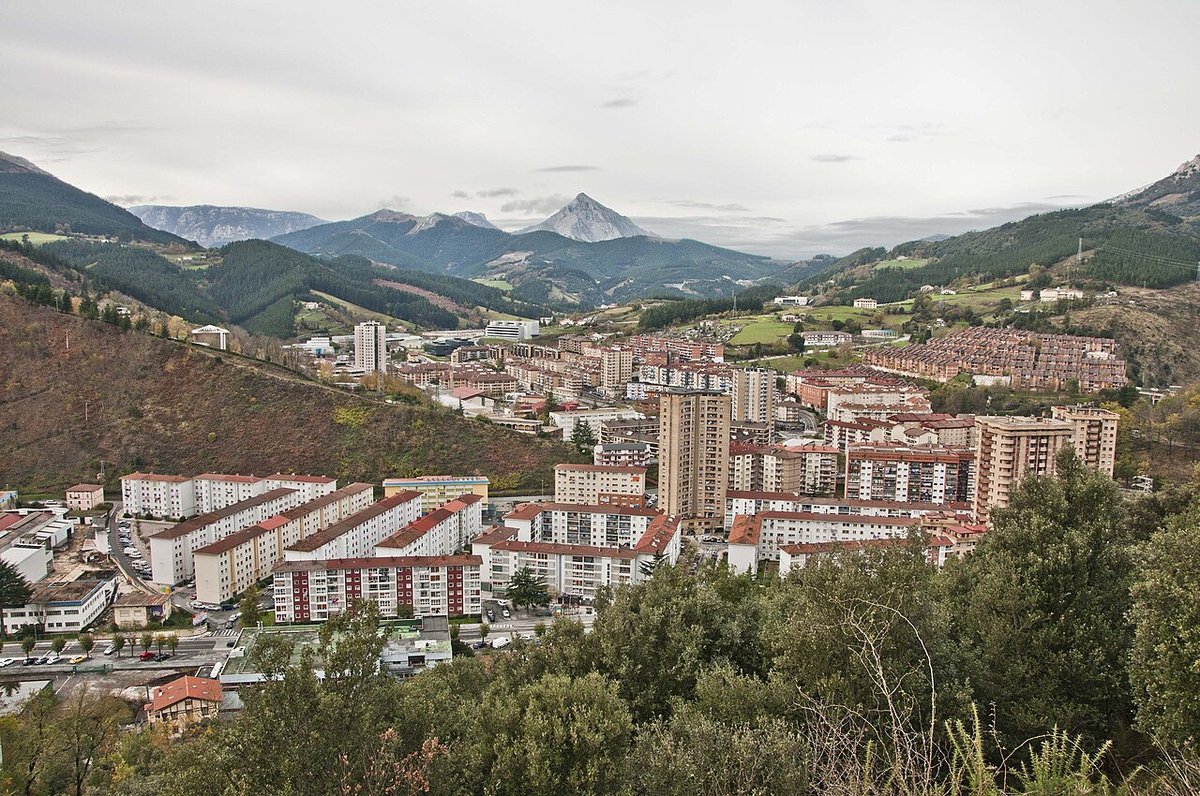
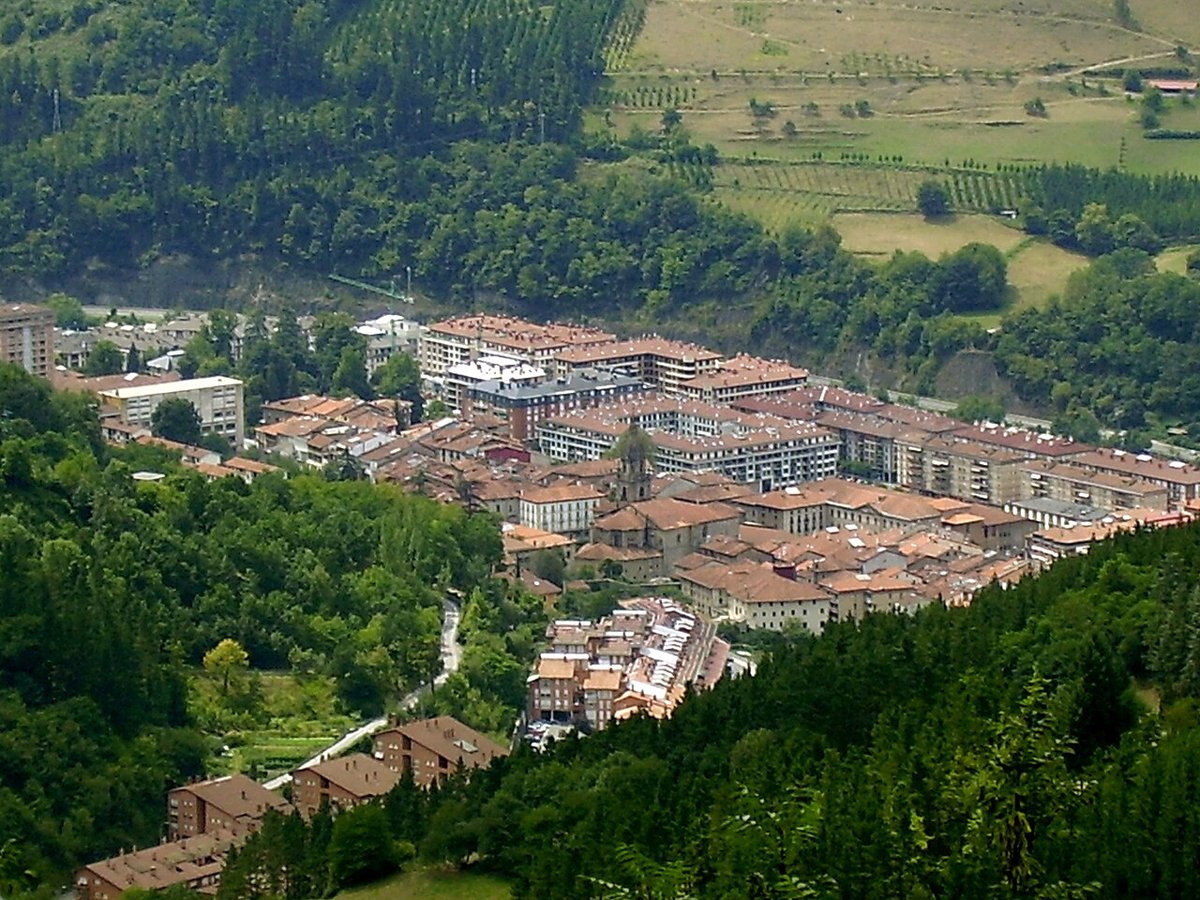
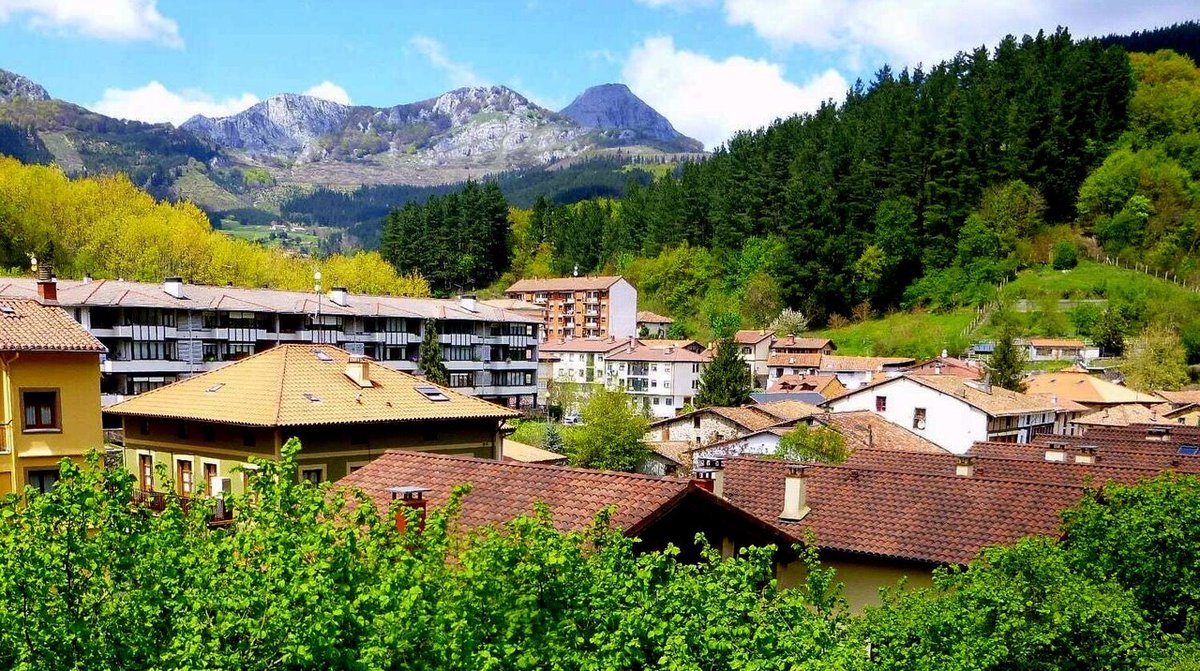
Any look at Aretxabaleta begins with its setting. The town lies in Debagoiena, one of the upper basins of the river Deba, surrounded by hills that are not especially steep yet close enough to enclose the landscape. The urban centre sits on the valley floor, while the slopes around it are dotted with scattered caseríos, the traditional Basque farmhouses that still shape the rural rhythm of the area.
There is no coastline here and no landmark designed to draw coach tours. What defines Aretxabaleta is something quieter and more everyday: a visible coexistence between rural traditions and industrial activity. That balance gives the place its character and explains much of how it functions today.
The place of wide oaks
The name itself offers a clue. Aretxabaleta is usually explained through the Basque words haritz (oak), zabal (wide), and the place suffix -eta, giving a meaning along the lines of “place of wide oaks”. The name appears as early as the 11th century in the Reja de San Millán, though with slightly different spellings. Those oak woods are no longer easy to recognise, as much of the land has gradually been turned into pasture and livestock farming.
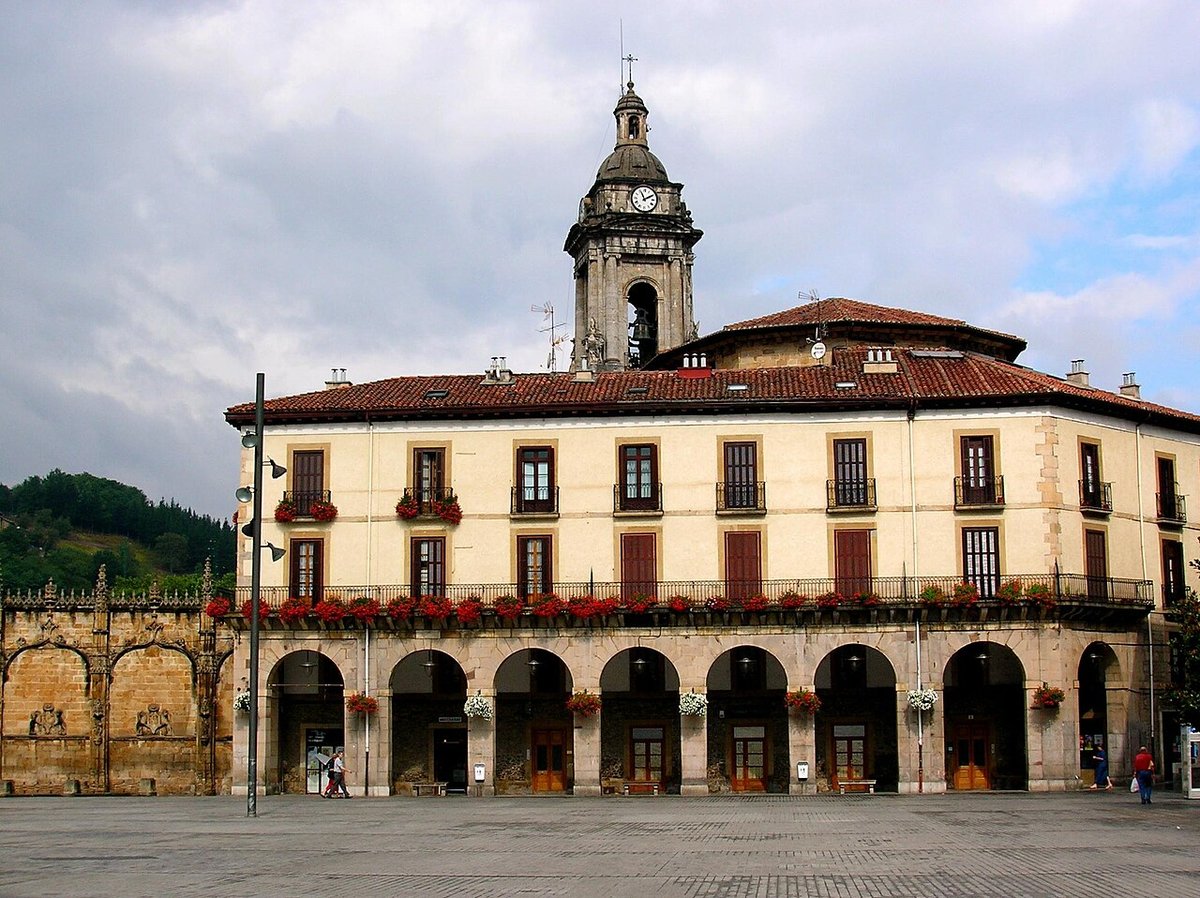
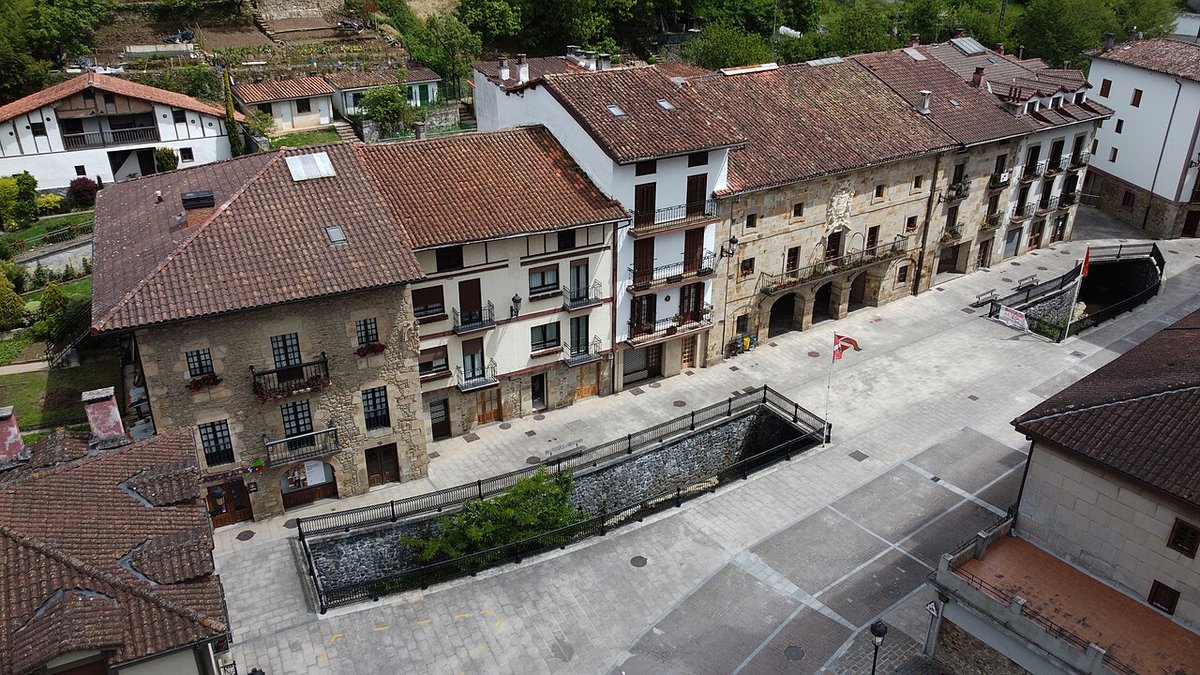
The town centre grew around a main street that still concentrates much of daily life. Its layout is practical rather than monumental. Buildings from different periods stand side by side, with houses and premises shaped by everyday use. Many date from between the 17th and 19th centuries, though later alterations are clearly visible.
At the upper edge of the town stands the church of San Miguel Arcángel. The tower is often dated to the 16th century, while the rest of the building has undergone several later changes. Inside, decoration is restrained. The main altarpiece follows a sober neoclassical style. More than its artistic features, it is the church’s position that stands out. From the atrium, the gradual spread of the town across the slope and down into the plain becomes easy to read.
Industry on the valley floor
Debagoiena is one of the most industrialised areas in the interior of Gipuzkoa, and Aretxabaleta forms part of that story. Over the 20th century, various factory buildings were constructed along the valley floor, linked to the wider industrial development of the region. Some remain active, while others have been adapted or transformed over time.
This industrial presence shapes the atmosphere of the town. It is not a place frozen in the past. There is a steady movement of workers, regular traffic towards Arrasate and other nearby towns, and a network of services designed mainly for residents rather than visitors passing through.
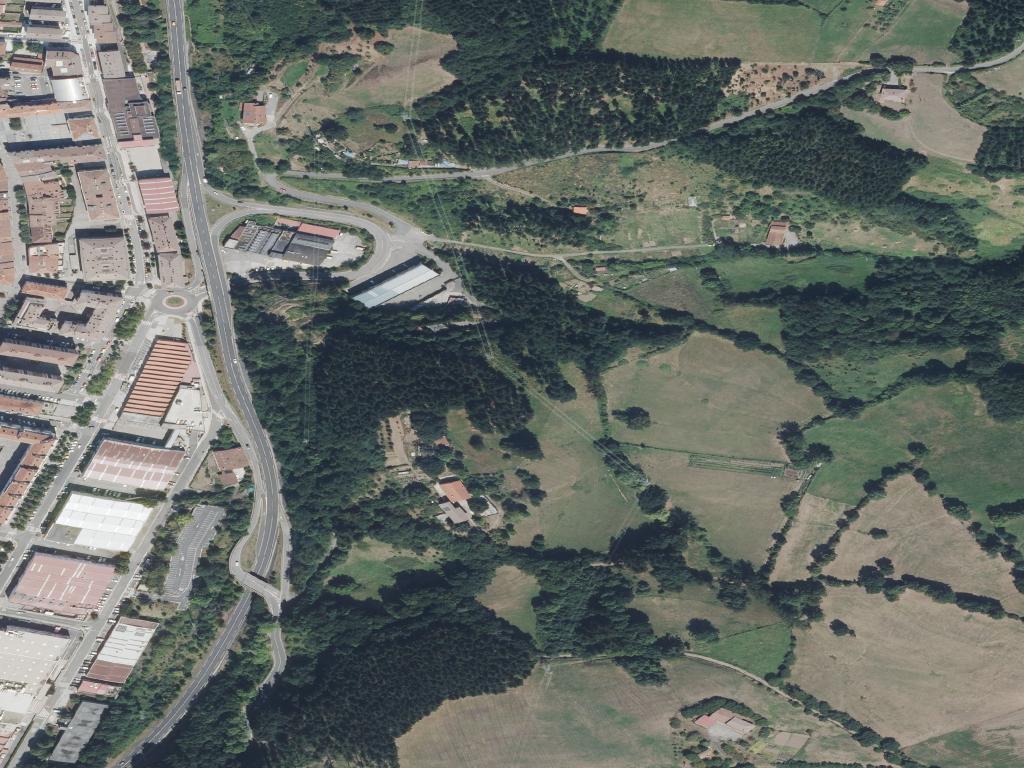
The contrast between factory spaces below and rural slopes above is part of daily life. It is not presented as a spectacle, but it is easy to notice when moving through the area.
Farmhouses on the slopes
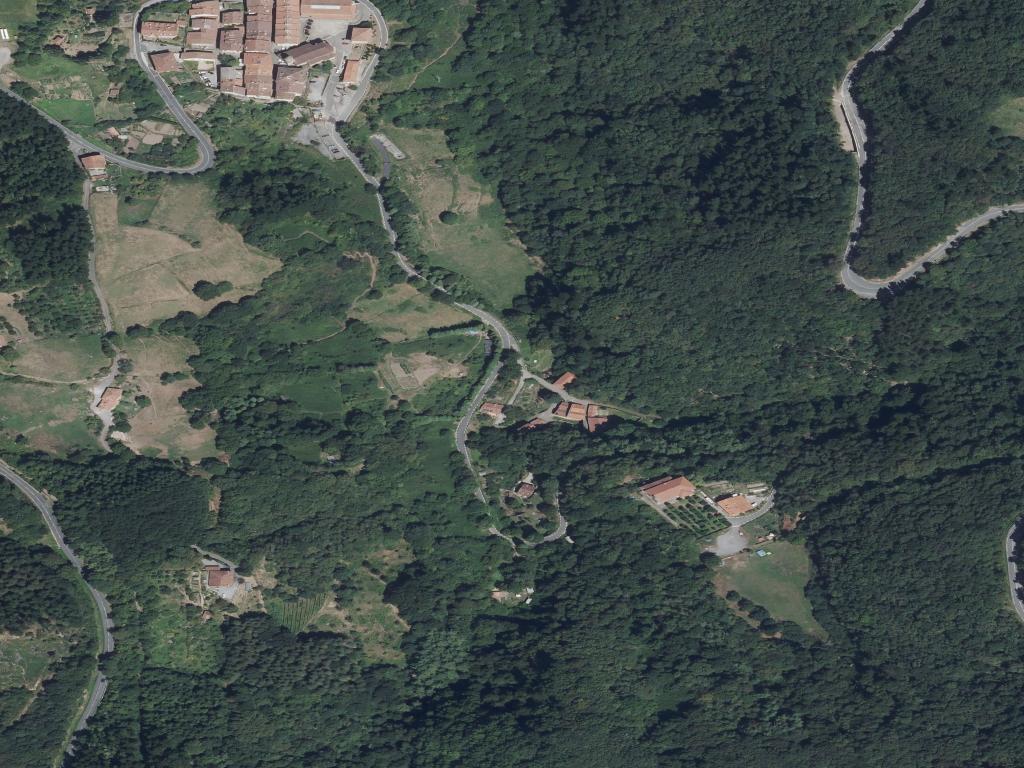
Leaving the urban centre along any of the roads that climb towards the rural districts, the landscape shifts quickly. Meadows enclosed by hedges appear, along with small wooded patches and farmhouses set a few hundred metres apart.
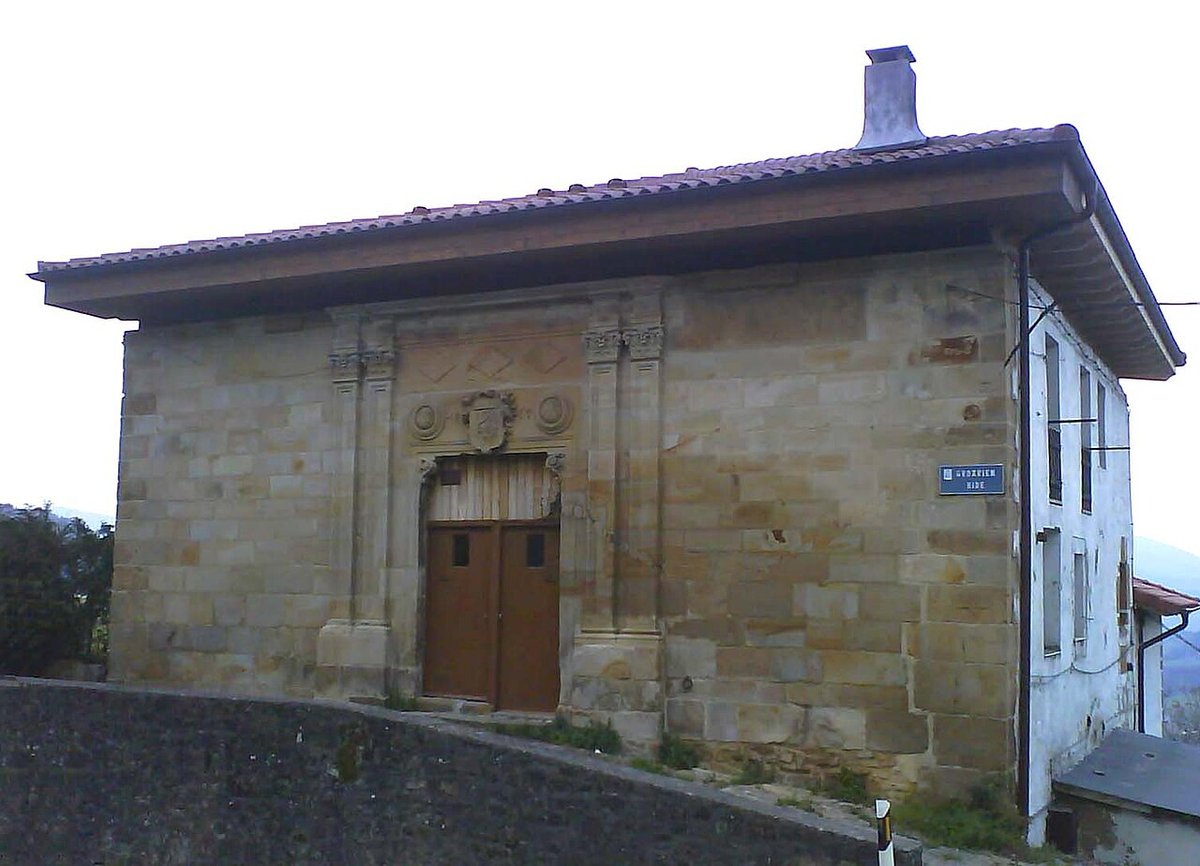
Many of these buildings retain their traditional form: stone walls, pitched roofs and large adjoining spaces once used for storage or livestock. In some cases, wooden elements are still visible on the façades, along with old structures where produce from the fields was once dried. These are not preserved as a museum display. They are lived-in homes, often with modern agricultural machinery parked outside and vegetable plots still in use.
This continuity between past and present is not staged or explained on site. It is simply part of how the countryside around Aretxabaleta continues to function.
Everyday life in the centre
The centre of Aretxabaleta works more like a local meeting point than a tourist setting. On certain days of the week, temporary market stalls appear, adding to the regular activity of the streets. The frontón, the court used for Basque pelota, sees frequent use, especially in the afternoons.
Gastronomic societies, common across this part of Gipuzkoa, also play a role in local life. These are private cooking and dining clubs run by members, and their activity tends to remain internal rather than open to visitors.
Food reflects everyday habits. In butcher’s shops and market stalls, txistorra is a frequent sight. This thin, fresh sausage is widely used in local cooking, often eaten in a sandwich or alongside simple dishes. Its presence says more about daily routines than about any special occasion.
Walking towards the hills
Paths lead out of the town and into the surrounding slopes. Some connect with longer routes heading towards the Aizkorri massif or towards the mountains that separate Debagoiena from the valley of Aramaio. These are not exclusively hiking trails. They are used by residents out for a walk, by runners, and by cyclists linking quieter secondary roads.
Cycling is particularly visible in the area. The region has a strong connection with the sport, and it is common to see groups leaving the valley towards nearby mountain passes. This movement adds another layer to how the landscape is used, not just as scenery but as part of everyday activity.
Finding your bearings
Aretxabaleta lies just a few kilometres from Arrasate, also known as Mondragón, the main urban centre of Debagoiena. Road connections link the town directly with the rest of Gipuzkoa and with Álava through the main routes that cross the region. Public transport also connects it with neighbouring towns.
The town itself is easy to explore on foot. Within less than an hour, it is possible to cross the centre and reach the edges where paths begin to climb towards the caserío districts. The most revealing details are often the simplest ones: refurbished façades, meadows beginning just behind the last row of houses, and the quiet transitions between built space and open land. These are the elements that show how Aretxabaleta actually works, beyond any formal description.