Full Article
about Arrasate (Mondragón)
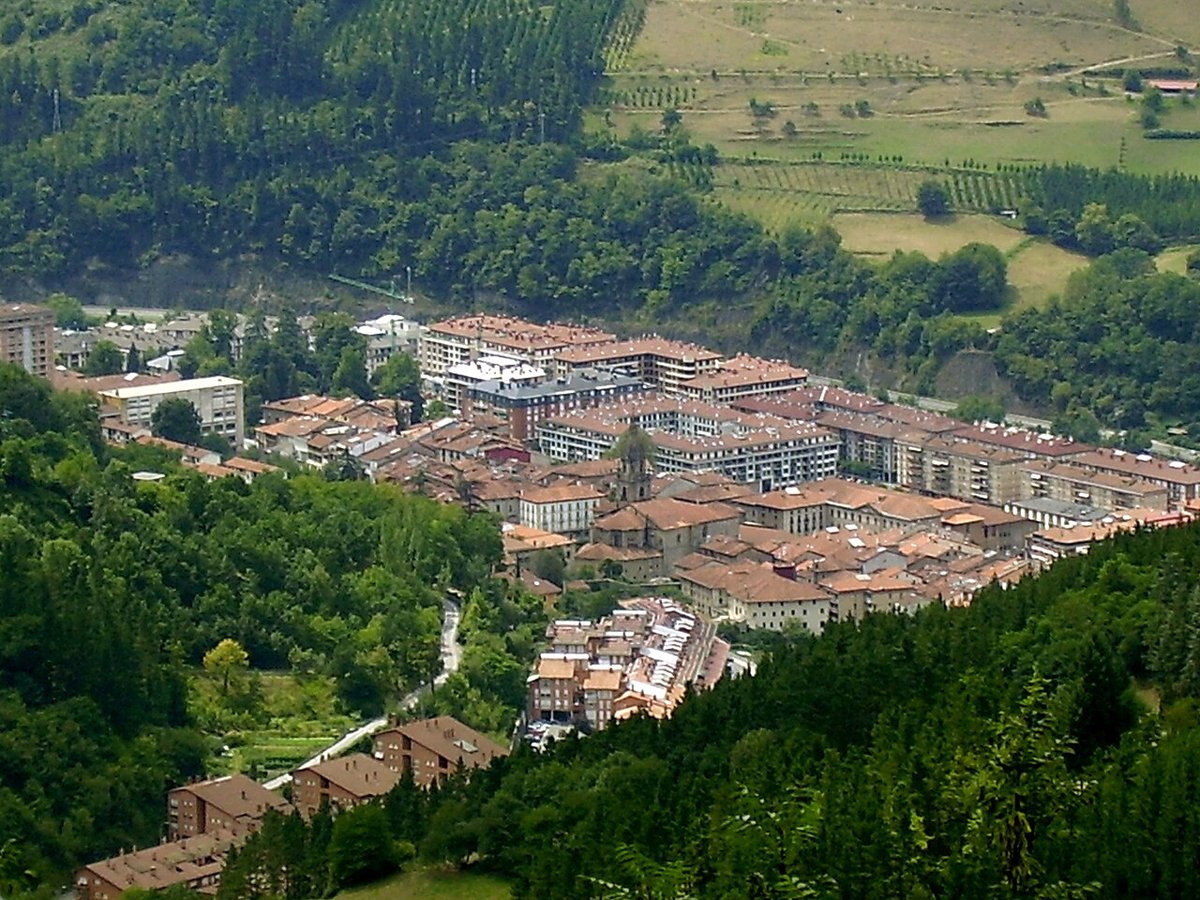
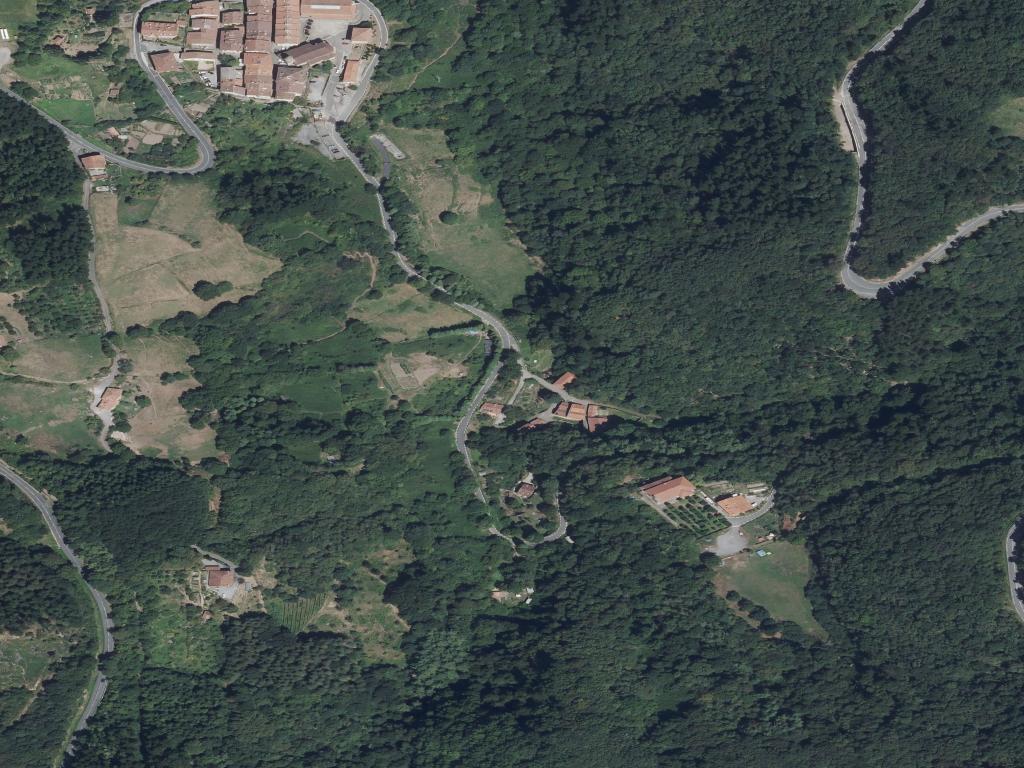
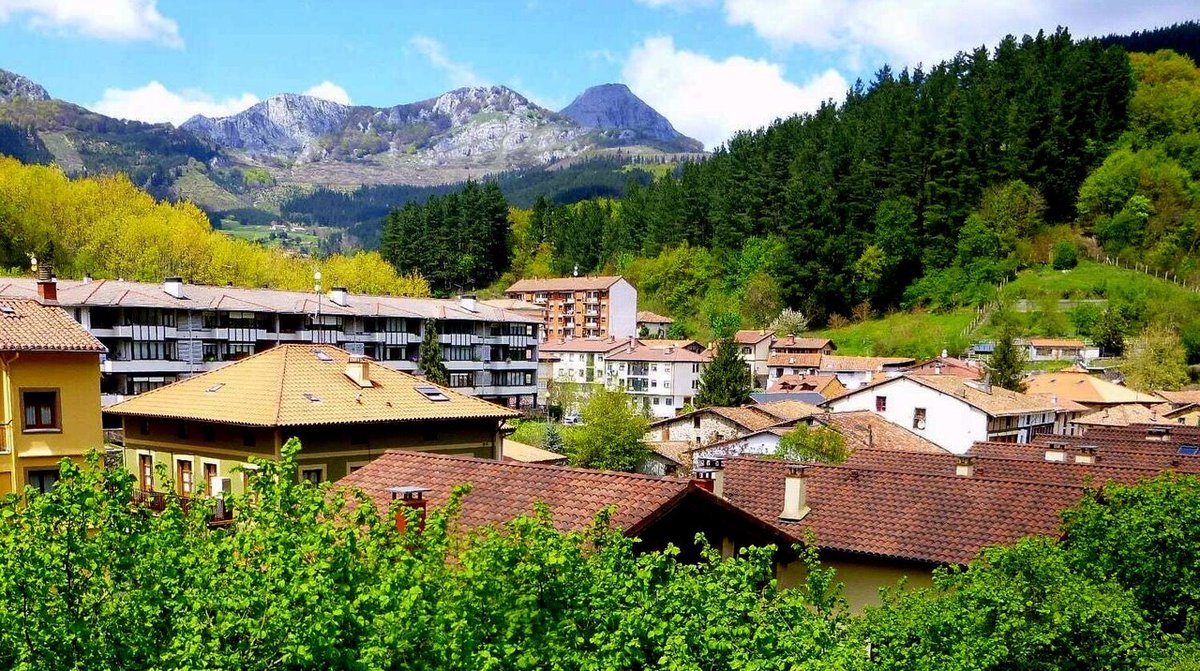
Deep green, farmhouses and nearby mountains with trails and viewpoints.
Hide article Read full article
A town that keeps going
Some places are quickly ticked off. Arrasate is not one of them. You might arrive expecting a short wander and end up thinking about medieval walls one moment and industrial cooperatives the next, with the smell of grilled food somewhere in the background. Tourism in Arrasate moves along that line, very old history set within a town that carries on with its daily routines.
Close by is the cave of Lezetxiki, where prehistoric human remains were discovered. Finds like these shift the sense of time. People lived here long before roads, factories or even the town itself existed.
From iron to industry
Arrasate has a habit of surprising people. For centuries, ironwork shaped the place. Weapons and tools were made here and travelled across much of Europe.
That activity changed over time without losing its core spirit. Today the area is known for its industrial cooperatives, which grew around Mondragón and later became a model studied in universities. In simple terms, these are factories where workers take part in decision-making.
This helps explain something that becomes clear in the centre. It does not feel like a preserved set of streets. It feels lived in. People go about their day, head to work and stop to buy bread.
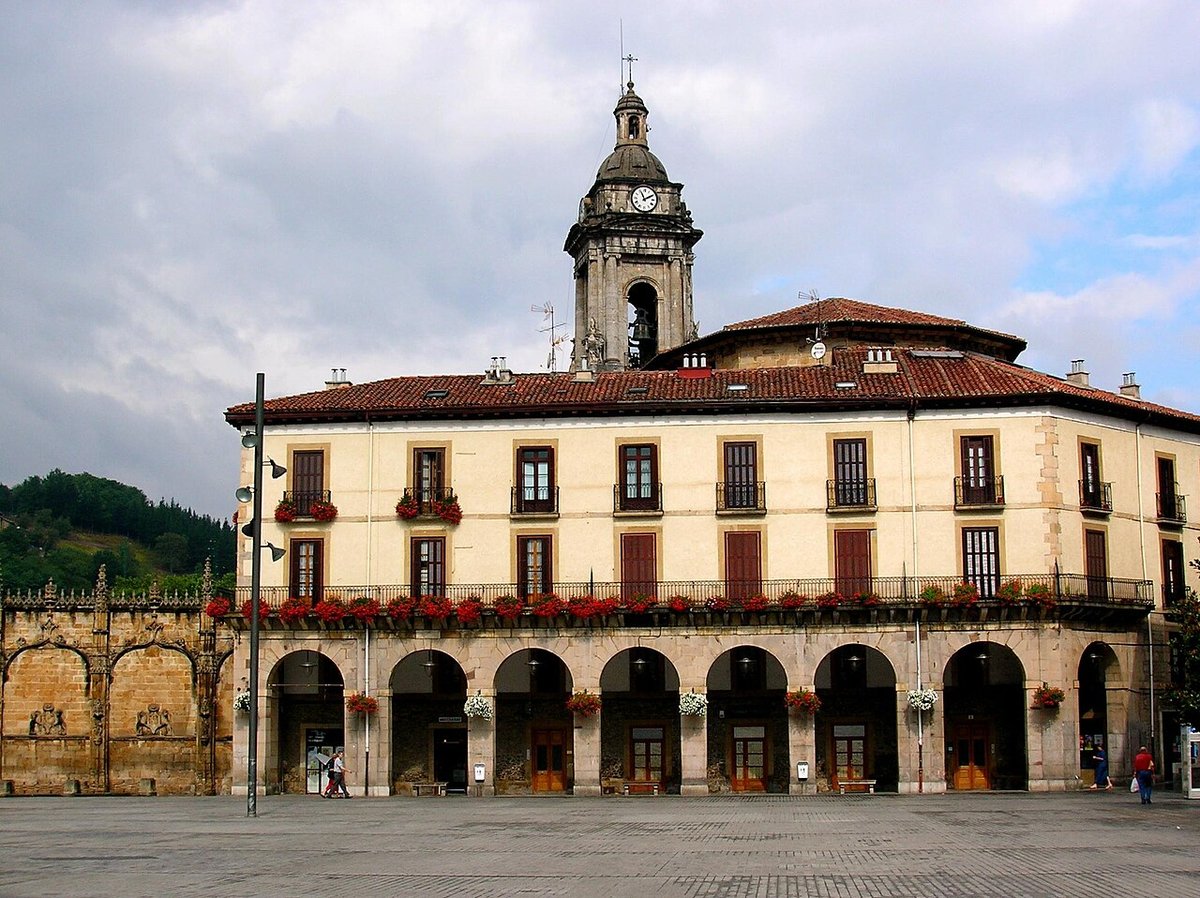
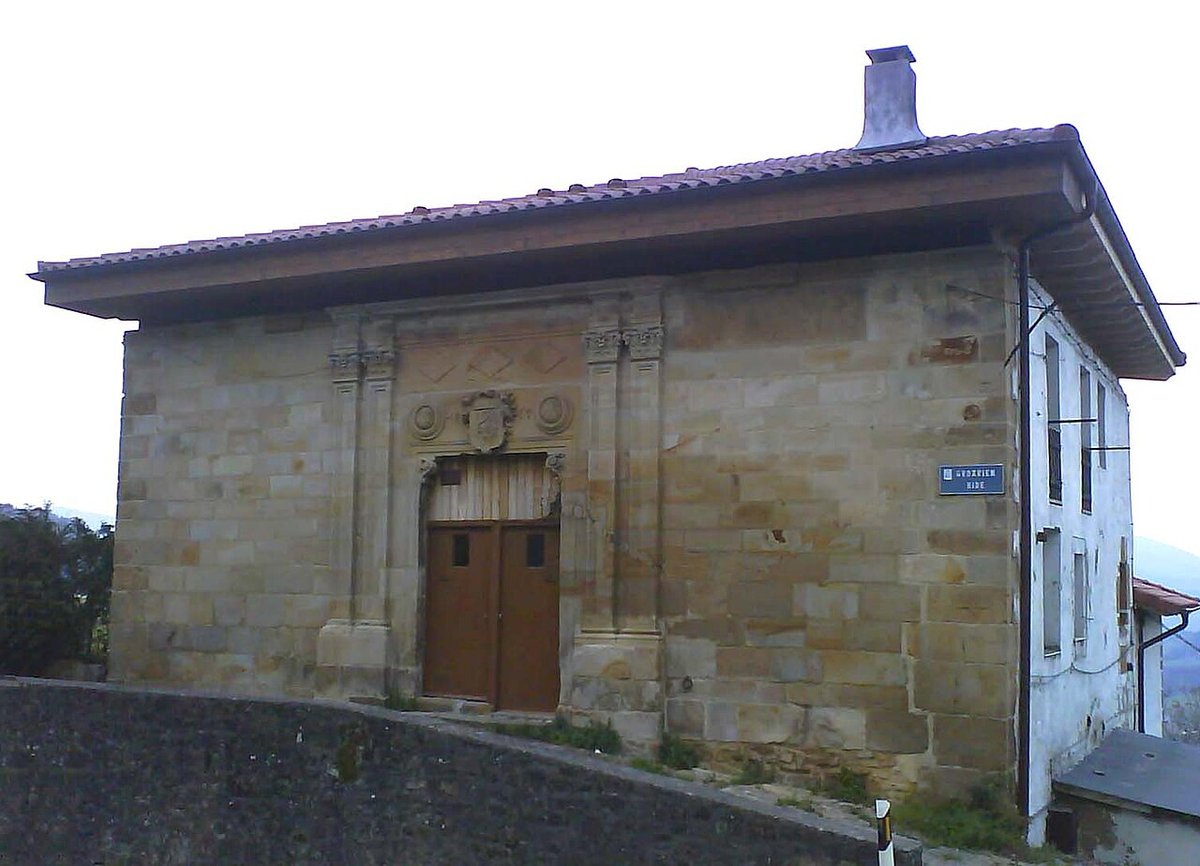
The old town has a distinct oval shape, easy to spot on a map. Parts of the former wall still stand. One of the gateways, the Portalón, continues to mark an entrance that used to be closed at night. It is hard to picture that now, with bicycles passing through every few minutes.
A name that stayed
There is a corner with a striking name: Zurgin Kantoia. Many translate it as “the crime corner”. The name comes from an old incident that ended in a fight and a death. The story stuck, as these things often do.
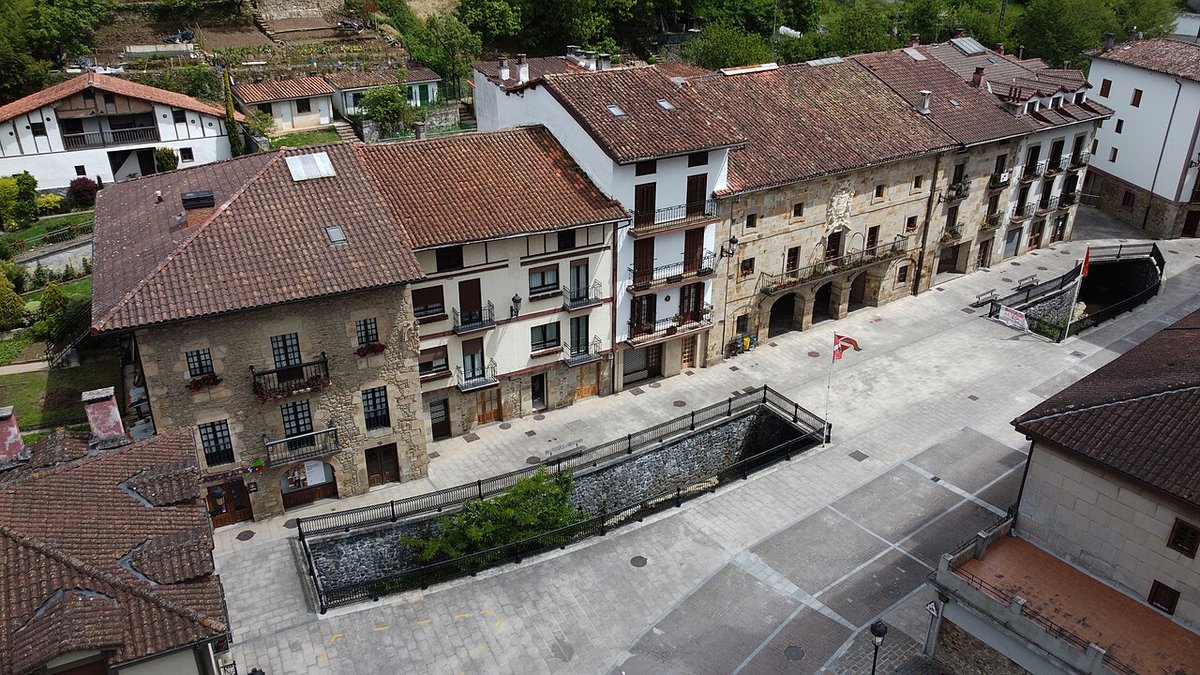
Today the street is small and quiet. Low windows, balconies with washing hanging out, and a calm start to the day. Without the story, it would barely stand out.
A short walk away lies Monterrón park. It is a broad garden with a palace at one end and a very large tree that draws attention straight away, the sort that looks as if it might have come from another continent. Groups of friends meet here, families bring children, and older residents return to the same bench they have used for years.
Food, fairs and San Juan
The San Juan festivities mark a moment when Arrasate shifts pace. The centre becomes busier than usual. Stages appear, music fills the streets and groups sit down to eat together outdoors. It is noticeable as soon as it begins.
Across the year there are also fairs and markets where local produce comes out into the open. Cheeses, freshly made talo and grilled meat appear on stalls and tables. Nothing elaborate, just food that leaves its mark on your hands and sends you looking for a napkin.
These are the kind of meals where conversation outlasts what is on the plate.
An easy circuit through town and beyond
Arriving by car, it makes sense to leave it outside the centre and continue on foot. Arrasate is easy to cover at a relaxed pace.
Within a short distance you pass the parish church of San Juan Bautista, several stately houses and the squares where daily life gathers. Inside the church there is a choir stall that is well known in the Basque Country, something not often found in parish churches.
Following the river, remains of old industrial installations come into view. They are linked to ironwork and to gunpowder from earlier centuries. The route is not long, yet it helps to explain where the character of the place comes from.
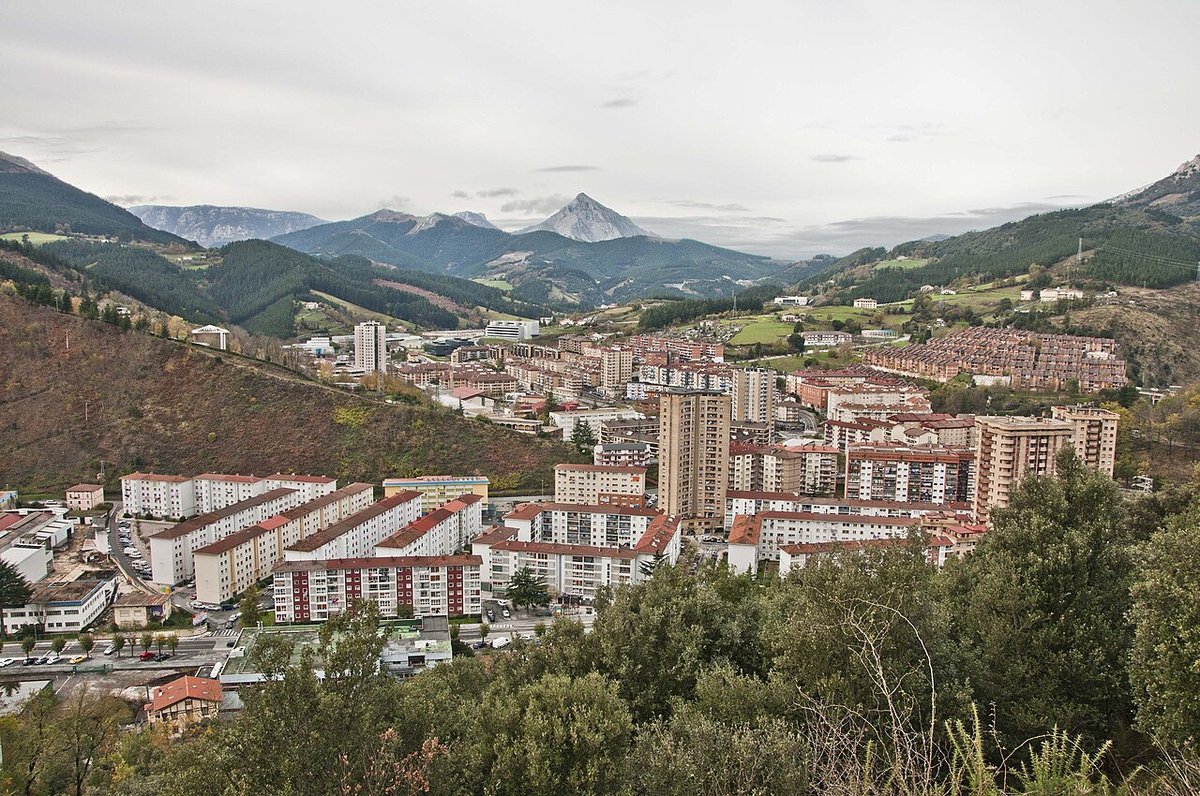
For those who prefer a longer walk, paths lead from the surrounding neighbourhoods towards nearby hills. The climb starts gently and then becomes more demanding, which is typical in this landscape. From higher up, the town appears compact, set between the slopes.
Names, pace and how to fit in
A couple of small details help make sense of things. Arrasate and Mondragón are both used for the same place. One comes from Basque, the other from Spanish. Either will be understood.
It is also not a town designed for hours of monument-hopping. It works better when taken slowly. A walk through the old quarter, some time in the park, something to eat and an unhurried conversation in a square.
Arrasate does not try to impress. It feels more like a place that has always been busy with its own concerns. When somewhere has functioned like that for so long, it shows.