Full Article
about Eskoriatza (Escoriaza)
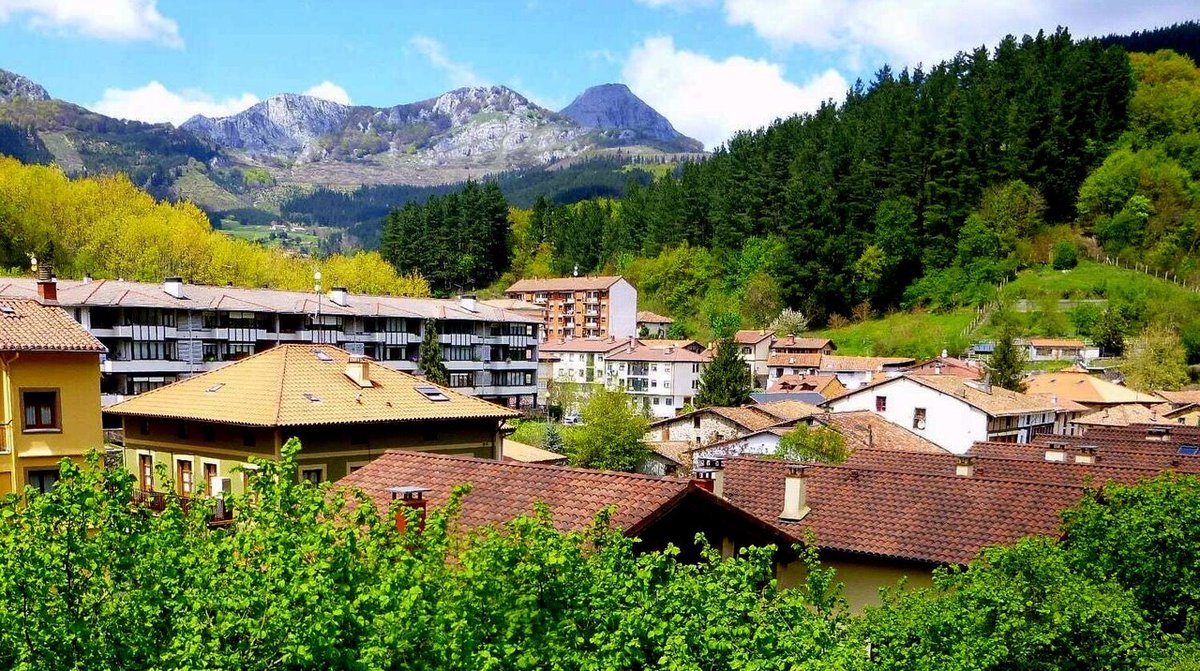
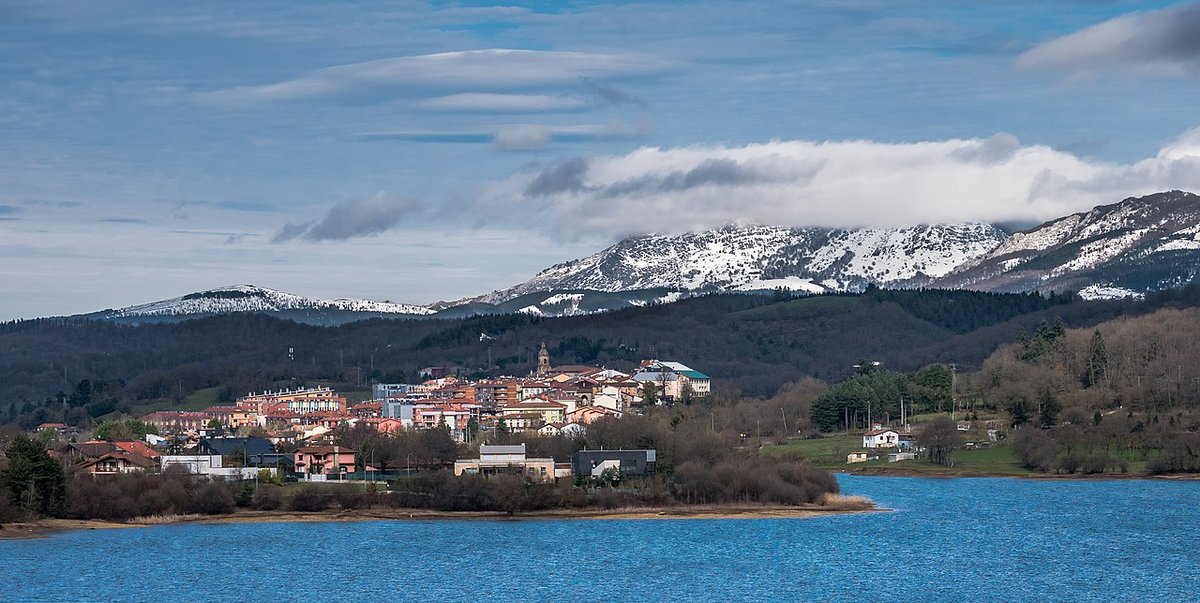
Deep green, farmhouses and nearby mountains with trails and viewpoints.
Hide article Read full article
Traces of a railway, traces of a landscape
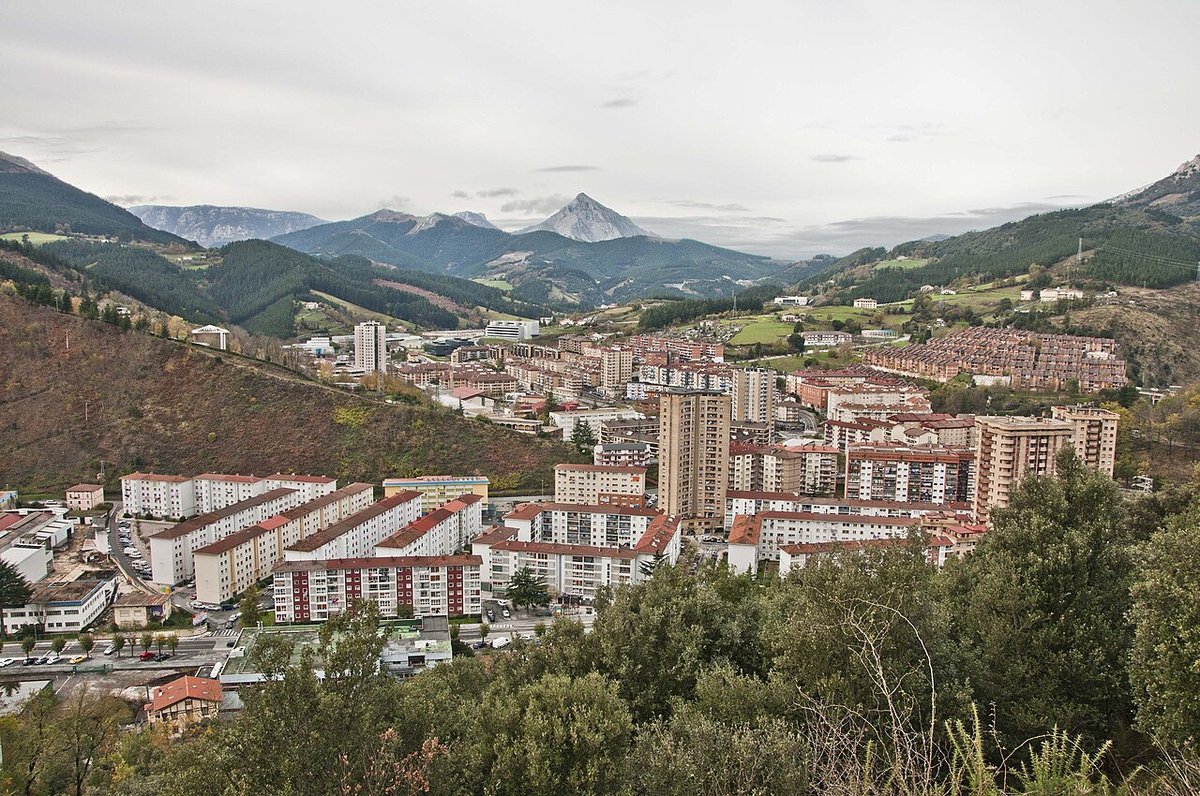
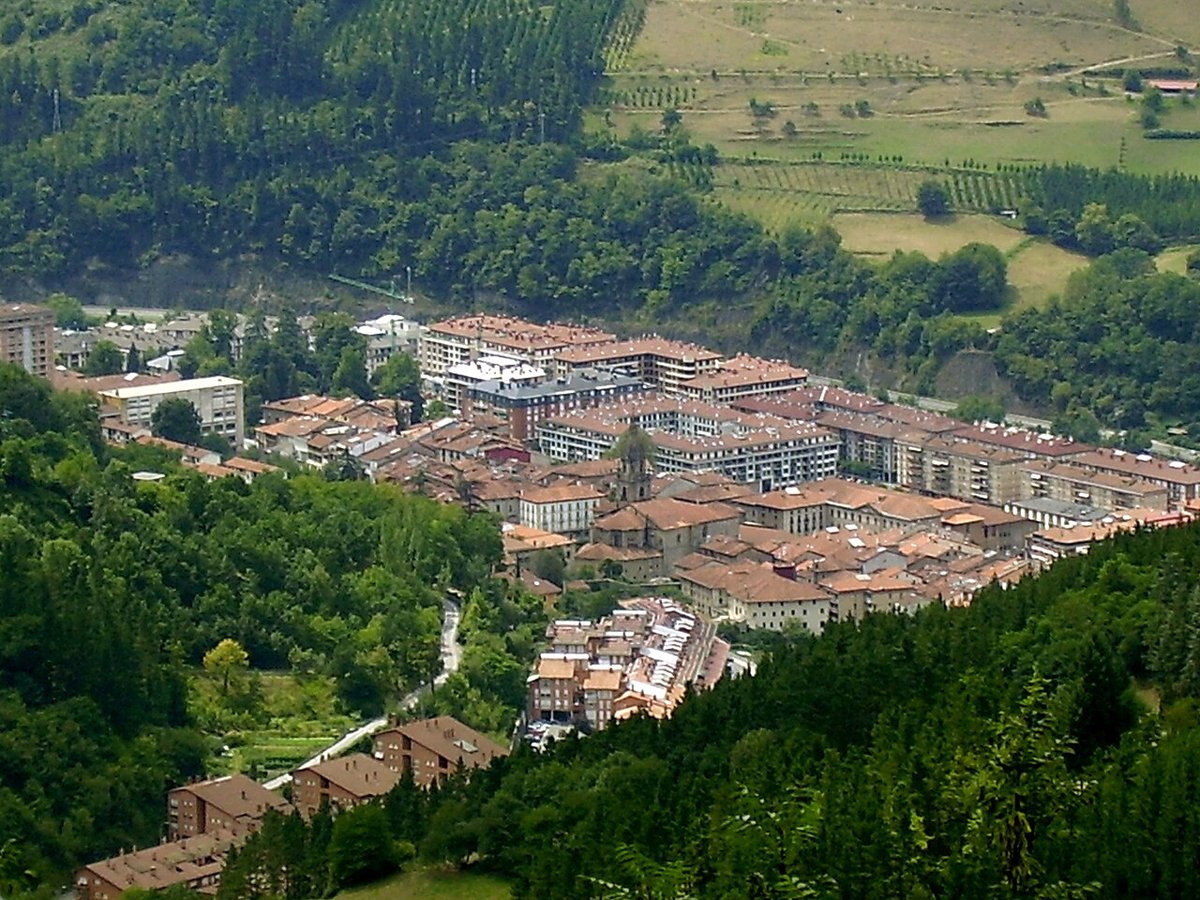
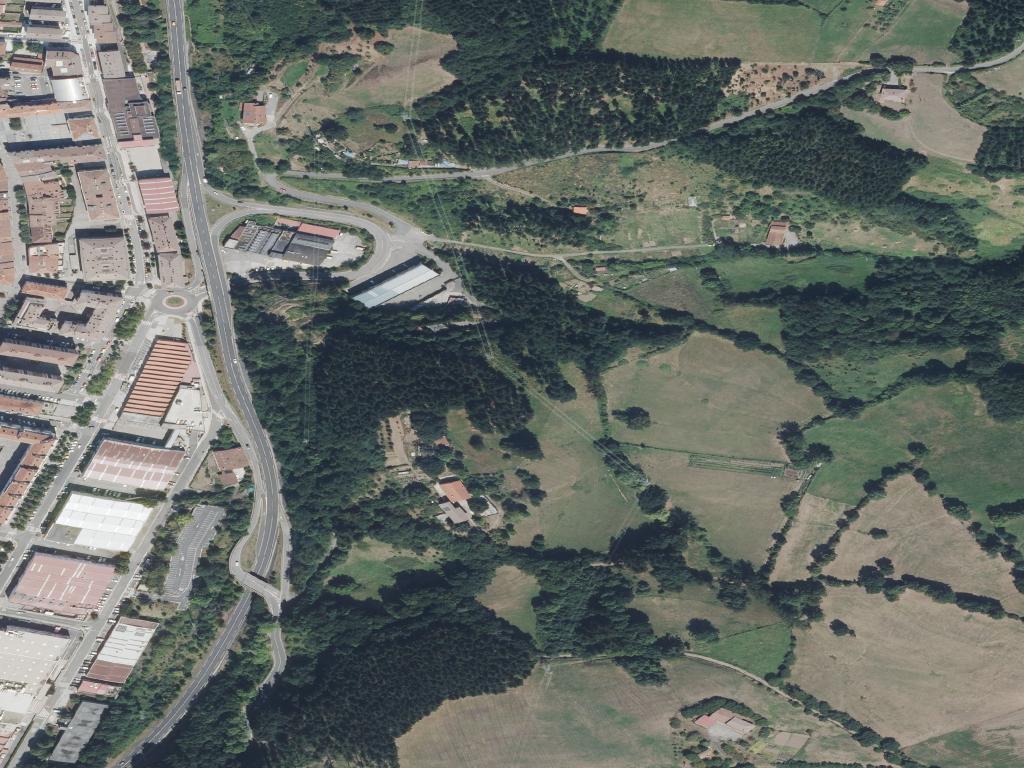
The old Basque-Navarre railway stopped running in the mid 20th century. Between Marín and Zarimutz, parts of its route can still be picked out: wooden sleepers, straight embankments cutting across the hillside, the occasional short tunnel. For decades, this line carried ore and goods between inland areas and the main railway network. Today it offers a way into understanding the human landscape of Eskoriatza, a municipality in the Alto Deba where settlement never gathered into a single compact town.
Instead, the territory has long been organised into small, scattered clusters. The railway once stitched these fragments into a wider system of movement and exchange. Its remains now sit quietly in the terrain, hinting at how people, materials and communities were once connected across the valley.
A valley shaped by anteiglesias
The structure of the Leintz valley explains much of how Eskoriatza developed. The slopes are dotted with anteiglesias, small rural communities built around a parish church, with farmhouses spread out around them. Traditionally, seven are counted within the municipality: Apotzaga, Bolíbar, Gellao, Marín, Mazmela, Mendiola and Zarimutz.
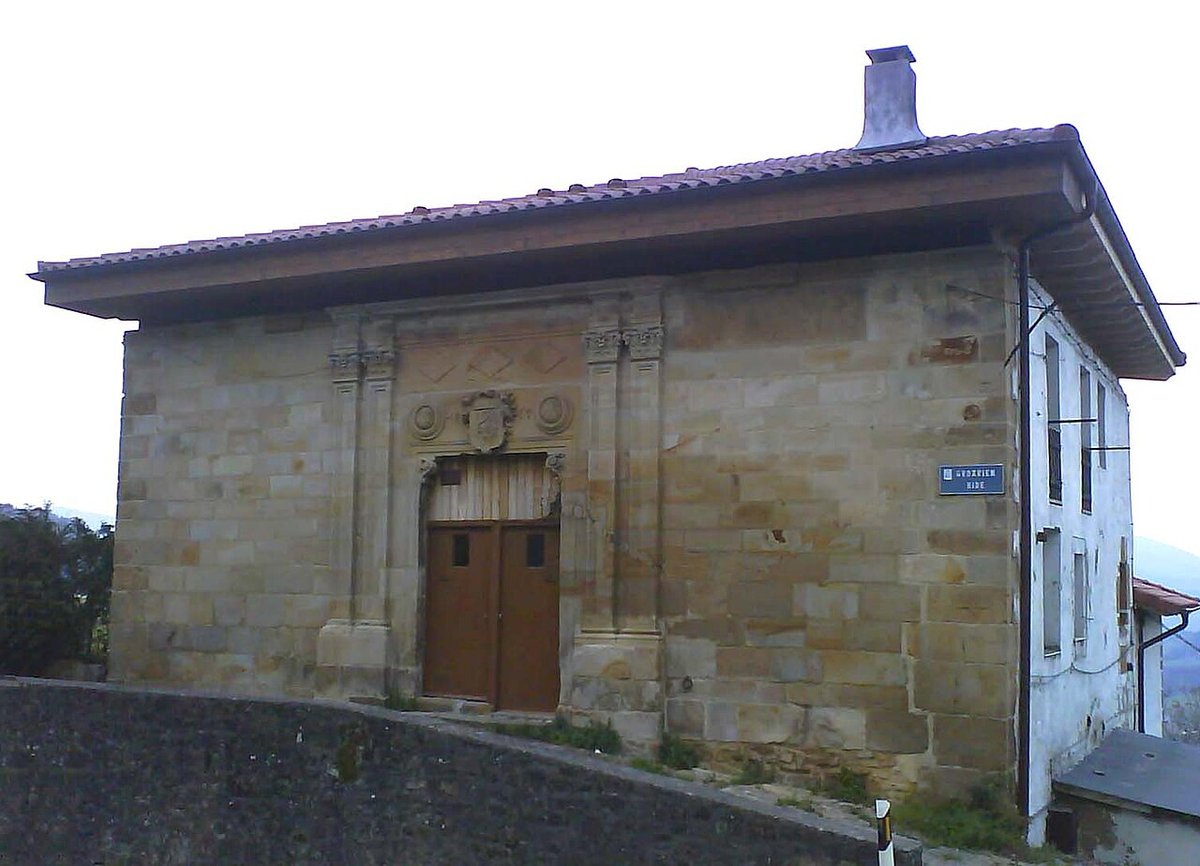
These are not simply neighbourhoods. Each one retains its historic name, its own church and a degree of distinct identity. In some areas, manor houses appear, built in the 17th and 18th centuries. Many of these were funded by money arriving from America, something that was fairly common in the valleys of Gipuzkoa. Emigrants who made their fortunes overseas, often in Spanish America, would send funds back to their place of origin and finance new buildings.
Eskoriatza became an independent municipality relatively late. For centuries, the area depended largely on nearby towns such as Mondragón and Leintz-Gatzaga, which had structured the valley since the Middle Ages. That past is still visible in the landscape. Defensive towers stand in elevated positions, parish churches mark the centre of each anteiglesia, and large farmhouses define the agricultural use of the land.
A church with ties to Nueva España
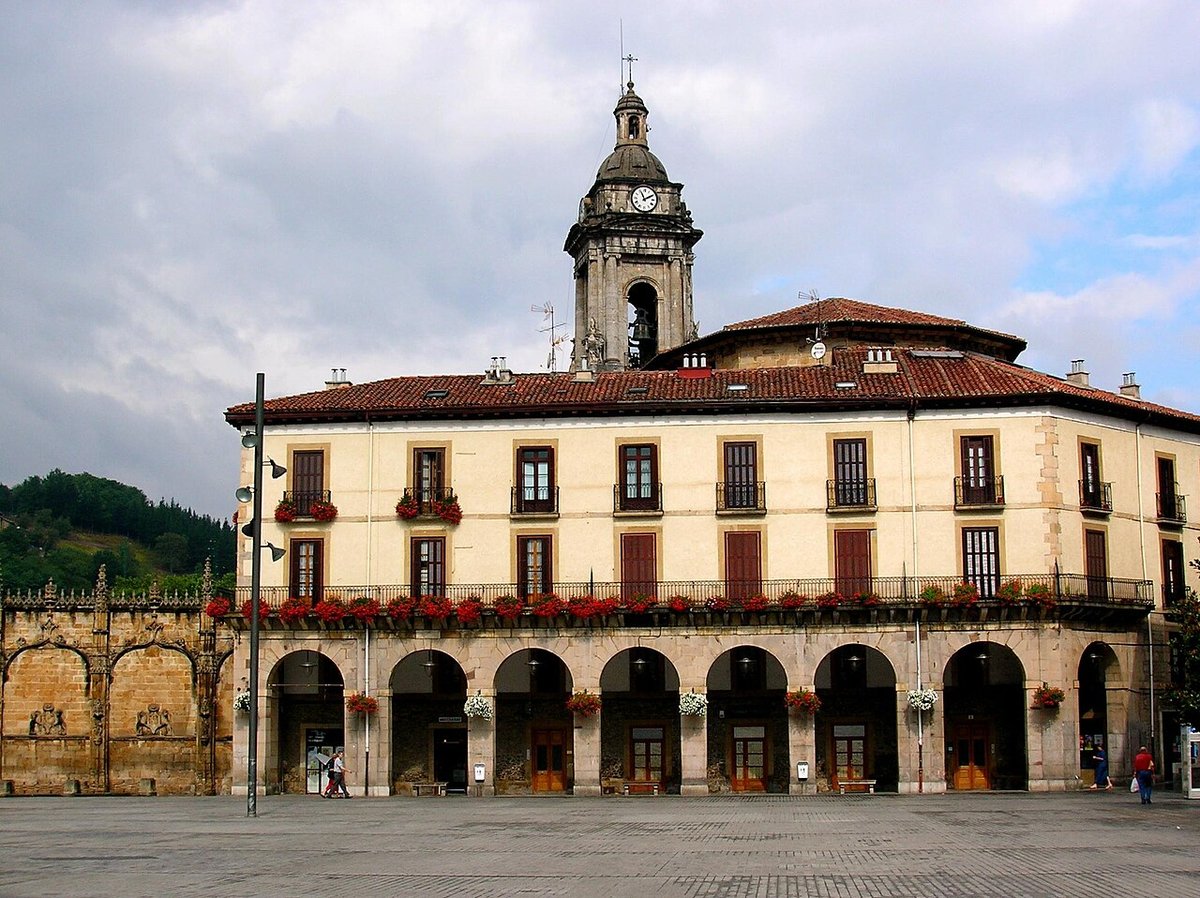
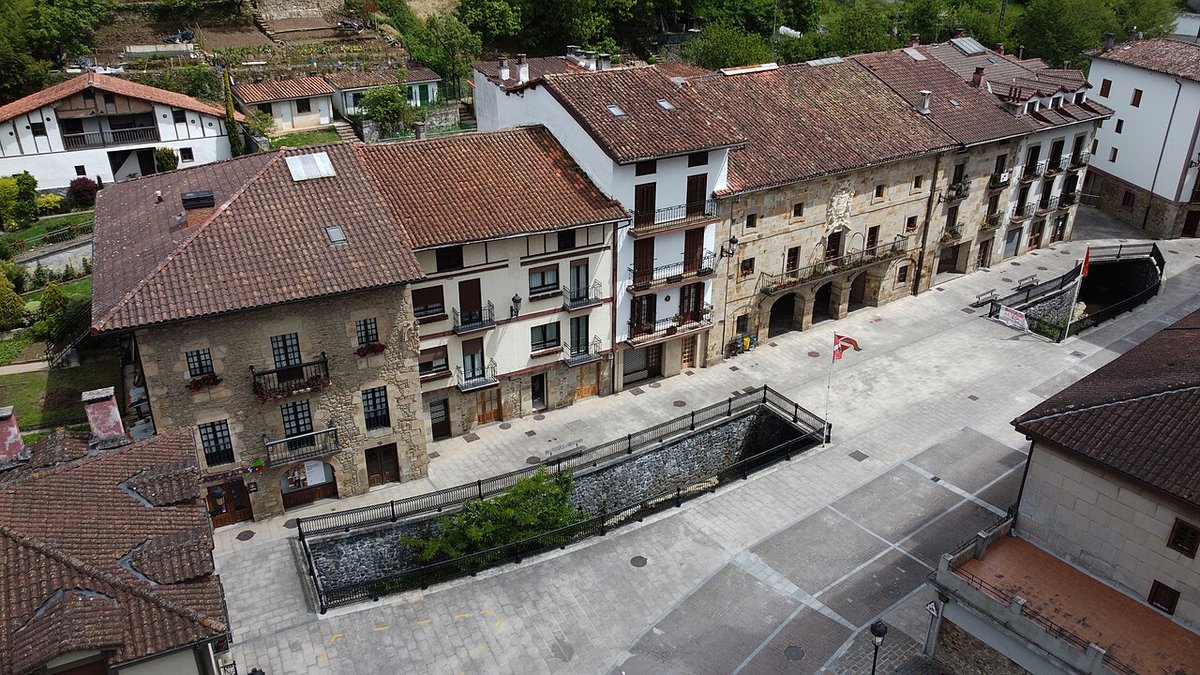
In the main settlement of Eskoriatza stands the parish church of San Pedro, an 18th-century building. Local tradition holds that a significant part of its funding came from Nueva España, through remittances sent by emigrants from the valley who had settled in Mexico. It is not an isolated case in the region, but here the story is especially closely tied to the church itself.
The exterior is restrained, in line with many rural Baroque churches in Gipuzkoa. Inside, there is an altarpiece whose style already leans towards neoclassicism, created when the building was nearly complete. The church is less about monumentality and more about illustrating a specific historical pattern: the steady relationship between Basque valleys and the Americas during the 17th and 18th centuries.
Opposite the church stands the former Hospital del Santísimo Rosario, a 17th-century building that served charitable and medical functions for many years. It is now part of Mondragón Unibertsitatea. This change of use reflects a broader shift in the area, from a small local institution to a space connected with the university and cooperative network of the Alto Deba.
Stone reused, memory preserved
In Apotzaga, there is a circular cemetery that often draws attention on a first visit. Funeral steles are arranged around the enclosure, many linked to specific farmhouses, a way of identifying family lineages within the rural community. On the outer wall appears the inscription “Gero arte”, meaning “see you later”, a brief farewell that also appears in other contexts in the Basque language.
Mazmela holds another unusual piece: an old stone sarcophagus that has long been reused as a washing trough and watering basin. Locals refer to it as the aska-sarkofagoa. Its original owner is unknown. This kind of reuse of medieval stone was not uncommon in farmhouses, where materials were adapted and repurposed across generations.
At the church of Santa María Magdalena in Marín, there is also a pillory with metal rings, probably dating from the 17th century. It was used to restrain prisoners and expose them in public, part of a system of local justice that existed before punishment became more centralised under modern administration.
Aitzorrotz: height and strategy
The mountain of Aitzorrotz, rising to just over seven hundred metres, dominates the Leintz valley. The walk up from the built-up area takes around an hour, depending on the route chosen. At the summit stands the hermitage of Santa Cruz, built in the 16th century on the site of an earlier defensive position.
Very little remains of the medieval castle that once stood here, but the logic of its location is easy to grasp. From the top, the natural passage between the interior of Gipuzkoa and the valleys leading towards the coast can be controlled. The topography alone explains why a fortification existed in this spot.
On clear days, the view stretches across much of the Alto Deba and the surrounding hills. Below, the anteiglesias appear as small clusters of farmhouses set among meadows and woodland, reinforcing the sense of a landscape shaped by dispersed communities rather than a single centre.