Full Article
about Oñati (Oñate)
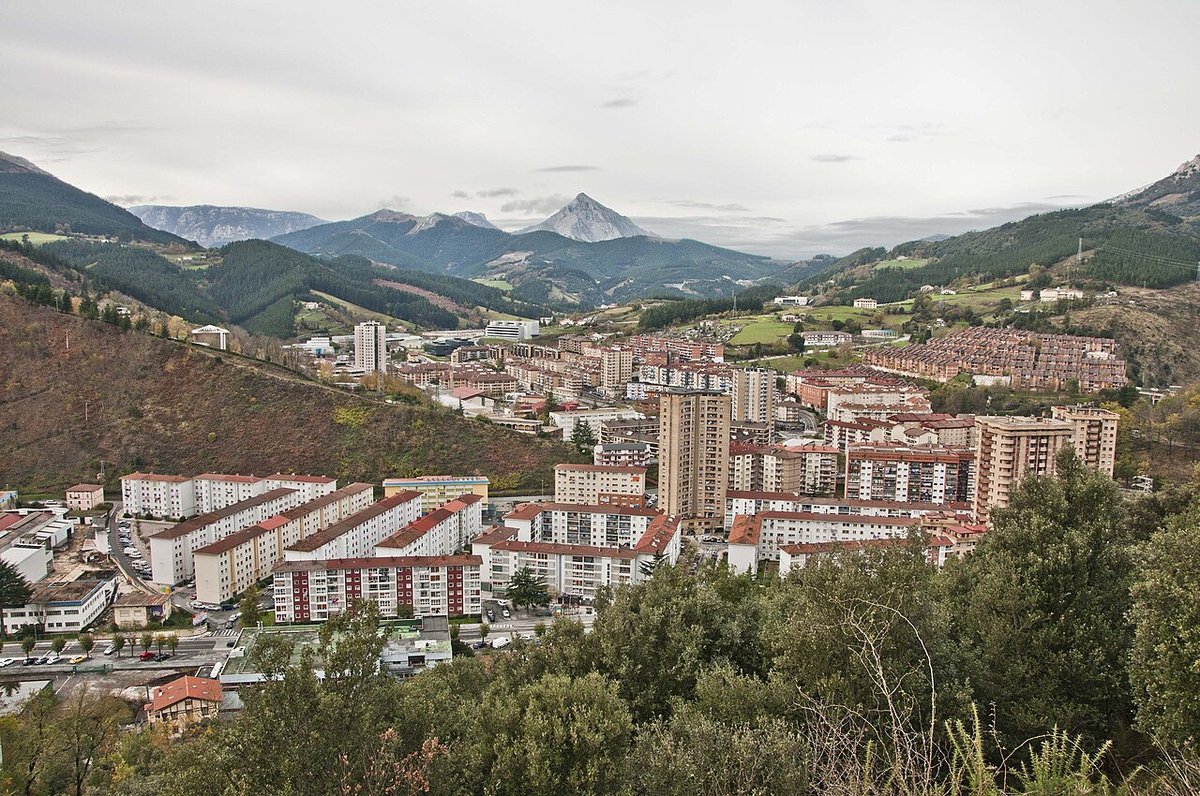
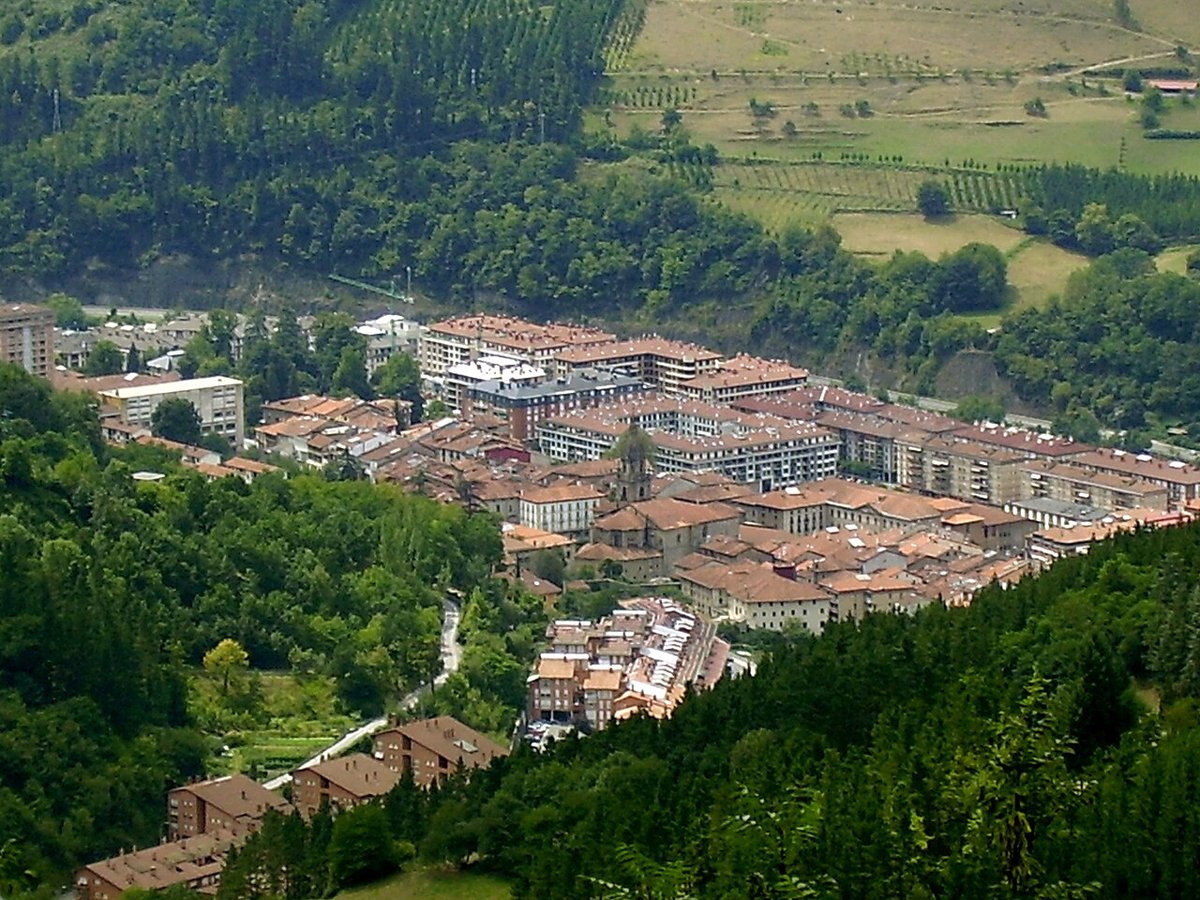
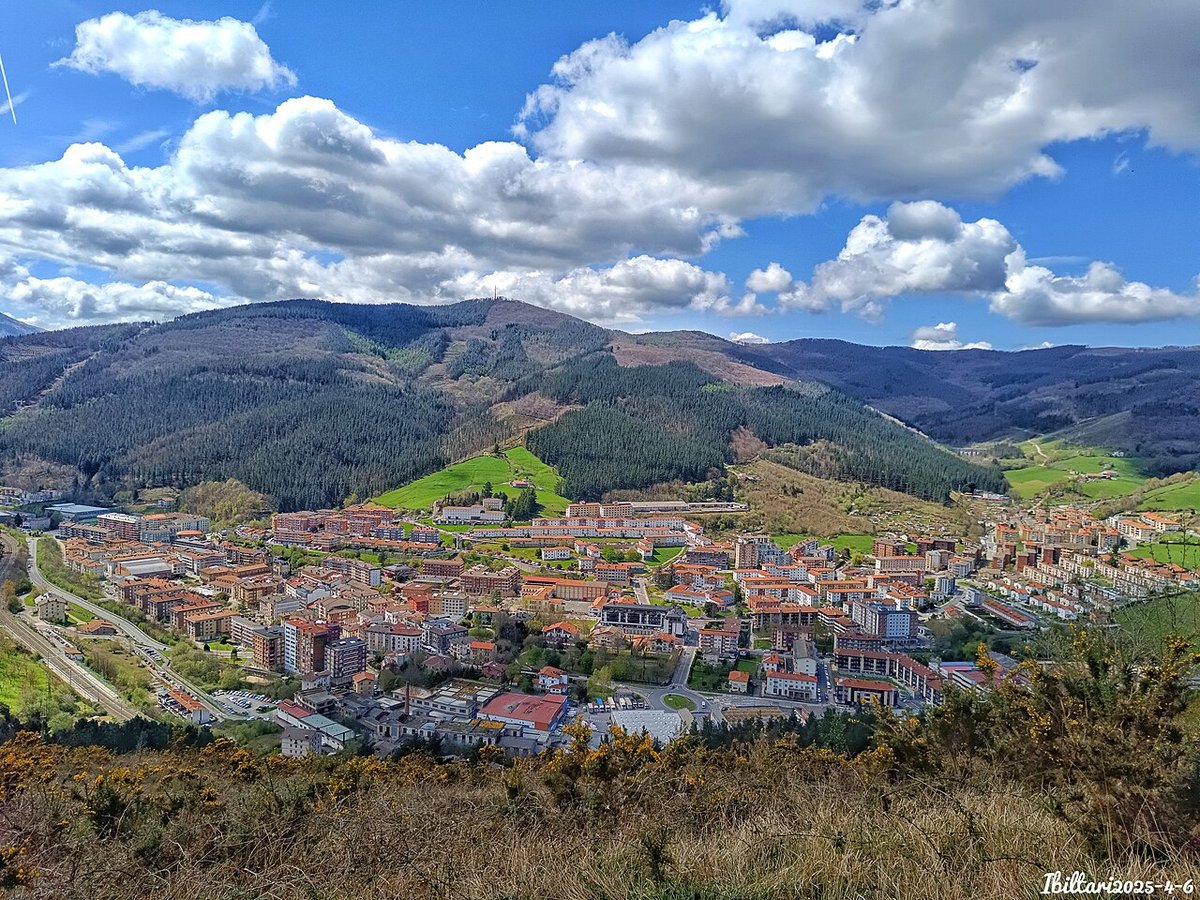
Deep green, farmhouses and nearby mountains with trails and viewpoints.
Hide article Read full article
Morning in the valley
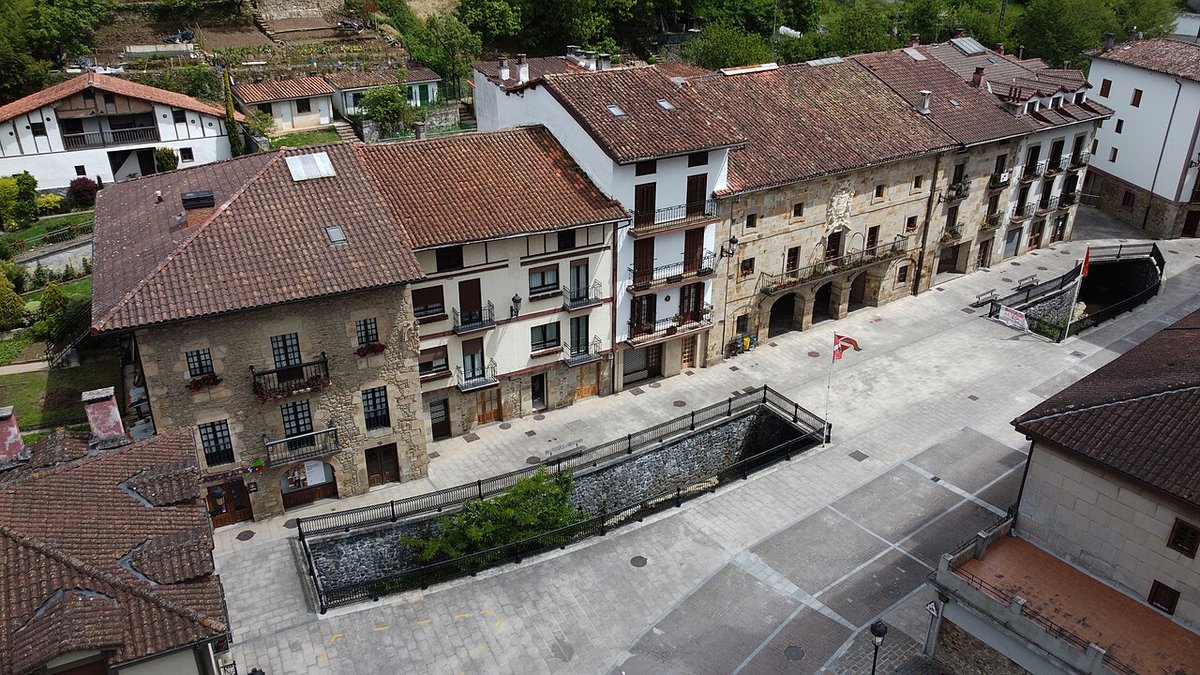
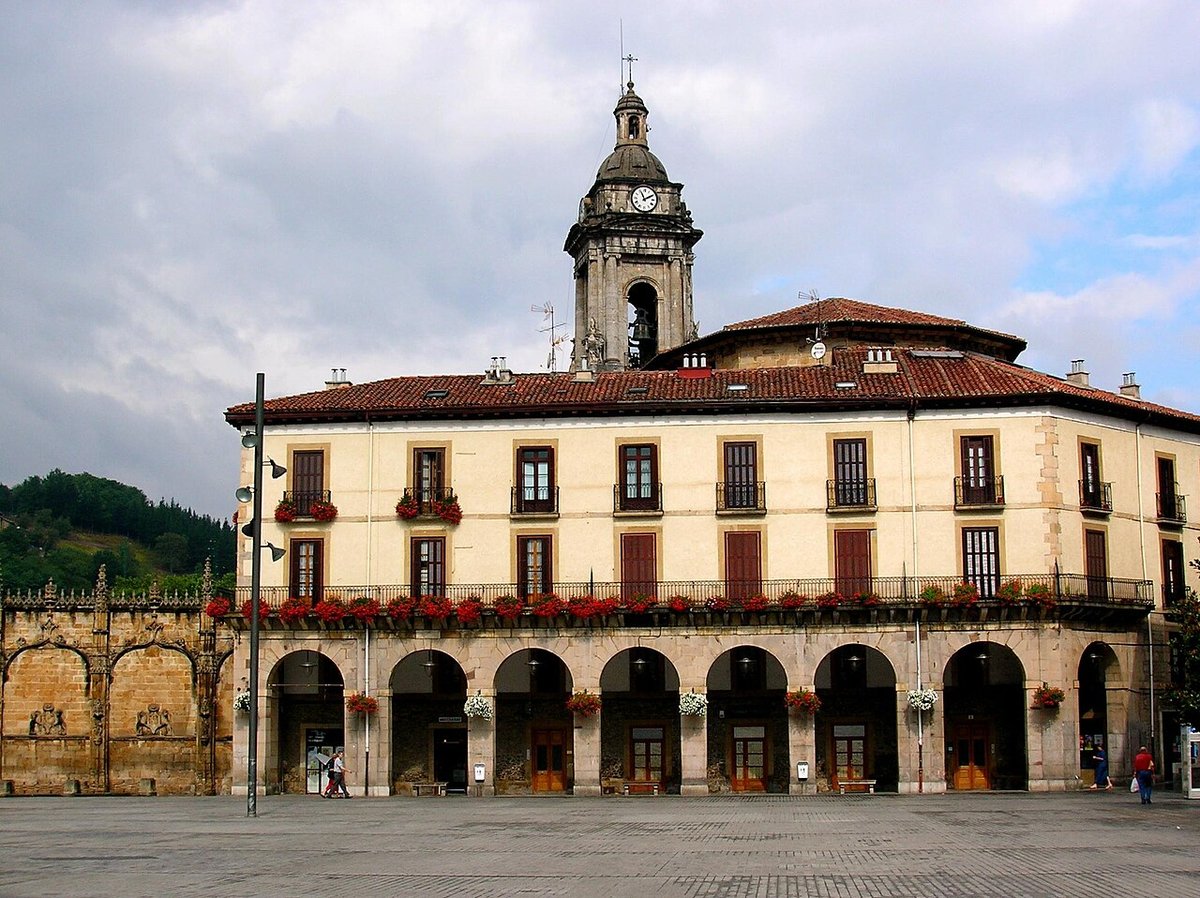
The bells of San Miguel strike eight while the sun has yet to fully reach the valley floor. From the Plaza de los Fueros, the ochre stone houses look as though they have risen straight out of the mountain, as if the town had opened from a crack between the limestone cliffs that encircle Oñati. At that early hour, before the traffic along the GI‑627 begins to build, the air carries the smell of freshly baked bread and the damp trace of the river that runs beneath parts of the streets.
The setting feels contained, almost enclosed by the surrounding rock. Light arrives gradually here, sliding down the slopes rather than flooding the town all at once. It shapes the rhythm of the morning, when shutters open slowly and the first movements gather around the square.
Cloisters and quiet echoes
The Universidad Sancti Spiritus appears suddenly as you turn a corner. Its golden stone façade bears the coat of arms of Charles V, and the acanthus leaves carved into the capitals still hold a sharpness that seems unlikely after centuries. Crossing the threshold changes the sound immediately: footsteps echo in the courtyard and the murmur of the street fades away.
This was once a place where law, medicine and theology were taught at a time when many of today’s universities did not yet exist. In the lower cloister, one detail consistently draws attention. Water flows between the arches, following the visitor with a steady, almost domestic sound. Some say it is one of the few cloisters crossed by a natural stream. Whether or not it is unique, the effect is clear. Voices drop and movement slows.
Inside, the building preserves historic spaces from its time as a university. There are worn wooden benches and raised lecterns from which lessons were delivered. Today the complex serves other academic and cultural purposes, yet students still pass through its doors with backpacks, many arriving from other towns in the Basque Country.
Flavours of the valley
By midday, sunlight fills the square and the stone begins to release the warmth it has gathered. In one of the bakeries in the old quarter, small chocolate sweets are wrapped in brown paper. They are modest in size, no larger than a walnut, and usually gone in a couple of bites.
The market often brings together products from nearby caseríos, traditional Basque farmhouses. Idiazabal cheese, recognised by its designation of origin label, is the easiest to find. When it is cut, the smell is immediate: sheep’s milk, dried grass, sometimes with a faint hint of smoke. More than one seller offers the same advice, try it once it has lost its chill, when the texture begins to soften slightly.
The square works as the town’s shared living room. By mid-afternoon, different rhythms overlap. Retired residents play cards, students cross quickly on their way elsewhere, and families step out for a short walk before heading home.
Beneath the surface
A short drive from the centre leads to the Arrikrutz cave. The transition is abrupt. The green of the valley gives way to a cold rock entrance where the temperature drops noticeably.
At one point during the guided visit, the lights go out. The darkness is complete and the only sound is water dripping. When the torch comes back on, stalactites and columns appear, formations that have taken thousands of years to develop. In some galleries, remains of cave bears were discovered, finds that drew considerable attention at the time of excavation.
The underground route usually lasts around an hour. Even in summer, a light jacket is useful, as it remains cool inside throughout the year. Stepping back outside, the daylight can seem intensely green after the dimness below.
From this area, paths lead up into the mountains that surround the valley. Some enter beech forests and gradually gain height until they open onto wide views over Oñati.
A night of silence
During Holy Week, there is a procession known locally as the Procession of Silence. It usually takes place at night and changes the atmosphere of the old quarter entirely. The streets fill with people, yet almost nothing is heard apart from the firm ضرب of a drum marking the pace.
Candles light the stone façades, and for a time the town seems to belong to another era. When it ends, the low murmur of voices returns little by little, and people drift towards the bars in the centre to talk through the night.
When to go and what to bring
Around the days of San Blas, at the beginning of February, the town often smells of chocolate and freshly made cheese. It is a quieter, still wintry period when everyday life in the valley is easy to observe.
August brings a different pace. During the week, it is still possible to walk calmly through the old quarter, but at weekends many families arrive from nearby cities, and the change is visible in the squares and car parks.
For those planning to walk towards Arantzazu along the riverside path, good footwear is important. Some stretches have damp stone and there are a few demanding climbs. And for a visit to the cave, it is worth carrying an extra layer. Inside, the temperature stays cool all year, even when outside it feels like the height of summer.