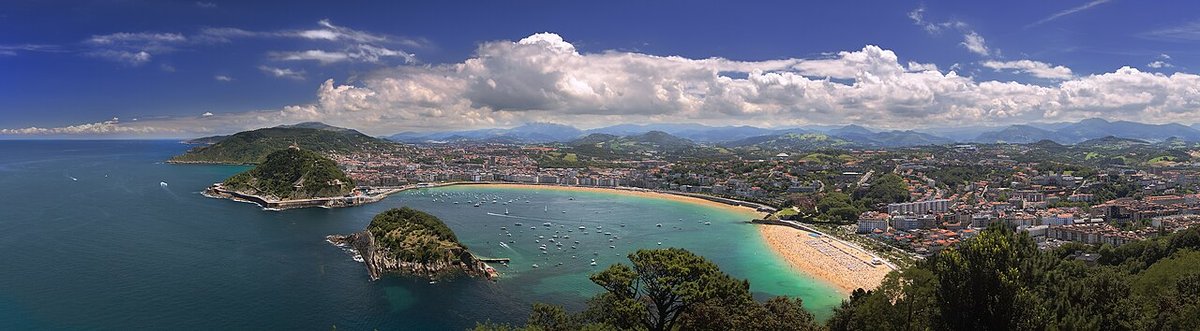
Donostia Igeldotik
País Vasco · Atlantic Strength

Donostia (San Sebastián)

At 7:30 on a Tuesday morning, La Concha beach is already busy with locals swimming parallel to the promenade. The water temperature reads 19°C—warm...

189,866 inhabitants · INE 2025
6m Altitude

Why Visit

Historic quarter Walks

Best Time to Visit

todo el año

Things to See & Do
in Donostia (San Sebastián)

Heritage

  • Historic quarter
  • Parish church
  • Main square

Activities

  • Walks
  • Markets
  • Cuisine
  • Short routes

Full Article
about Donostia (San Sebastián)

Between mountains and sea, Basque tradition and good food in every square.

Ocultar artículo Leer artículo completo

The Bay That Refuses to Behave

At 7:30 on a Tuesday morning, La Concha beach is already busy with locals swimming parallel to the promenade. The water temperature reads 19°C—warmer than Brighton in August, though the Basque lifeguards still wear neoprene. By 8:15 the first Atlantic swell rolls in, transforming the bay from mirror-flat to a churning washing machine in twenty minutes. This is Donostia's daily magic trick: a city beach that behaves like open ocean, watched by balconied apartments that cost more per square metre than Chelsea.

The beach curves for 1.3 kilometres between two headlands, each end telling a different story. The western tip, near the city hall, hosts elderly women doing chi-kung in the shallows. Walk east towards Ondarreta and you'll pass the royal Miramar Palace—now a music school where students practice cello with the windows open, the notes drifting across the sand. At the far end, the Pico del Loro rock formation creates natural tidal pools where children hunt crabs while their parents drink cortados from the beach kiosk. No postcards here: just locals treating the beach as their garden, complete with changing cabins painted the same green as London's park benches.

Up the Hill, Down the Hatch

Donostia sits in an amphitheatre of hills, and the city makes you work for its views. The easiest ascent is the funicular to Monte Igueldo—a rickety wooden contraption that's been climbing 200 vertical metres since 1912. At the top, an ageing theme park shares space with a camera-ready panorama: the entire bay laid out like a scale model, with the Pyrenees visible on clear days. The ride costs €3.15 return, less than a pint in most British pubs, though the queue moves at Spanish speed (which is to say, slowly but with good humour).

Back at sea level, the Parte Vieja reveals itself as a grid of streets narrower than most Oxford lanes. Here, pintxos bars operate on a rhythm that puzzles first-time visitors. At 11:00, workers queue at La Cuchara de San Telmo for foie gras on toasted brioche. By 14:30 the same bar stands empty—staff prepping for the evening rush while locals lunch on three-course menús del día elsewhere. The system rewards observation: order at the bar, don't ask for the bill (they'll tot it up when you leave), and never, ever touch the pintxos with your fingers unless you want a lecture in rapid-fire Basque.

The Sea That Pays the Bills

Walk the harbour at 6:00 and you'll see the city's real economy in action. Small boats unload bonito tuna, still fighting on the deck, while auctioneers rattle prices in Spanish and Basque. The daily catch heads straight to the bars—within six hours that tuna becomes pintxos at €3 a piece, dressed with nothing more than olive oil and sea salt. It's this immediacy that makes Donostia's food scene special: no supply chains, no central distribution centres, just fishermen and chefs separated by a ten-minute walk.

The working port sits next to the Paseo Nuevo, a breakwater that doubles as the city's weather vane. When Atlantic storms hit, waves crash over the 19th-century lighthouse sending spray across the entire walkway. Locals call these days "whale weather"—the sea behaves like something hunting Moby Dick. Smart visitors watch from the safety of the city walls, though you'll always spot one brave soul in flip-flops getting drenched for an Instagram shot.

Beyond the Postcard Grid

Leave the centre and Donostia reveals its other neighbourhoods. Gros, across the river, hosts surf schools where instructors speak English with Newquay accents—drawn by waves that work year-round thanks to the Bay of Biscay's fetch. The beach here, Zurriola, lacks La Concha's elegance but offers something better: space. On a Saturday in July you'll share the sand with 500 surfers, 200 bodyboarders, and precisely zero tour groups taking selfies.

Inland, the city morphs into something resembling a Basque version of Hampstead. The Egia district climbs hills planted with apple trees—remnants of the cider houses that supplied London's docks in the 19th century. Now these orchards feed neighbourhood cooperatives where €15 buys you a year's supply of organic vegetables, delivered weekly to collection points that operate on trust-based honesty boxes. It's all terribly civilised, though the produce comes with instructions in Basque that even Spanish speakers struggle to decode.

The Practical Bits That Matter

Getting here used to mean flying to Bilbao then navigating Spain's most expensive taxi ride. Now Biarritz airport, 40 minutes away by French bus, offers direct Ryanair flights from Manchester and London Stansted for under £60 return if you book midweek. From the airport, a €2 bus drops you at Donostia's edge—the walk into town takes twenty minutes along the river, past rowing clubs practising in the morning mist.

Accommodation divides cleanly into two camps. The old-town pensions, carved from 18th-century merchant houses, charge €80-120 for rooms where you'll hear your neighbour's phone conversations through walls thick enough for postcards but not much else. Alternatively, Airbnb apartments in Gros start at €60 nightly and come with kitchens—essential if you plan to self-cater, though why you'd cook when breakfast pintxos cost €1.50 at Casa Urola remains a mystery.

Weather demands the same approach you'd take to a British seaside holiday: pack layers and expect everything. July averages 24°C but the sea fog—called haize locally—can drop temperatures to 16°C in minutes. October brings the best conditions: warm enough for swimming, empty enough to find space on the sand, with bars serving txuleta (giant rib-eye) to crowds of locals rather than tourists hunting Instagram gold.

When to Cut Your Losses

Donostia rewards time but punishes haste. The weekend trippers who arrive Friday night, tick off the top ten bars, and leave Sunday lunchtime miss the point entirely. They queue 45 minutes for a table at Bar Nestor, pay €18 for tomato salad and steak, then declare the place overrated. Meanwhile locals eat the same meal at 12:30 on a Tuesday with no wait, paying half the price while discussing last night's football.

The city works best when you surrender to its pace. Spend three hours walking the bay at different tides. Try one pintxo bar, then wander for twenty minutes before the next. Accept that the weather might scrap your beach plans—then discover that indoor pintxo-hopping in the rain provides its own pleasures, particularly when bars hand out free txakoli to compensate for the gloom.

Leave the car at Illumbe park-and-ride (free, secure, with buses every ten minutes). Bring cash in small notes—many bars still operate like British markets, with handwritten tabs and a distrust of contactless. And remember: Donostia isn't trying to impress you. It's simply getting on with being itself, Atlantic weather and all, confident that if you stay long enough you'll understand why locals never leave.

Key Facts

Region
País Vasco
District
Donostialdea
INE Code
20069
Coast
No
Mountain
No
Season
todo el año

Livability & Services

Key data for living or remote work

2024
ConnectivityFiber + 5G
Housing~5€/m² rent · Affordable
Sources: INE, CNMC, Ministry of Health, AEMET

Official Data

Institutional records and open data (when available).

  • Catedral del Buen Pastor
    bic Monumento ~0.4 km
  • Basílica de Santa María del Coro
    bic Monumento ~0.6 km
  • Puente de María Cristina
    bic Monumento ~0.3 km
  • Plaza de la Constitución
    bic Monumento ~0.6 km
  • Paseo de La Concha
    bic Monumento ~1.4 km
  • Teatro Victoria Eugenia
    bic Monumento ~0.3 km
Ver más (10)
  • Peine del Viento
    bic Monumento
  • Palacio de Aiete
    bic Monumento
  • Plaza Gipuzkoa
    bic Monumento
  • Puente de la Zurriola
    bic Monumento
  • Palacio Miramar
    bic Monumento
  • Puente de Santa Catalina
    bic Monumento
  • Iglesia de San Vicente
    bic Monumento
  • Parte Vieja de San Sebastián
    bic Monumento
  • Iglesia de Iesu
    bic Monumento
  • Funicular de Igeldo
    bic Monumento

Planning Your Visit?

Discover more villages in the Donostialdea.

View full region →

Day trips near Donostia (San Sebastián)

La Concha, alta gastronomía y pueblos de inte…

Villages near San Sebastián →

More villages in Donostialdea

Traveler Reviews