Full Article
about Amorebieta-Etxano
Hide article Read full article
A slow start in the valley
At eight in the morning, the smell of freshly cooked txistorra hangs in the damp air drifting in from the Ibaizabal. In the Plaza de la Cruz, shutters begin to lift one by one. There is a brief metallic clatter, then quiet returns to streets that are still only half awake. A paper bag rustles as someone walks past. Amorebieta-Etxano is just starting its day, yet there is already movement under the arcades.
Daily life gathers in small gestures. People cross the square, exchange a few words, carry bread home. Nothing feels rushed. The rhythm is set more by habit than by urgency, and that pace tends to hold as the day unfolds.
A valley that brought two places together
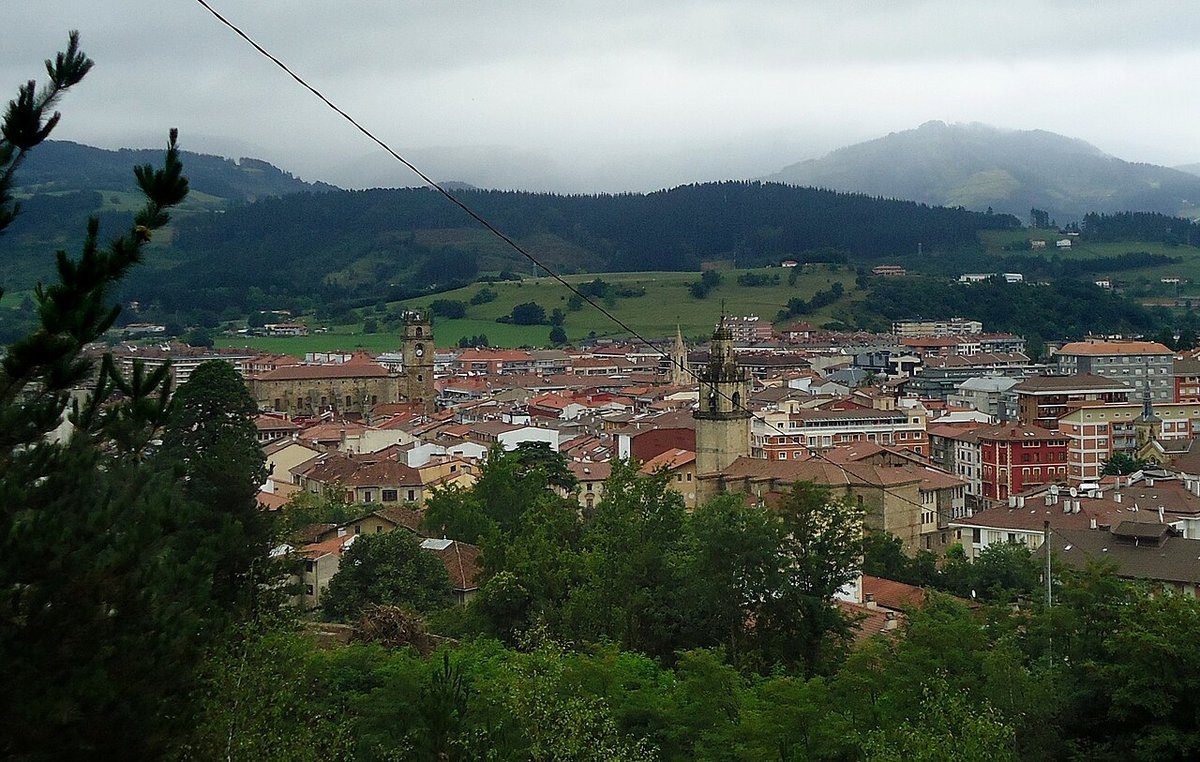
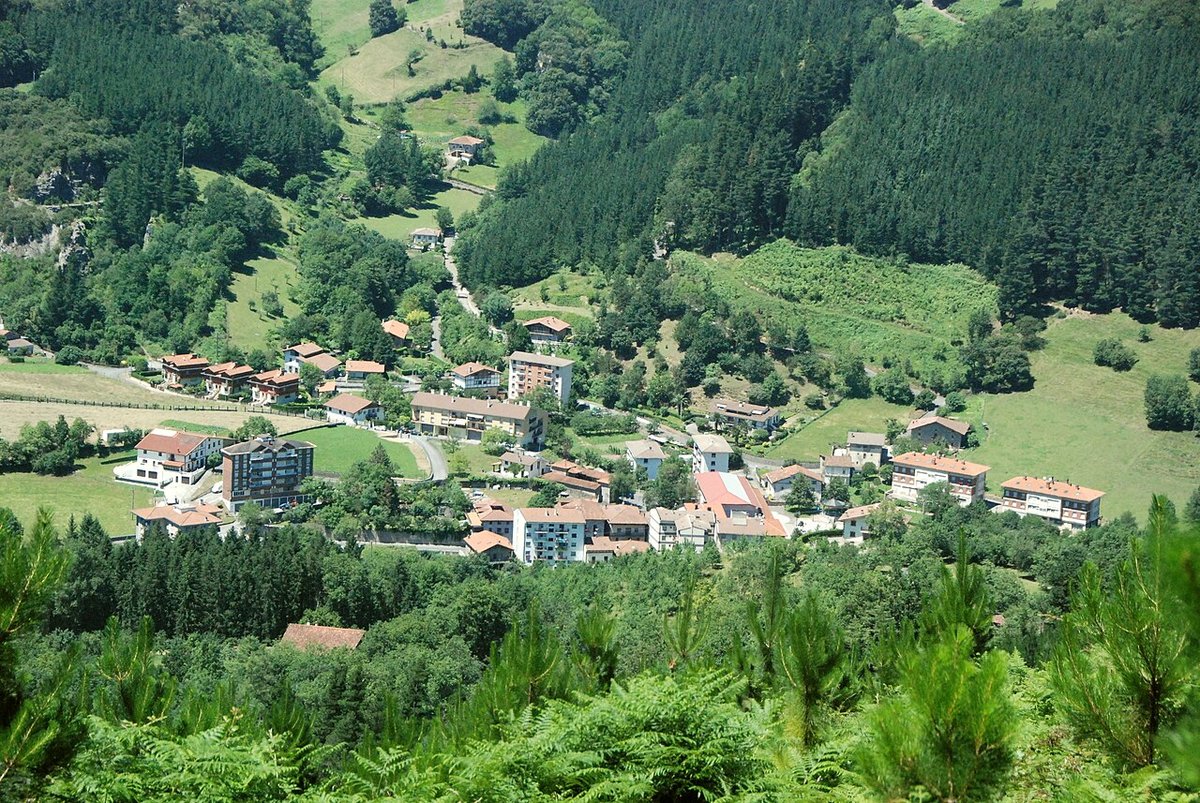
Amorebieta-Etxano came into being through the administrative union of two places that had long existed separately: the main settlement in the valley and the rural neighbourhood of Etxano, set higher up on the hillside. On paper they have formed a single municipality since the mid-20th century, though the distinction still lingers in everyday speech. In Etxano, it is common to hear that someone is “going down to the town” when heading towards the centre of Amorebieta.
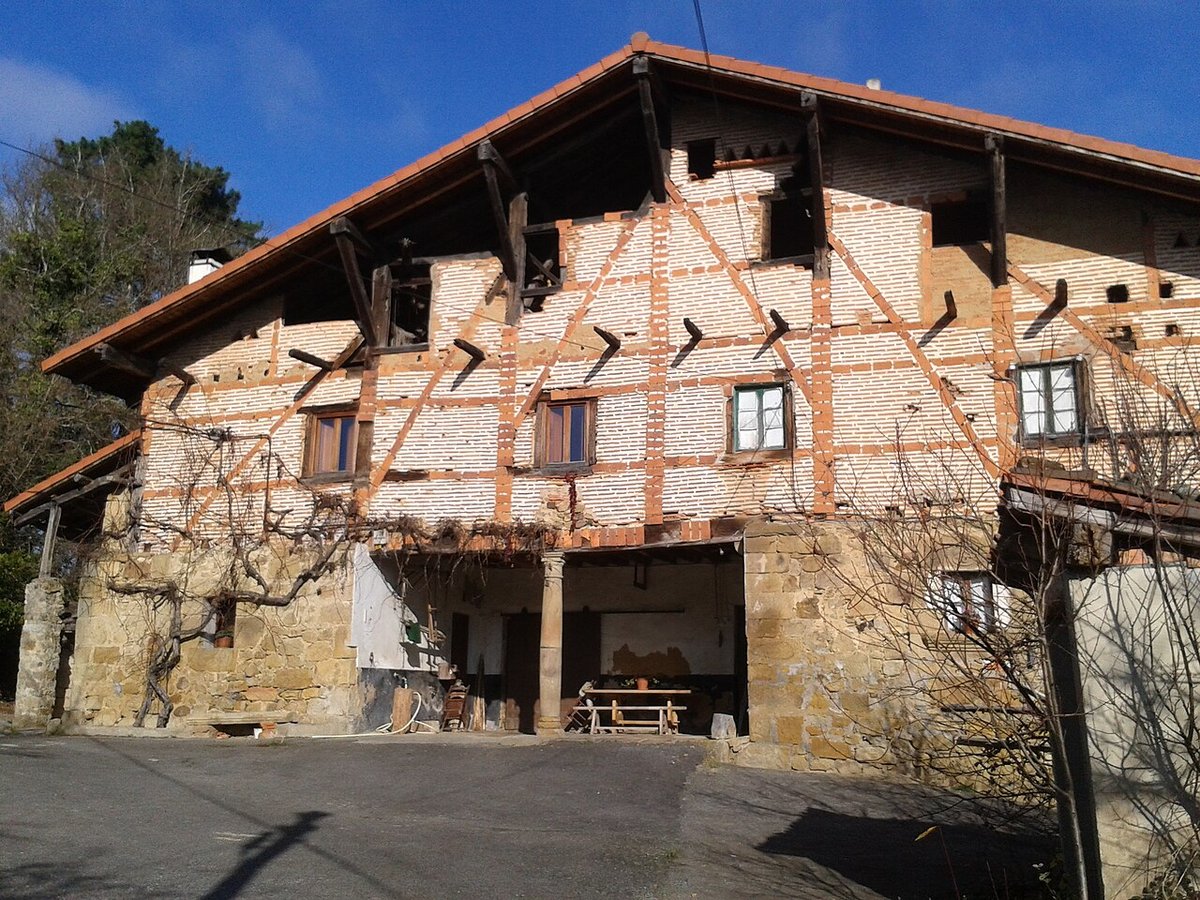
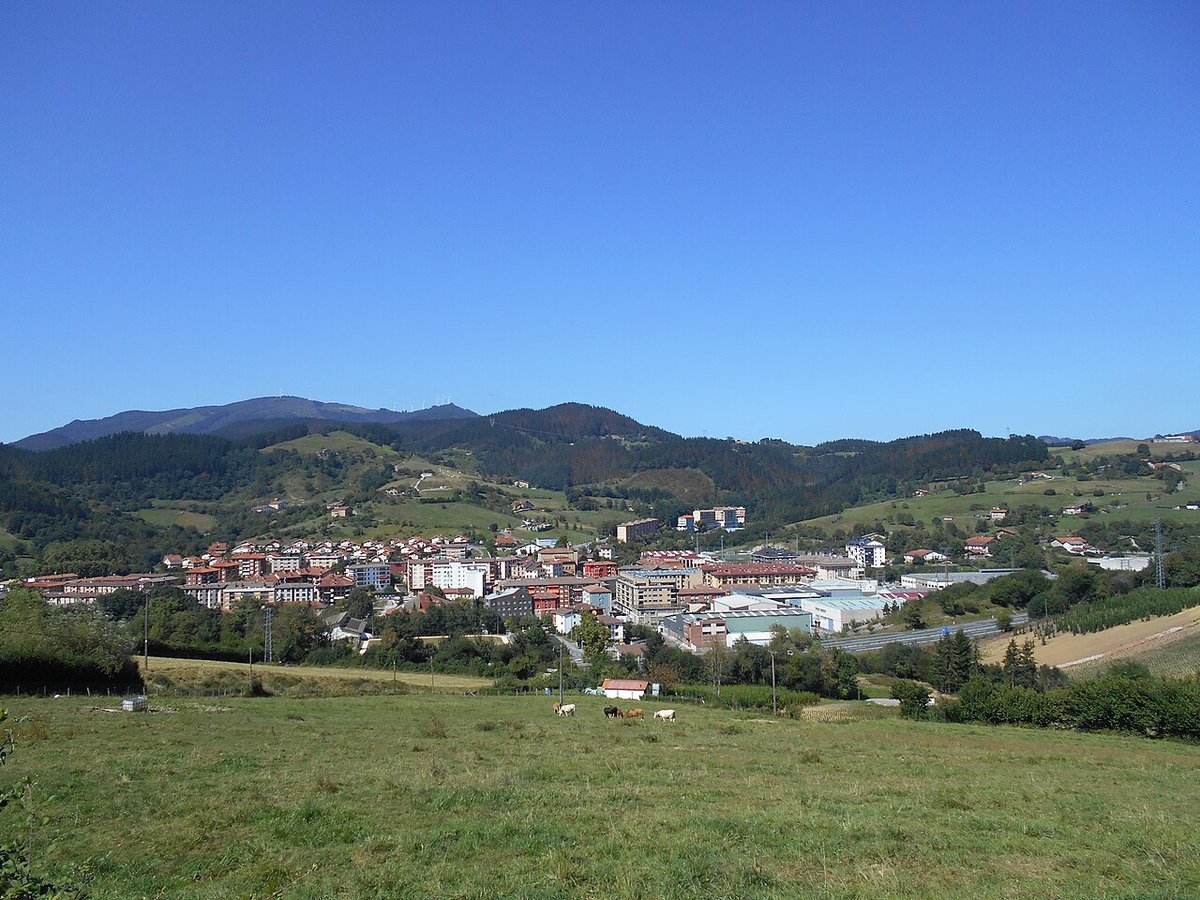
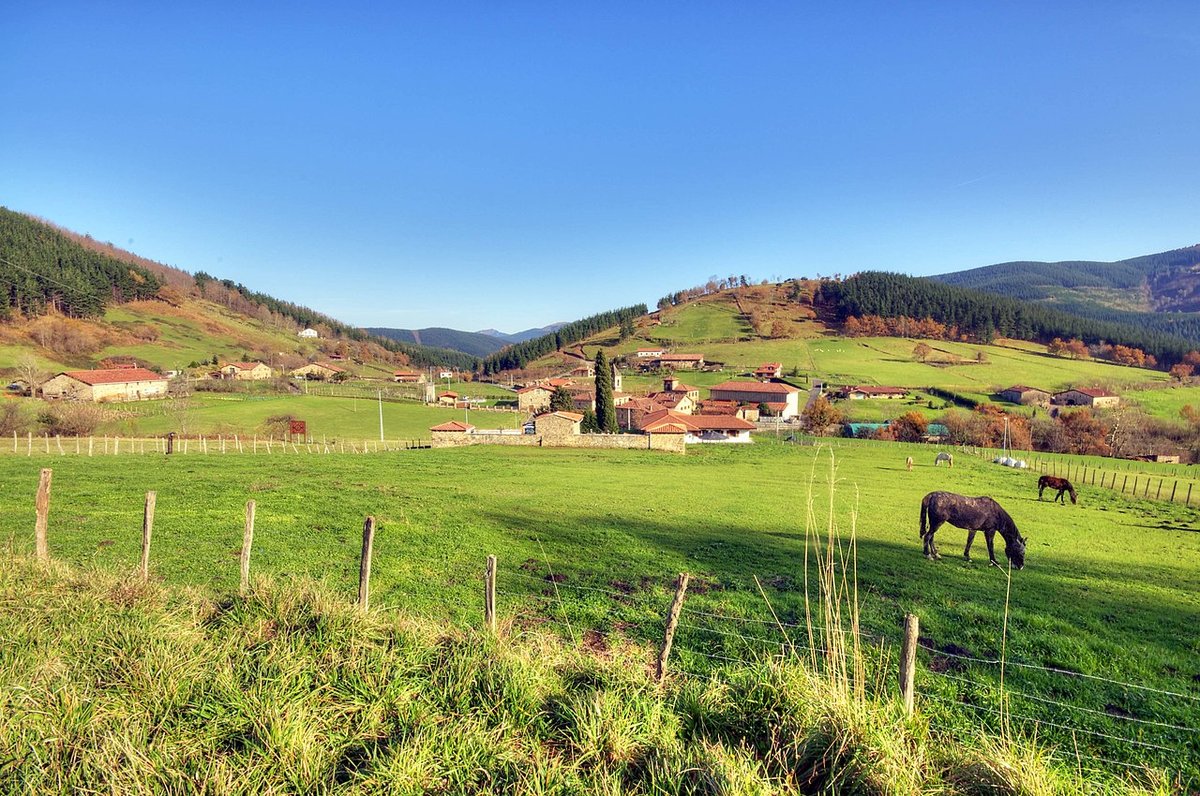
The landscape shifts quickly between the two. Up in Etxano, farmhouses are scattered across sloping meadows, linked by narrow roads where cars move slowly. Down in the valley, most of daily life is concentrated: shops, schools, stations and the road that connects to Bilbao, around twenty-five kilometres away.
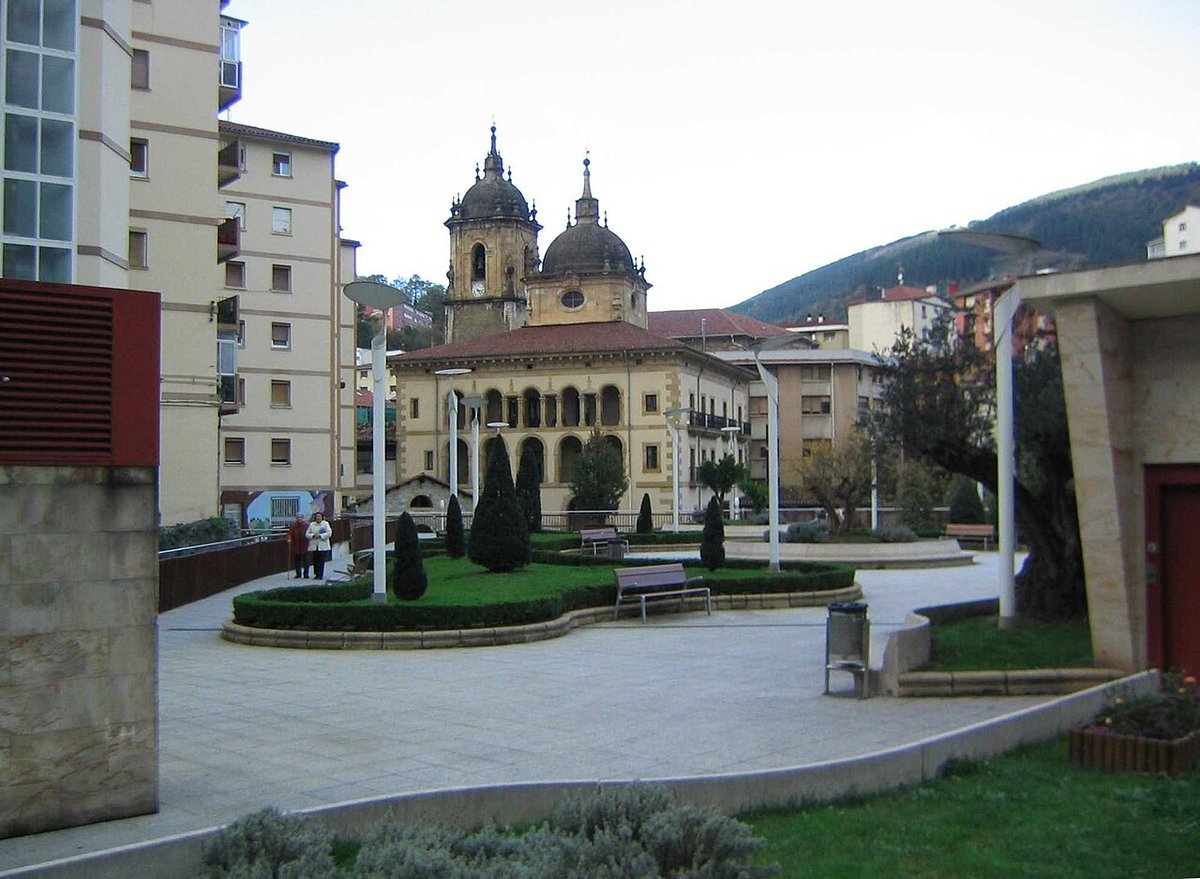
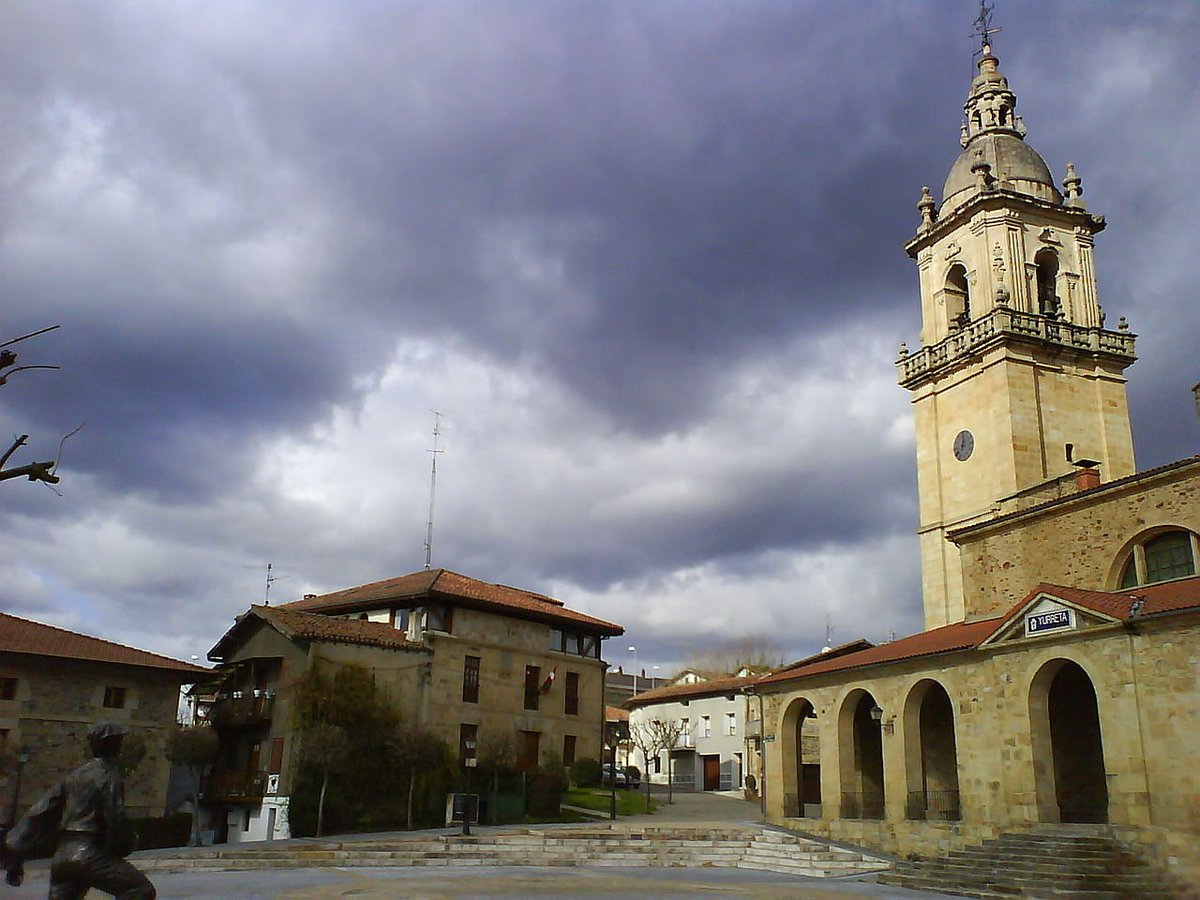
In the middle of the town centre stands the Colegiata de Santa María. Its pale stone structure is visible from several streets. Inside, a richly decorated altarpiece contrasts with the building’s restrained exterior, something often seen in churches across Bizkaia built between the 16th and 17th centuries.
Mountains within reach
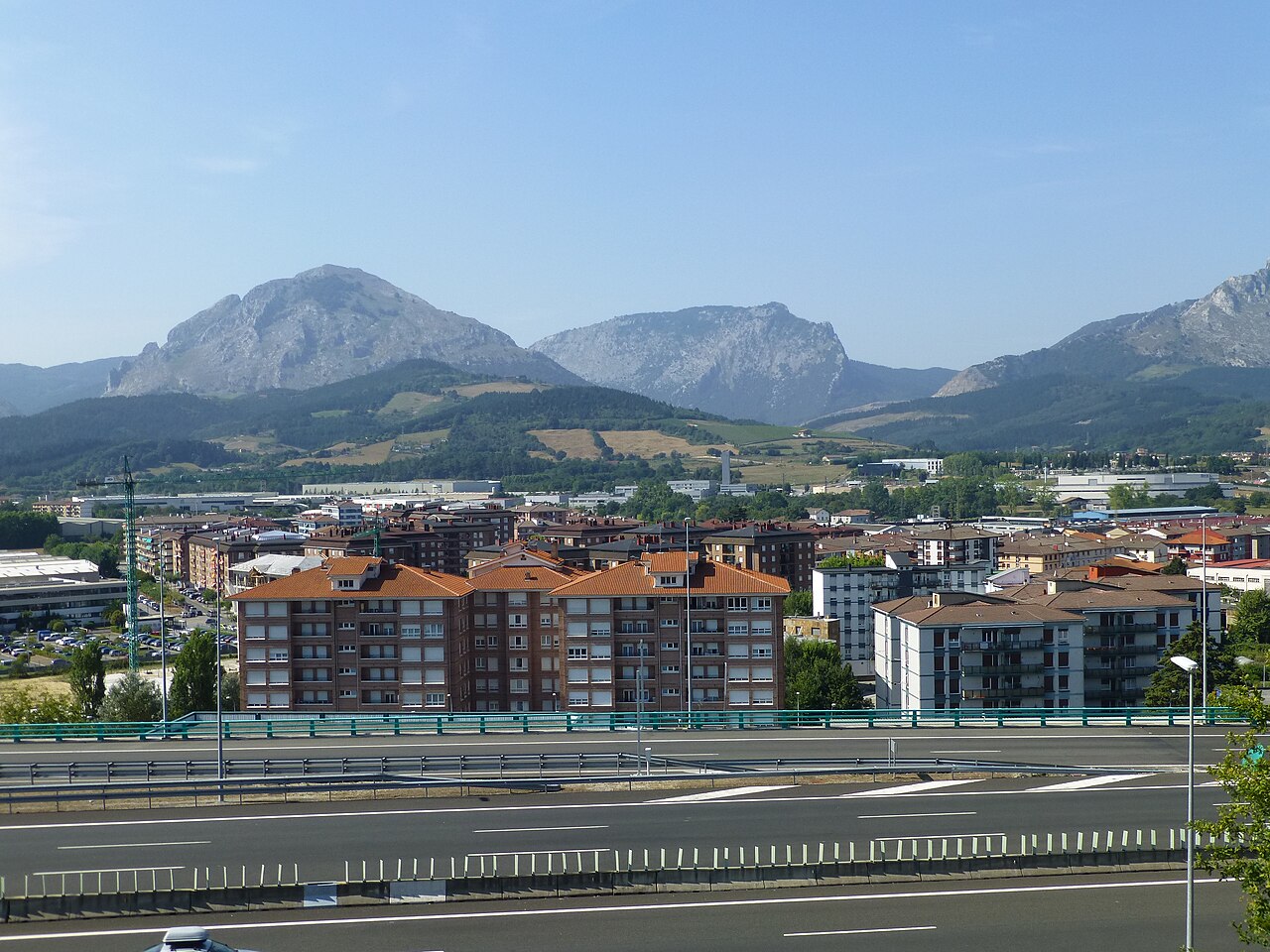
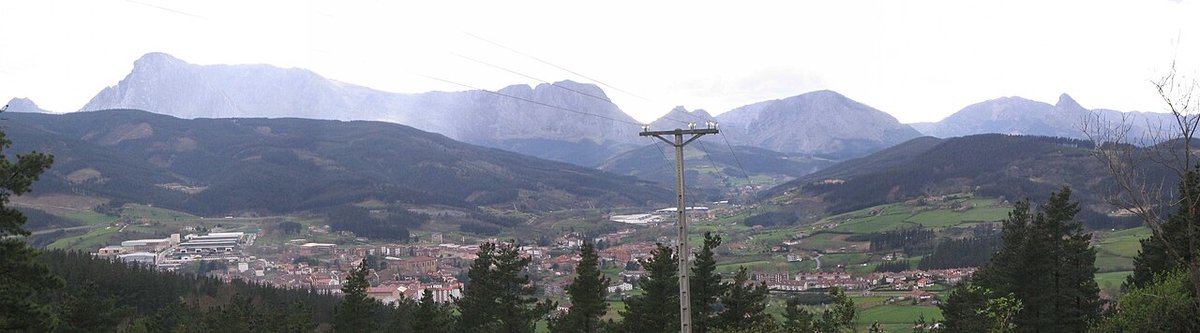
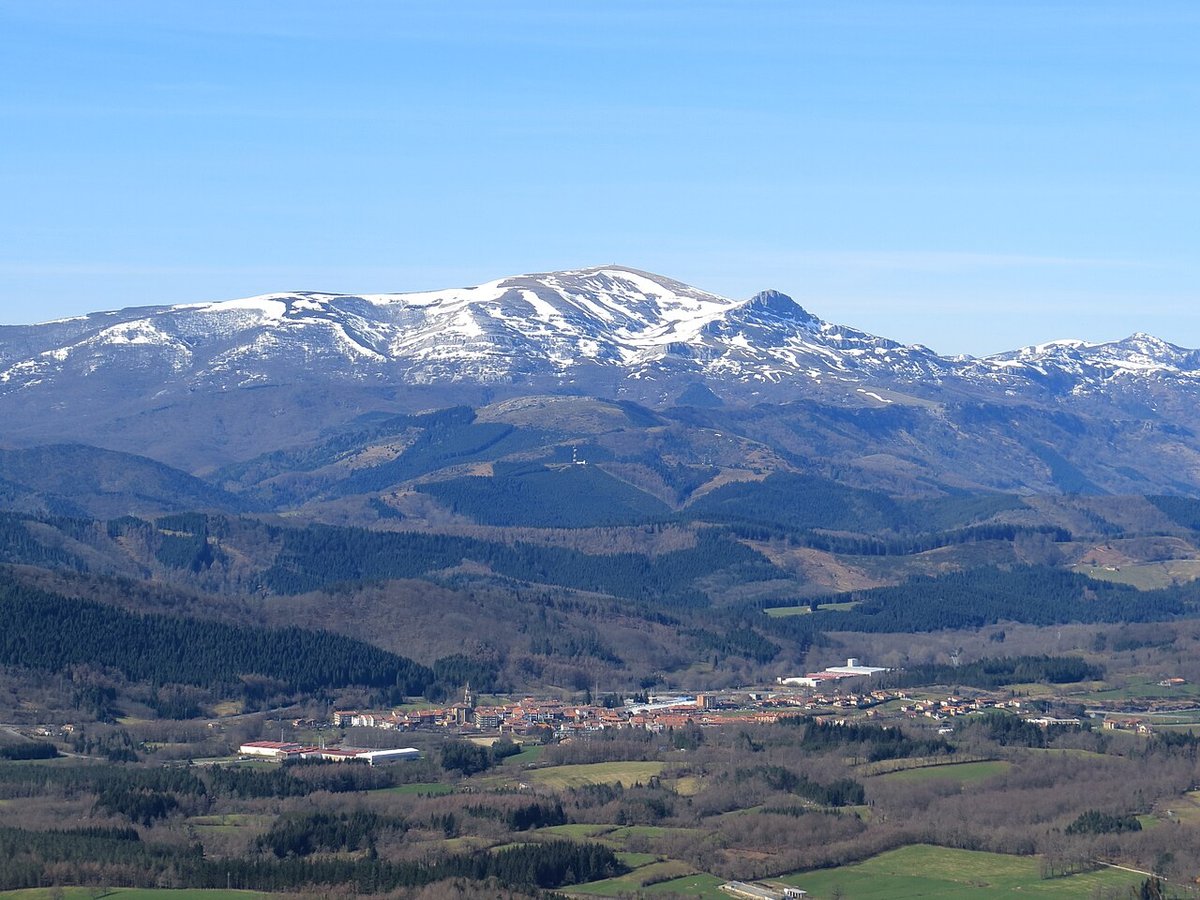
From the train station, which still carries the name Zornotza as many locals continue to call the town, the view opens towards the mountains of the Duranguesado. On clear days, the outline of Anboto is easy to recognise. It is the most familiar peak in the area and a constant presence on the horizon.
One of the usual ways to approach it is from the surroundings of Etxano. The path crosses open fields, skirts beech woods and gradually climbs higher. It is not a short walk. Depending on the route, the return journey can take several hours. In summer, the air carries the scent of dry grass and warm earth. In autumn, the trail is often covered with fallen leaves.
Closer to the valley lies Mugarra. Many local people head up on Sunday mornings, sometimes early, when the air is still cool and the sound of cowbells drifts up from the fields. From the top, the Duranguesado stretches out as a sequence of narrow valleys, with the Ibaizabal winding through industrial areas, small plots of farmland and residential neighbourhoods.
Food as a shared moment
In Amorebieta-Etxano, food still has a strong sense of being shared. When the town hosts its fair dedicated to potatoes, a well-known event in the area, people tend to gather around a large sculpture shaped like a potato. The scene repeats itself each time: groups chatting while standing, dishes moving from hand to hand, the smell of freshly made tortilla filling the air.
Around these dates, stalls run by local producers appear, and conversations turn to different potato varieties, family recipes and how the year’s harvest has turned out. Everything happens at an unhurried pace, typical of rural fairs that remain oriented towards local people rather than visitors.
In the surrounding cider houses, the txotx season stretches weekends into long social occasions. The ritual is simple. Someone calls out the opening of the kupela, the large barrel, and people step forward with their glasses. The stream of cider hits the glass before settling. There is little ceremony, but plenty of conversation around long shared tables.
Old stone among everyday movement
The Casa-Torre de Larrea rises in grey stone in an area now filled with passing cars, bicycles and people heading home from work. For centuries it served as a defensive tower. Today, it houses a space dedicated to memory and reflection on the recent history of the Basque Country.
The town centre mixes relatively modern buildings with older houses that have narrow balconies and dark ironwork. On quiet afternoons, the church bell marks the hours, and the sound of water beneath the bridge over the Ibaizabal accompanies anyone who pauses to look at the river.
A little further out are the remains of old mills along the Axpe stream. They are not always easy to spot at first glance. Low moss-covered walls and partially hidden stone channels blend into the vegetation. It is a short walk from the centre and offers a way of understanding how the valley functioned before factories and roads became part of the landscape.
At the beginning of autumn, the scenery across the Duranguesado starts to shift in colour, with hills turning shades of ochre. During the week, the atmosphere in the town is usually calm. In contrast, summer weekends tend to bring more traffic into the centre and busier terraces, changing the rhythm that otherwise defines the place.