Full Article
about Iurreta (Yurreta)
Valleys and hamlets a stone’s throw from Bilbao, buzzing with local life.
Hide article Read full article
A place that slips past unnoticed
The first impression of Iurreta often comes with a small confusion. You get off the train in Durango, assume it is all the same town, walk for ten minutes, cross the river, and suddenly you are somewhere else. There is no grand sign announcing the change, no sharp shift in scenery. Stay a while, though, and the difference becomes clear. Iurreta moves at its own pace, noticeably calmer than its neighbour.
That quiet distinction shapes the whole place. It does not try to stand out at first glance. Instead, it reveals itself slowly through everyday details, the kind you only notice when you stop rushing.
The town that chose its own path
Iurreta spent many years effectively functioning as the far side of Durango, the other end of the bridge. That changed towards the end of the 20th century, when it separated and became its own municipality again. The comparison that often comes to mind is a family member deciding to move out and live independently after years of sharing space.
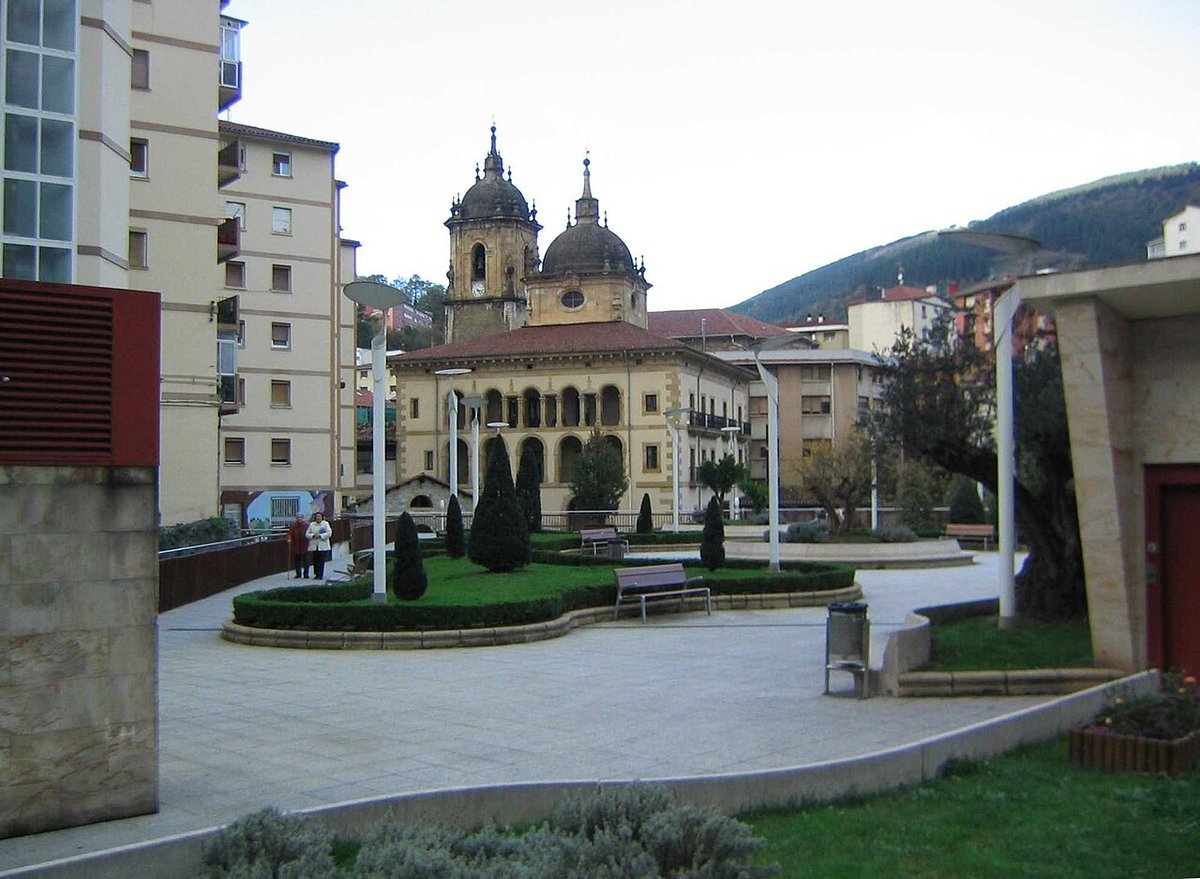
The town hall sits in the Goikola palace, a 17th-century building with wooden balconies and the composed look typical of rural Basque palaces. It feels like a confident choice for a municipality that only recently regained its independence.
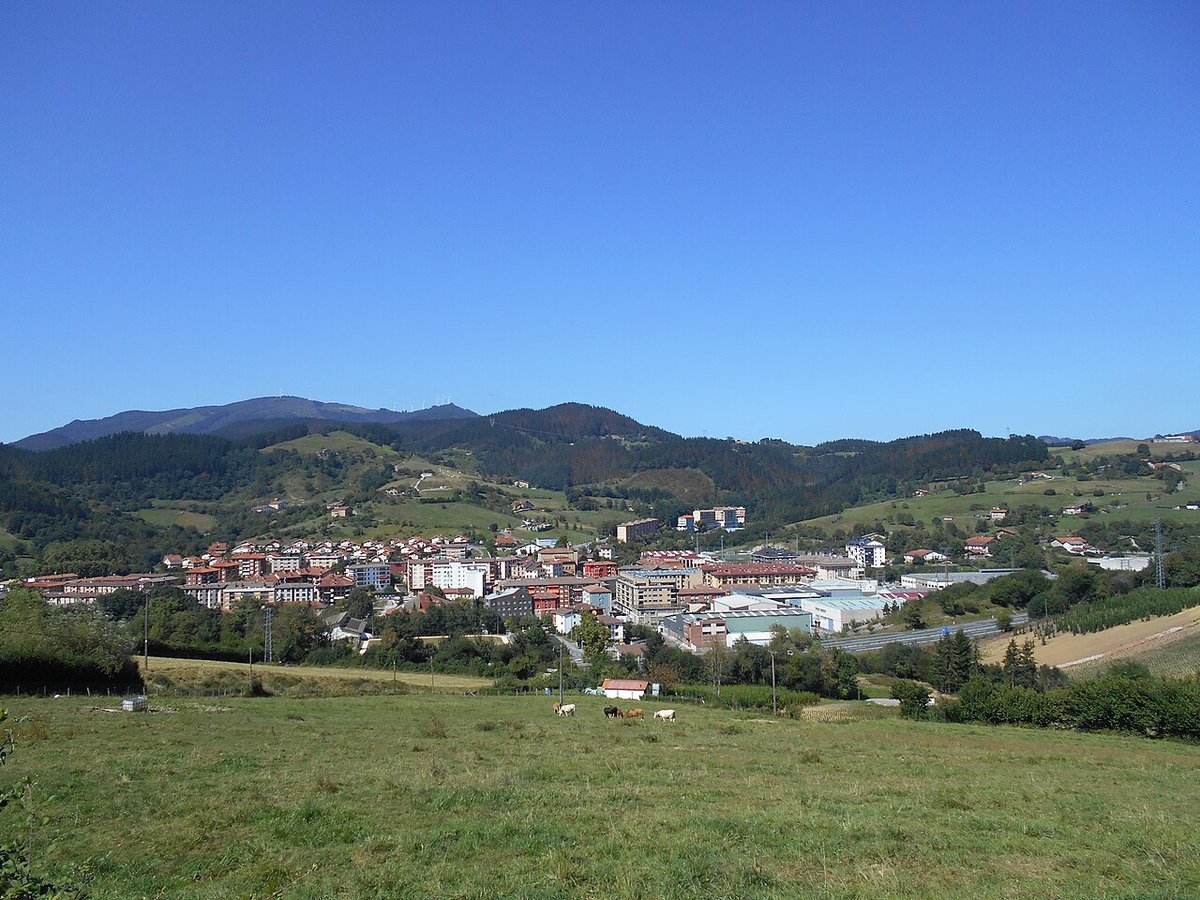
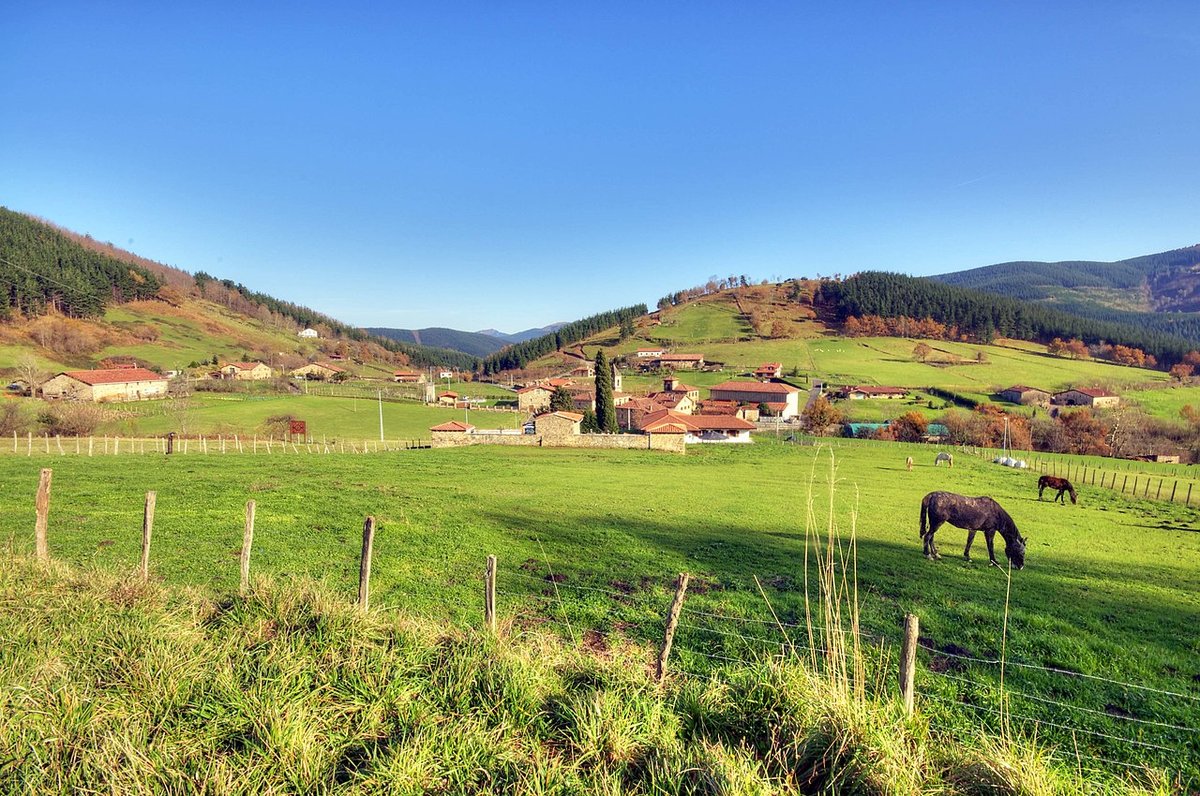
Even so, Iurreta does not feel like a capital of anything in particular. It comes across more as a collection of rural neighbourhoods that agreed to organise themselves together. Each area keeps its own small traditions, its own hermitage, its own local celebrations. There is a sense of familiarity in that structure, similar to how different groups in a town might each have their preferred meeting spot and their own way of doing things.
Between Oiz and Anboto
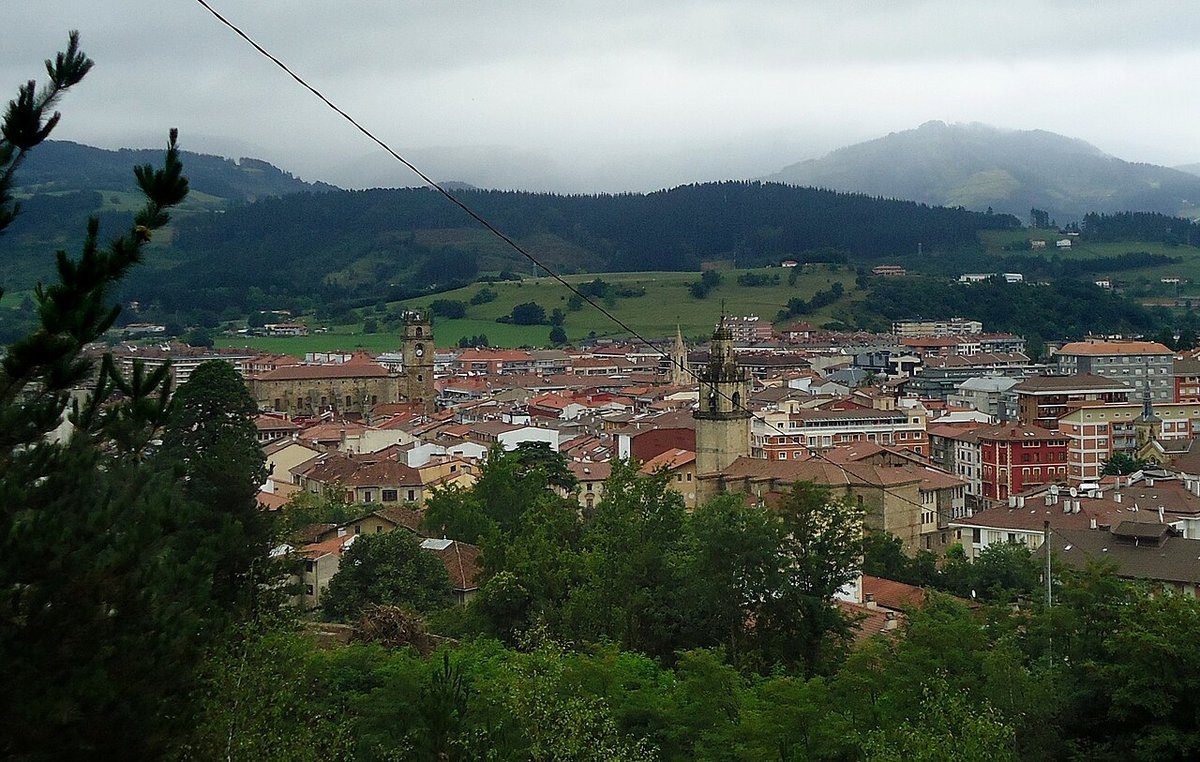
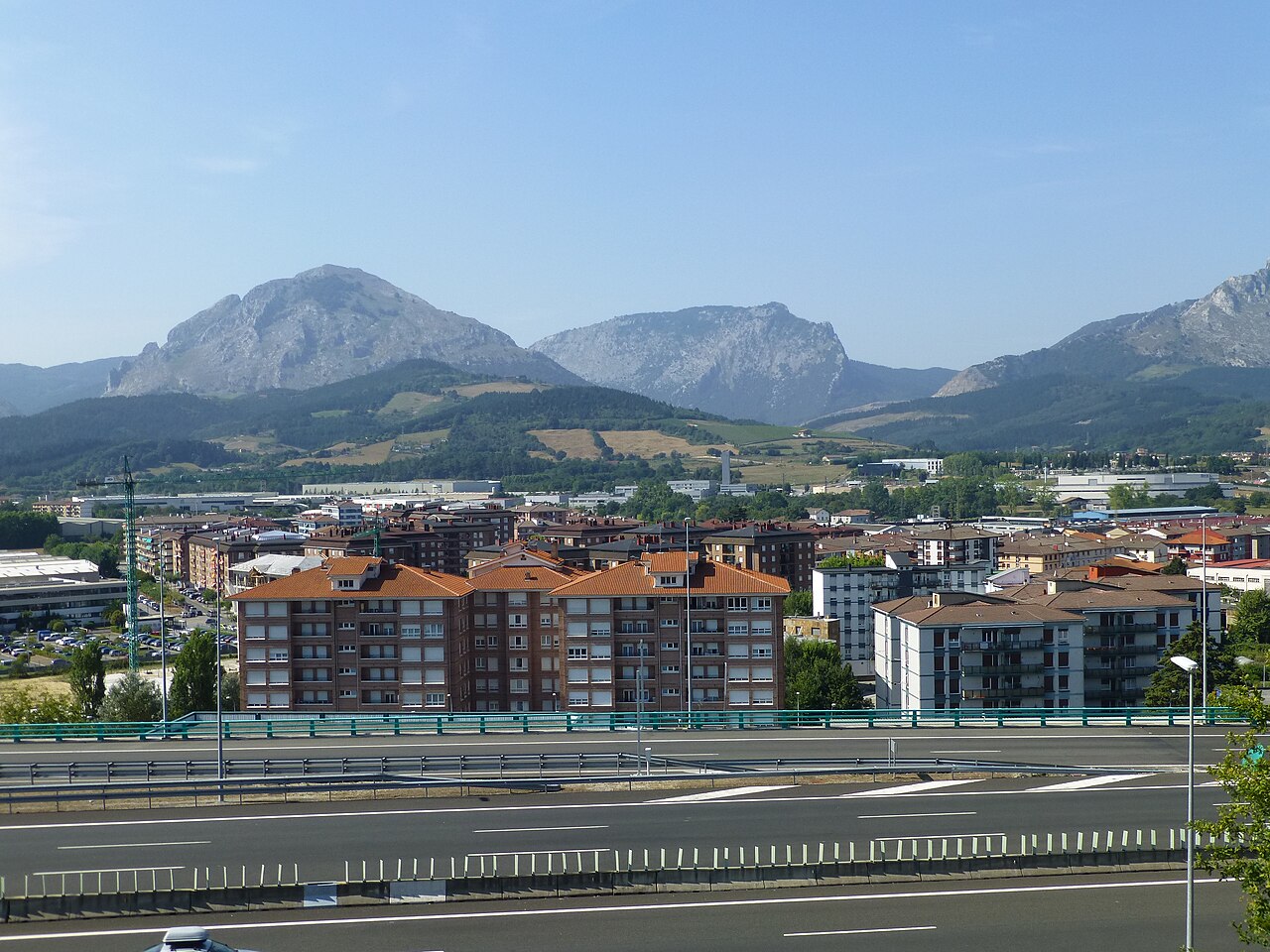
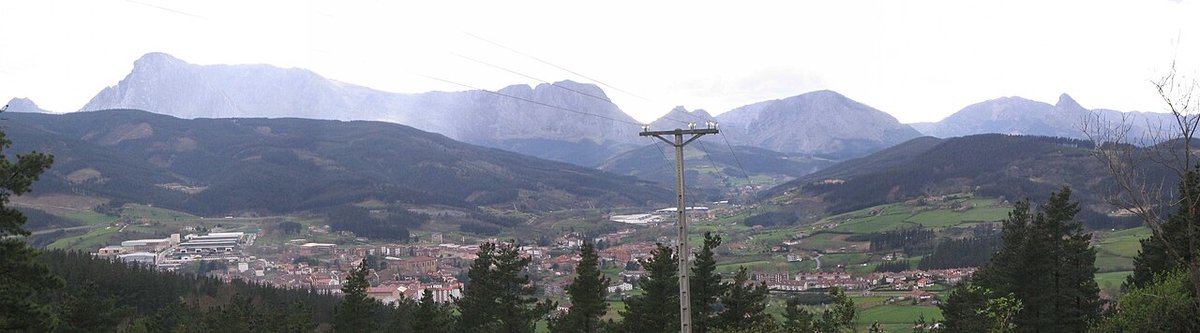
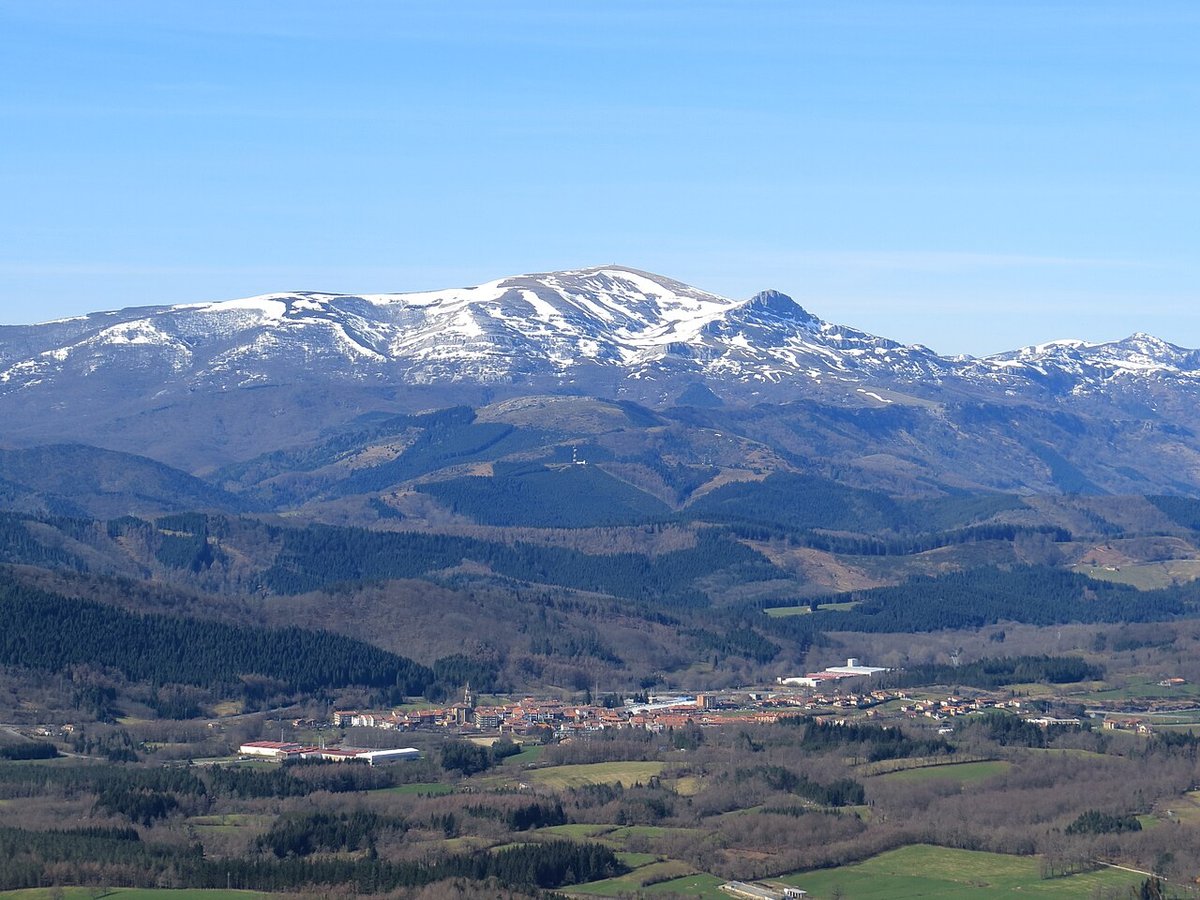
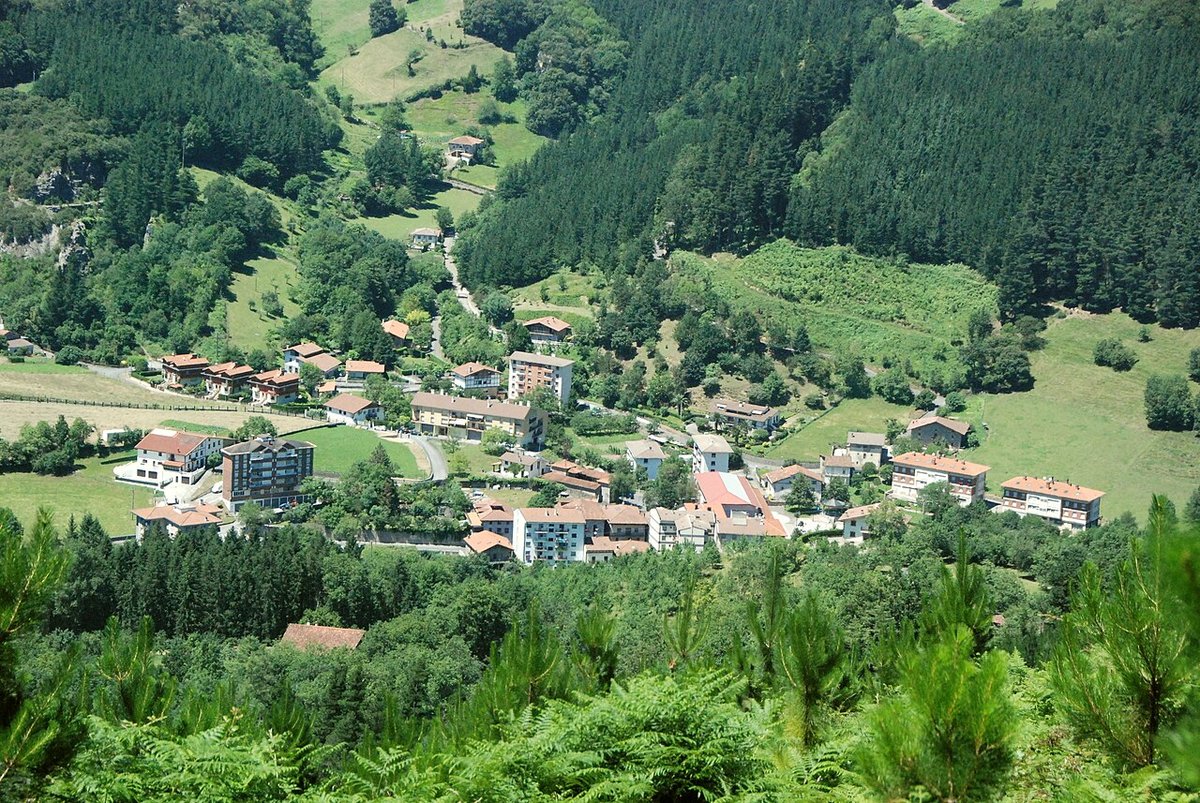
The setting is easy to read at a glance. Mountains rise on either side, with the Ibaizabal river running through the middle. Oiz stands on one side, Anboto on the other, both well-known in Bizkaia and acting here as natural boundaries.
This is not a landscape designed for quick stops and photos before moving on. It invites a slower rhythm. Paths run alongside the river, used daily by locals for walking or cycling. They are not laid out as formal tourist routes, and they do not need special signs. Following the water is enough.
An old bridge remains in the area, usually dated to the 18th century. Nearby stands a miliario, a stone marker that recalls the old route leading towards the fishing ports on the coast. It is the sort of historical detail that can easily go unnoticed without a pause.
Life continues around these elements in a very direct way. A person tending a vegetable patch might look up and give a brief wave without stopping their work. That kind of automatic gesture tends to disappear in places shaped by constant visitor traffic, but here it still feels natural.
A church with a long story
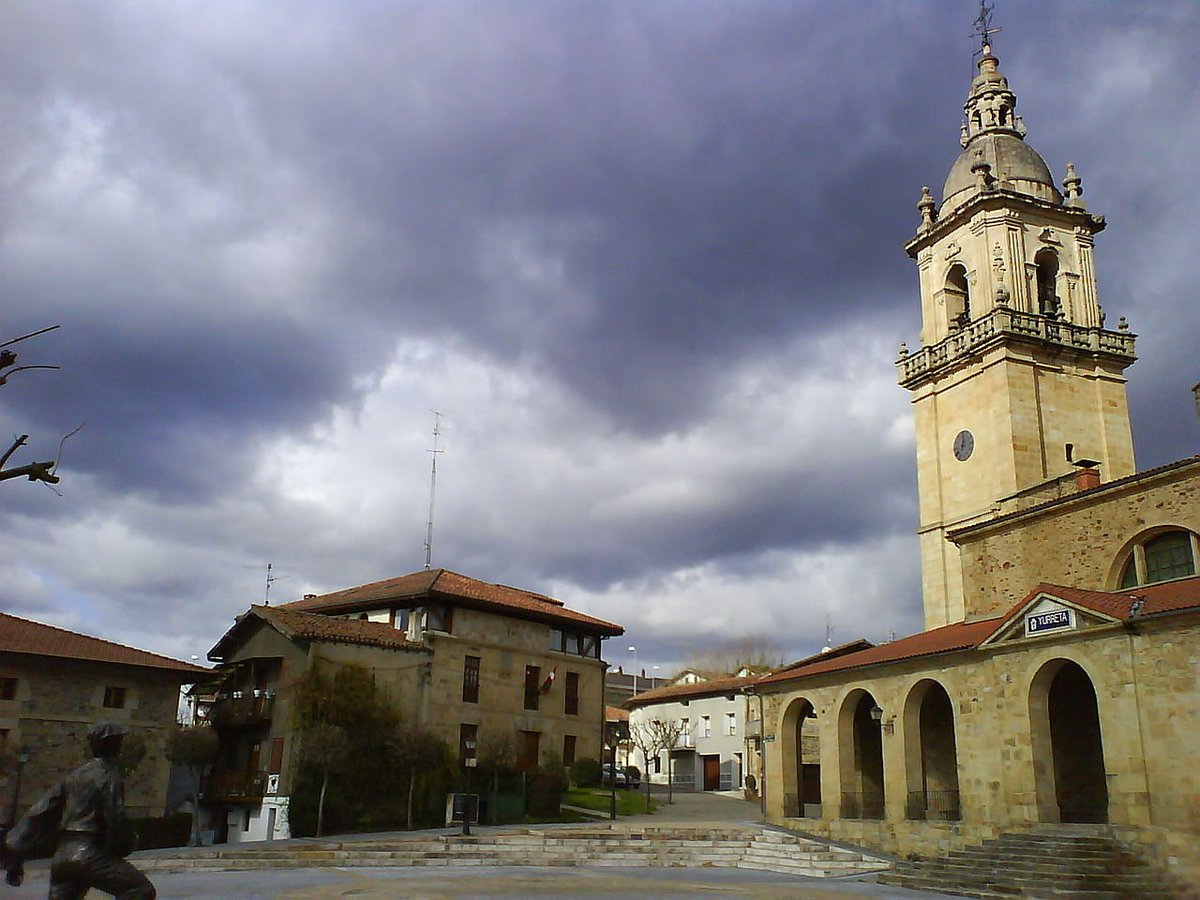
The most visible building in the centre is the church of San Miguel. Local accounts say that its tower took decades to complete during the 18th century. It did not end there, as part of it later collapsed, which made the construction history anything but straightforward.
Today, the tower stands out with its pale tiles and can be seen from various points around the town. Inside, the church reflects a restrained Baroque style typical of Bizkaia. Stone and wood dominate, and the light enters softly from above, giving the interior a muted atmosphere.
Everything shifts during the feast of San Miguel, held towards the end of September. People come down from the surrounding neighbourhoods and farmhouses, and the town fills with activity. The frontón, a traditional Basque pelota court, becomes a focal point. The celebrations keep a local scale. Rural sports, music, and long games of mus, a traditional card game, shape the atmosphere rather than large staged events.
Hermitages, a granary, and quiet traces of history
One of the more striking aspects of Iurreta is the number of hermitages scattered across its territory. There are said to be around ten, each historically linked to its neighbourhood and its small brotherhood. This helps explain why festivities are not concentrated in a single place but spread out across the area.
The hermitage of Andra María de Goiuria contains a particularly old detail: a narrow arrow-slit window, usually dated to medieval times. It is easy to miss if you are not looking closely.
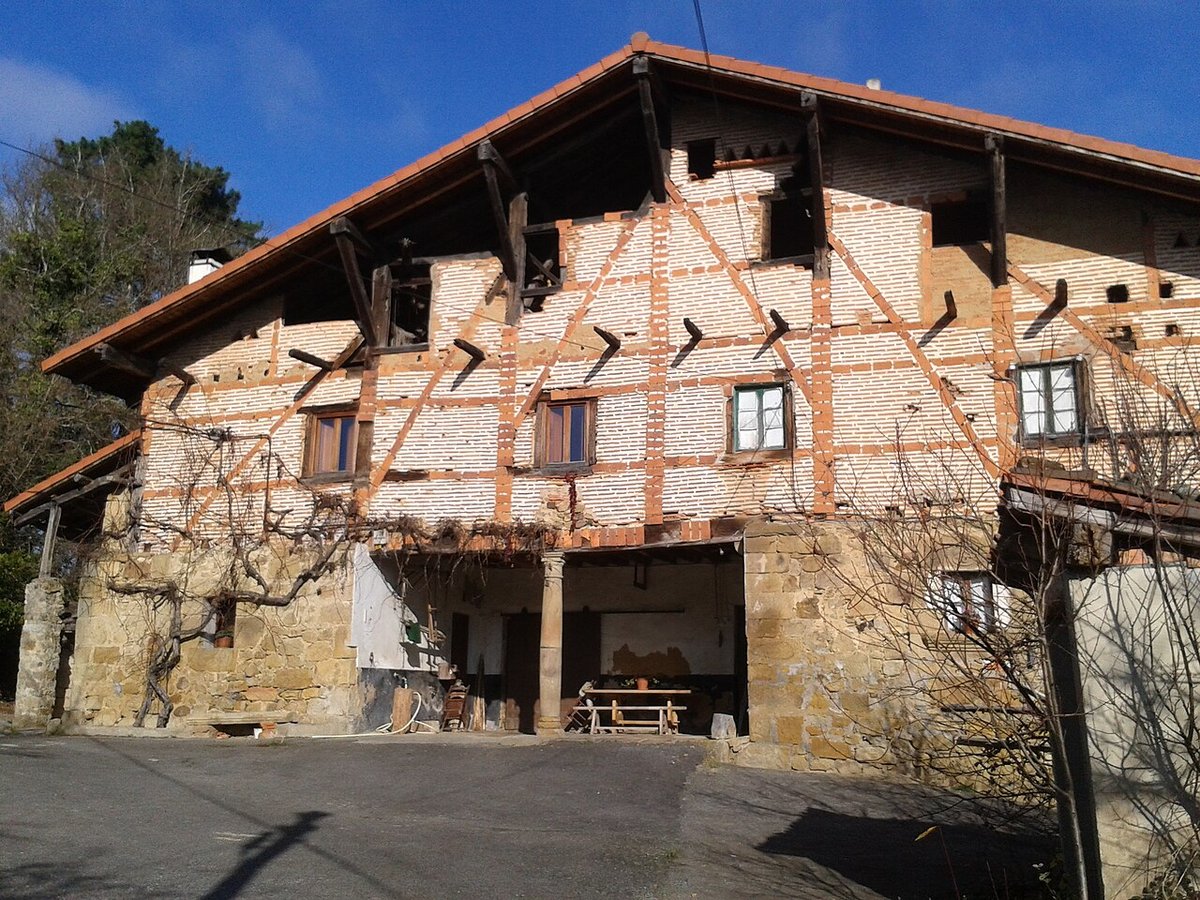
Another element often mentioned is the granary of Ertzille, already documented in the 17th century. Its structure makes it clear at a glance that it belongs to a much earlier period.
The farmhouse known as Amatza Bekoa also comes up in local conversations. It displays the coat of arms of the first archbishop of Panama, who was born in Iurreta before leaving for the Americas. The building remains there without much explanation around it, simply part of the landscape.
A stop rather than a destination
Iurreta is not the kind of place people usually travel to with a detailed plan from far away. It works better as a stop along the way, somewhere you decide to explore because you are already nearby.
From Durango, the simplest approach is to walk over. Follow the river path, take a look inside the church if it is open, and wander through nearby neighbourhoods where farmhouses still appear frequently.
After that, the most typical thing to do is also the simplest. Sit down in a local bar, order a drink, and watch daily life pass by for a while. That quiet pause offers a fairly accurate sense of what Iurreta is about.