Full Article
about Gueñes
Valleys and hamlets a stone’s throw from Bilbao, buzzing with local life.
Hide article Read full article
A valley that wakes gently
At nine in the morning, in the Cadagua valley, tourism in Gueñes has barely begun. The air carries the smell of freshly baked bread and wood smoke drifting out of a chimney. Chickens edge towards the roadside of the local road, and a man in a blue beret walks up the slope of Zaramillo with a folded newspaper under his arm. There is no sense of urgency. It may be Friday, yet days here are marked more by the way light falls across the houses than by any calendar.
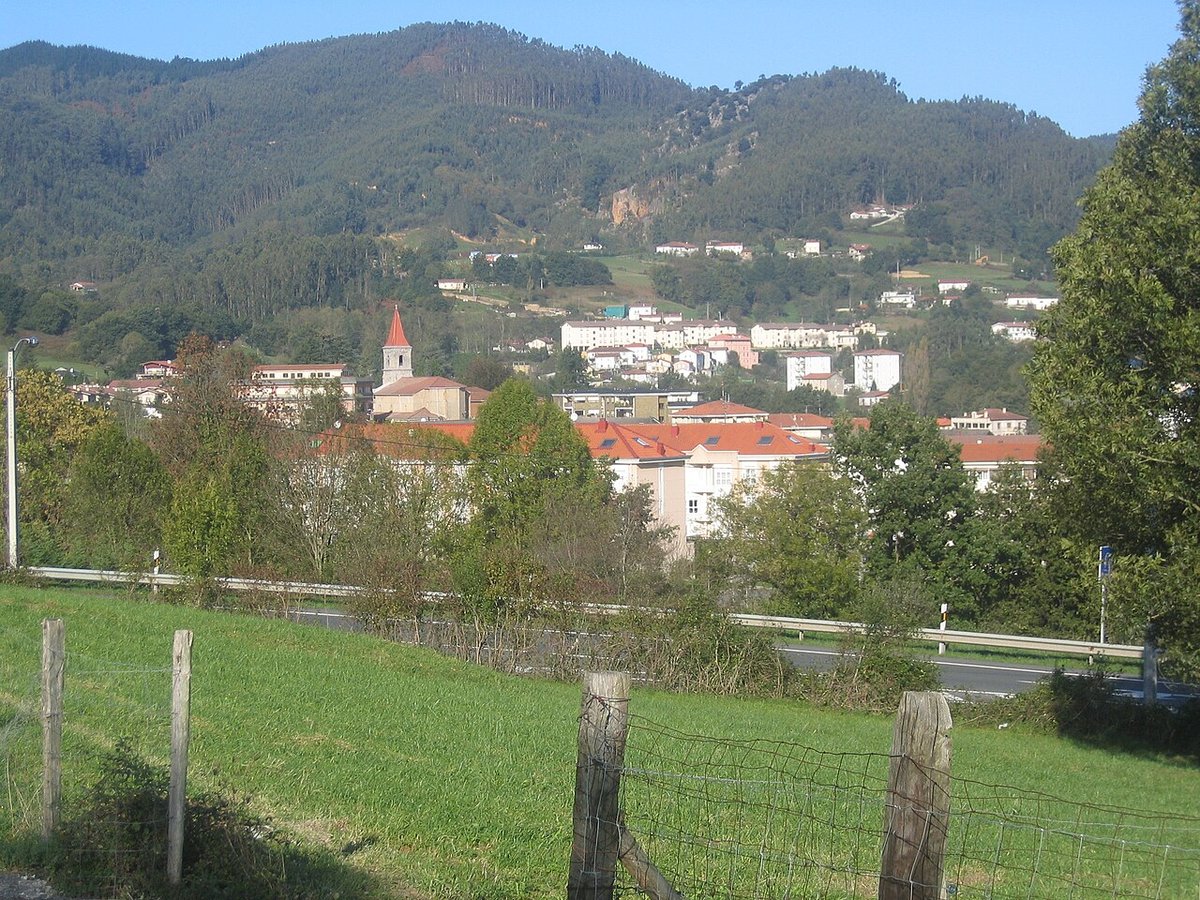
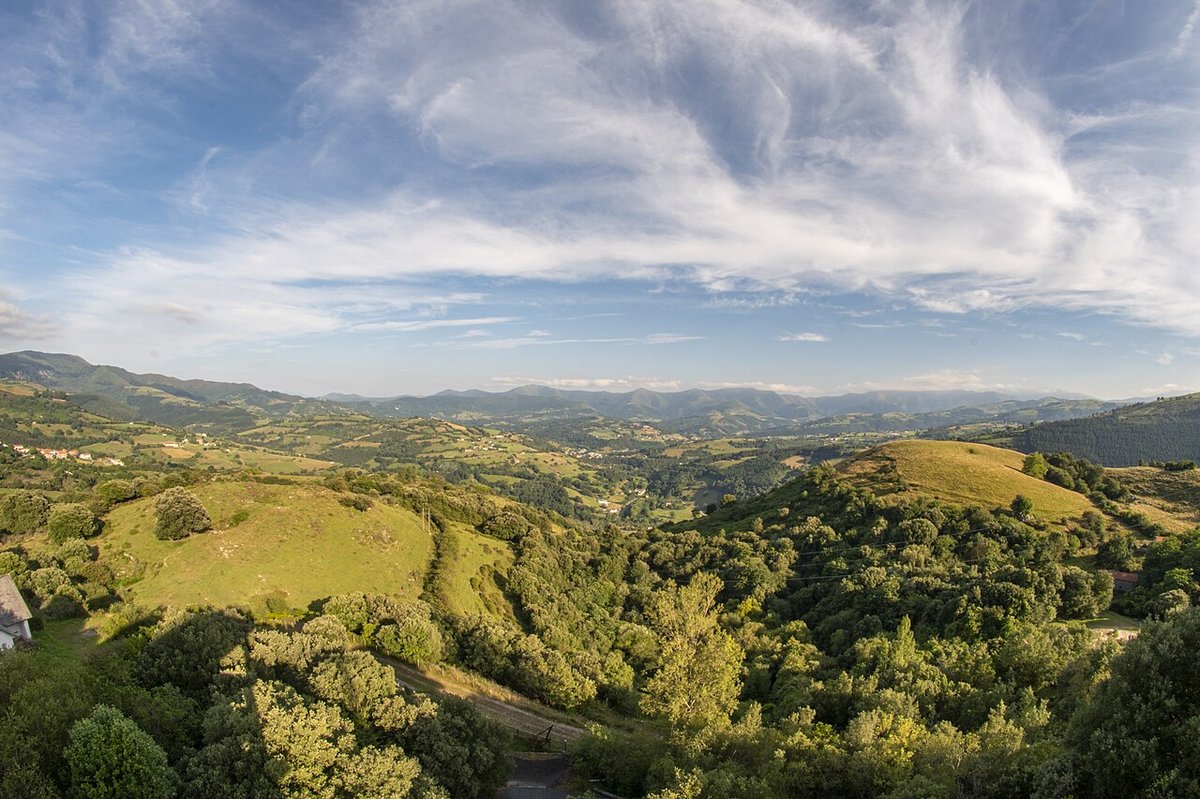
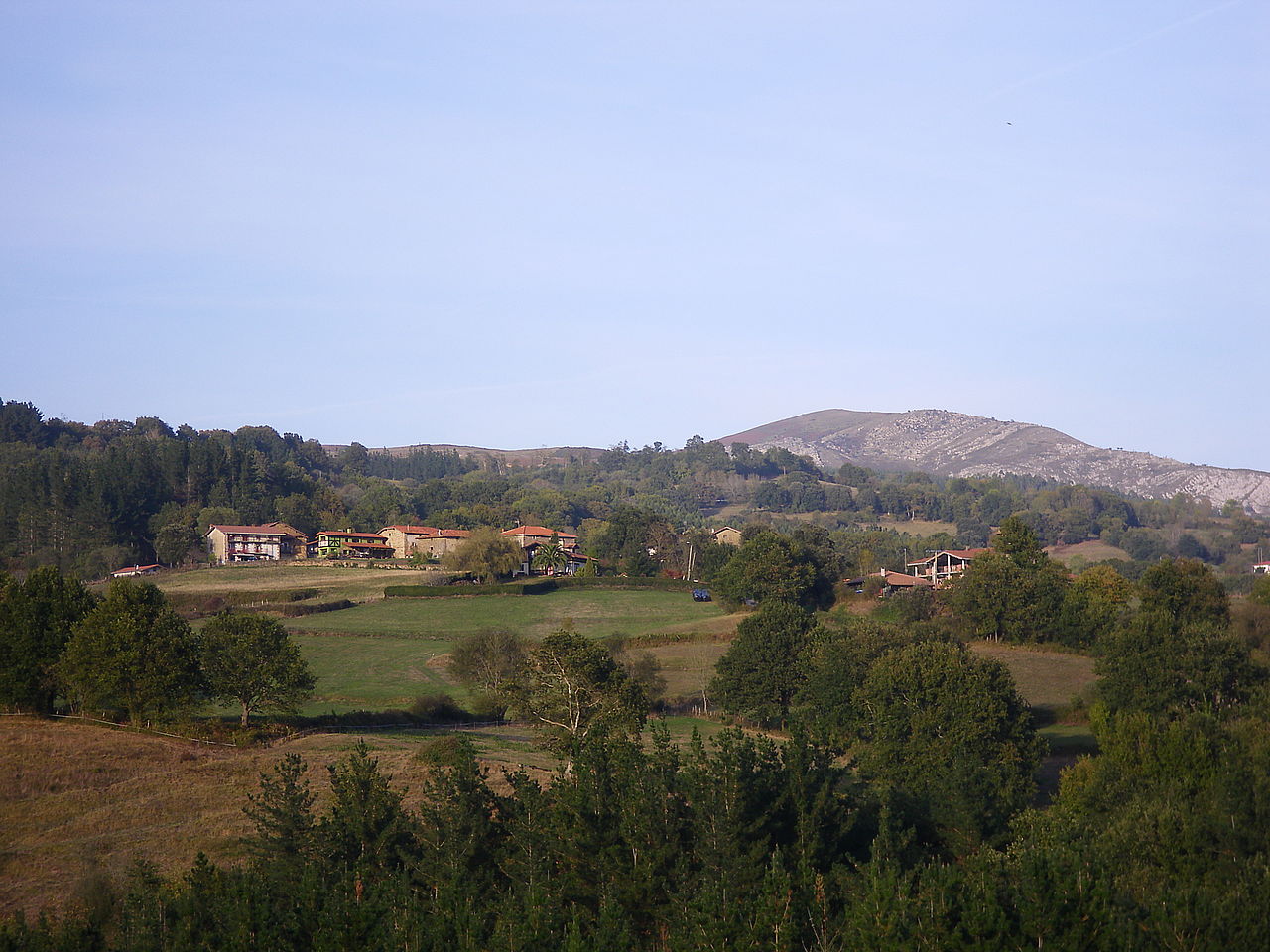
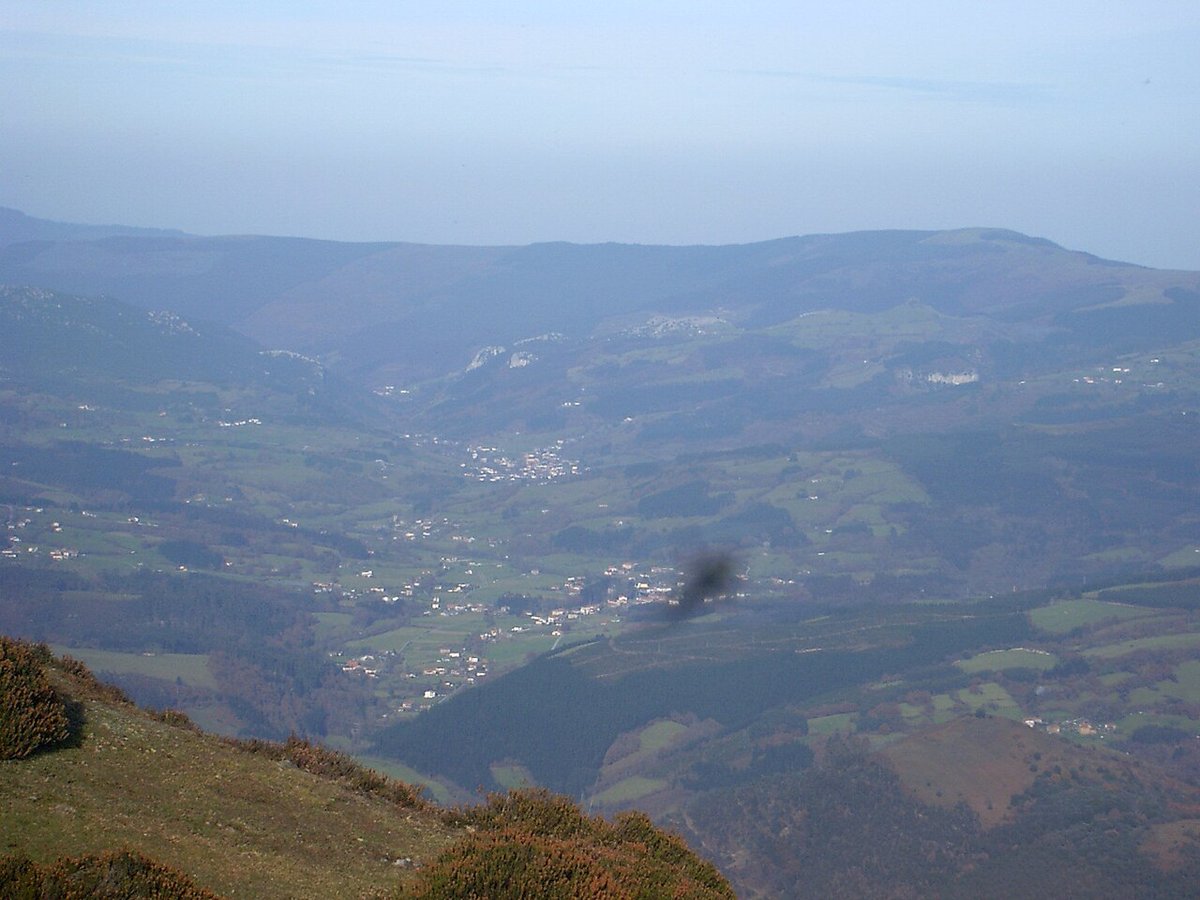
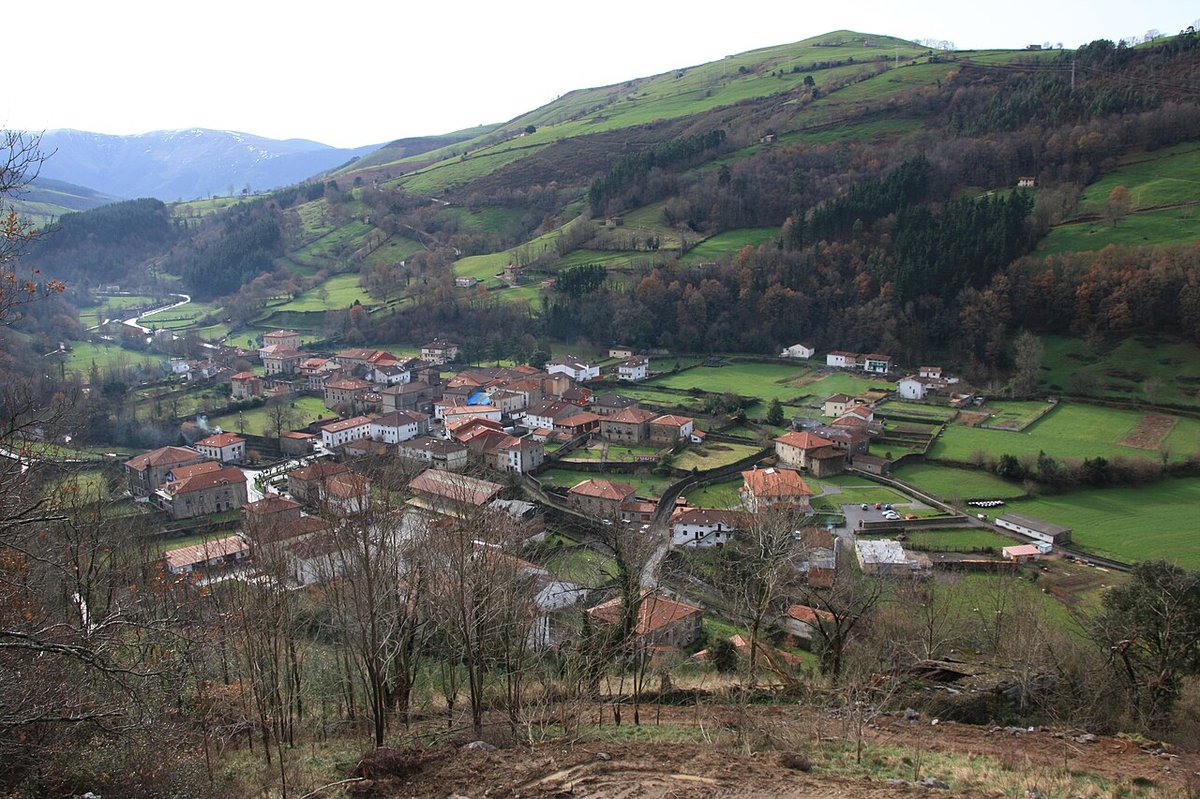
Gueñes sits low in the valley, surrounded by gentle hills that hold on to moisture and keep the nights cool, even in summer. Life unfolds quietly, with small movements that define the rhythm of the place rather than any fixed schedule.
Stone, balconies and the sound of the frontón
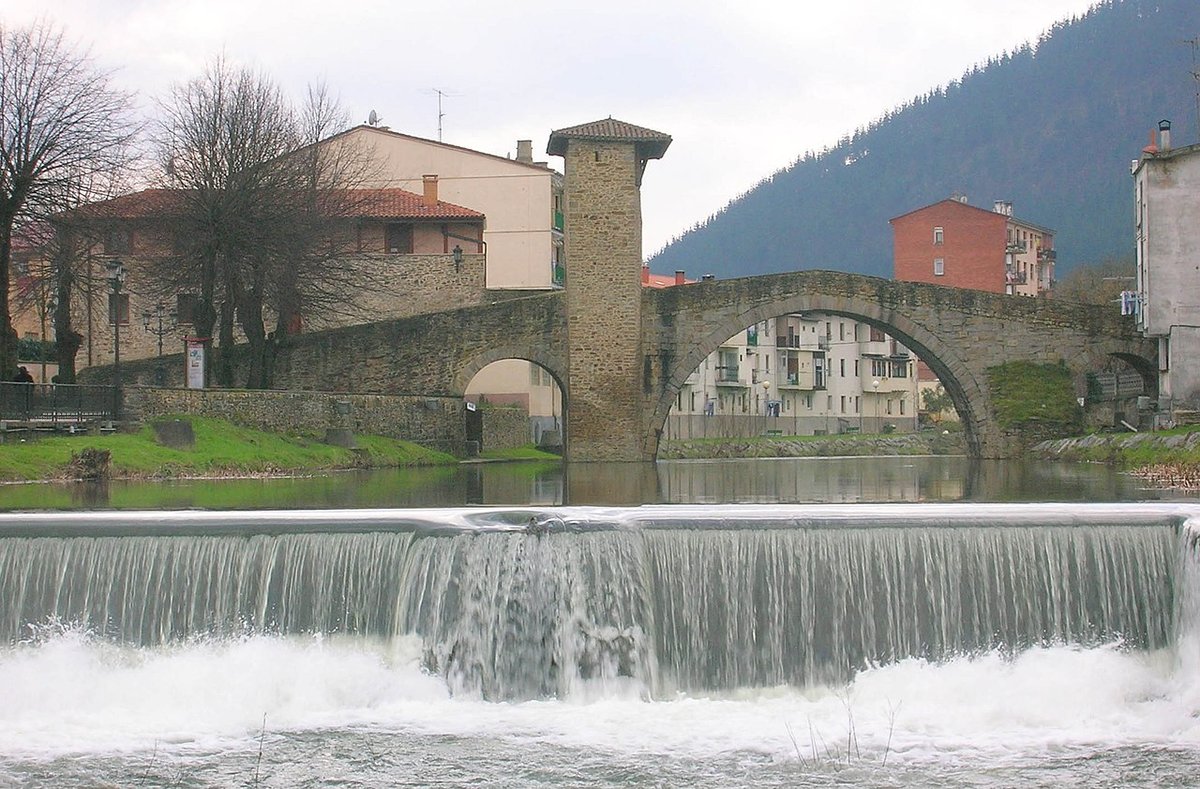
The old centre of Zaramillo feels like a preserved stage set, though everything remains in use. From the Plaza de San Pedro, houses lean into one another, their façades decorated with carved stone coats of arms, dark iron balconies and green shutters that have seen the shift from carts to slow-moving cars climbing the hill.
The church of San Pedro rises above the neighbourhood with its square tower. The stone is worn at the corners, softened by years of fine rain. Along the main street, a neighbour waters plants, and the water runs over the cobbles, briefly reflecting the neighbourhood frontón, the plain wall used for traditional Basque pelota. On Sunday mornings it still comes alive when someone brings a ball out to play by hand. The sharp echo of ball against wall carries down several streets.
This is a place where details linger. The worn edges of stone, the quiet gestures of daily life, and the occasional burst of sound from a game all shape the atmosphere.
La Quadra and the line that remains
Before midday, light reaches the old station of La Quadra at an angle, a cool tone that clings to the wooden structure. Trains stopped running here decades ago, yet the building still stands. Some visitors come to look at the display boards showing old photographs from when wagons loaded with mineral passed through.
From this point, a walking route usually begins, following the former railway line. The path is mostly flat and, for a stretch, passes through a tunnel carved into the rock. A torch is advisable, even just the one on a phone. Inside, moisture clings to the walls and droplets fall at a steady pace, like a very slow clock.
On the other side, the valley opens out again. Fields of maize stretch across the land, with the occasional isolated borda, a traditional rural building. In the background, the constant murmur of the Cadagua river runs through it all.
A park meant to be felt
In the afternoon, the park surrounding the centre of Gueñes often smells of damp leaves and turned earth. There is a short sensory route marked with guide ropes and panels designed for touch and smell. It is not long, yet it encourages a slower pace.
Some people walk it with a cane or even with their eyes closed, following the rope by hand. The bark of the trees shifts texture every few steps, smooth, rough, cracked.
Higher up, paths lead into denser woodland where old chestnut trees mix with oak and beech. In autumn, the ground is covered in leaves, and each step produces a dry, papery sound. Bringing water is sensible if planning a longer walk, as there are not always fountains along the way. Wind descending from the plateau can feel cold, even when the valley below seems mild.
Markets, music and quieter months
Towards the end of December, the Santo Tomás fair fills Zaramillo with stalls from early in the day. The air changes, carrying the smell of hot talo, a traditional corn flatbread, chistorra cooking on grills, and freshly poured cider. The sound of txistus, a Basque flute, threads through the crowd, while children walk around with sugar from churros on their hands.
June brings the fiestas of San Pedro. At dusk, txistu music often echoes through the streets, and the square gradually fills as night falls. Balconies are draped with light-coloured cloth, and the scent in the air is that of freshly cut grass from nearby fields.
For a quieter visit, January has a particular stillness. Fog settles on some days, noise fades, and the valley seems suspended for hours at a time.
Reaching Gueñes and settling into its rhythm
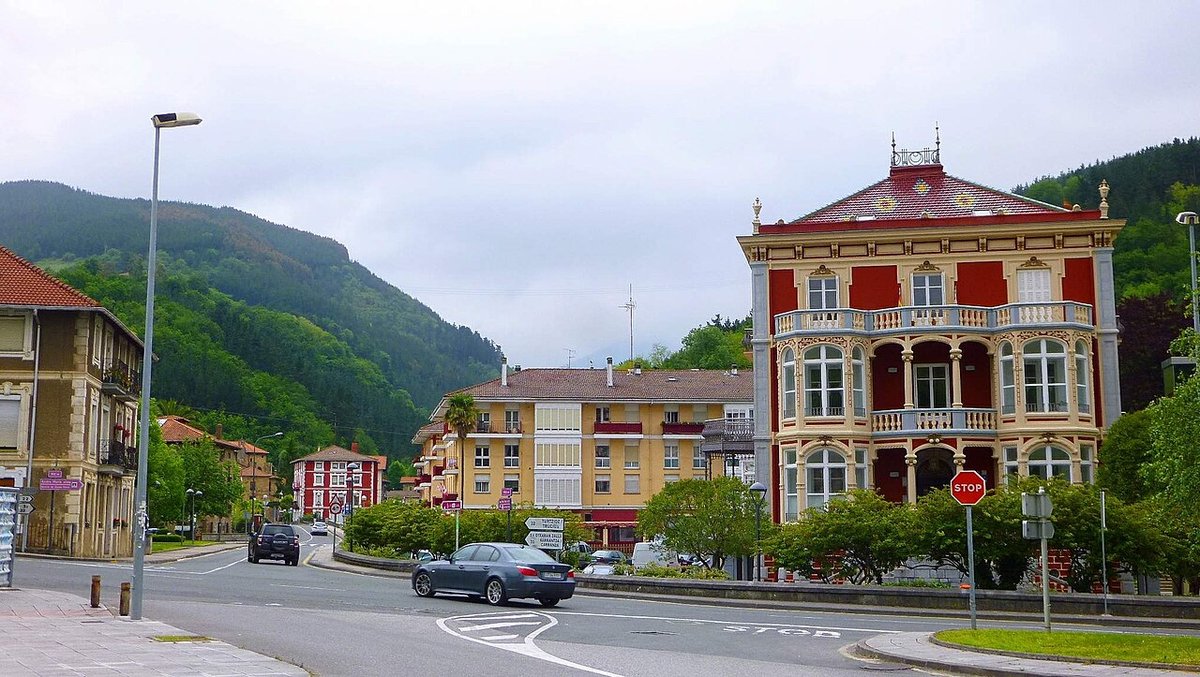
From Bilbao, Gueñes is reached by following the Cadagua corridor along the BI-636. The drive usually takes just over twenty minutes if traffic is light. The village sits at the bottom of the valley, shaped by its landscape and climate.
August weekends tend to bring more activity, especially people from nearby areas coming for the day or to walk the surrounding paths. During the week, the atmosphere shifts noticeably. Parking near the centre becomes easier, and the streets return to their usual pace.
Even in July, evenings call for a light jacket. The river runs cold, and damp air slips between the stones of the houses.
If a bakery window offers bizcocho de Gueñes, it is worth trying. The sponge cake is soft and rich with butter, and its smell often reaches the street while it is still warm. Time here is measured less by the clock and more by these small moments. There is always another quiet morning waiting.