Full Article
about Trucios/Turtzioz
Hide article Read full article
A valley without a centre
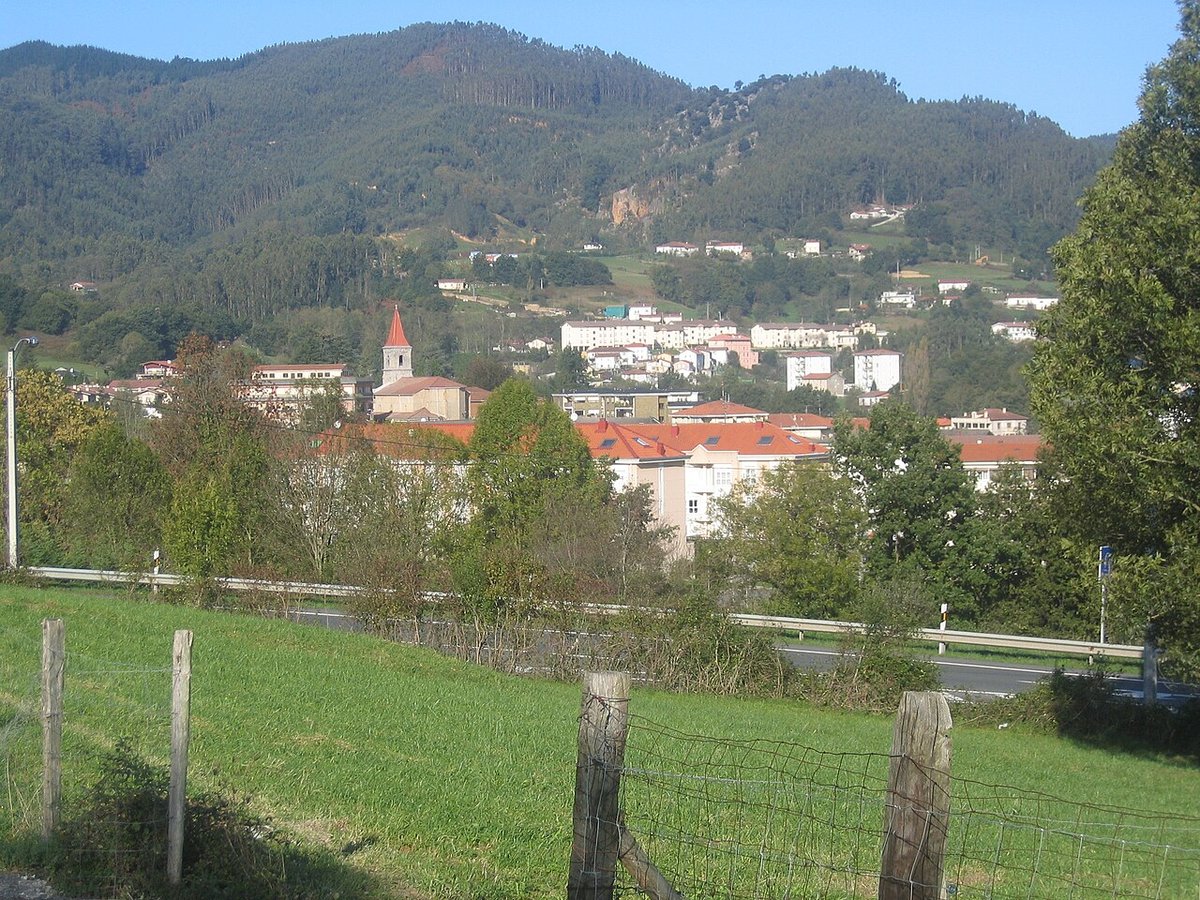
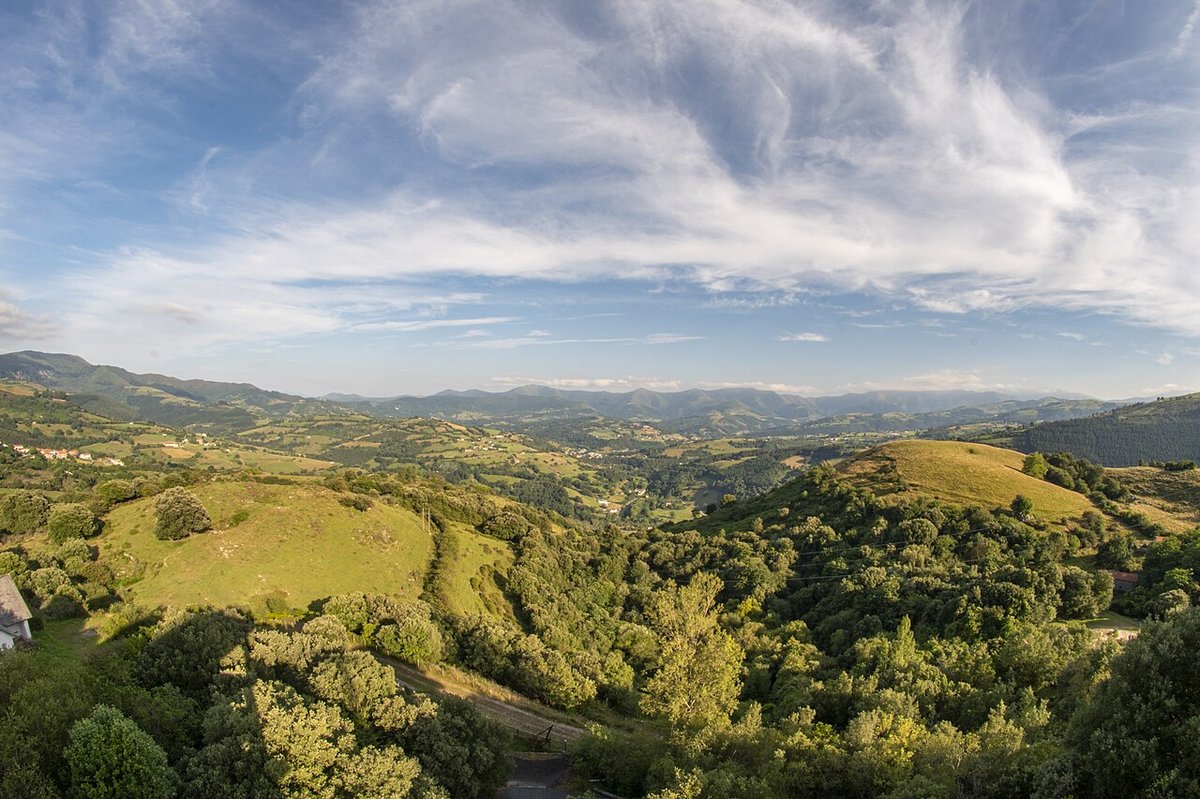
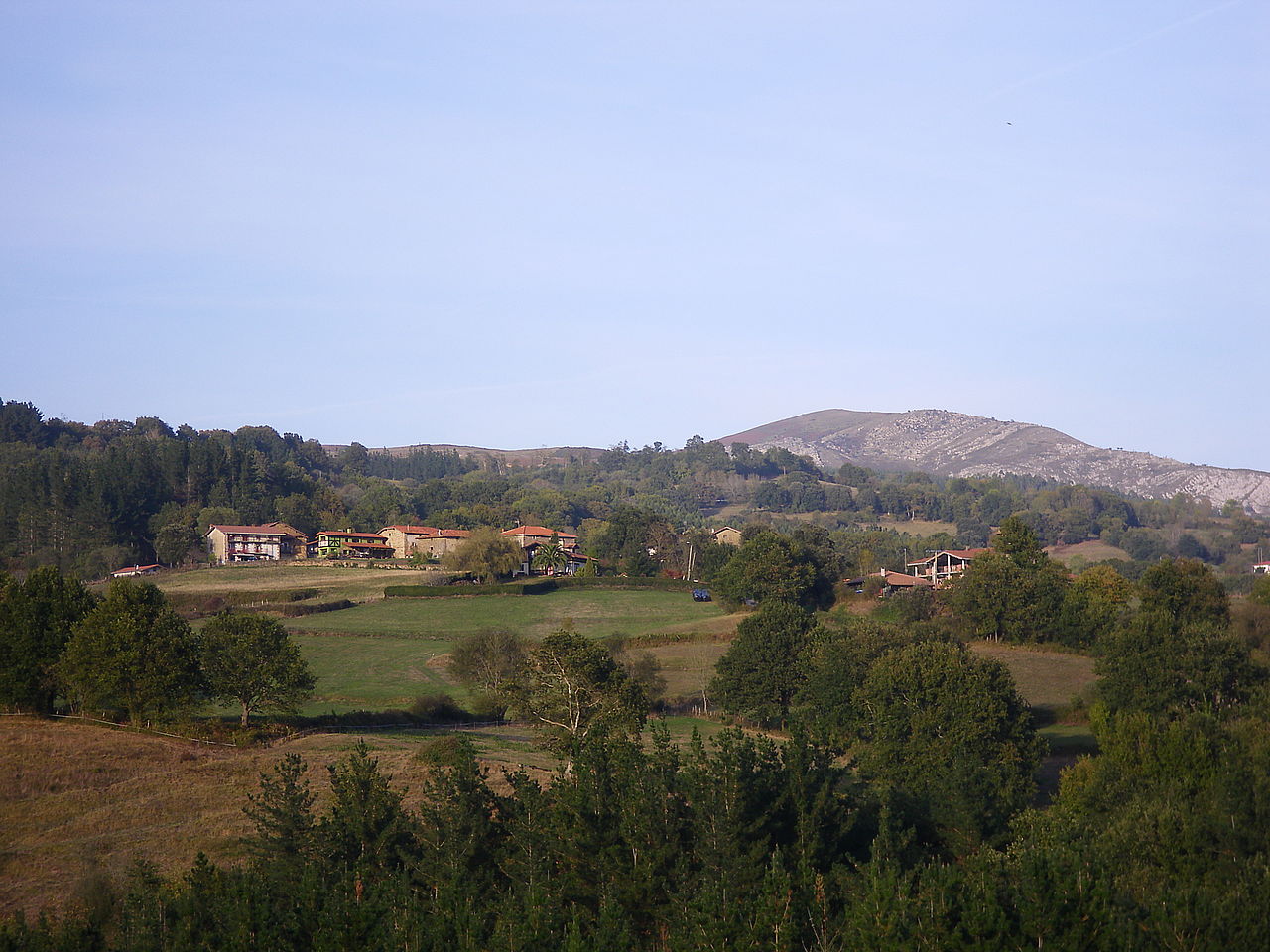
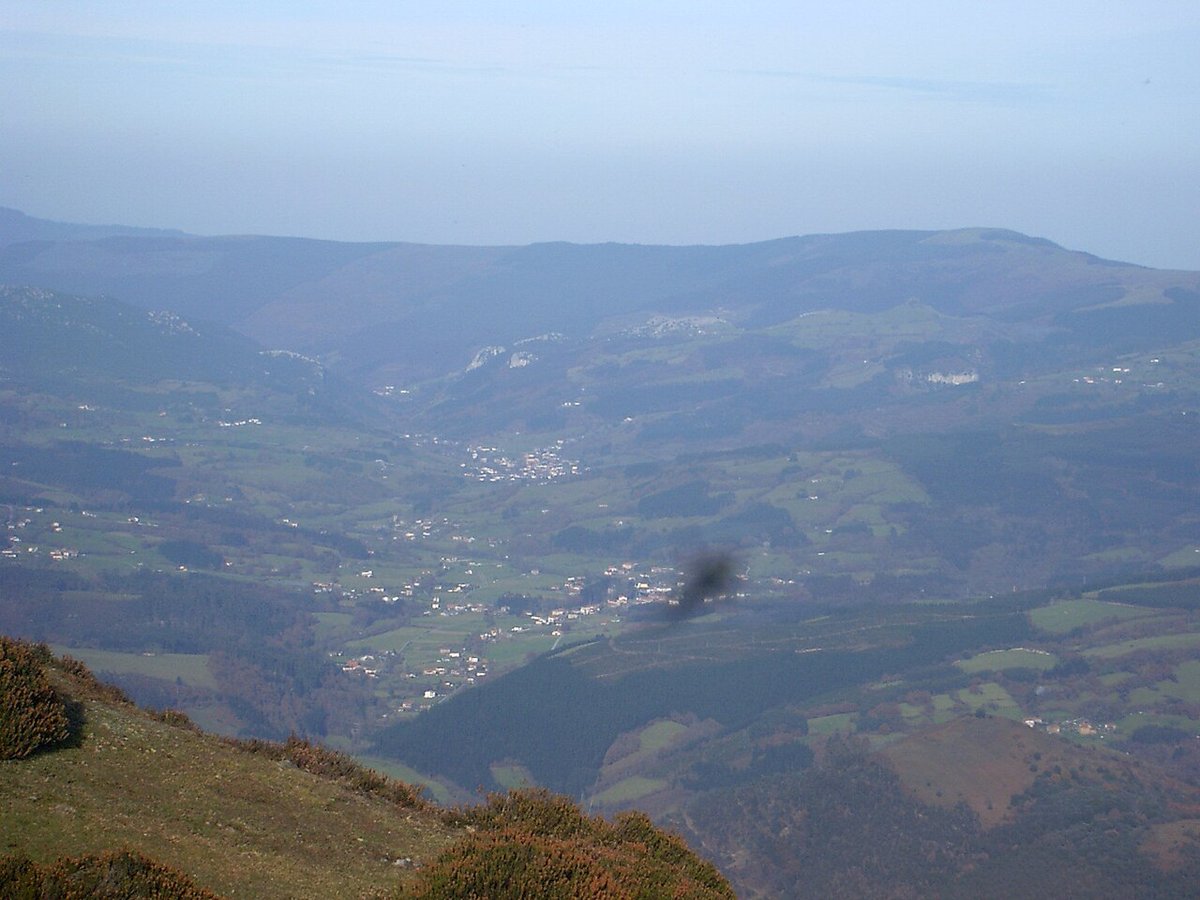
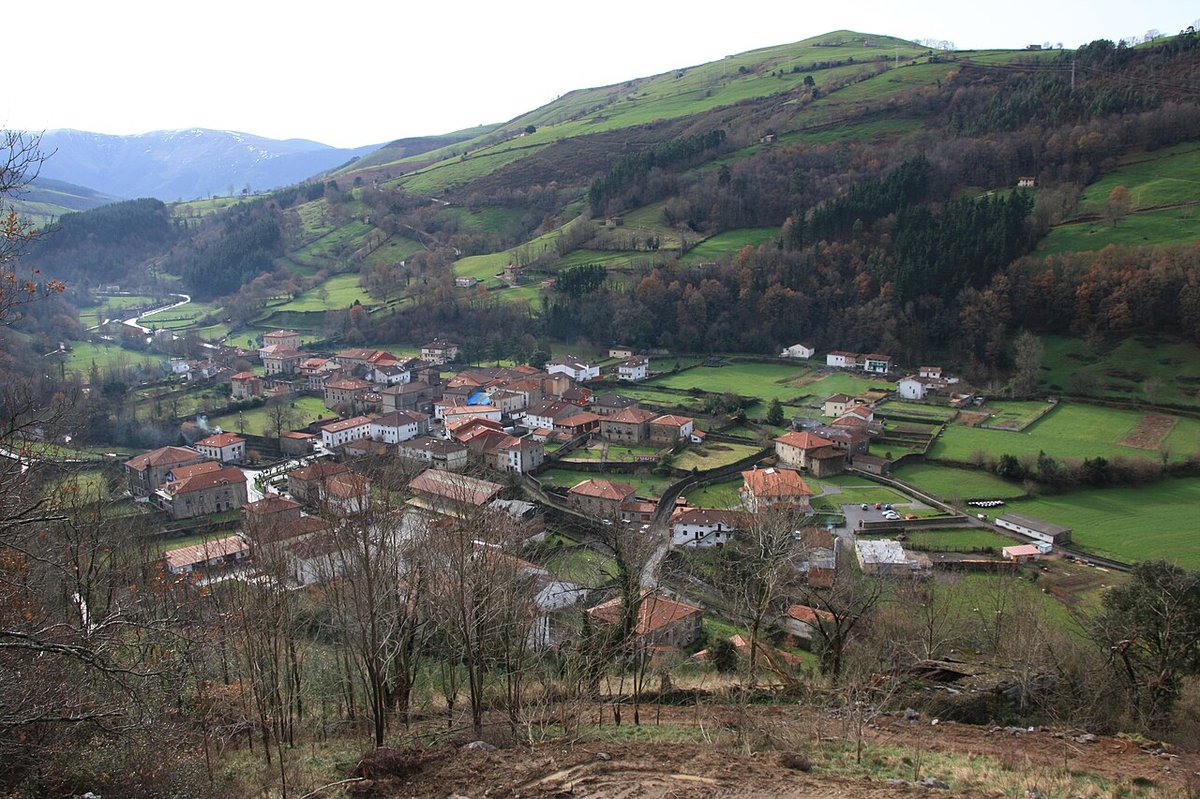
Trucios-Turtzioz sits in the westernmost part of Bizkaia, its municipal boundary tracing the border with Cantabria. The settlement pattern here is the key to understanding it: there is no single village. Instead, the municipality is a collection of barrios and isolated caseríos scattered across a valley of meadows and soft slopes. The geography dictated this dispersion. For centuries, the Basque farmhouse was built where the land could be worked, not where a central plaza could be drawn.
This is typical of the Encartaciones region. Each house stands apart, connected to others by narrow roads that follow the old paths between fields, vegetable gardens, and small woods. To see Trucios is to follow these roads.
Traces of history across the land
The Torre de Montehermoso is a reminder that this was once a contested borderland. Built in the 15th century, it follows the late medieval defensive tower model common in Bizkaia: a compact block of stone with thick walls and minimal openings. It now forms part of a private farmstead and is not open to the public. Its importance is visual; from various points in the valley, the tower’s solid mass breaks the horizontal line of fields and farmhouses, a fixed point in the landscape.
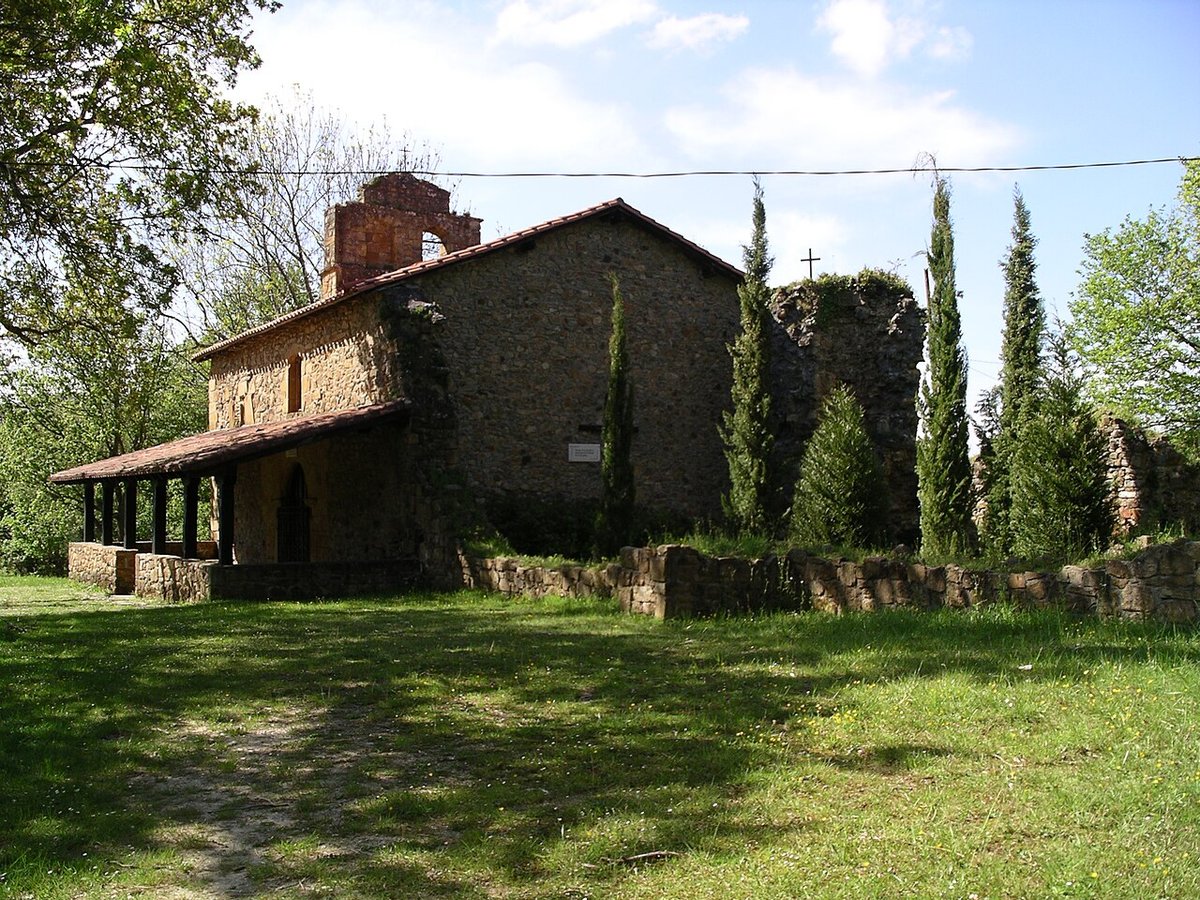
In the barrio of San Martín, the church of the same name is a practical building. Its masonry walls and tile roof speak of local materials and rural congregation. The houses and lanes around it show how community life has been organised here for generations, centred on the church and its adjoining cemetery.
Moving through the landscape at its own pace
To get around Trucios is to accept its rhythm. The distances between barrios are real, connected by roads with bends and gentle climbs. A car is useful, but the detail is in the minor tracks. Many are not official walking routes but agricultural lanes linking farmsteads to pastures. Walking one gives you a clearer view of how the land is managed: stone walls defining plots, barns built into the hillside, the change of crop or livestock in each field.
Fog is common in the lower parts of the valley, especially in the morning. When it burns off, the structure of the place—the relation of a house to its land—becomes legible.
The local cooking relies on what the valley produces: beans, potatoes, milk from local herds turned into cheese, and beef. You will find these in the few small establishments here. The offering is straightforward and seasonal.
Traditions that keep the community together
The feast of San Martín, in November, is one of the main gatherings for residents. It has the feel of a local festival, organised by and for the people who live here.
In summer, some barrios hold their own small festivities, often built around a communal meal and music. These are domestic in scale, not designed for tourist consumption.
What to know before arriving
If you come looking for a defined old town with cobbled streets, you will miss the point. Trucios-Turtzioz’s character is in its dispersed settlement and the working landscape that cradles it.
The Torre de Montehermoso should be viewed from a respectful distance. It is private property, as are most of the caseríos, which are family homes and working farms.
The valley roads are narrow. A journey that looks brief on a map will take longer than you expect.
A short route and a few precautions
With a couple of hours, drive the secondary roads that cross the valley, stopping where you get a clear view of the tower. A walk through the lanes around the church of San Martín helps to grasp the human scale of the place and its direct connection to the farmland.
Be considerate with parking. Do not block farm tracks or gateways; they are used daily for machinery and moving animals.
A visit here works without an itinerary. The value is in observing the landscape, listening to its quiet, and seeing how a territory has been shaped by its use.