Full Article
about Ormaiztegi (Ormáiztegui)
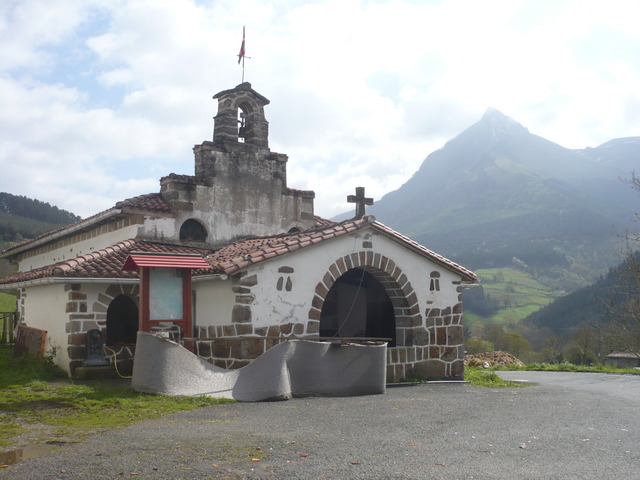
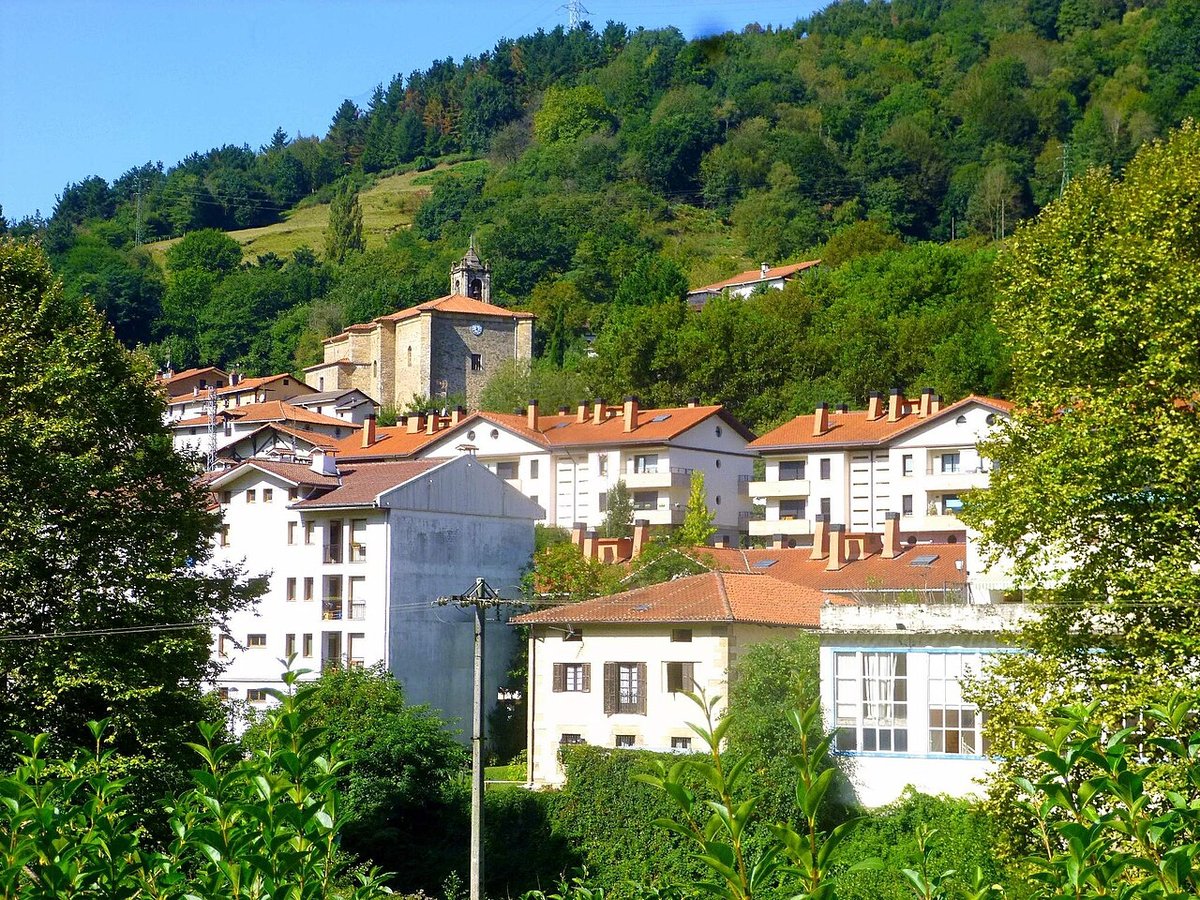
Deep green, farmhouses and nearby mountains with trails and viewpoints.
Ocultar artículo Leer artículo completo
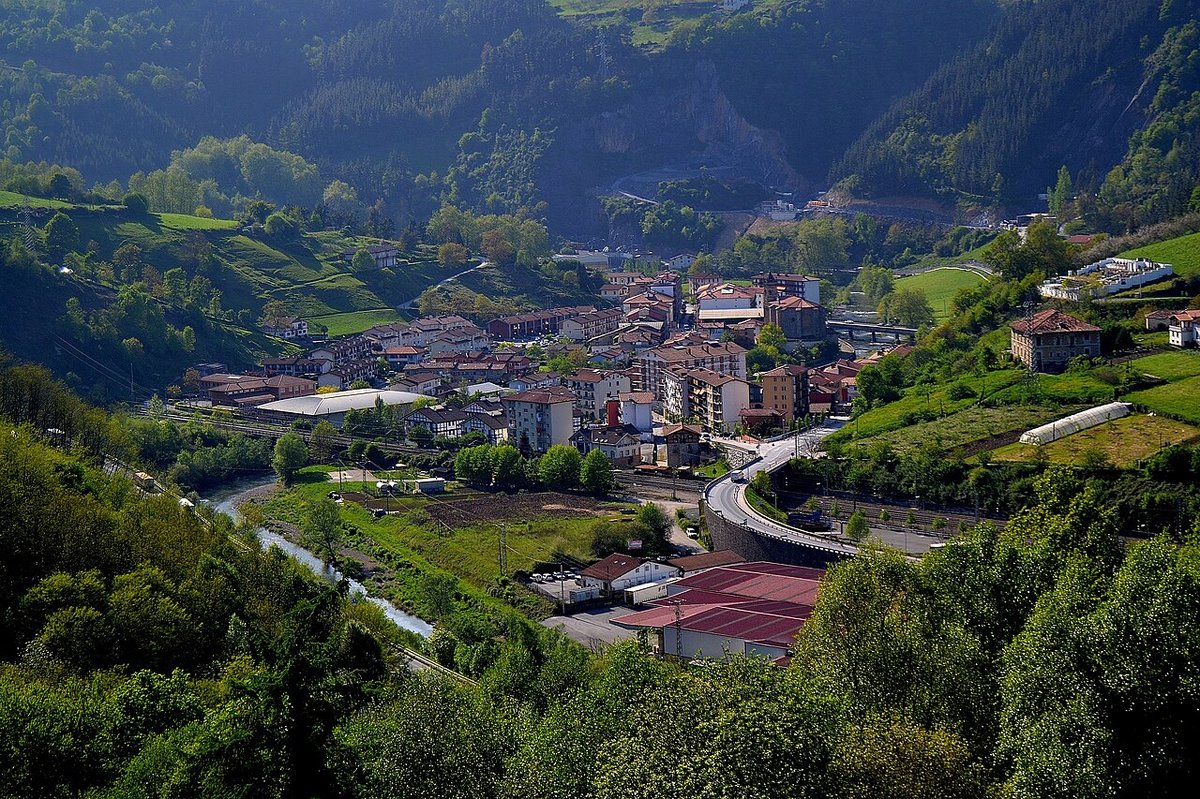
The 1864 steel viaduct arrives before the village does. One moment you're winding through the Oria valley's cow-scattered slopes, the next a Victorian-era lattice bridge is leaping across the windscreen, its rust-red girders bolted together like Meccano on steroids. Pull over: this is Ormaiztegi's handshake moment, and the view south towards Aizkorri's limestone wall is worth the emergency stop.
From the riverbank car park – free, gravel, mercifully large after those hedge-lined lanes – the place reveals itself in layers. First comes the thwack of pelota against stone from the fronton court. Then the smell: woodsmoke, manure, something faintly cider-ish. Finally the sound, or rather the lack of it. No tour-bus engines, no café terraces playing Ed Sheeran on loop. Just cowbells and the click of walking poles as a pair of locals disappear uphill towards the caseríos.
A Museum for the Curious, Not the Crowds
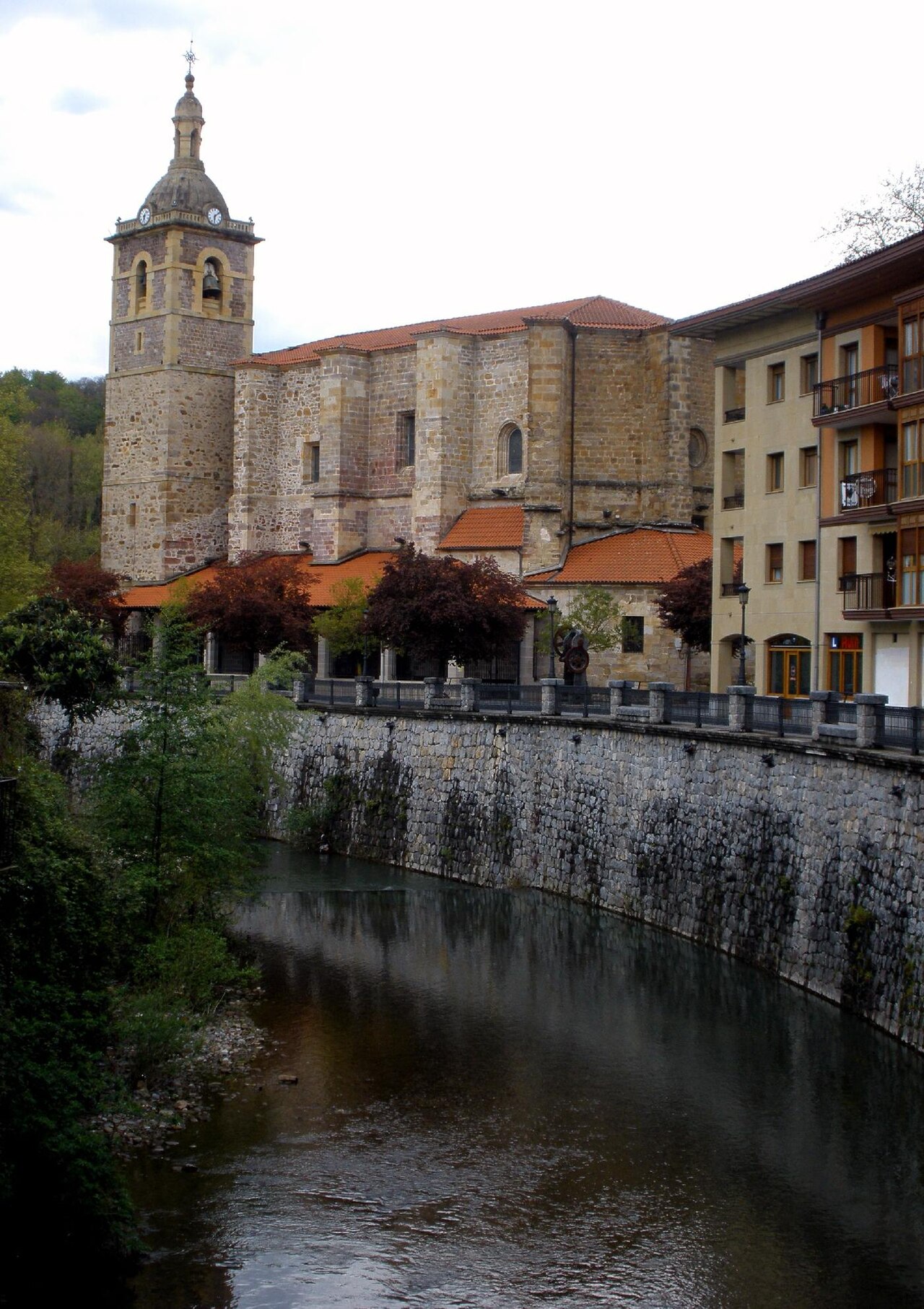
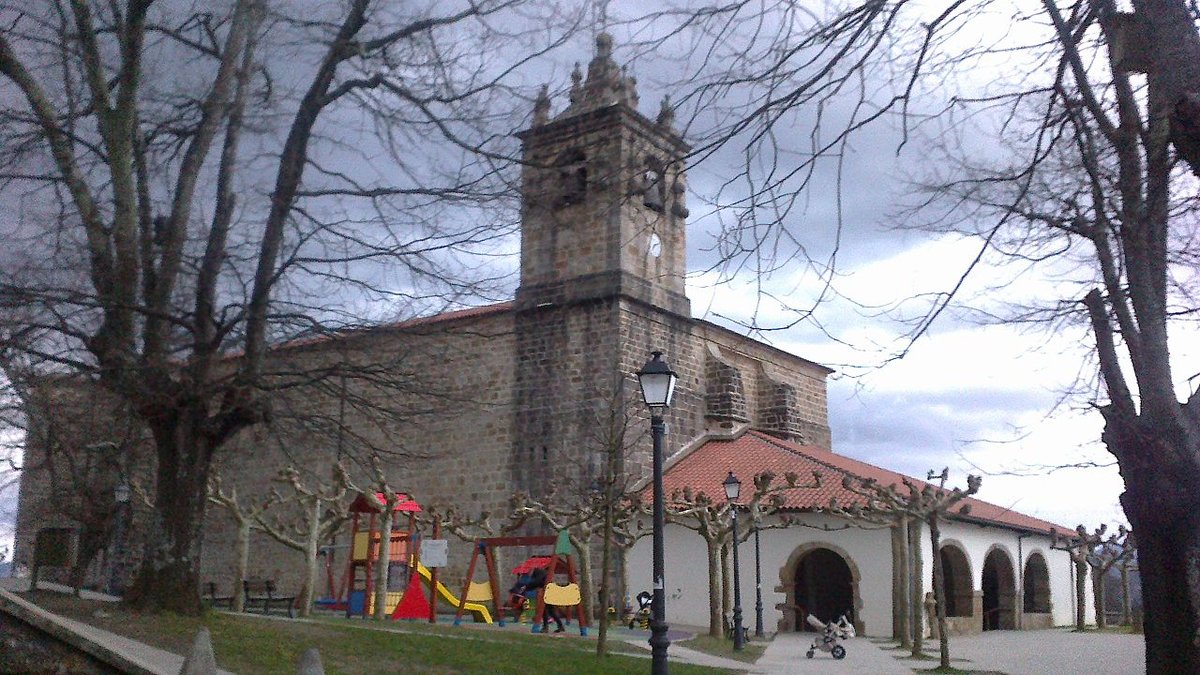
The Zumalácarregui Museum squats in the old rectory beside San Martín church, its mustard walls as solid as the Carlist general whose bullet-torn uniform lives inside. Tuesday to Sunday only; Monday visitors will find the door bolted and a handwritten note in Basque that needs no translation. Inside it's pleasingly old-school: glass cases of rusted bayonets, a diorama of 1830s troops that looks assembled by keen sixth-formers, and the blood-stained sash Tomás de Zumalácarregui was wearing when a Biscayan sniper ended his career at 34. Most British guests spend twenty minutes here; military-history buffs emerge an hour later muttering about forgotten European wars.
Entry is €4, card accepted, though the volunteer attendant still eyes chip-and-pin like it's witchcraft. Labels are Spanish and Basque only, but a laminated English sheet deciphers the highlights. Don't miss the upstairs map room – a 1:5000 military survey from 1892 that shows every farmstead still standing today.
Walking Without the Slog
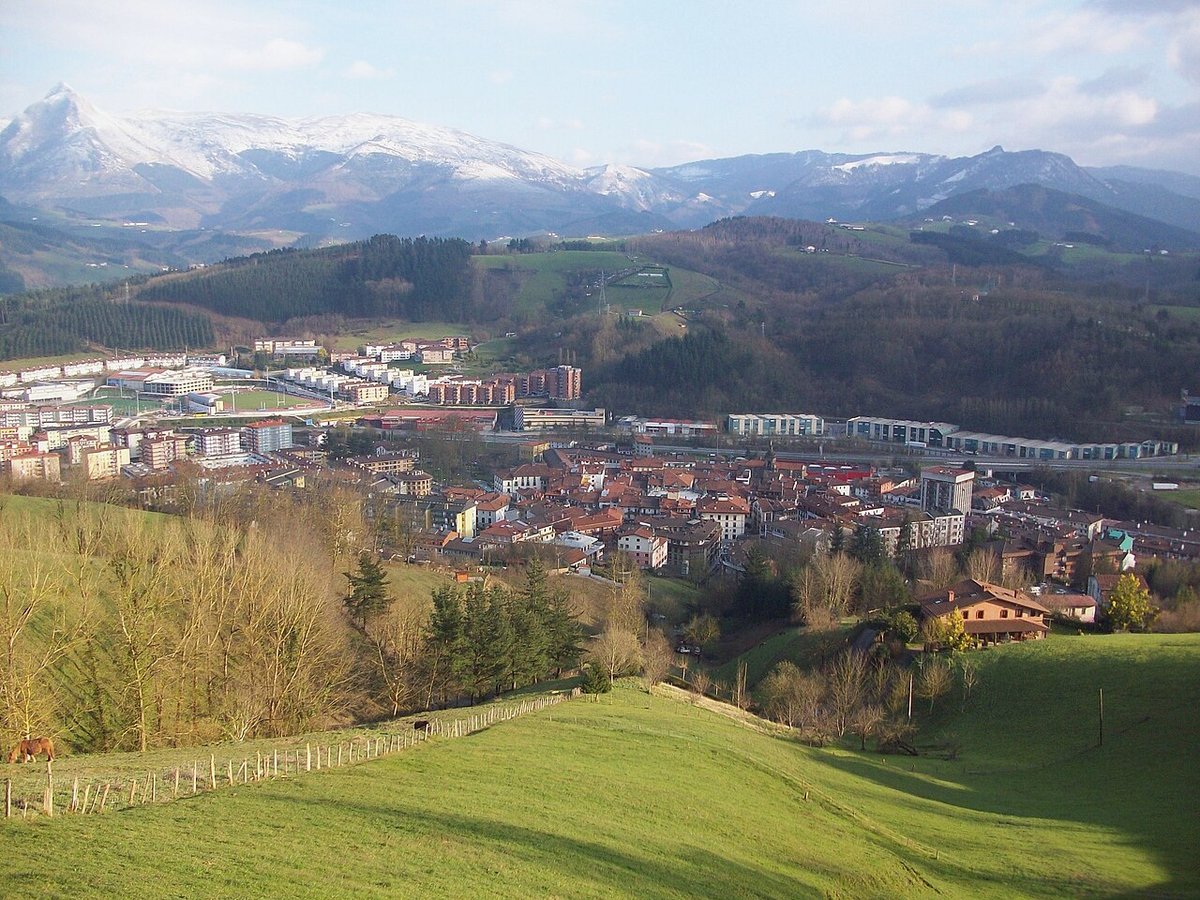
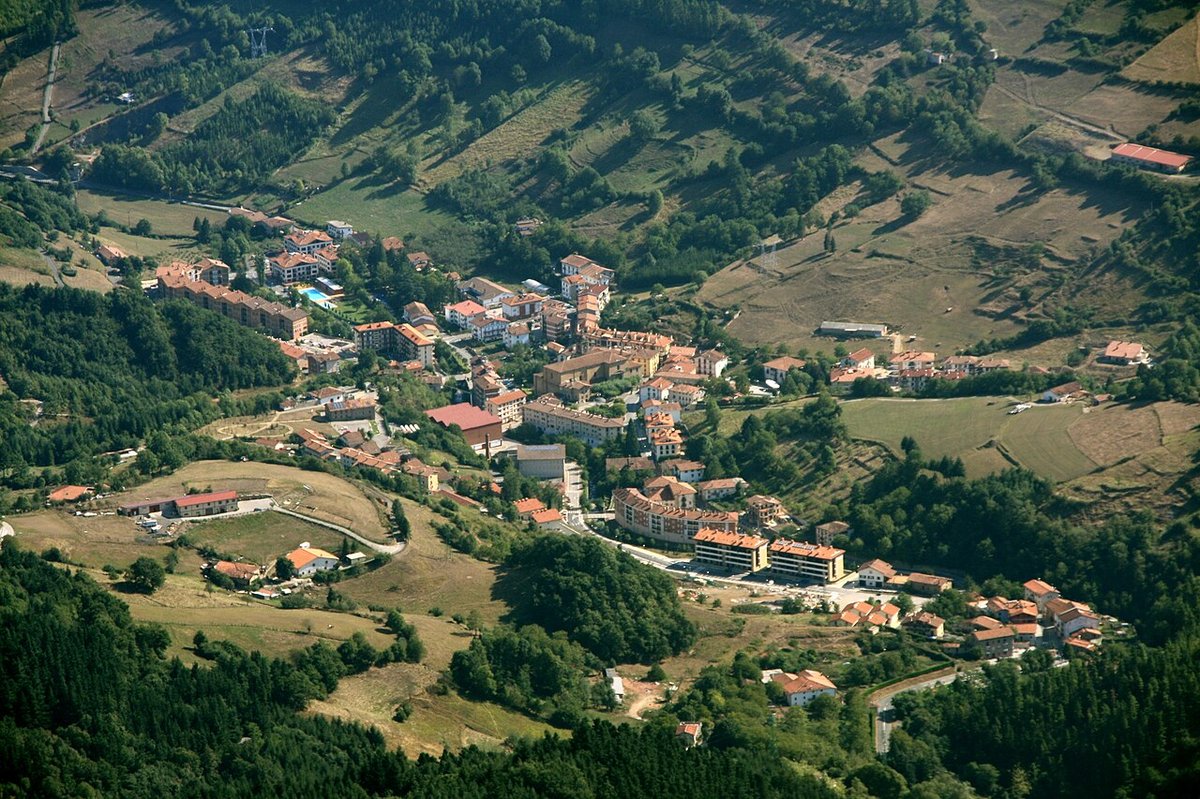
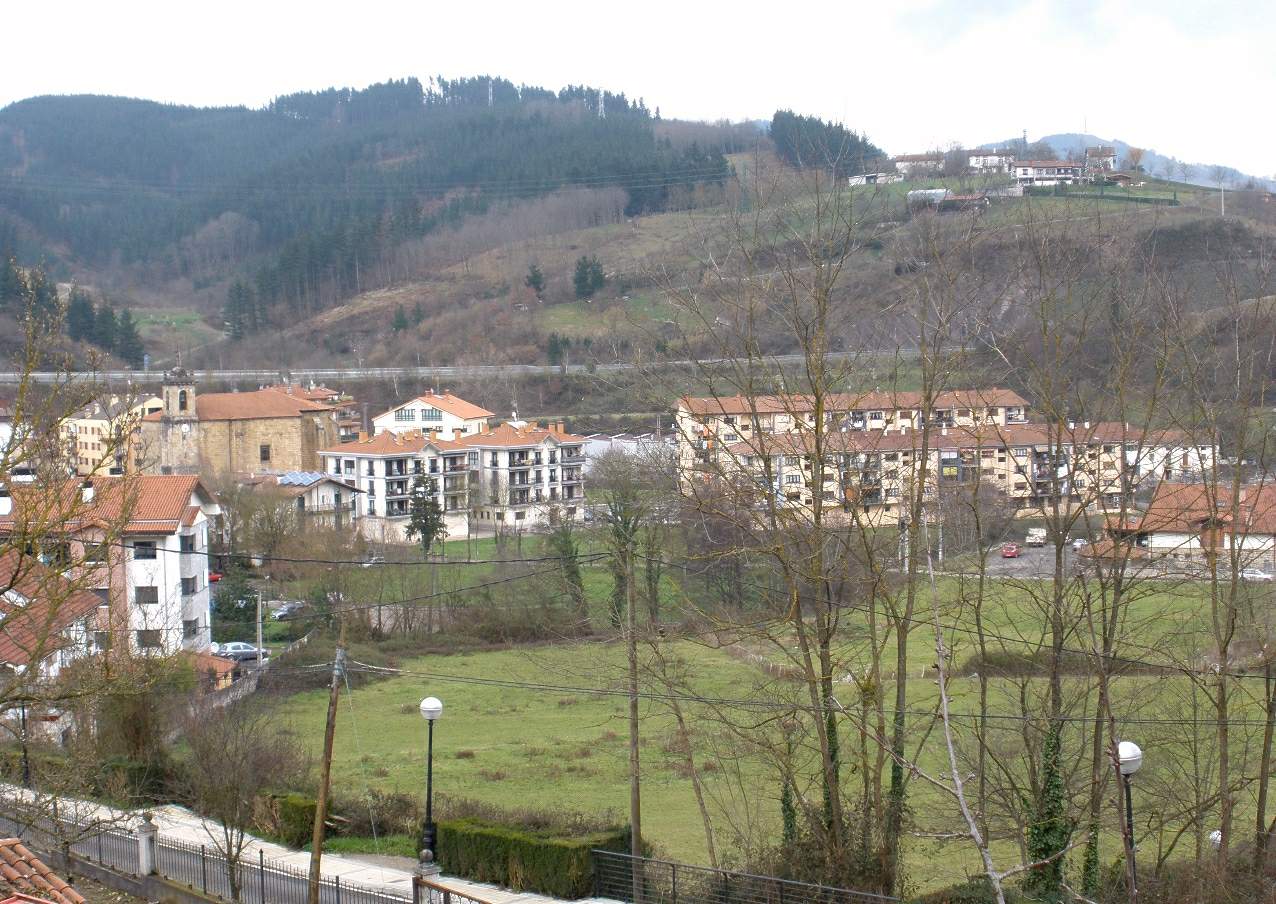
Ormaiztegi isn't postcard-pretty; it's workaday pretty. The centre is two streets and a square, modern flats wedged between stone houses, washing hung from balconies that face the slopes rather than each other. The appeal lies five minutes beyond the last lamppost. Pick any track signed "caserío" and the tarmac turns to packed earth, hawthorn hedges replace garden walls, and the valley floor drops away to reveal the Oria's silver ribbon.
A thirty-minute loop south-east towards Amezketa gives you the essentials: meadows grazed by caramel-coloured cows, stone threshing circles now filled with wild garlic, and a vantage point where the viaduct photographs itself against the mountains. Stout shoes suffice; boots are overkill unless you're continuing to the Aralar ridge, a serious five-hour haul that starts 200 metres above the village and keeps going. Spring brings drifts of narcissus; autumn smells of wet chestnut leaves and cider pressings. Summer is warm but rarely stifling – you're at 200 metres, not 800 – though the valley can trap humidity after lunch.
Beef, Cheese and Fermented Apples
Food here is fuel, not theatre. The two bars open before 7 am for tractor drivers and close after the evening news. Both serve the same short list: tortilla the size of a tractor wheel, gildas (olive-pepper-anchovy skewers) that bite back, and txuleta – a T-bone the thickness of a paperback that arrives sizzling on a platter big enough to sled down. One chop feeds two greedy adults; three could share if they loaded up on bread. Expect €28 per kilo, €35 with wine.
January to April is cider-season. The village sagardotegi looks like an aircraft hangar lined with enormous barrels; diners stand in queues to catch thin, tart apple wine in wide glasses. The set menu is fixed: cod omelette, salt-cod with peppers, the inevitable txuleta, then Idiazabal cheese and quince jelly. Vegetarians get tortilla and cheese; vegans should stay in San Sebastián. Reserve by email – replies arrive in Spanish but Google Translate handles the gist.
For self-catering, the farm-shop opposite the fronton sells smoky Idiazabal vacuum-packed in sensible 250 g wedges, plus cider by the litre in plastic bottles that survive Ryanair cabin bags if wrapped in a jumper. They close for siesta 12:30–15:00, a Basque habit the British never quite trust.
Getting Stuck, and Getting Out
Public transport exists but only just. Buses from San Sebastián's Amara bus station leave at 08:10 and 17:40, take 45 minutes, and return at 07:25 and 19:10. Miss the last one and a taxi costs €70. There is no railway; the station closed in 1984 and the trackbed is now a gravel cycle path that links Ormaiztegi to Beasain (4 km) and Zaldibia (3 km) – flat, car-free, and oddly useful for fetching pintxos when village kitchens shut.
Drivers should ignore the sat-nav shortcut through the old quarter; the lanes narrow to shoulder-width and meeting a delivery van is a wing-mirror lottery. Use the riverside car park and walk. From Bilbao airport it's 55 minutes south on the A-1; from Biarritz 75 minutes if the French border behaves. Petrol is cheaper on the Spanish side – fill up before you turn off the motorway.
When to Bail Out
Rain turns paths to chocolate mousse within minutes; if the forecast shows orange blobs, swap boots for the museum and plan a second stop in Ordizia (10 minutes' drive) where the Wednesday market covers the square with tarpaulins and the bars understand "decaf". August can feel sleepy rather than sleepy-beautiful – locals escape to the coast, leaving shuttered houses and a single bar open. Conversely, September's Idiazabal cheese fair fills the village with tractors and tasting stalls; charming if you like livestock aromas, claustrophobic if you don't.
Stay overnight only if silence is the objective. The three rural guesthouses are immaculate, reasonably priced (€70-90 double B&B), and will serve dinner if asked before noon. Otherwise treat Ormaiztegi as a two-hour pause between San Sebastián's seafood and the Aralar peaks. Enough time to walk the viaduct, sniff the cider barrels, and understand that the Basque Country keeps its back-office here – green, practical, and stubbornly alive rather than frozen for the camera.