Full Article
about Derio
Valleys and hamlets a stone’s throw from Bilbao, buzzing with local life.
Hide article Read full article
Reading the map: where Derio sits
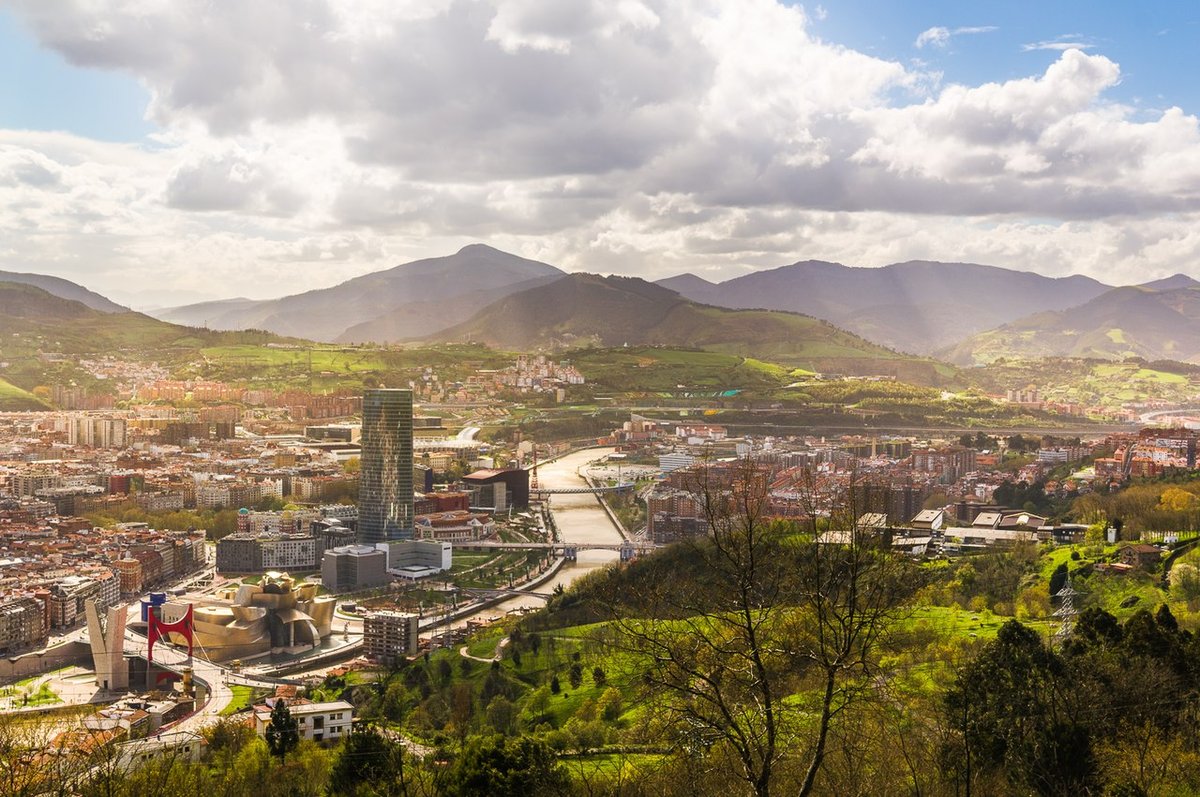
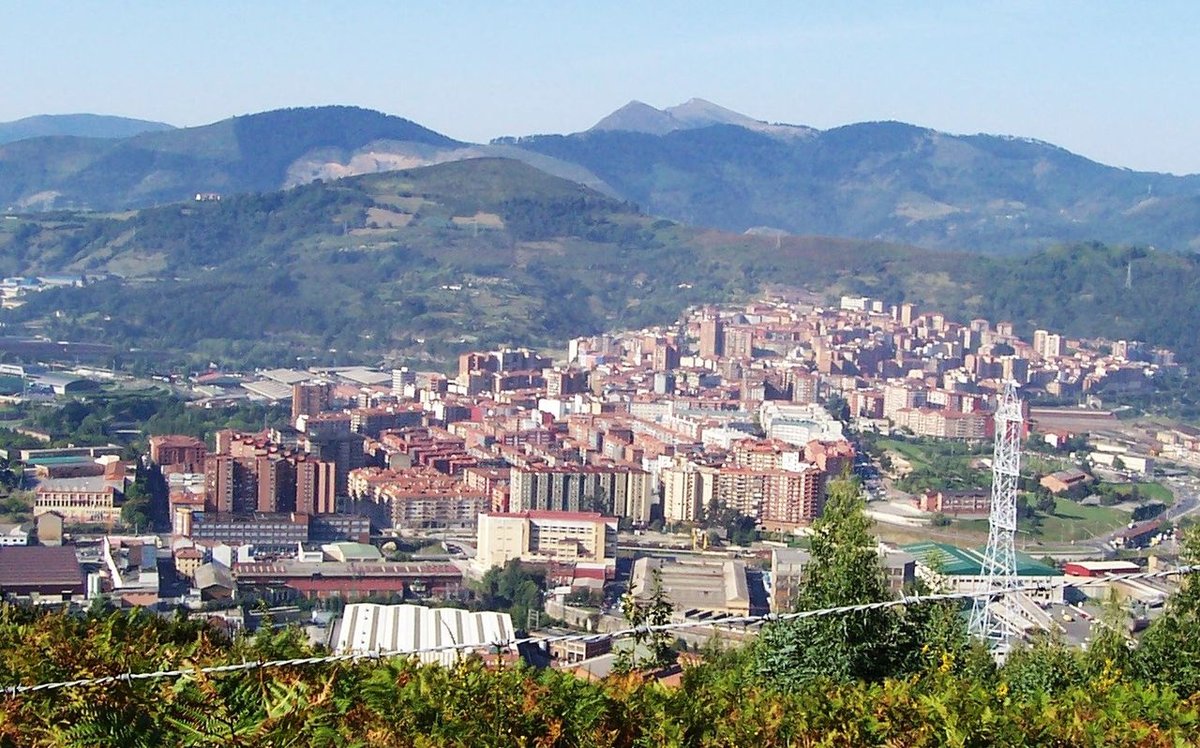
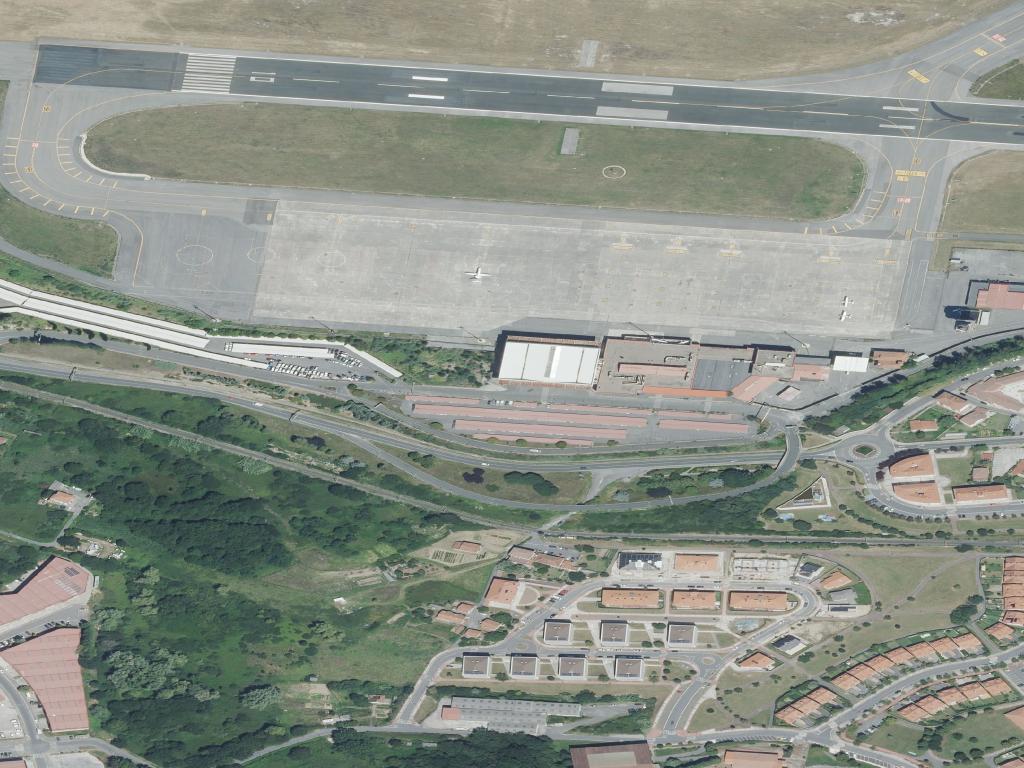
Any look at tourism in Derio starts with geography. The town lies in the Asúa valley, very close to Bilbao and beside the airport of Loiu. That position goes a long way to explaining what Derio is today. For centuries it was a landscape of scattered farmhouses and small agricultural plots. Now that rural setting coexists with scientific and business facilities linked to the wider metropolitan area.
The airport sets the daily rhythm. Even so, stepping away from the main roads quickly changes the scene. Green slopes appear, along with market gardens and small rural neighbourhoods that reflect Derio’s agricultural past. The contrast is immediate rather than gradual, and it shapes how the place feels.
This dual identity is not unusual around Bilbao, but in Derio it is especially visible. The proximity to infrastructure is constant, yet the countryside has not disappeared. Instead, both layers remain side by side.
From rural parish to technological hub
Like other municipalities around Bilbao, Derio was historically organised as an anteiglesia. This was a traditional form of rural community in Bizkaia, centred on a parish church and a network of farmhouses rather than a dense urban core. That structure explains the scattered layout of its neighbourhoods and the importance once held by the paths connecting the valley with other parts of the province.
For a long time, those links were essential to daily life. Movement between small settlements defined how the territory functioned. The legacy of that system can still be seen in the way Derio spreads across the valley rather than gathering around a single compact centre.
The most visible change came in the late 20th century with the creation of the Parque Tecnológico de Bizkaia on land within the municipality. The arrival of research centres, technology companies and new infrastructure altered the landscape in a clear way. Even so, the earlier character was not completely erased. Cultivated plots and working farmhouses still exist not far from laboratory buildings and office spaces.
That juxtaposition, with market gardens and technology within minutes of Bilbao, is probably the most recognisable feature of present-day Derio. It is not presented as a contrast to be resolved but as a reality that defines the place.
San Cristóbal and the centre of local life
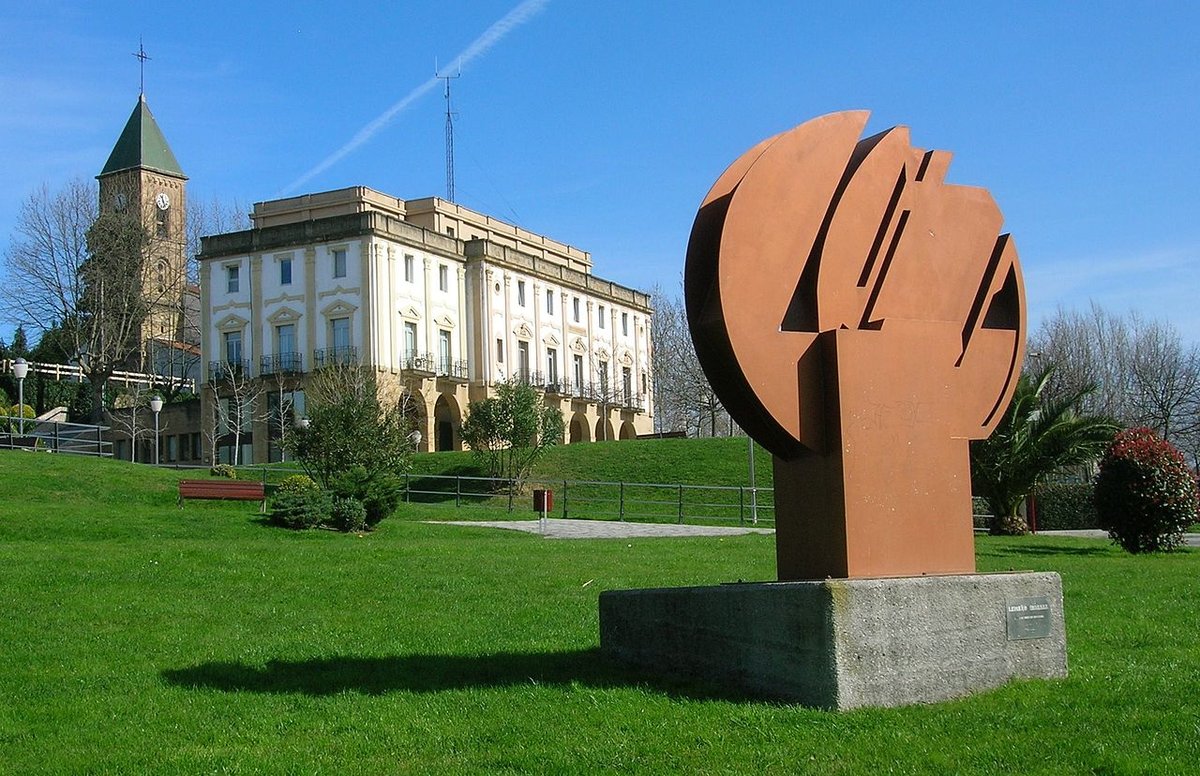
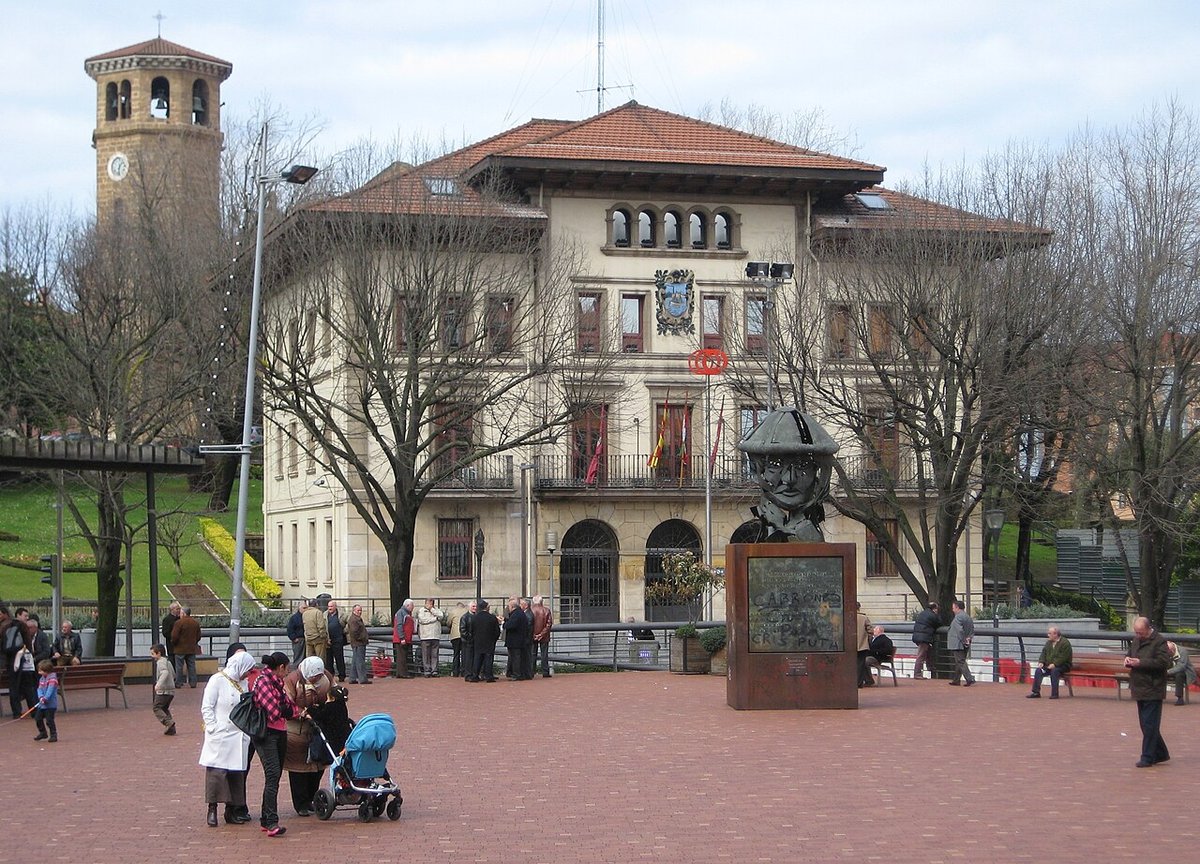
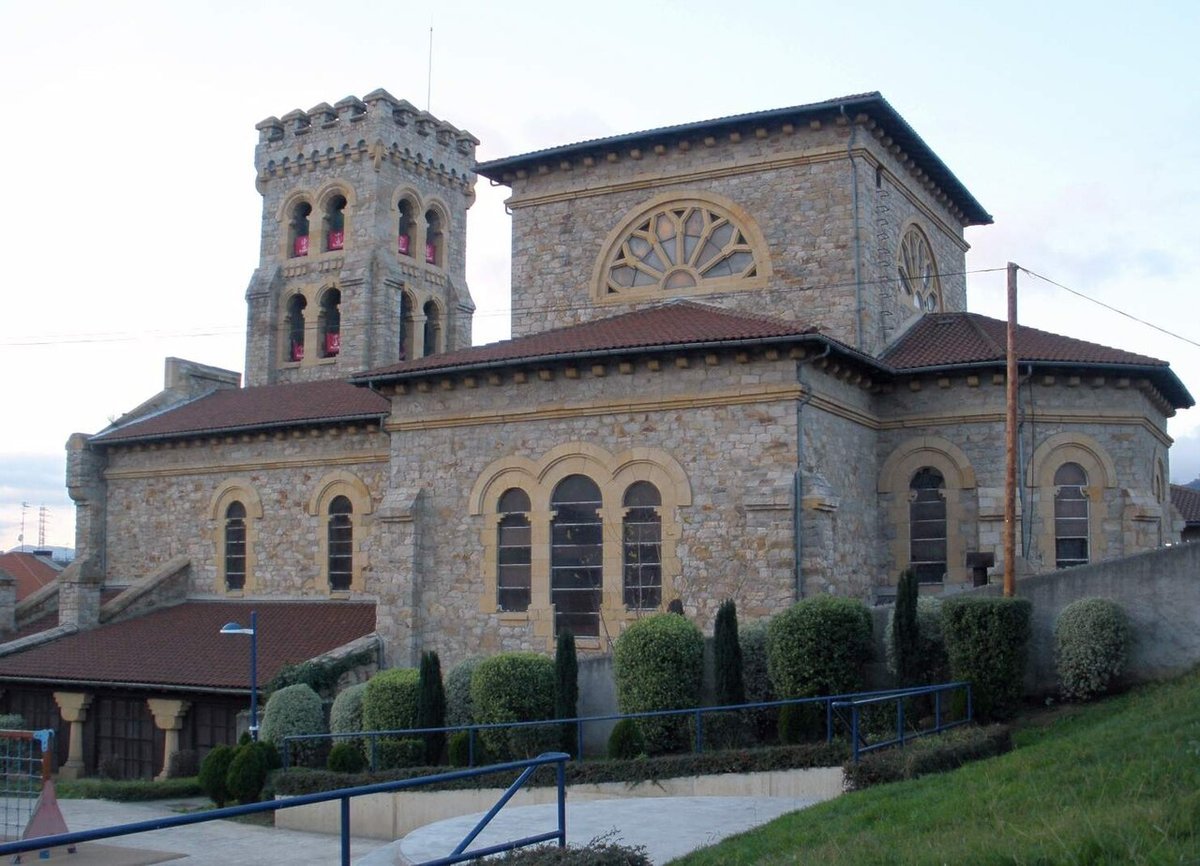
At the historic heart of the municipality stands the parish church of San Cristóbal. The current building largely reflects works carried out from the 16th century onwards, although there had been a place of worship on the site before that time. As in many rural parishes in Bizkaia, the church has long served as more than a religious space.
It functioned as a territorial reference point. Paths were organised around it, neighbours gathered there, and part of public life unfolded in its immediate surroundings. This role helps explain why the church still feels central, even in a municipality that has grown and changed.
Inside, the church is relatively restrained. Some Baroque elements were added in later periods, though decoration is not its defining feature. More significant is its position within the town. The atrium continues to act as a meeting place in everyday life, something quite typical of former anteiglesias in Bizkaia.
That continuity links past and present in a simple way. The building is not isolated as a monument but remains part of daily routines.
Farmhouses, plots and a living landscape
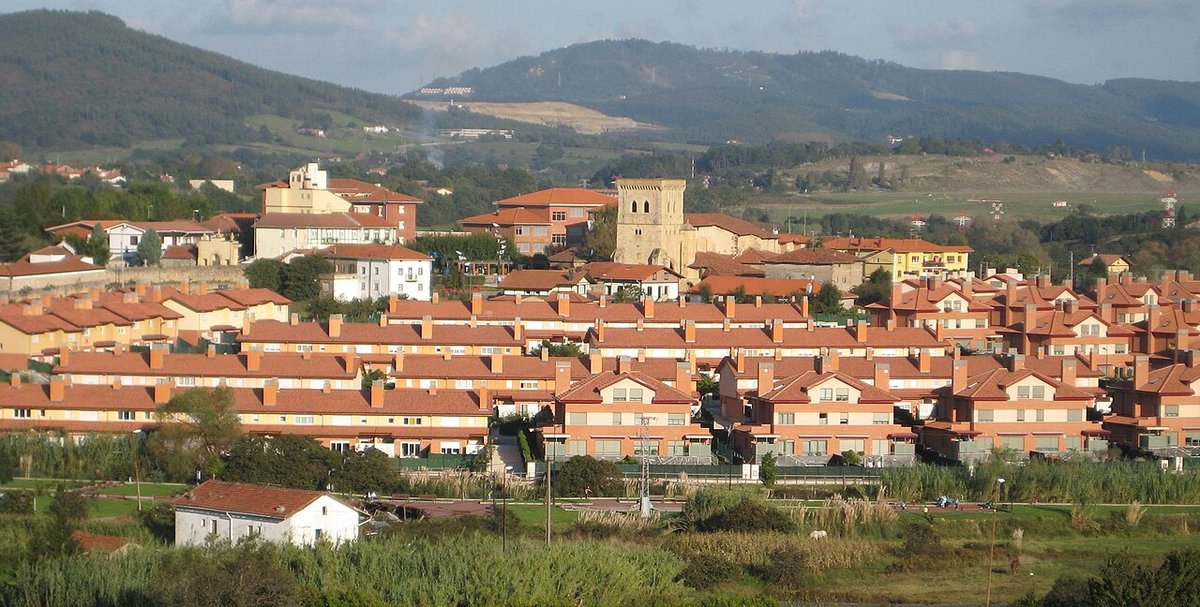
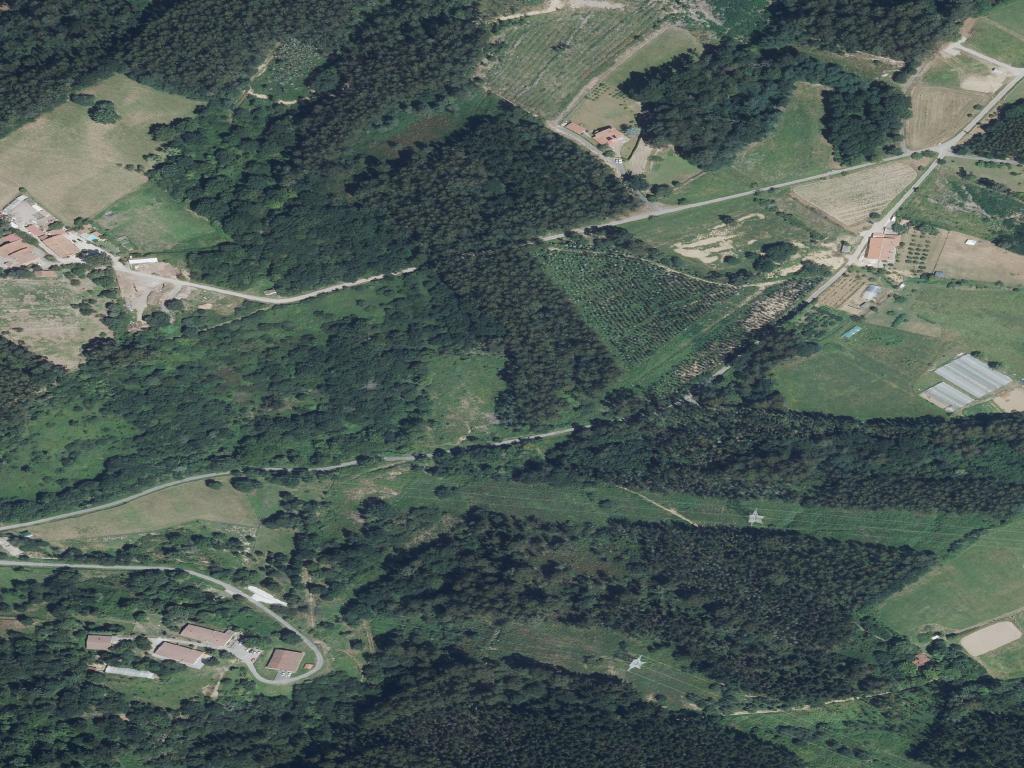
Despite its closeness to Bilbao, Derio retains visible agricultural areas. Around the urban centre there are still market gardens and small plots that continue a long-standing tradition in the Asúa valley. These spaces are not decorative. They remain part of how the land is used.
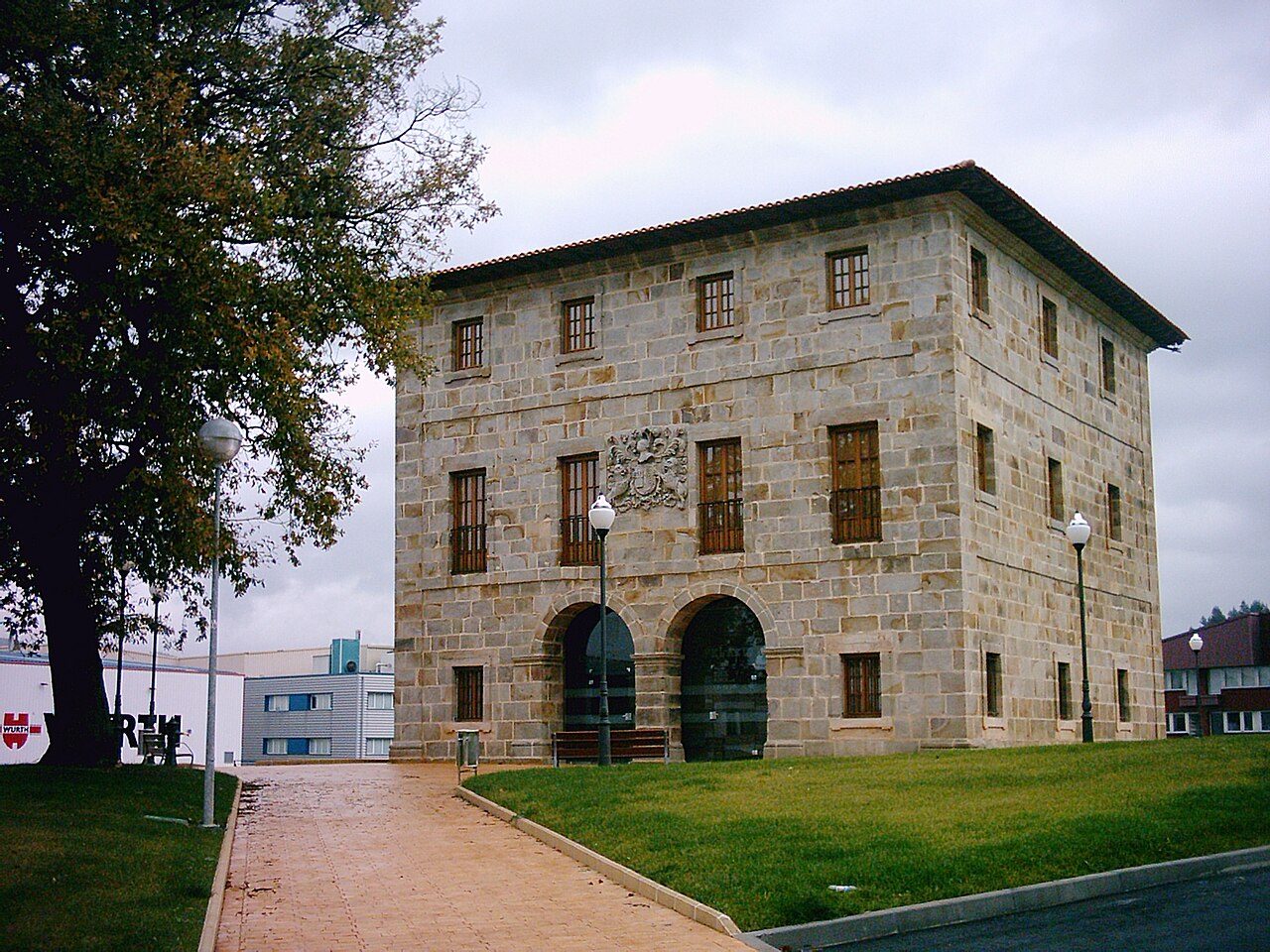
The farmhouses scattered across the nearby slopes reflect typical rural architecture in Bizkaia. They are solid buildings, usually with stone on the ground floor and timber framing or balconies above. Many have been refurbished over time, yet they still shape the character of the landscape.
Their presence gives continuity to the area. Even where modern infrastructure is close by, these buildings maintain a link to earlier ways of life. The visual relationship between cultivated land and residential space remains clear.
At certain times of year, fairs or markets linked to local agricultural and livestock products are usually held. This is quite common in municipalities around Bilbao that have preserved a connection with the countryside. In Derio, these events reinforce that link without turning it into something purely symbolic.
Walking Derio today
Derio can be explored on foot in a relatively short time if starting from the centre. From the area around the church, several local paths lead out towards rural neighbourhoods and trails that cross the valley. These routes follow the natural shape of the terrain rather than imposing a strict layout.
Some longer walks connect Derio with nearby municipalities in the Uribe region or within Greater Bilbao. These are generally gentle routes, passing through meadows and past farmhouses. The rural landscape appears quickly, even when metropolitan infrastructure is only minutes away.
This accessibility is part of the experience. The shift from built-up areas to open land happens without much effort, and that transition defines the character of the place.
For those arriving with time to spare before a flight, or coming from Bilbao, Derio offers a clear impression of what it is. It is a small town that still preserves part of its rural structure, even as it sits within one of the most dynamic areas of Bizkaia.