Full Article
about Ortuella
Valleys and hamlets a stone’s throw from Bilbao, buzzing with local life.
Hide article Read full article
A place that smells of ovens and ore
Ortuella carries two scents at once. Walk through on a Sunday morning and they meet in the air. Freshly baked pastries from local ovens and the dry trace of old spoil heaps on the hillside. It feels unusual, almost like stepping into a bakery set inside a mining exhibition.
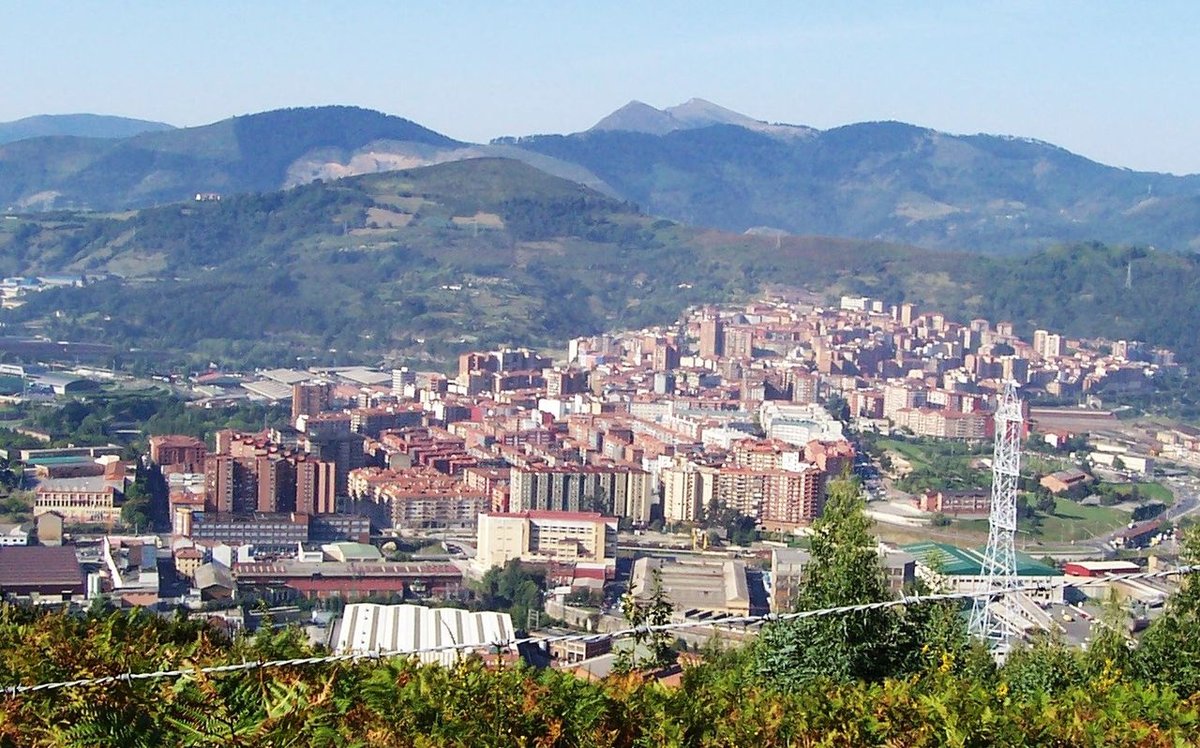
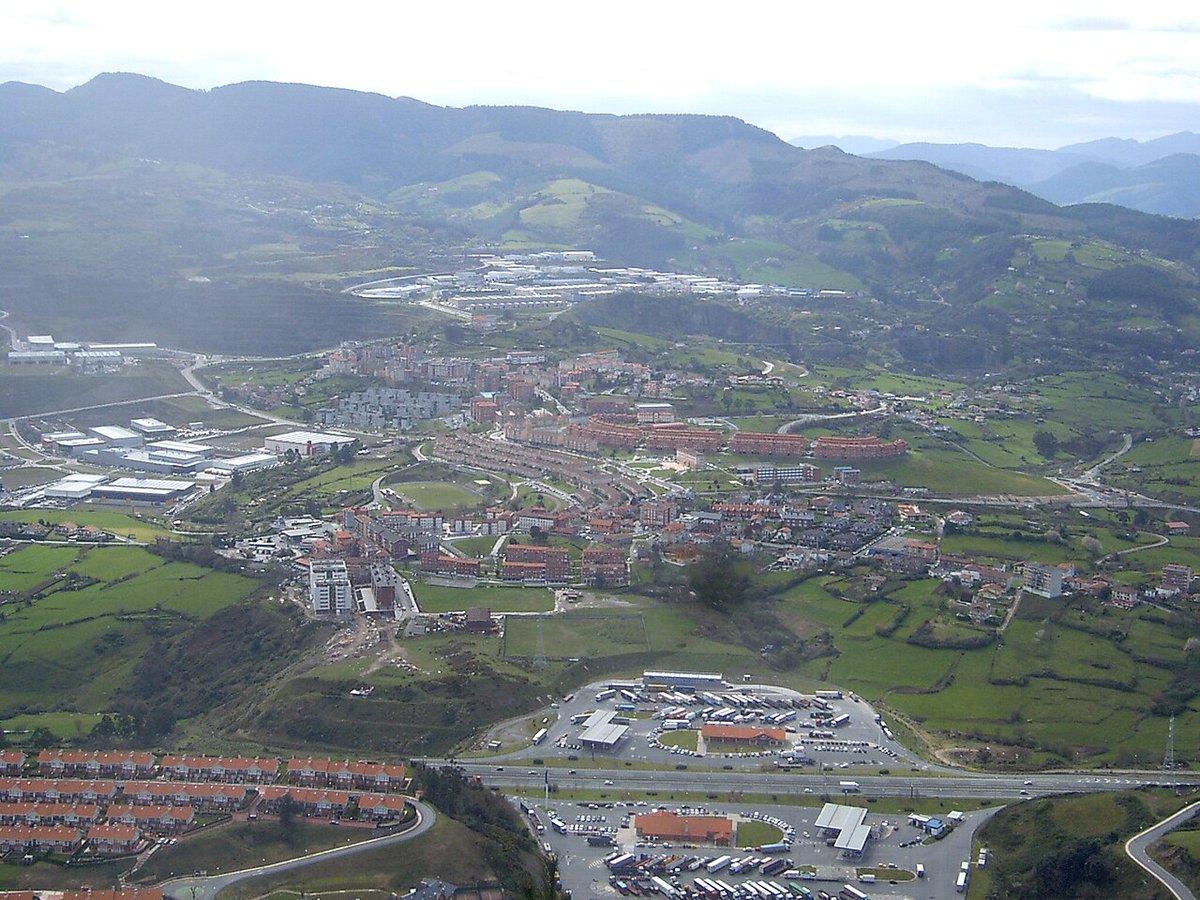
That contrast sums up Ortuella. This is not a postcard village. It is a place shaped by hard work. A town that grew around iron and now lives with what remains. The surrounding hills show their scars openly. No one has tried to smooth them away.
When work and home were the same place
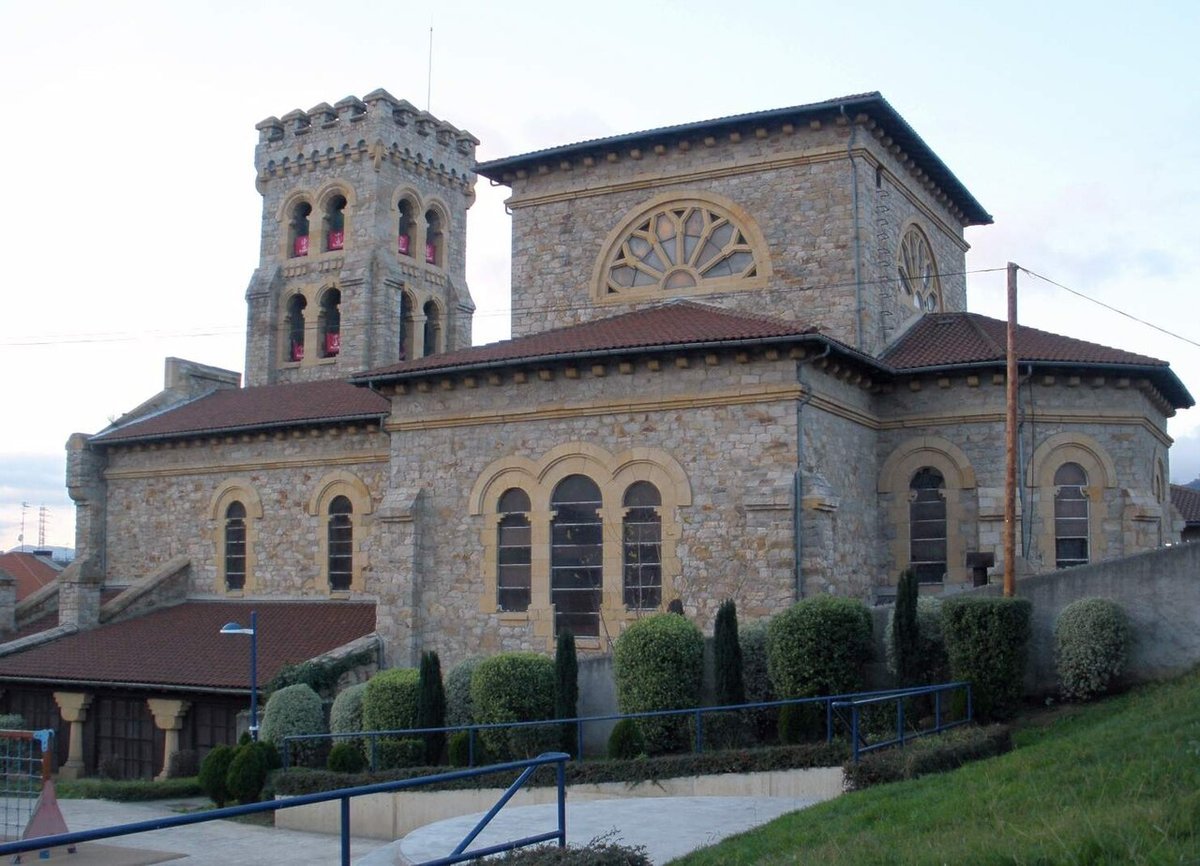
Ortuella began as a mining settlement in the late eighteenth century. Housing was simple, often built in exposed brick. Some of those homes are still standing in areas like Cadegal. Companies put them up to keep workers close to the mines.
Life followed a different rhythm then. Home stood right beside the workplace. The mountains were blasted with dynamite, the ground shook, and iron dust settled everywhere. It clung to clothes, found its way into food and hung in the air people breathed.
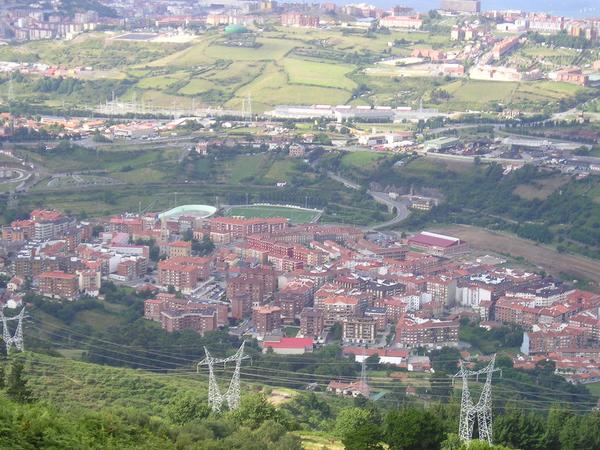
The town expanded gradually. At the start of the twentieth century it separated from Santurtzi. Mining set the pace, bringing new buildings and more residents.
One of the clearest reminders of that era still operates today: the funicular that climbs towards Larreineta. It covers a steep incline in a short distance. On foggy days the journey feels almost cinematic. The valley drops away beneath your feet and the carriage creaks as it moves, as if it remembers its past.
Reading the mountain
In the Peñas Negras area there is a centre dedicated to explaining the region’s mining history. The name might sound formal, but inside it becomes more direct. Models, tools and remains of industrial installations help explain how iron was extracted from these hills.
There is also an explanation of an old system used to treat the ore at high temperatures. It operated for a period before the sector entered crisis. Many mines closed. A large part of the population had to look for a different way of life.
From this area several paths lead into the hills. One route climbs towards the peak of La Cruz. The walk itself is not especially difficult, though the wind can be strong on some days. The landscape holds surprises. Former spoil heaps are now covered in heather, and in spring there is a faint scent of honey in the air.
It is the kind of place where the past becomes clear without needing explanation. The mountain never returned to what it was before. At the same time, it was not left behind either.
The upper neighbourhood
Higher up sits La Arboleda. It technically belongs to the same municipality, yet it feels like a separate village. There are houses, a quiet square and lagoons that formed from former mining excavations.
Many visitors take the funicular up and then wander slowly through the area. In winter, the plan often ends with a warm meal. Dishes like alubias, a traditional bean stew, bread and long conversations at the table. Simple things, the kind that leave you ready for a rest afterwards.
In February, the festival of Santa Águeda usually takes place. Children walk through the streets singing and striking the ground with sticks, following a long-standing tradition in parts of northern Spain. Adults gather to talk. Someone will always recall how the town used to be when the mines were still open.
Moving around without overthinking it
If arriving by car, the easiest option is to leave it near the centre. Some of the older streets are very narrow. In neighbourhoods like Cadegal, it is clear they were designed for another time.
The Camino del Norte, the coastal route of the Camino de Santiago pilgrimage, also passes through here. Pilgrims often arrive from Portugalete. Many look as though they have walked further than planned. It is common to see someone resting on a bench for a while.
In the upper area there is a golf course built on former mining land. The contrast stands out. Where there were once barracks and dust, there is now carefully maintained grass.
Is it worth the visit?
That depends on expectations. Anyone looking for a storybook old town may be better off heading to other coastal villages nearby. Ortuella operates on different terms.
It feels more like sitting down with someone who spent a lifetime working in the mines. A drink appears, and the stories begin. Some are harsh, others lighter. By the end, the place makes more sense.
A simple plan works best. Take the funicular, walk for a while in the hills, then come back down without rushing. If it rains, even better. The smell of wet earth mixes with the iron in the ground. In that moment, the reason this town exists becomes clear, along with why it is still here.