Full Article
about Portugalete
Valleys and hamlets a stone’s throw from Bilbao, buzzing with local life.
Hide article Read full article
A morning shaped by iron and mist
Early in the day, the estuary often sits under a low veil of mist in Portugalete. From the quay comes the first clue that something is moving out there: the metallic rattle of the Bizkaia Bridge. Its iron outline gradually appears through the haze, stretching between the two banks. This structure has linked both sides since the late nineteenth century, and it still operates with a steady, almost mechanical rhythm. The suspended gondola rises and falls above the dark water of the ría.
Visitors tend to end up here sooner or later, watching the crossing from one side to the other. The journey itself is brief, just a couple of minutes, yet the wind sweeping in from the mouth of the Nervión arrives sideways and presses against your clothes. Below, different vessels pass along the channel. Tugboats move slowly, and occasionally a trainera, a traditional rowing boat, heads upriver during training. Above it all, the iron framework creaks as if it were still newly built.
A town built on trade and shelter
Portugalete began with its gaze fixed firmly on the port. In 1322, Doña María Díaz de Haro granted the town its founding charter at a time when this stretch of the estuary held real strategic value. Goods arriving from the Cantabrian Sea travelled inland from here. Ships carrying salt, iron and other cargo found shelter along these banks.
That maritime logic still shapes the old quarter. Streets climb from the quay towards the hillside in short, uneven slopes. Wooden arcades line parts of the route, offering protection when wind blows in from the Abra, the wide opening where the estuary meets the sea. These are not streets designed for speed. There are cobbled sections, small steps, and corners that turn without warning between houses that seem to lean gently into one another.
At the centre sits the square of Santa María. The basilica has stood here since the fifteenth century, its square tower rising above the surrounding roofs. The stone portico holds carved figures that are easy to miss without a closer look. Animals, leaves and worn human faces have been softened over time by salt air. Inside, the scent is a mix of old wax and damp stone. When the bells ring around midday, the sound bounces off the low façades around the square, painted in ochre tones, faded pinks, and an occasional blue that has long since lost its brightness.
The bridge that reshaped the estuary
The Bizkaia Bridge was created as a practical response to a busy waterway. By the end of the nineteenth century, there was a need to connect both banks without interrupting maritime traffic. A conventional bridge would have forced ships to stop. The solution came in the form of this iron transporter, designed by the engineer Alberto de Palacio.
Seen from below, its scale stands out immediately. Riveted iron towers rise like vast frameworks, and a high walkway stretches between them. Suspended from cables, the gondola continues to carry vehicles and pedestrians across the water just as it did when it first opened.
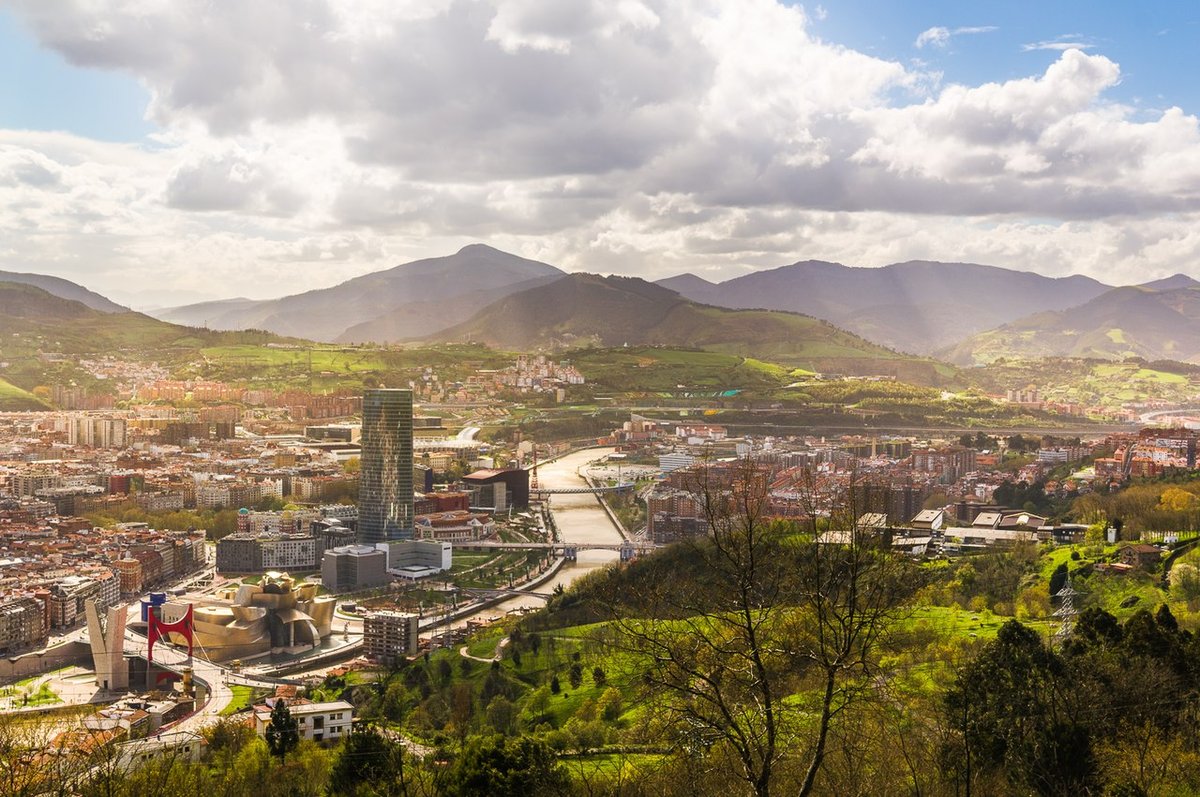
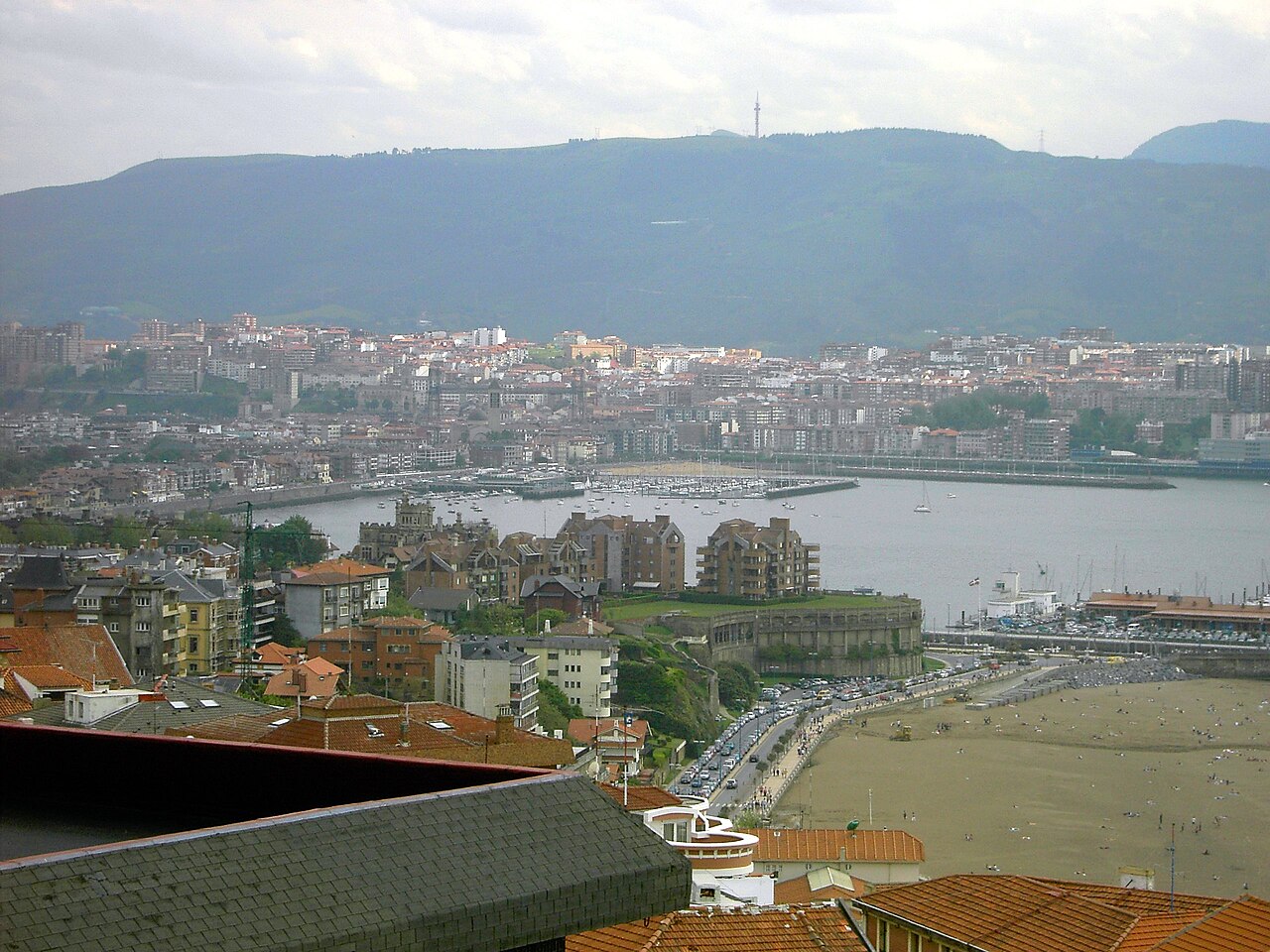
From the upper level, the view widens considerably. The estuary opens beneath your feet. On one side lies Portugalete, its tightly packed rooftops climbing the slope. On the other is Getxo, where neighbourhoods spread out more loosely towards the sea. On clear days, the Abra becomes visible, along with the distant line of the Cantabrian coast. Conditions up there can be brisk. Wind hits hard for much of the year, even when things feel calm at street level.
Midday rhythms by the water
As the day moves on, the atmosphere shifts in the streets around the old quarter. Activity gathers near the bars, where counters begin to fill and the sound of glasses and small plates becomes part of the background. The food is straightforward and tied to local habits. Anchovies appear frequently, along with tortilla de bacalao, a salt cod omelette. When the season allows, fish or seafood also make their way onto plates.
Conversation flows easily in these spaces. Spanish and Basque, or castellano and euskera, often mix within the same exchange. The language can switch without warning, just as topics do. Football comes up, then tides, then local politics. Through open windows, the estuary makes its presence known. There is a salty smell in the air, edged with a trace of fuel from the boats that continue their steady movement up and down the water.
When the tide retreats
Later in the day, the character of the estuary changes again. As the tide goes out, dark stones along the banks are revealed and the water slows. It becomes a good time for a walk along the quay or beside the ría, as the light begins to soften.
For those looking towards open sea, the Abra and nearby beaches are only a short distance away from Portugalete. During summer, these areas draw plenty of people, especially at weekends when visitors arrive from Bilbao and across the wider metropolitan area.
Timing affects how the town feels. The old quarter is quieter early in the morning or towards the end of the day. Around midday and during the height of summer, the area near the bridge becomes busier, particularly close to the transporter. Yet it does not take much to step away from that movement. A couple of streets uphill are enough to return to a slower pace. Footsteps sound against the cobbles, a shutter opens somewhere nearby, and in the background there is always the same constant noise: iron shifting over the estuary.