Full Article
about Valle de Trápaga/Trapagaran
Hide article Read full article
A lift between valley and mining plateau
The Larreineta funicular links the neighbourhood of La Escontrilla with the mining plateau of La Reineta. The slope between the two is steep, which explains why the system was built in the first place. Up on the plateau stood many of the mines and workers’ districts, while below lay the valley and its connections to the Nervión estuary.
When it opened in the 1920s, the funicular was conceived as an industrial transport solution. It could haul heavy loads uphill without the need to transfer them between different systems. Today it is used mostly by local residents and by walkers heading into the hills, yet its mechanical design still points clearly to its mining origins.
From shared territory to municipality
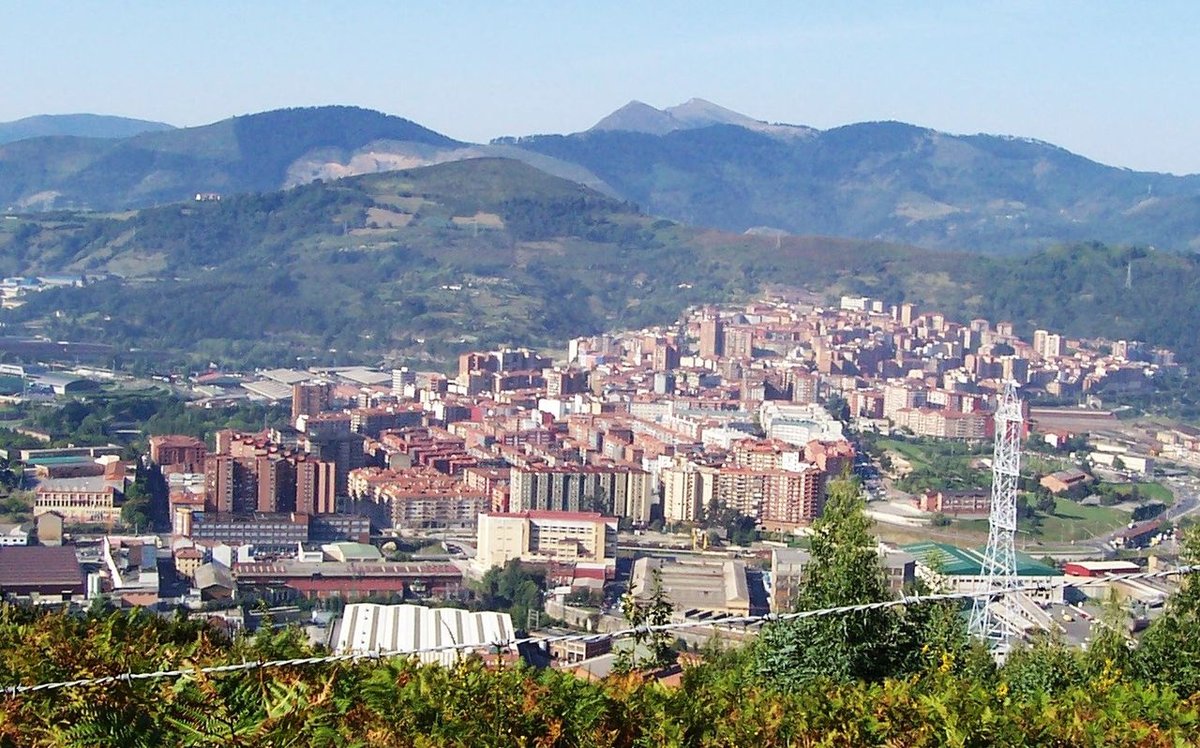
Valle de Trápaga-Trapagaran is a relatively recent municipality. Until 1841, this area formed part of the Tres Concejos del Valle de Somorrostro, an older administrative structure that grouped together several settlements in the mining zone on the left bank of the estuary. Following municipal reorganisation in the 19th century, each of these councils became its own town hall.
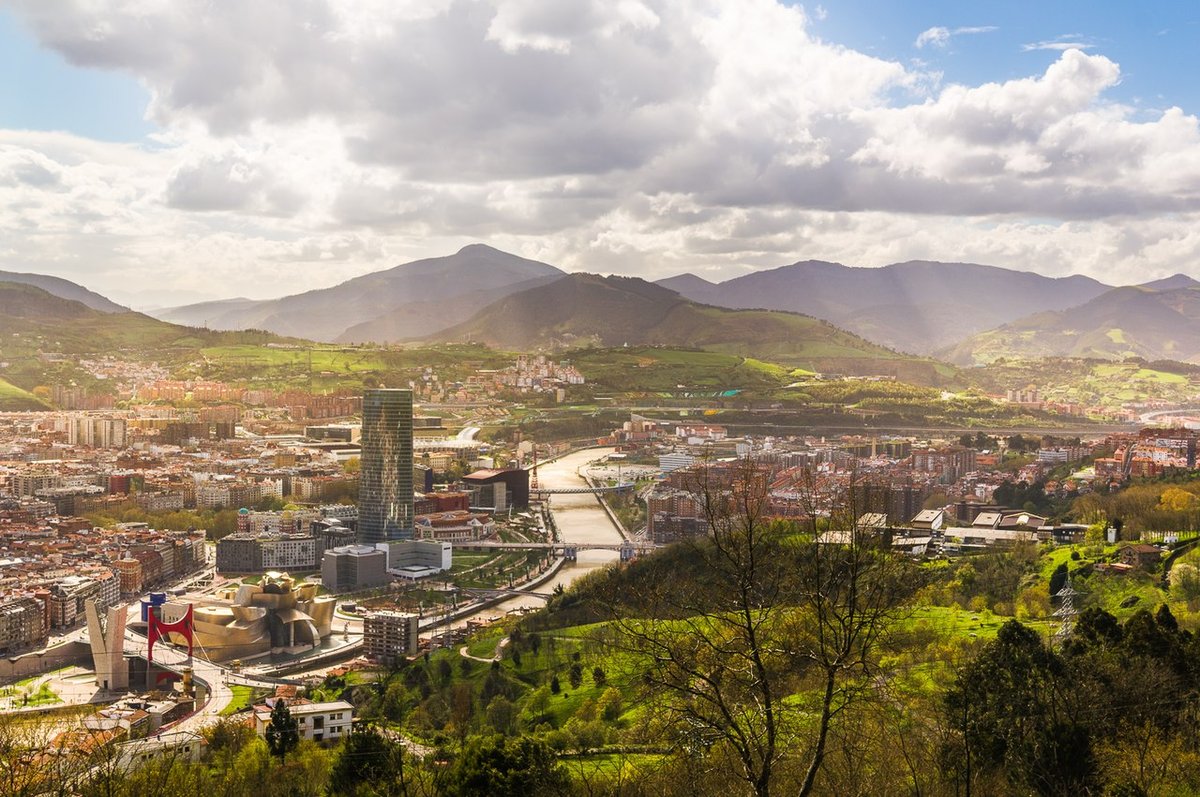
Geography helps explain what happened next. The valley opens out between the lower course of the Nervión and the slopes of the Montes de Triano, an area where iron ore is close to the surface. When iron mining became industrialised in the late 19th century, the landscape changed rapidly. Mining railways appeared, along with inclined planes and entire neighbourhoods built to house workers.
In the higher areas such as La Reineta, Zaballa and Ugarte, rows of workers’ housing can still be recognised near former extraction sites. In La Arboleda, one of the settlements most closely tied to mining in this region, the old Casa del Pueblo survives. These buildings were linked to the labour movement, which had a strong presence here from the late 19th century.
Reading the mining landscape
The transformation of the land is still visible. One of the clearest ways to understand it is by following the paths that cross former open-cast mines. Many of the lagoons that appear on maps and walking routes today are actually old mining pits that gradually filled with water.
Between La Arboleda and the surrounding hills, straight embankments, cut slopes and old railway lines can still be traced. Many of those routes have been converted into footpaths. Even without detailed knowledge, it is easy to see that this landscape, now covered in grass and scrub, was once an intensely active industrial zone.
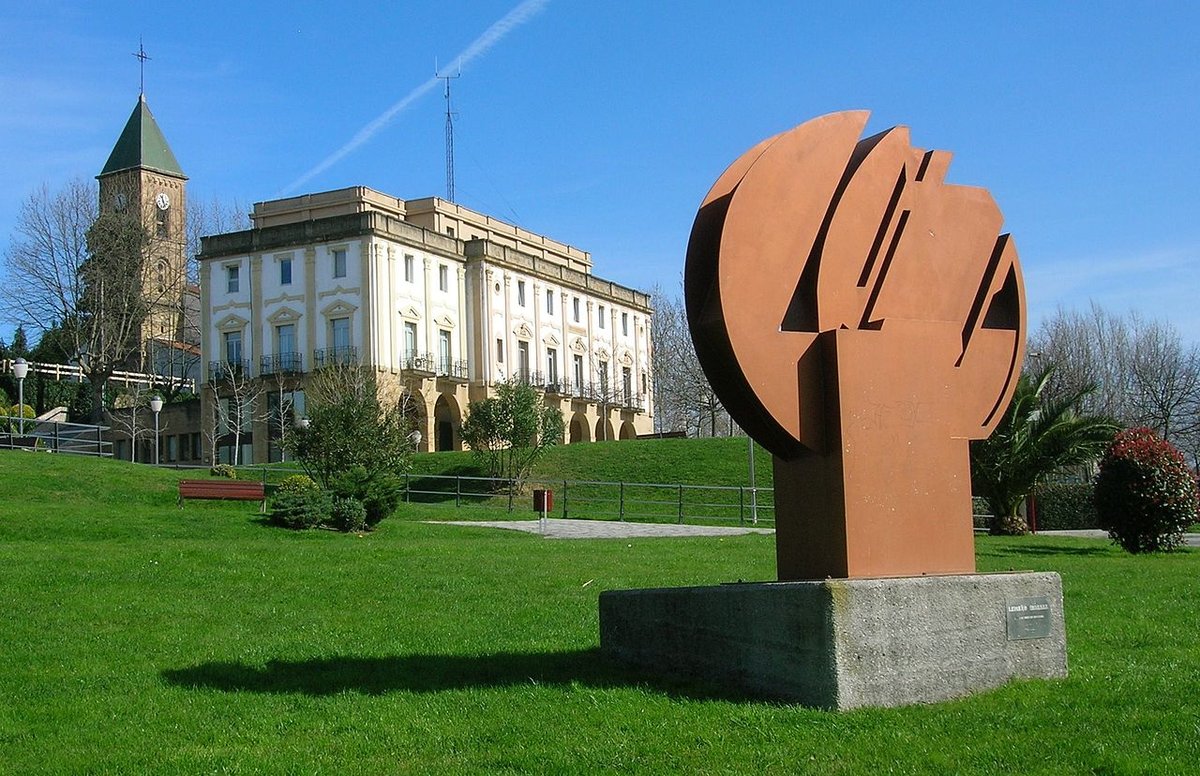
In La Reineta, a small group of contemporary sculptures has been installed in connection with the area’s mining past. Several pieces made from iron and steel have been placed in former extraction sites, creating a direct dialogue with the ground that was once excavated.
A much older human presence
Although modern mining dominates the story of the valley, people lived here long before the industrial period. Prehistoric remains have been found at various points across the municipality and the nearby hills, including pottery linked to the Bell Beaker culture. Some caves in the area have yielded materials that show human activity going back several millennia.
In the area of La Casería, a Christian discoidal stele was discovered and is now preserved in the Archaeological Museum of Bilbao. This find helped confirm that the corridor between the coast and inland areas supported stable settlement long before mining expanded.
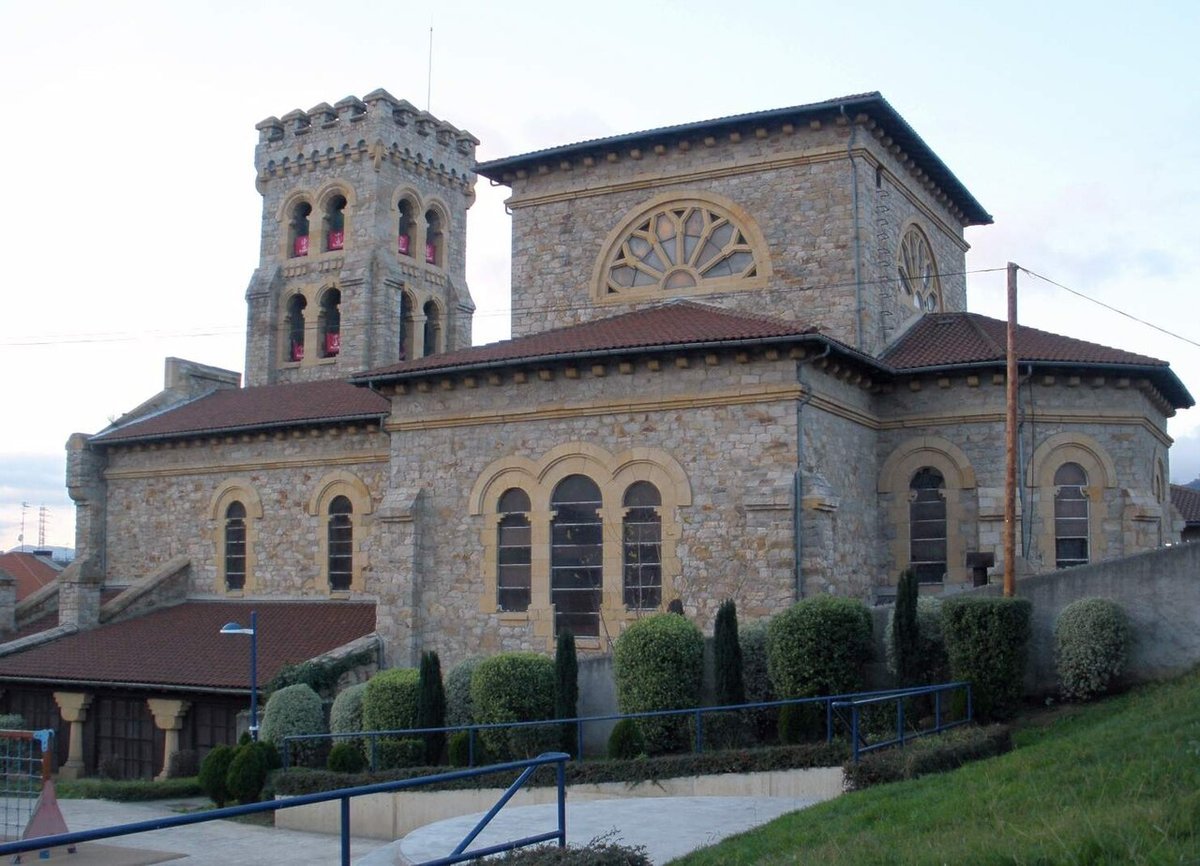
At the top of the mountain stands the church of Santa María Magdalena. Its position overlooks the entire valley. From the churchyard, the mining districts can be seen, along with the route of the estuary towards Bilbao and, on clear days, a strip of the Cantabrian Sea. A traditional romería, a local religious pilgrimage and festivity, has long been held here as part of the community calendar.
Farmhouses and later architecture
Among the neighbourhoods of the valley, some farmhouses predate industrialisation. The caserío of Ayestarán, documented since the early modern period, preserves the timber structure typical of rural architecture in Bizkaia, with a broad roof and a façade facing the surrounding farmland.
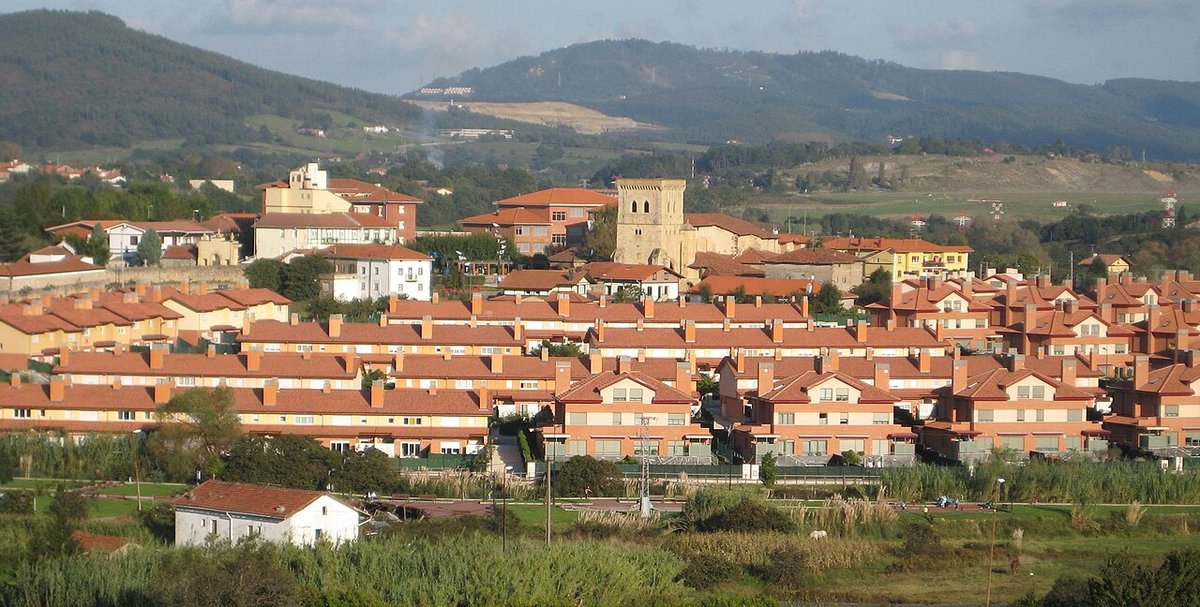
In the lower part of the municipality, there are also buildings linked to investments made by emigrants who found success in the Americas and returned in the early 20th century. Some schools and public facilities were created thanks to their contributions, a pattern seen in many towns across Bizkaia.
Moving through the valley today
The funicular remains the most direct way to travel from the bottom of the valley up to La Reineta. From there, several paths branch out across former mining areas, connecting with La Arboleda and other points in the Montes de Triano.
It is also possible to make the journey on foot by following the route alongside the funicular. The descent towards La Escontrilla is continuous and relatively short, yet it gives a clear sense of the gradient that shaped daily life for the miners who once worked on these slopes.