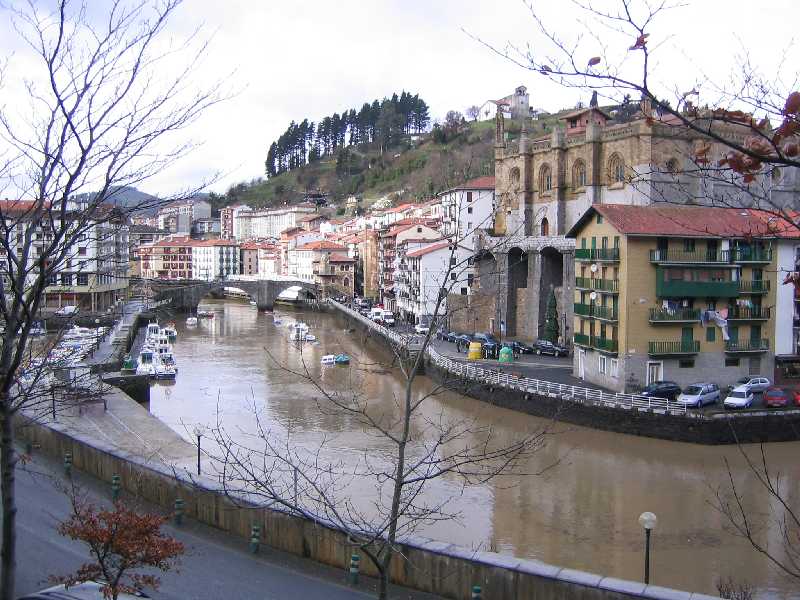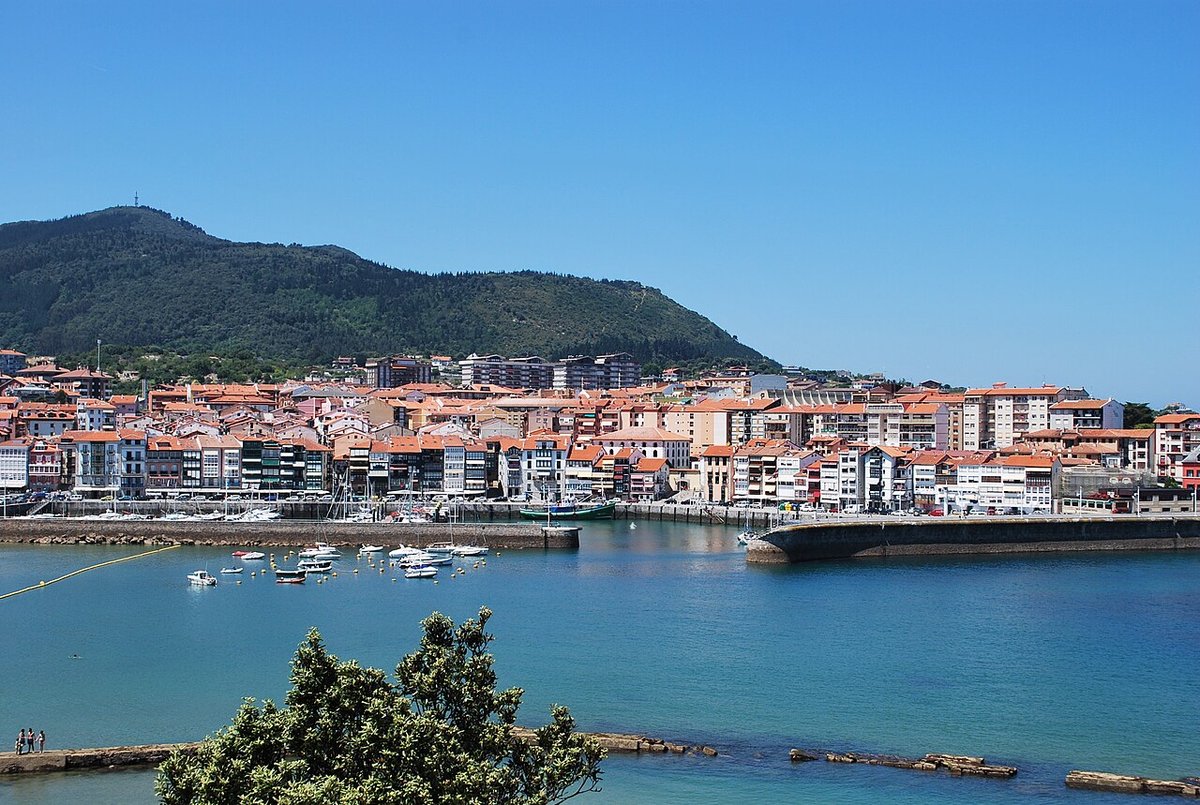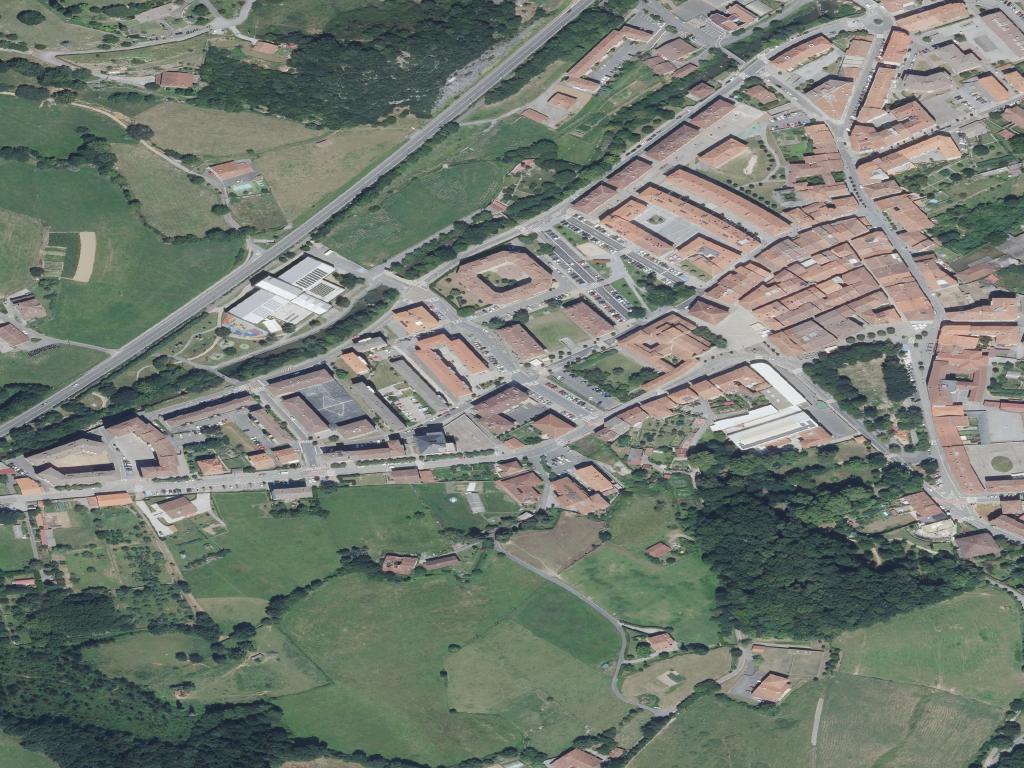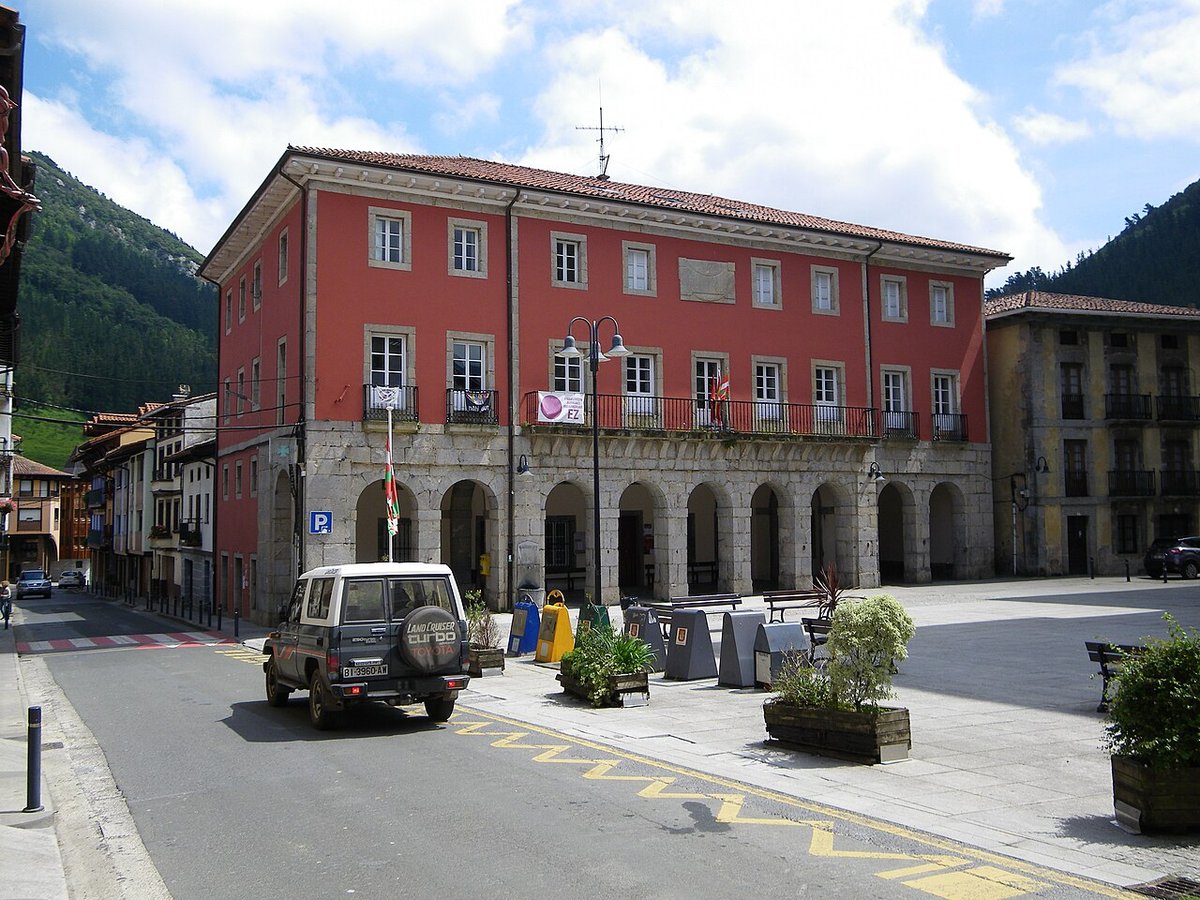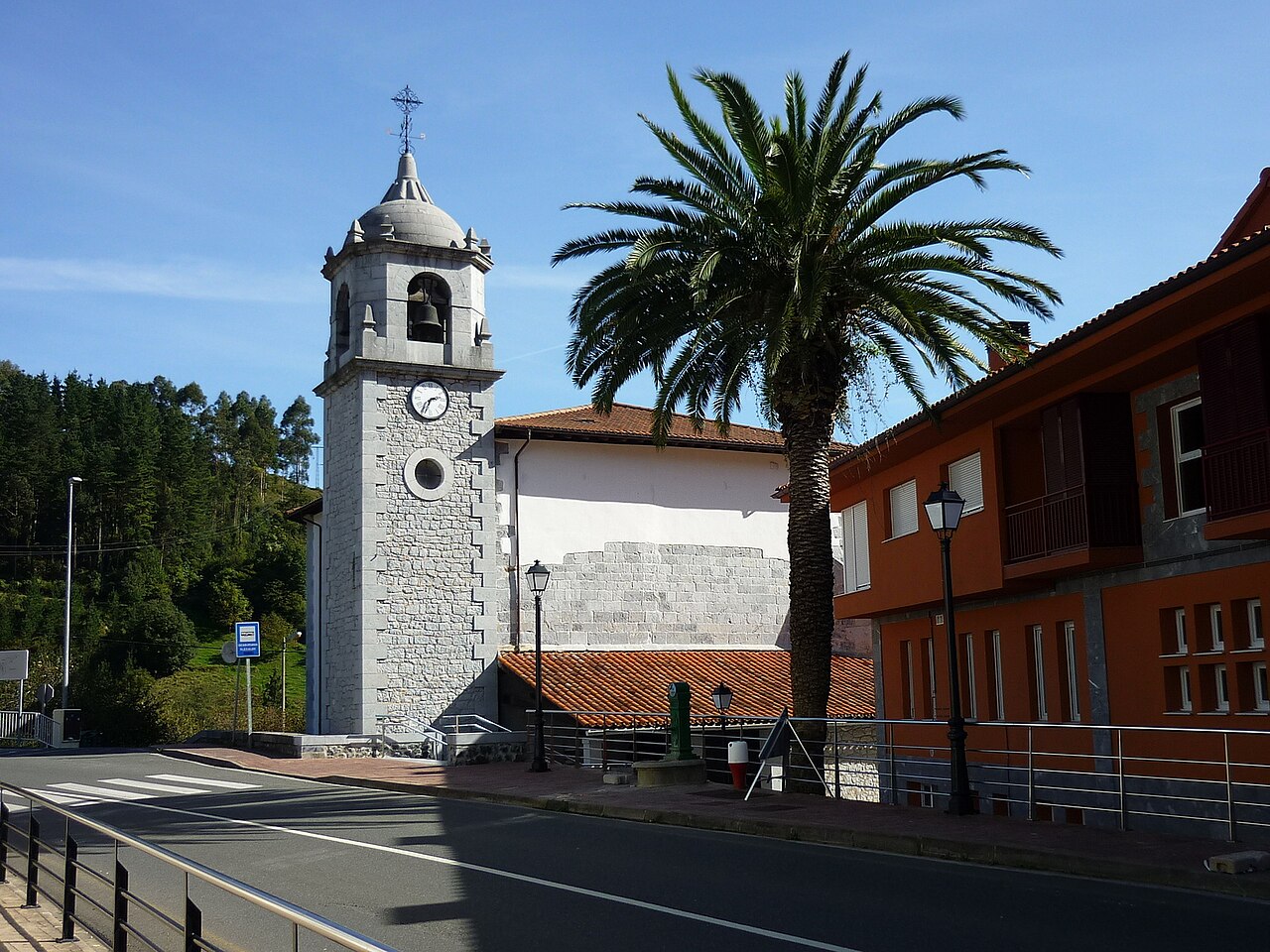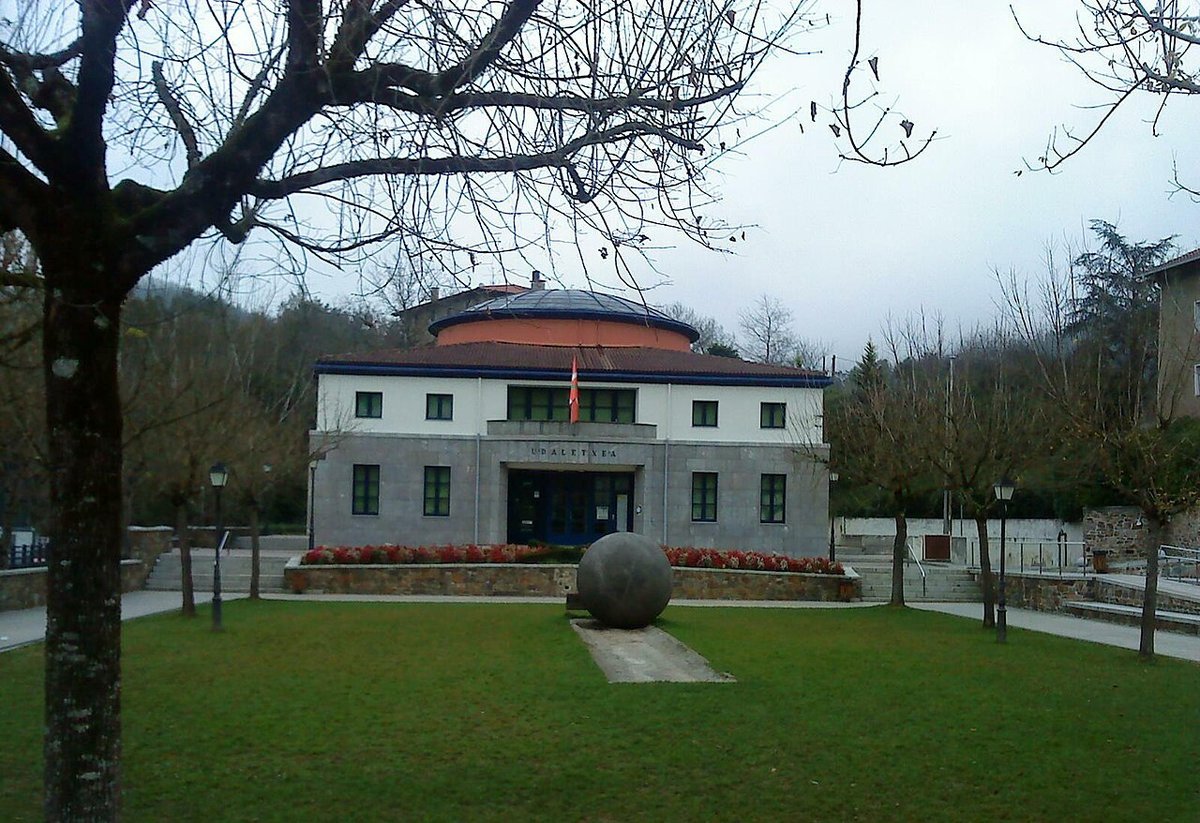
Etxebarria, casa consistorial
País Vasco · Atlantic Strength

Etxebarria (Echevarría)

The church bell strikes eleven and nobody looks up. In Etxebarria's single café, farmers in waxed jackets are finishing their second coffee while d...

791 inhabitants · INE 2025
105m Altitude

Why Visit

Historic quarter Walks

Best Time to Visit

summer

Things to See & Do
in Etxebarria (Echevarría)

Heritage

  • Historic quarter
  • parish church
  • main square

Activities

  • Walks
  • Markets
  • Food
  • Short routes

Full Article
about Etxebarria (Echevarría)

Valleys and hamlets a stone’s throw from Bilbao, buzzing with local life.

Ocultar artículo Leer artículo completo

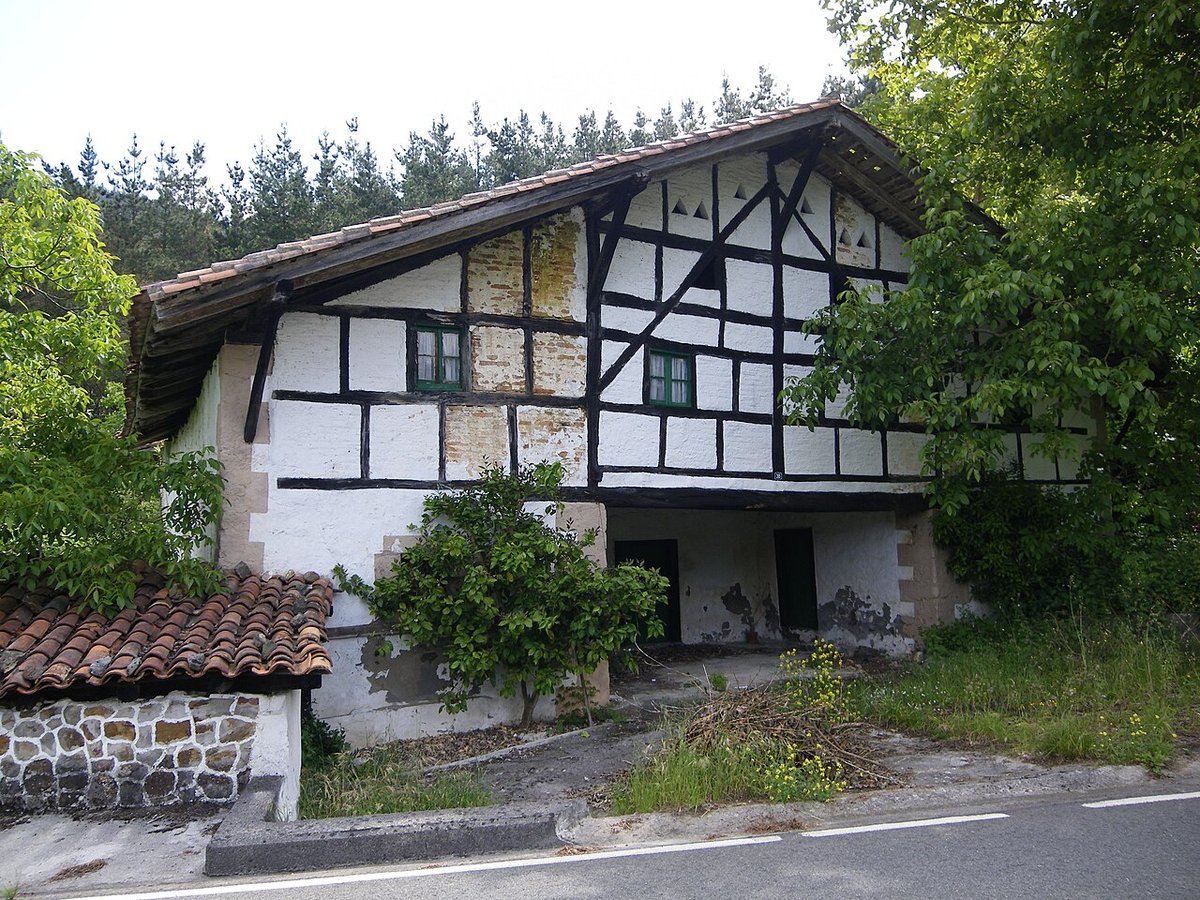
The church bell strikes eleven and nobody looks up. In Etxebarria's single café, farmers in waxed jackets are finishing their second coffee while discussing tractor parts, their Basque rolling over the clatter of cups like loose gravel. Outside, the Lea-Artibai valley stretches green and workmanlike, hedged with chestnut and punctuated by stone farmhouses that have been waking up to the same view since the 1500s.

This isn't the Basque Country of glossy travel supplements. Twenty-five minutes inland from the coastal drama of Lekeitio and Ondarroa, Etxebarria sits at 200 metres above sea level, far enough from the sea to smell pasture instead of salt, close enough that today's hake might have been swimming this morning. The village proper holds about 700 souls; add the scattered hamlets—Atxondo, Bedarona, Gopegui—and you reach roughly 5,000, enough to support a pharmacy, a bakery that sells out by ten, and a frontón where pelota games finish when the light fails.

The Logic of Livestock and Lanes

Roads here follow animal tracks more than surveyors' lines. The BI-633 skirts the valley floor, but to understand Etxebarria you need to leave it. Take the lane signed "Amezcoa" opposite the petrol station; within five minutes the tarmac narrows, the hedgerows close in, and you're walking between moss-covered dry-stone walls that separate dairy pasture from apple orchards. Every gate has a nameplate: Ibarreta, Uribarren, Zubelzu—farmhouses doubling as family brands, their txakoli wine or Idiazabal cheese sold at the Saturday market in Gernika, 25 km west.

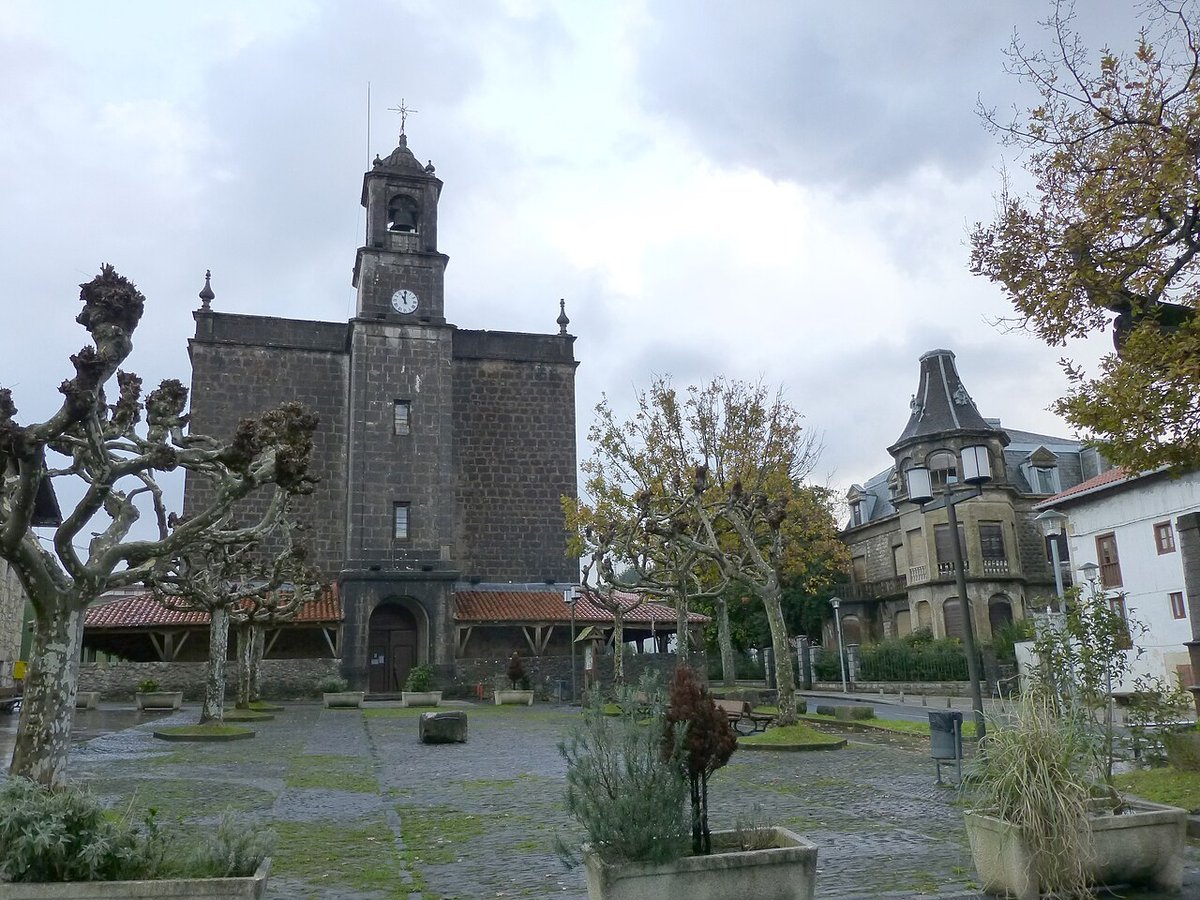
The parish church of San Andrés sits where logic dictates: on a low rise above the junction of three lanes. Built in the sixteenth century, rebuilt after the 1874 Carlist siege, it unlocks only for mass on Sundays and the occasional funeral. Step inside when it's open and you'll find nautical motifs carved into the confessional—reminders that every family here has a cousin who crews the tuna boats of Bermeo. The priest keeps the key to the crypt where three British sailors, washed up after the 1916 Battle of Jutland, were buried beneath generic headstones: "Unknown English Seaman." The Commonwealth War Graves Commission still sends someone every spring to tidy the grass.

When the Map Says "Track" It Means It

Walking routes exist, but they're working infrastructure, not leisure product. The PR-BI 203 waymarks a 12-km loop through three hamlets, yet the yellow-and-white paint often hides under cow muck. OSM maps show tarmac; reality delivers tractor-rutted concrete with a camber designed to shed silage effluent. After rain—common, annual precipitation tops 1,400 mm—descents turn into streams sturdy enough to test Gore-Tex. Proper boots matter; the local vet earns a steady income from twisted ankles suffered by visitors in trainers.

Still, the payoff comes quickly. Climb 45 minutes south-east from Atxondo and the view opens across the oak-carpeted slopes of the Urkiola massif. On clear winter days you can pick out the steel glint of the Bilbao Abra estuary, 35 km away. Buzzards ride thermals above, while below the only sound is the rhythmic clank of a distant milking machine. Carry on another hour and you reach the col of Urregarai, where an unmanned hut sells tinned beans and cider on trust: drop coins in the tin, sign the ledger, admire the honesty box that has never been robbed.

Eating What the Day Produced

There are no Michelin stars, yet the food tastes of time and place. The sole restaurant, Zubelzu, opens only at lunch and stops serving when the daily rations run out—usually around three. A three-course menú del día costs €18 and might start with salt-cod omelette, follow with beef shin stewed in txakoli, finish with walnut flan from nuts gathered in the adjacent orchard. Vegetarians get scrambled eggs with wild mushrooms; vegans should pack sandwiches. House wine comes from vines you passed on the walk in; the owner can point to the exact slope.

If Zubelzu is full, the Bar-Cafetería Lea by the main roundabout grills txistorra sausages until 11 pm, but only on Fridays. Order a zurito (a quarter-pint of lager) and you'll get a free tapa of fried pepper and anchovy—fish again, delivered by van from Bermeo market at dawn. The bakery opposite sells talo, corn-flour pancakes best eaten hot with sugar, though locals prefer them wrapped round chistorra for mid-morning elevenses.

Saints, Pipes and the Annual Population Spike

Festivities punctuate rural routine. San Blas on 3 February blesses throat lozenges and distributes 1,500 bread rolls stamped with the saint's image; arrive early at the church porch if you want one still warm. Summer fiestas shift to mid-August, when emigrants return from Bilbao or Madrid and tents appear on every lawn. The programme mixes tractor-pull contests with late-night Basque folk-punk concerts; decibel readings rival Heathrow's third runway, but nobody complains because grandma danced to the same songs in 1952. Book accommodation a year ahead or you'll sleep in your hire car.

Getting Here, Staying Sane

Public transport reaches the edge of the valley but not the village. ALSA buses connect Bilbao (Termibus) with Markina-Xemein, 12 km north, four times daily; from there a taxi costs €22 unless you wait for the school bus at 14:10 on weekdays. Hiring a car at Bilbao airport makes more sense: take the A8 coastal motorway east, exit 18 for Gernika-Lekeitio, follow the BI-633 for 20 km. Parking is free but not thoughtless: leave room for combine harvesters that need the full width of the lane.

Accommodation is limited. The rural house Atxondo Goikoa offers five ensuite rooms in a 1645 farmhouse; breakfast includes eggs from chickens you can still hear. Weekend rate €95, weekday €75, closed January. Two self-catering cottages in Bedarona sleep four each; owners leave milk from their own cows and expect you to rinse bottles for return. Wild camping is tolerated above 600 m if you pitch after dusk and leave by sunrise—technically illegal, practically ignored provided no fires are lit.

The Honest Verdict

Etxebarria will not keep a checklist tourist busy. Rain can set in for days, phone signal drops to E in every hollow, and the nearest cash machine is 10 km away in Markina. What the place offers instead is a calibration of scale: hedgerows trimmed by hand, milk collected every afternoon, a community that measures distance in walking time and greets strangers because they can still tell who belongs. Come for one clear day when the chestnut leaves are turning and you'll understand why some Basque families never saw the need to leave.

Key Facts

Region
País Vasco
District
Lea Artibai
INE Code
48030
Coast
No
Mountain
No
Season
summer

Livability & Services

Key data for living or remote work

2024
ConnectivityFiber + 5G
HealthcareHealth center
EducationElementary school
Housing~5€/m² rent · Affordable
CoastBeach nearby
Sources: INE, CNMC, Ministry of Health, AEMET

Planning Your Visit?

Discover more villages in the Lea Artibai.

View full region →

More villages in Lea Artibai

Traveler Reviews