Full Article
about Berastegi (Berástegui)
Deep green, farmhouses and nearby mountains with trails and viewpoints.
Hide article Read full article
A valley that sets the tone
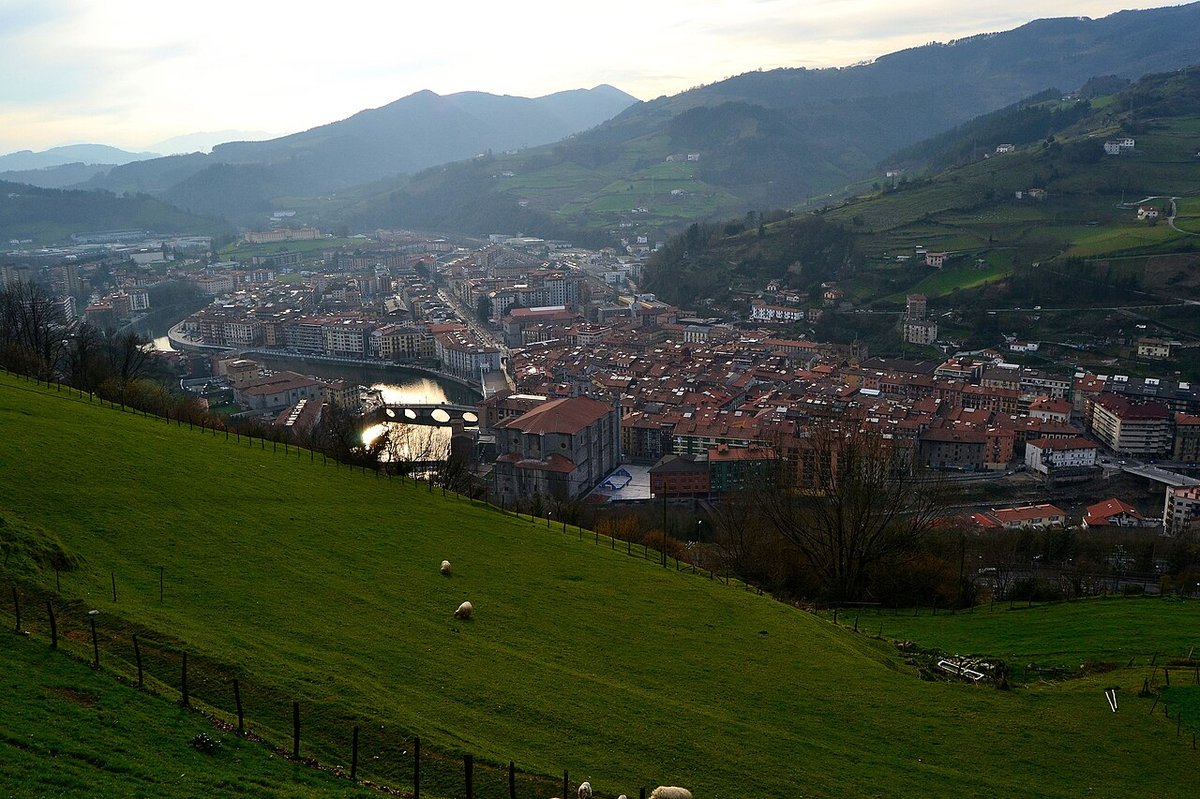
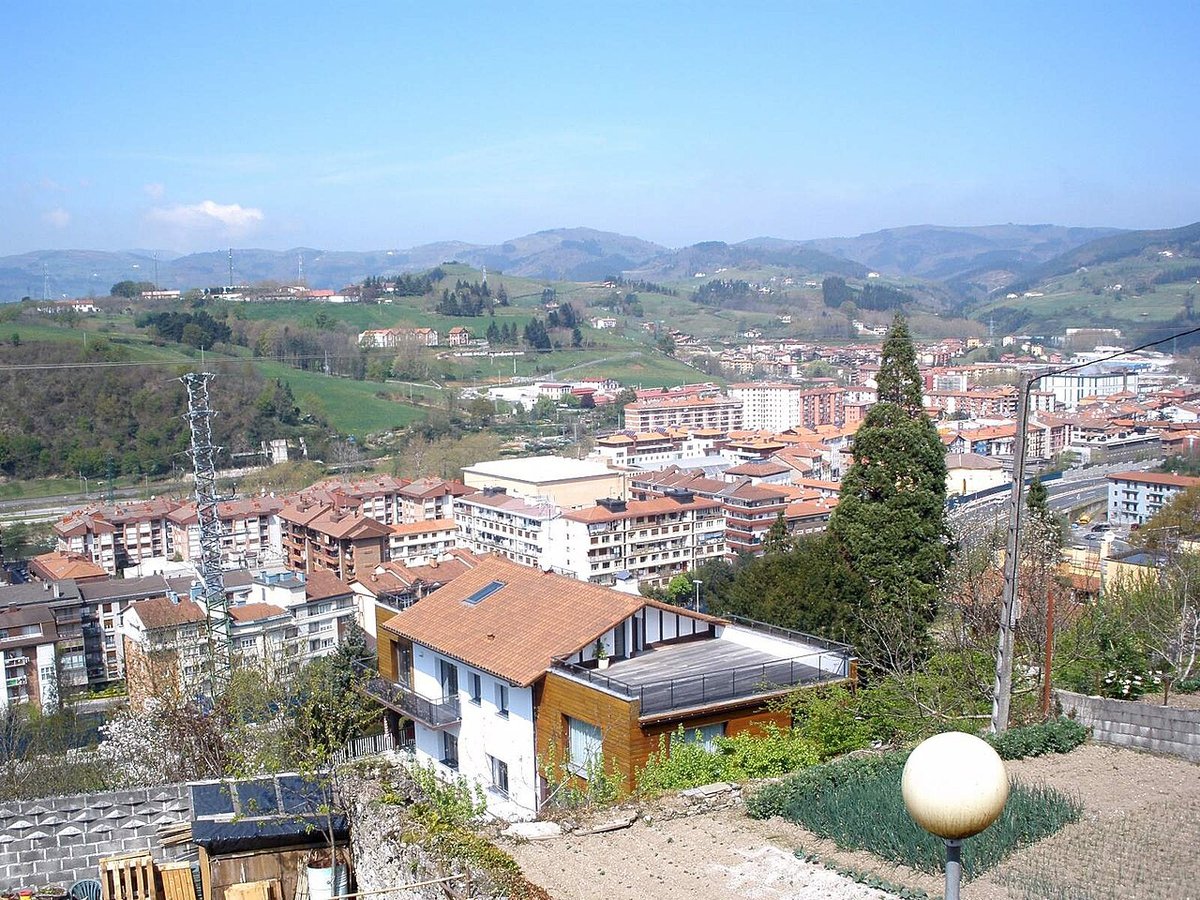
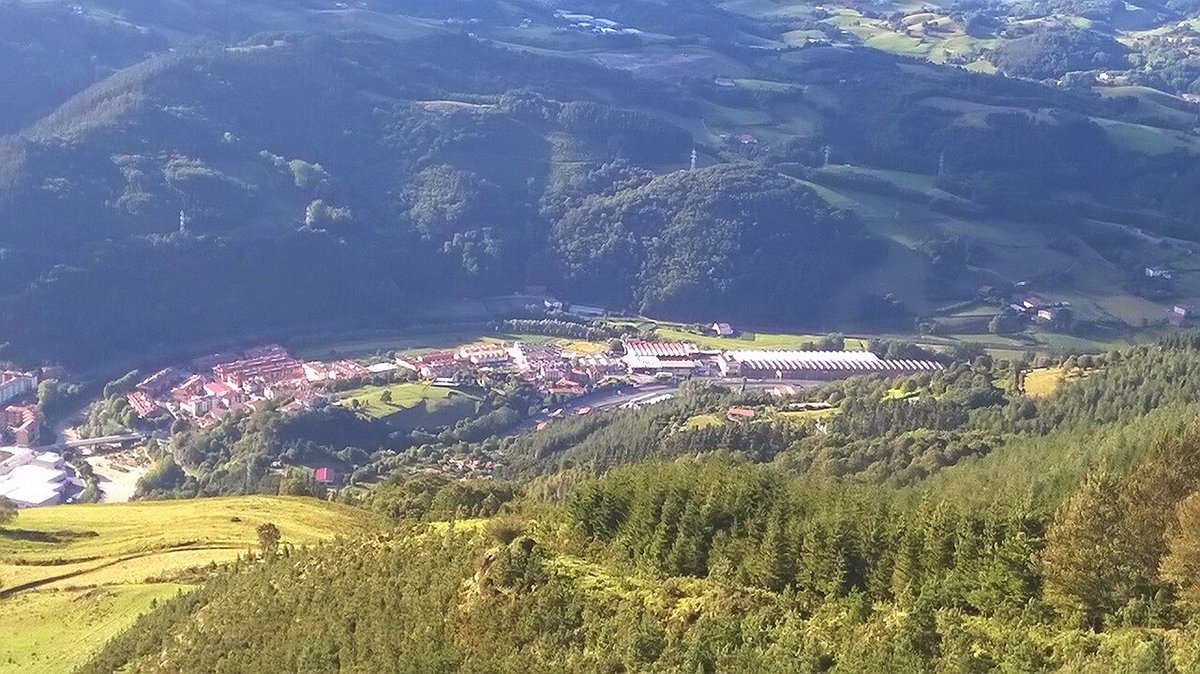
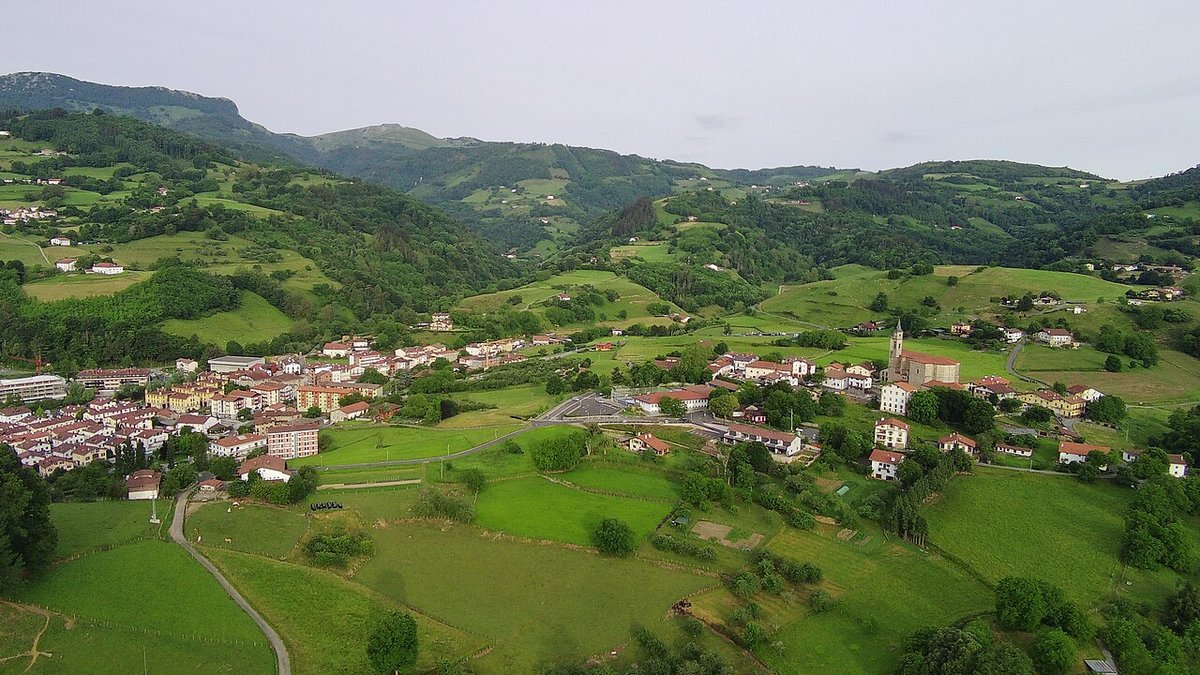
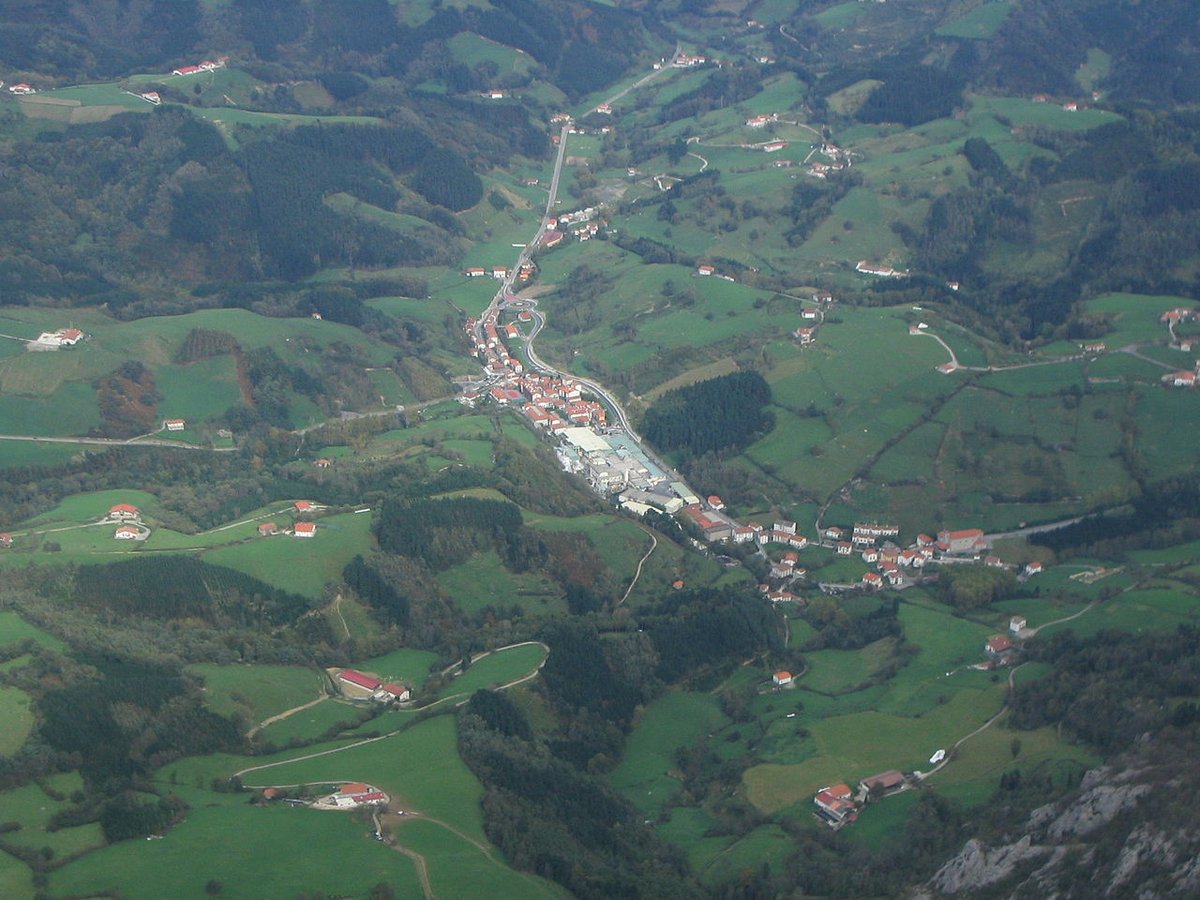
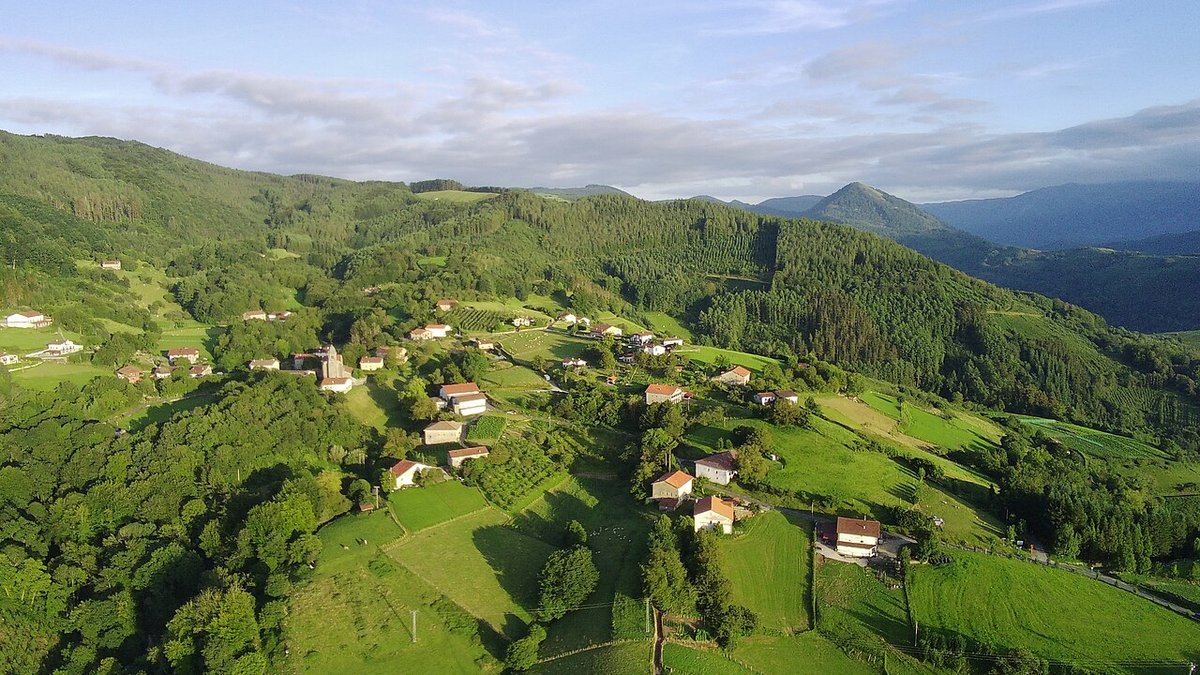
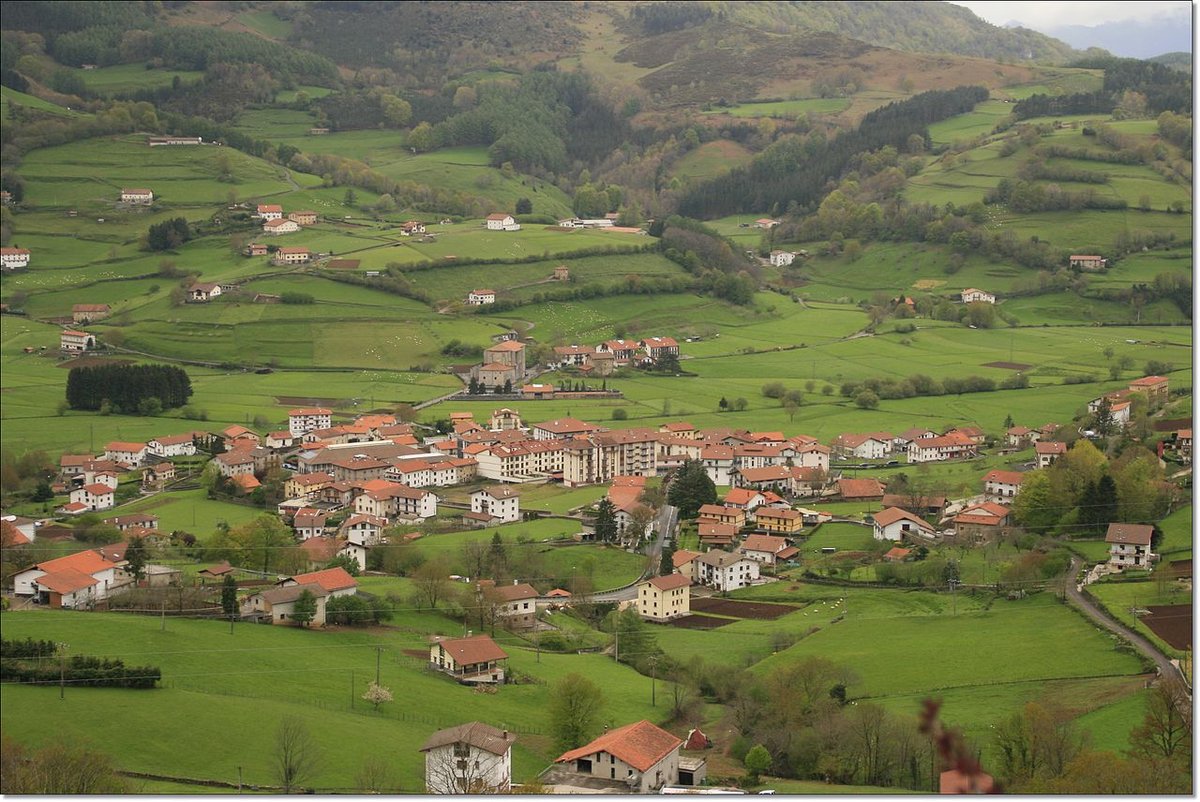
Berastegi sits at the eastern edge of Tolosaldea, in a natural corridor leading towards Navarra. Any visit starts with its geography. The village lies in a narrow, damp valley, with farmhouses scattered across the slopes and working meadows still very much in use. This is not a place organised around a grand square. It grew in a dispersed way, like many settlements in inland Gipuzkoa, following the practical needs of land and livestock.
The nearby N‑1 makes access quick, yet the pace shifts as soon as the road drops into the valley. The centre is small and the neighbourhoods spread out across the hillsides. The layout reflects a long-standing reality: the farmhouse, or caserío, was the true unit of life here, not an urban core. That pattern still defines how the landscape looks and feels today.
There are no major monuments or long streets designed for strolling. The interest lies in how the surroundings are organised. Enclosed meadows, barns attached to homes and paths linking one caserío to another give a clear sense of how daily life has been structured. Much of the local economy has traditionally revolved around livestock and milk production.
San Esteban and the small centre
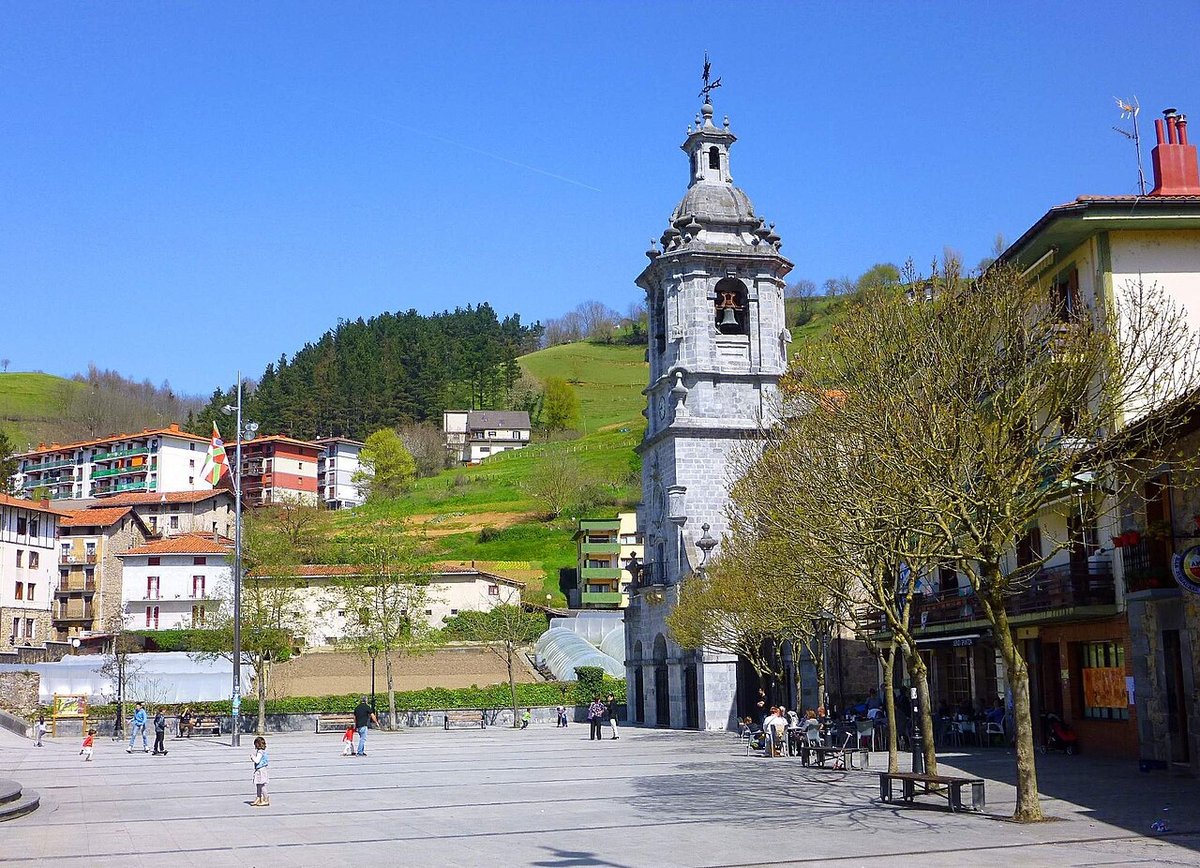
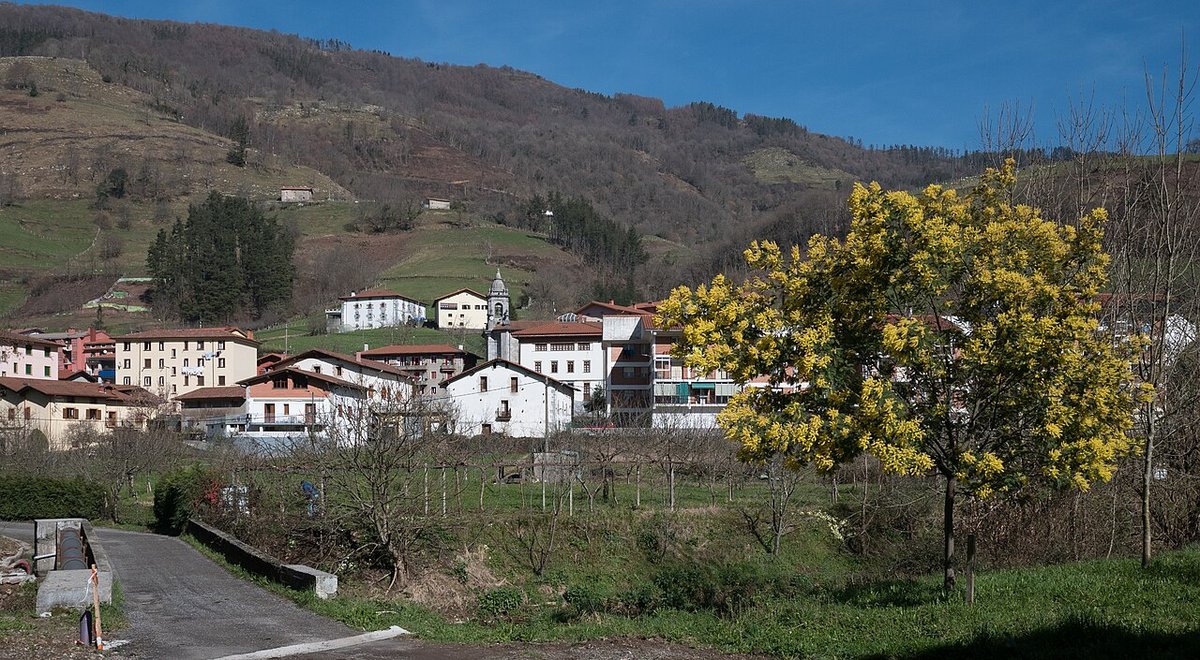
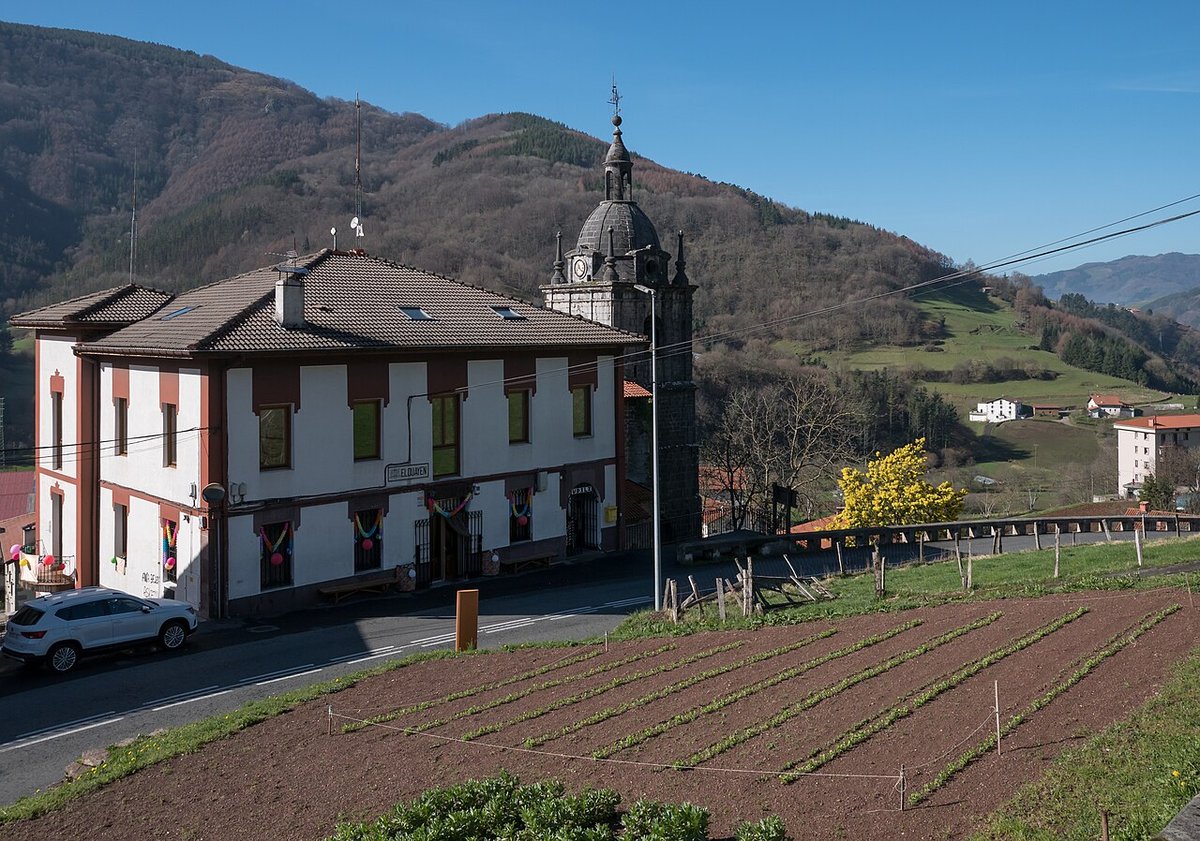
The closest thing to a centre is the parish church of San Esteban. The building is usually dated to the 16th century, though it has undergone later alterations. Its square tower rises above the nearby houses and acts as a clear reference point when arriving from the road.
The architecture is restrained. Stone walls, a sloping roof and a porch that looks out over the valley define the structure. From this spot, the scale of Berastegi becomes clear: a handful of streets, a small cluster of homes and, almost immediately, open countryside.
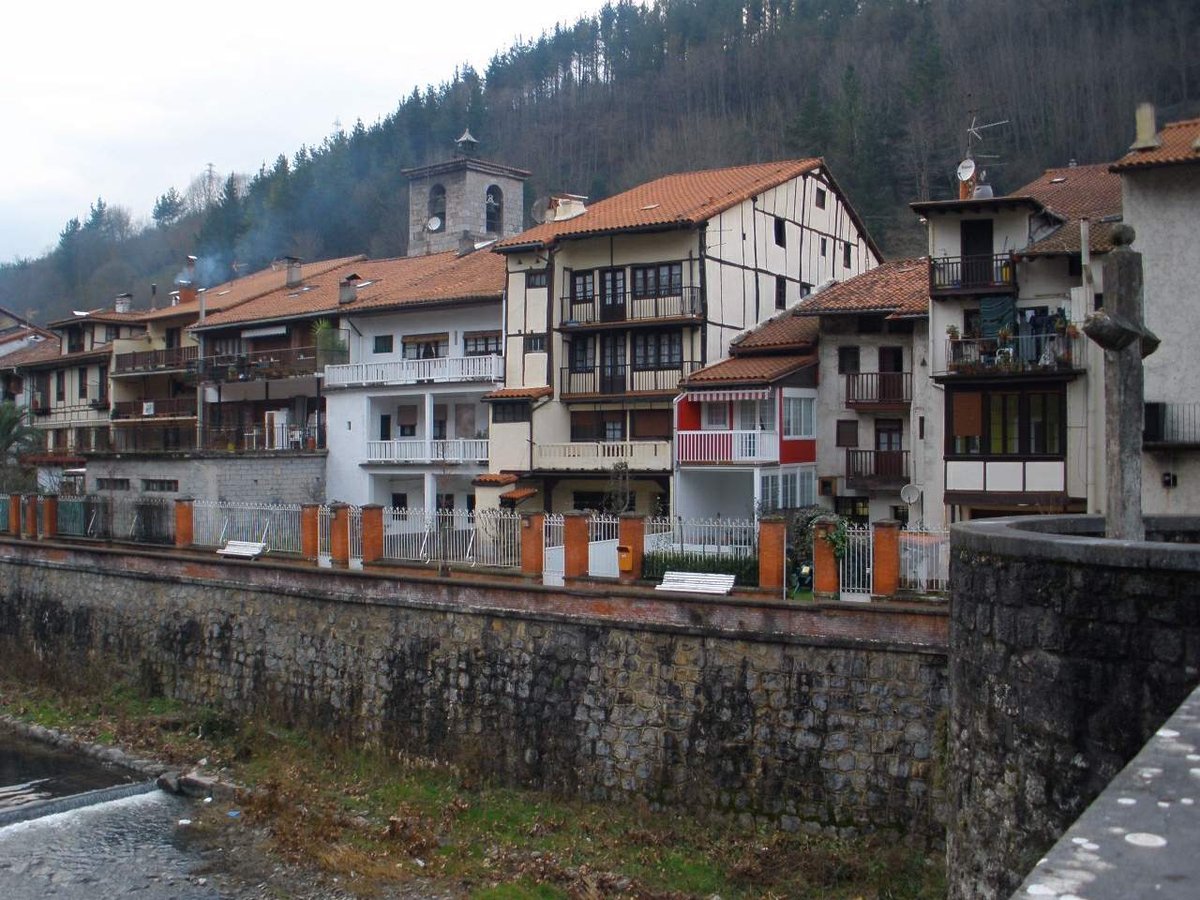
Nearby houses retain features typical of local architecture. Thick walls, in some cases wooden balconies or galleries, and steeply pitched roofs suited to frequent rain all form part of the visual identity. These details connect the buildings directly to the climate and to the practical demands of rural life.
Paths through meadows and woodland
The appeal of Berastegi becomes more apparent once beyond the small centre. Several tracks and footpaths link the scattered neighbourhoods across the valley. These are not long-distance routes. They began as working paths and still carry that character, even as they are now used for walking.
The surrounding woodland combines beech and oak with more recent plantations. Between these wooded areas lie open meadows where livestock can still be seen. In this part of Gipuzkoa, the latxa sheep is common, closely linked to the production of Idiazabal cheese, which holds a protected designation of origin. Many caseríos continue to maintain barns and small plots of cultivated land.
Some paths are narrow and can become muddy after rain. Good footwear is advisable, and the slopes may feel steeper than they appear on a map. The terrain demands a bit of attention, though it also reinforces the sense that these routes were shaped by daily work rather than leisure.
Local life and celebrations
Life in Berastegi continues to revolve largely around agriculture and livestock. Euskera, the Basque language, is frequently heard in the streets, especially among long-time residents, though Spanish is also spoken.
Local celebrations tend to gather around patron saint festivities and certain dates in the traditional calendar. During these events, rural sports and traditional music take centre stage. They are occasions primarily intended for the community itself rather than for drawing visitors from outside. The atmosphere reflects continuity rather than spectacle.
Visiting and getting there
Berastegi can be explored quickly in terms of its built centre. The village core can be seen in under an hour, though the more rewarding experience comes from spending extra time walking the nearby paths.
Weather conditions can change easily. Fog is common in the valley and rain can make some tracks slippery. Streets in the centre are narrow, so it is often more practical to leave the car where space allows and continue on foot.
The most direct access is from the N‑1, followed by local roads that descend into the valley. The journey from Tolosa or Andoain is short. Once in Berastegi, the simplest way to understand the place is also the most effective: park, then walk for a while among caseríos and meadows.