Full Article
about Ikaztegieta (Icazteguieta)
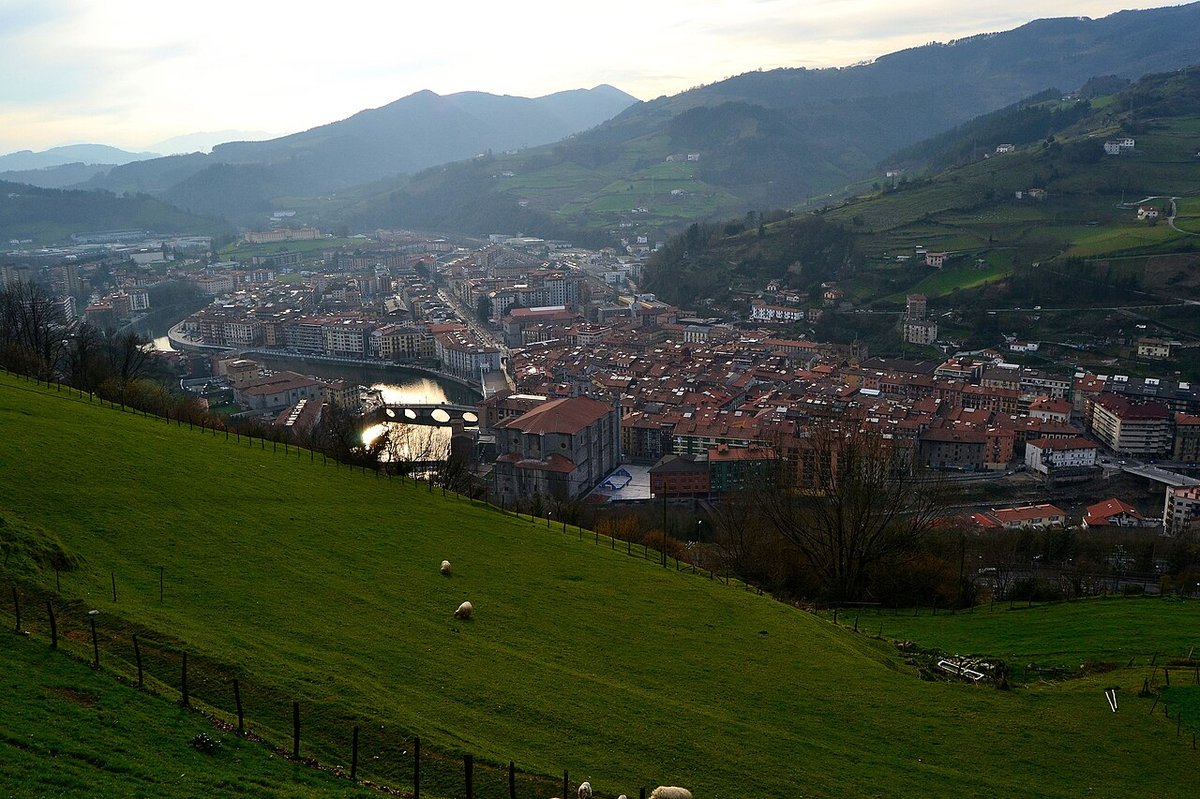
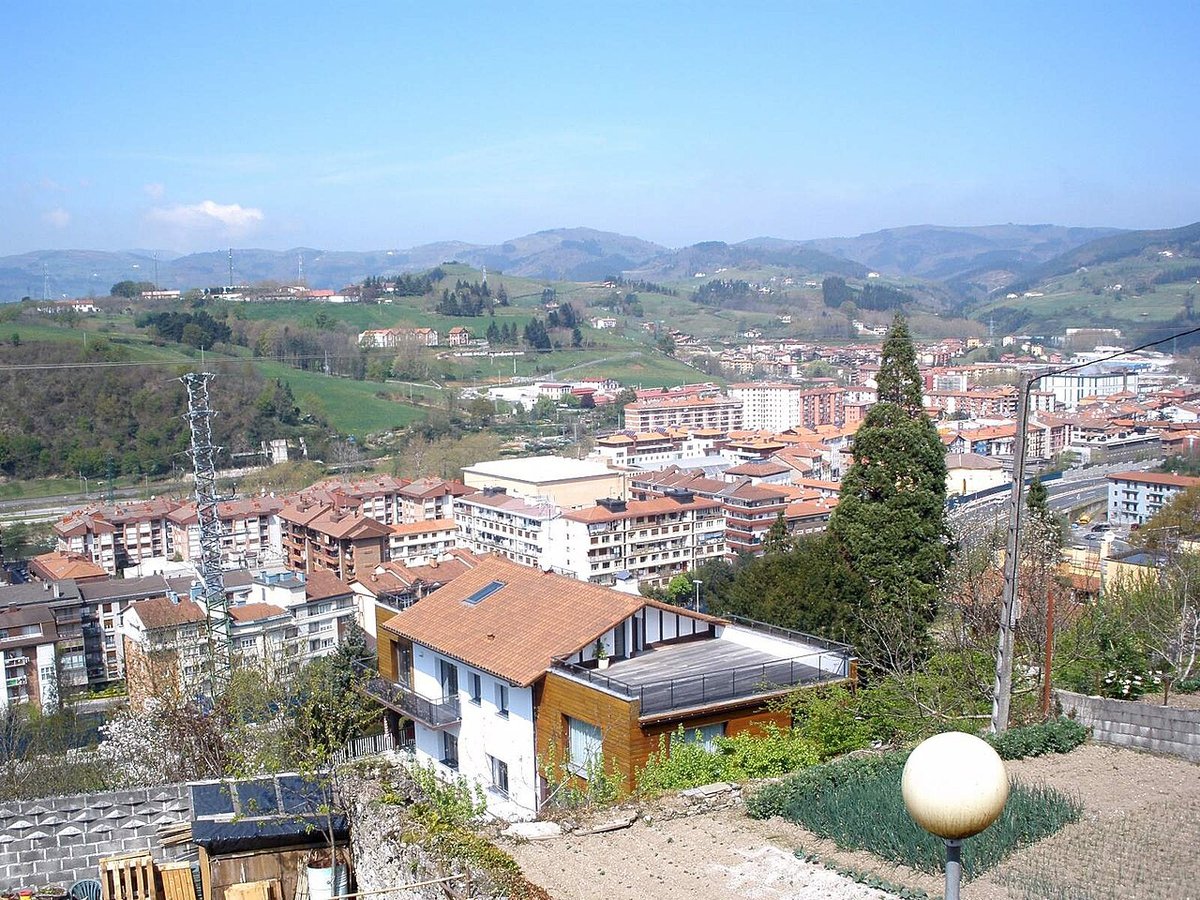
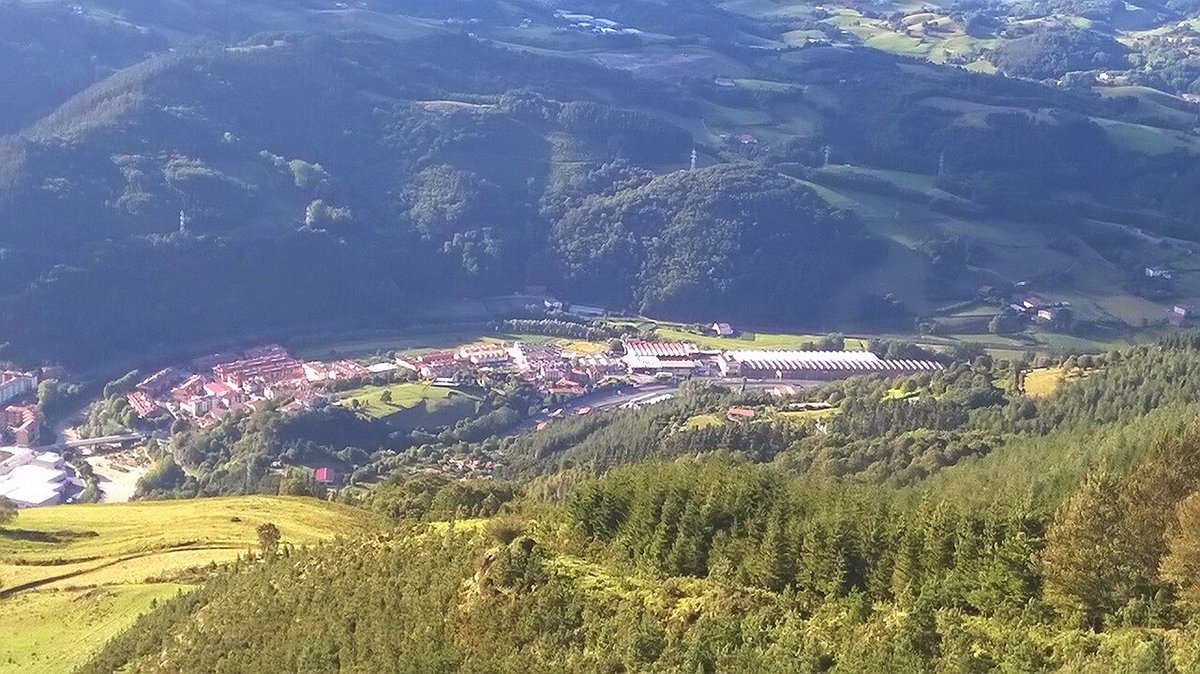
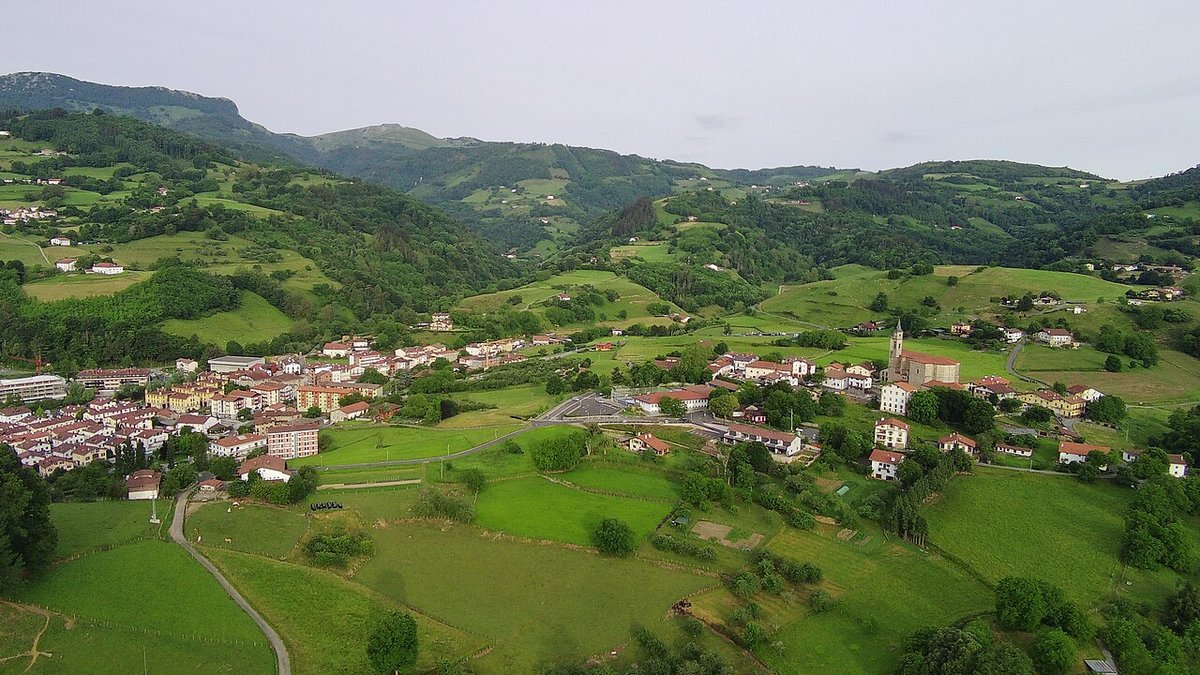
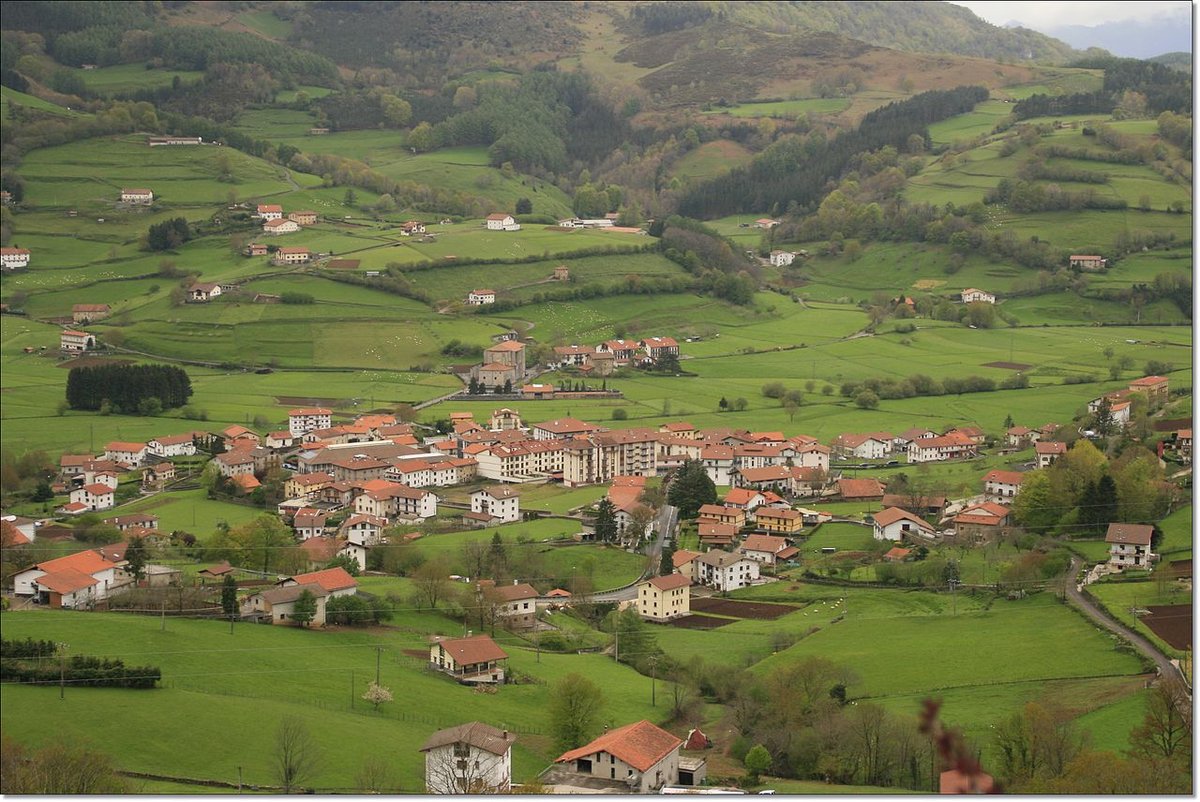
Deep green, farmhouses and nearby mountains with trails and viewpoints.
Ocultar artículo Leer artículo completo
The tractor driver raising two fingers from his steering wheel isn't being friendly. He's warning that the lane ahead is blocked by his mate reversing a livestock trailer into a farmyard. This is Monday morning in Ikaztegieta, and the rush hour involves sheep, not commuters.
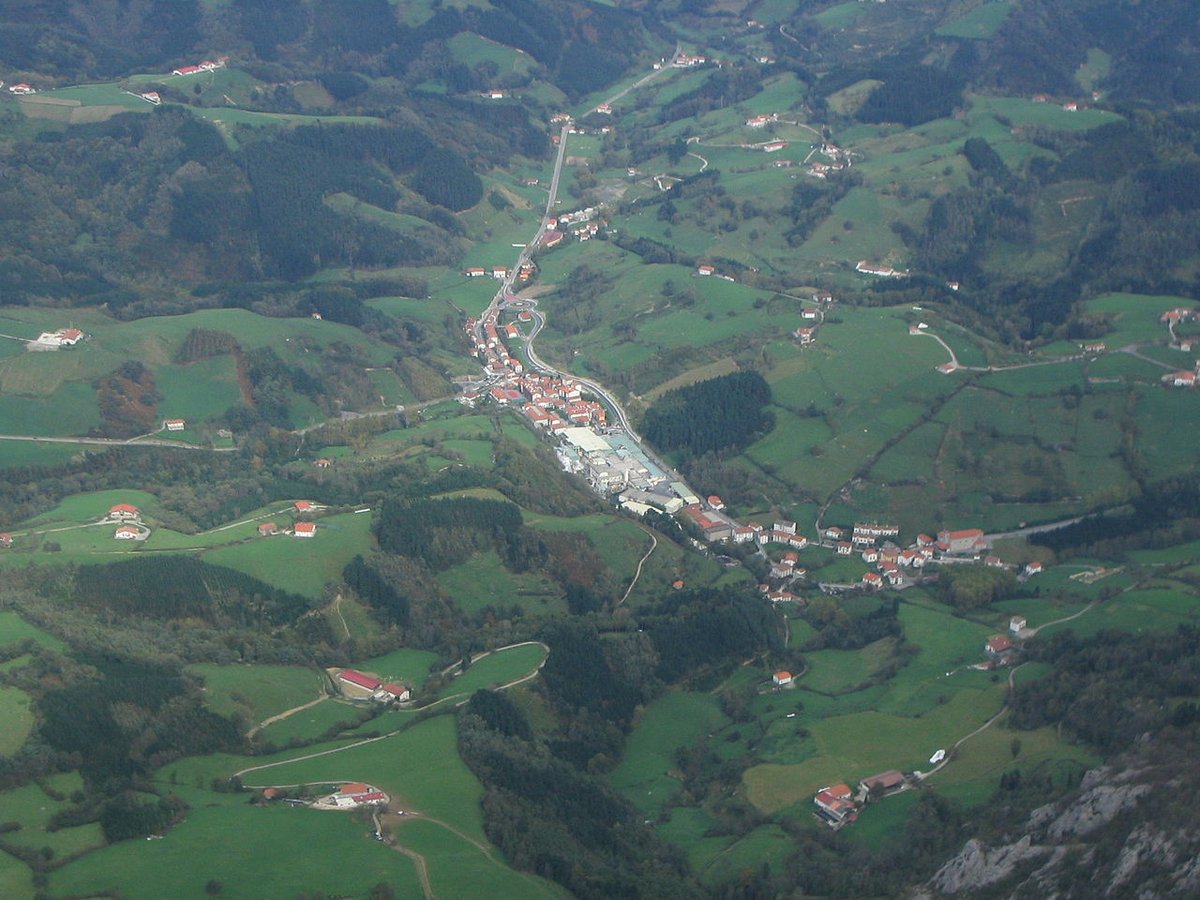
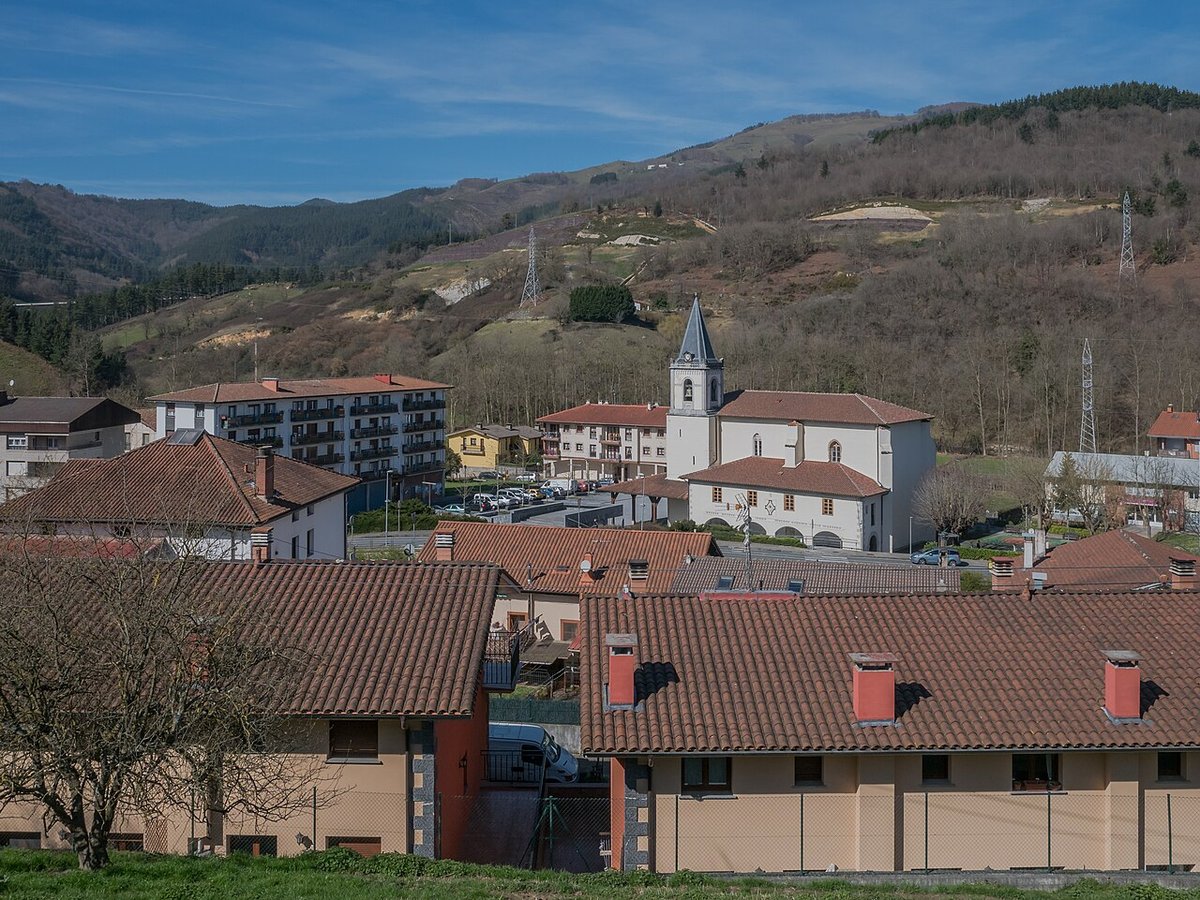
At barely 110 metres above sea level, this isn't one of those eagle's-nest Basque villages that require oxygen and a head for heights. Instead, Ikaztegieta sits squarely at the valley bottom where the Oria River straightens out after its contortions through higher ground. The location explains everything: workable land, manageable gradients, and a community that measures wealth in hectares of riverside meadow rather than medieval palaces.
What You're Actually Looking At
The name itself betrays the village's practical past. Ikaztegieta translates roughly to "place of lime kilns" – not the most romantic etymology, but an honest one. These kilns once supplied the mortar that built farmsteads across Gipuzkoa, and the charcoal that fired Basque foundries during the iron-working boom. Today, the industrial heritage survives only in place names and the occasional circular stone foundation disappearing under brambles.
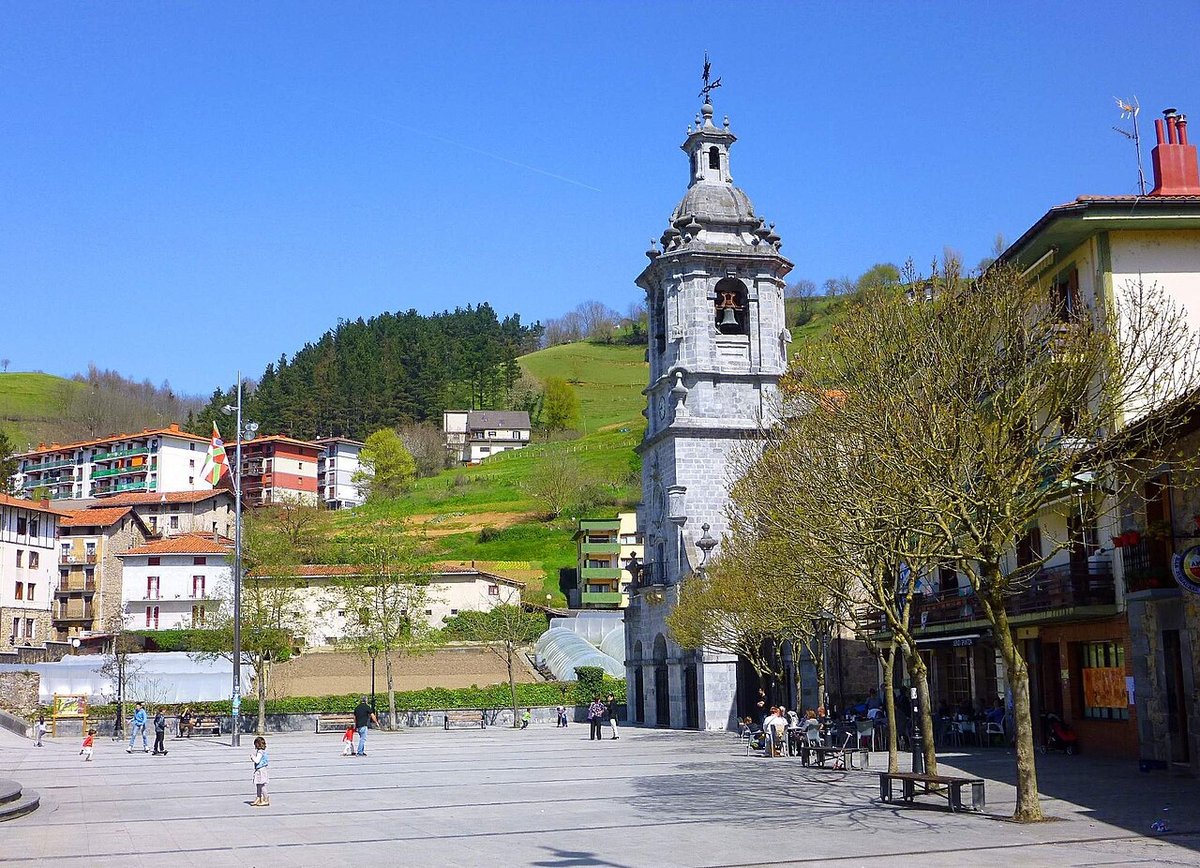
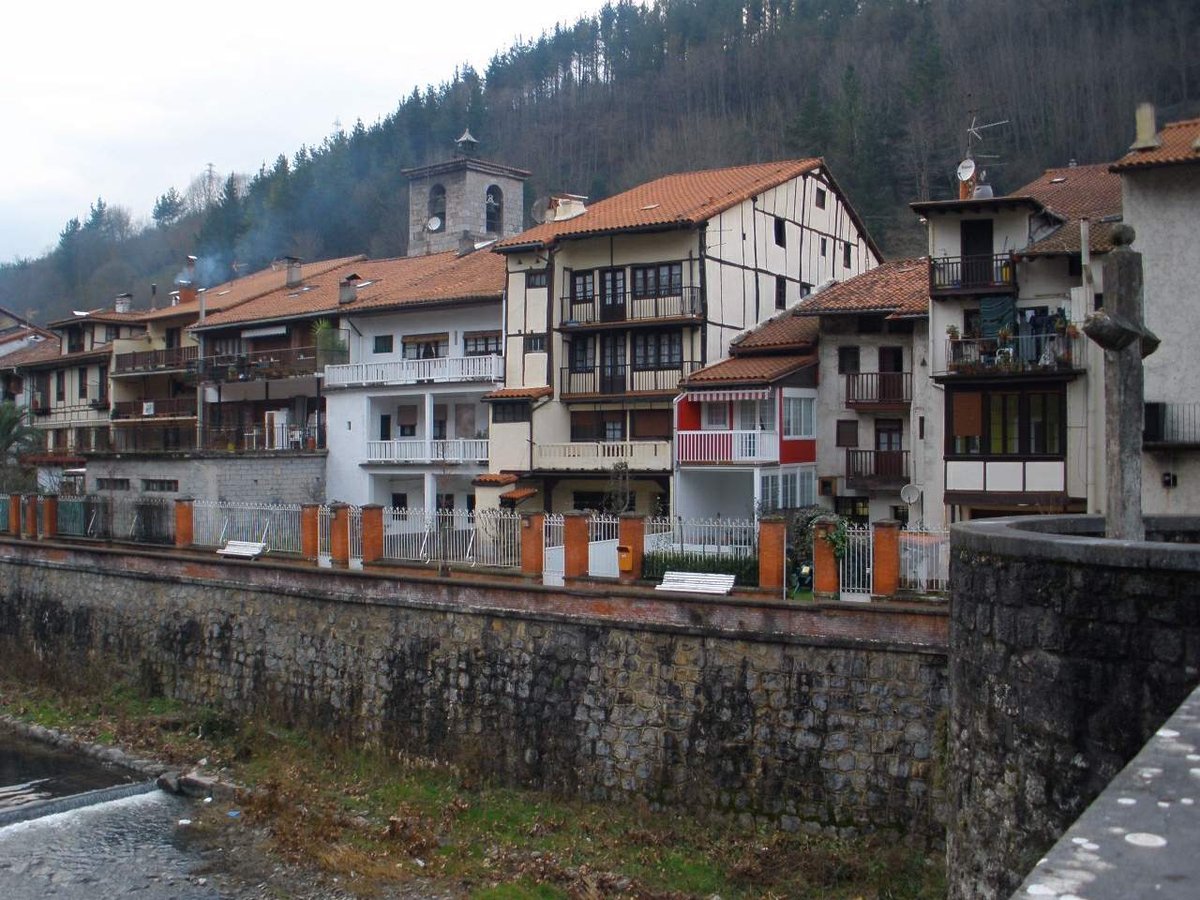
San Martín de Tours church won't feature in any architecture textbooks. Rebuilt piecemeal since the 16th century, it's a catalogue of whatever materials were cheap when the roof needed fixing. The bell tower leans slightly, not from artistic intent but because the ground underneath is essentially river gravel. Yet the building serves as an effective landmark when you're trying to work out which lane leads back to the main road – something that becomes surprisingly difficult after two hours of wandering between farmsteads.
Walking Into Someone's Office
The real geography lesson starts where the tarmac ends. Farm tracks radiate from the village centre like spokes, each leading to a cluster of baserri – the traditional Basque farmsteads that combine family home, barn and office in one stone structure. These aren't museum pieces. The smell of silage and the sound of milking machines leak from open doorways. One track leads past a dairy where Latxa sheep queue for morning milking, their milk destined for the protected-designation Idiazabal cheese that fetches £25 per kilo in London delicatessens.
Walking here requires a mental adjustment. Public footpaths exist, but they're working infrastructure first and leisure routes second. That perfectly proportioned stone bridge? Built so the farmer could get his tractor to the riverside meadows. The well-maintained track contouring around the hill? It's the school bus route for kids living in isolated farmhouses. The Basque Government has started adding waymarking, but coverage remains patchy. OS-quality maps don't exist – the best you'll find are 1:25,000 topographic sheets where rights of way are marked with the same line weight as private driveways.
When the Valley Weather Turns
The Atlantic climate that keeps these meadows emerald also delivers weather that would make a Cumbrian farmer reach for another jumper. Morning fog rolls up the valley with such reliability that locals have fifteen different words for various densities of mist. On clear days, the surrounding hills reveal themselves as the western foothills of the Pyrenees, though here they're called the Basque Mountains – less dramatic, but equally capable of generating their own weather systems.
Spring brings the practical advantage of dry tracks before the summer growth chokes the narrower paths. Autumn offers the year's most reliable walking weather, with September often delivering two-week stretches of settled conditions. Summer can surprise: while the Costa Brava swelters, valley-bottom humidity here turns paths into green tunnels where temperatures stay manageable. Winter rarely brings snow to village level, but the surrounding hills get enough to make farm tracks treacherous. When they freeze, the traditional practice of spreading wood ash from the fireplace provides grip – and explains why village doorways often feature neat piles of grey powder.
Eating Beyond the Village Limits
Ikaztegieta itself offers precisely one bar and no restaurants. The bar opens at 7am for farmers needing coffee before market, closes at 2pm for siesta, and might reopen at 5pm if the owner's daughter isn't busy with school activities. Plan accordingly. The nearest proper meal is a 10-minute drive towards Tolosa, where Casa Julián serves beef chops grilled over vine cuttings to a crust that would make a Gaucho chef weep. Their set lunch menu costs €18 including wine, but you'll need to order in Spanish – the waiting staff switch to Basque when discussing the day's specials.
For self-catering, Tolosa's Saturday market supplies everything from still-warming Idiazabal to seasonal mushrooms that local foragers sell from barrows. The market runs until 2pm sharp – stallholders start packing away at 1:45 regardless of potential sales. Sunday shopping requires forward planning; the Eroski supermarket on the outskirts opens until 1pm, after which your options are garage forecourt sandwiches or a 25-kilometre drive to San Sebastián.
Getting Here Without the Car
Public transport exists, but operates on agricultural rather than tourist timetables. The Euskotren line from San Sebastián terminates in Tolosa, where a twice-daily bus continues to Ikaztegieta. The 11:15 departure connects with the market, returning at 1pm sharp – giving you precisely 105 minutes to explore before you're stranded until 5pm. Driving makes infinitely more sense, though parking requires thought. The village centre features precisely three spaces designed for vehicles wider than a quad bike. Farm access tracks double as informal parking, but blocking someone's gateway while you photograph their 14th-century chapel will earn you a lecture in rapid-fire Basque that requires no translation.
The Reality Check
This isn't a destination that rewards checklist tourism. The church takes ten minutes to circumnavigate, there's no museum, and the only shop sells animal feed and welding supplies. What Ikaztegieta offers instead is a functioning rural economy where you can observe how modern Basques balance tradition with satellite broadband and automated milking systems. The surrounding network of farm tracks provides gentle walking through landscape that looks medieval but operates on 21st-century margins.
Come with realistic expectations and sensible footwear. The valley rewards those who understand that watching a farmer herd his cows past a 400-year-old chapel while conducting business on his mobile phone represents living heritage more authentic than any reconstructed village. Just remember to step aside when the tractor needs past – that two-finger salute isn't optional.