Full Article
about Orexa (Oreja)
Deep green, farmhouses, nearby mountains with trails and viewpoints.
Hide article Read full article
Morning mist and a different rhythm
Early in the day, when mist still hangs low over the meadows of Tolosaldea, tourism in Orexa tends to begin in near silence. A distant cowbell carries across the slopes, a car rolls slowly over gravel, and little else breaks the calm. Light filters through oak and beech trees, settling on the roofs of farmhouses that still hold the dampness of the night.
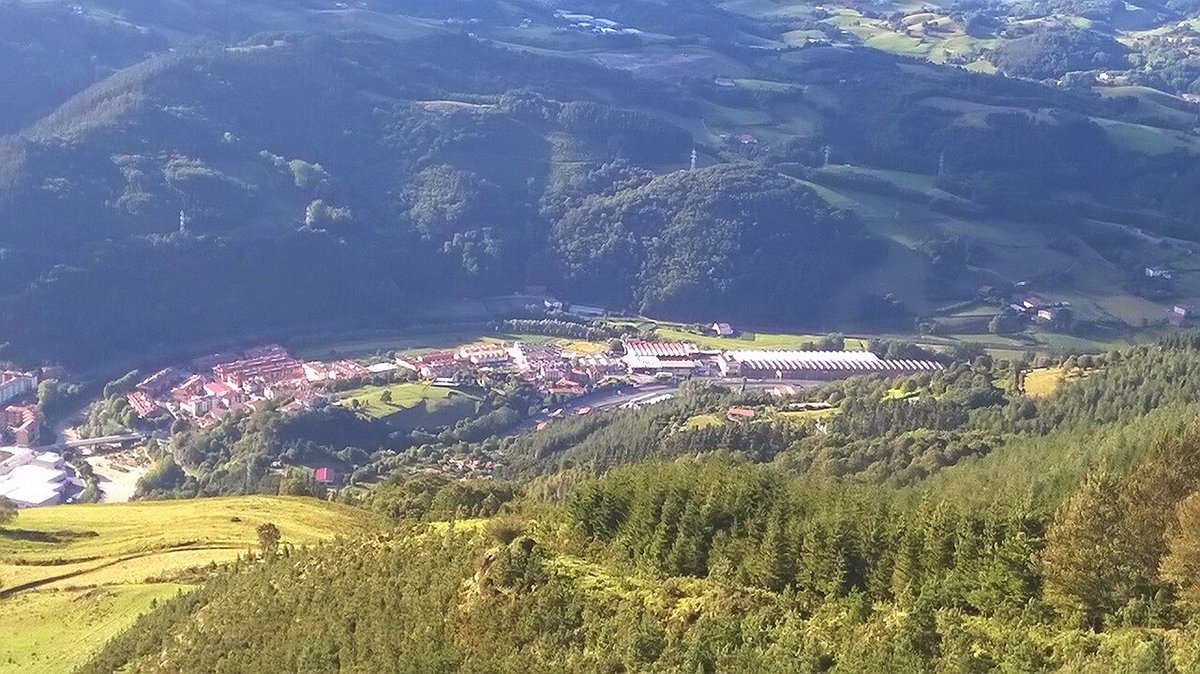
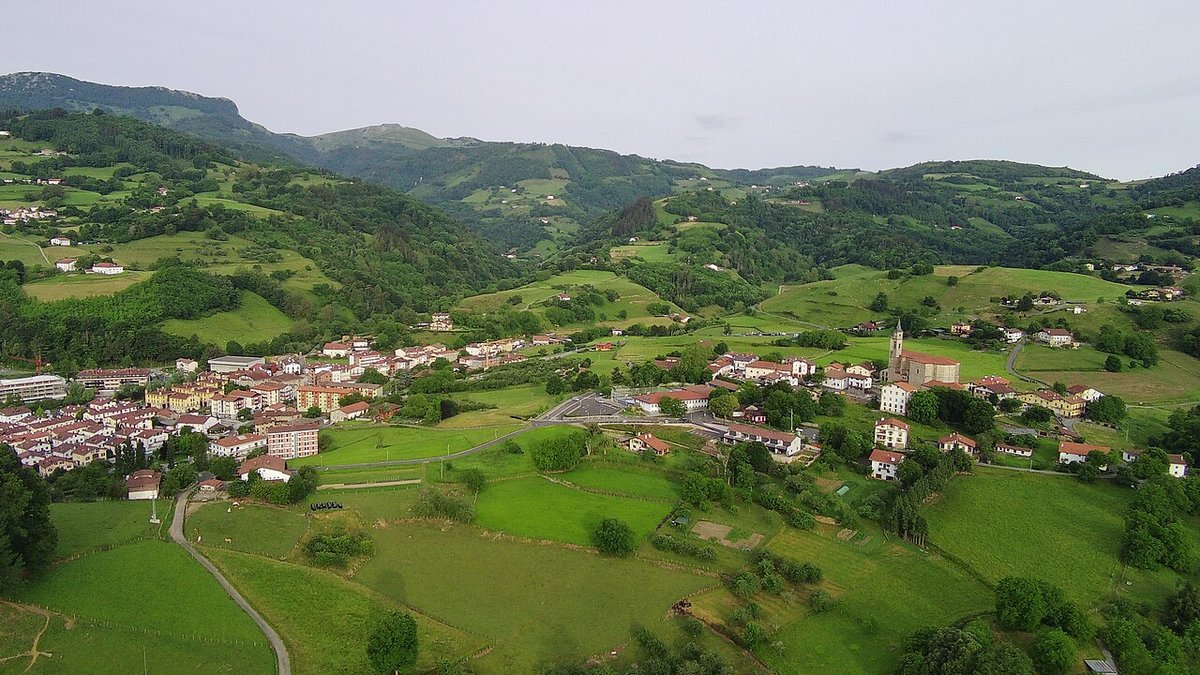
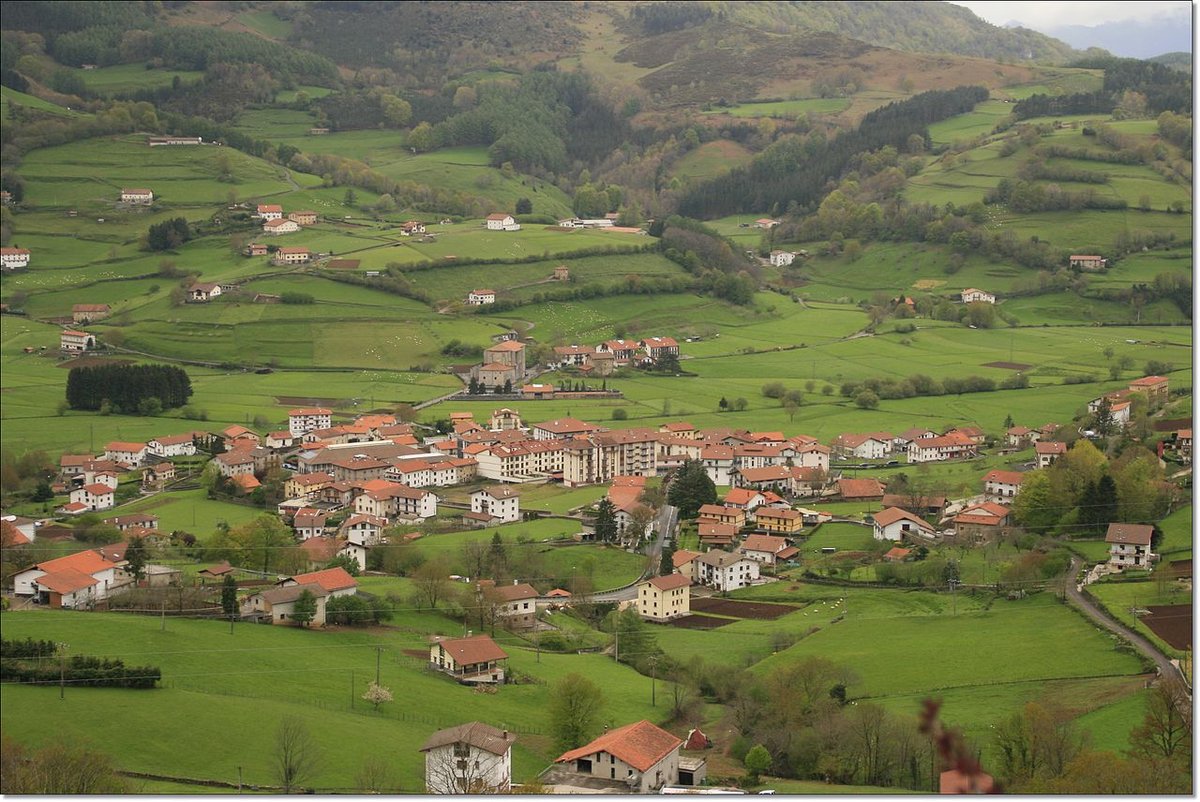
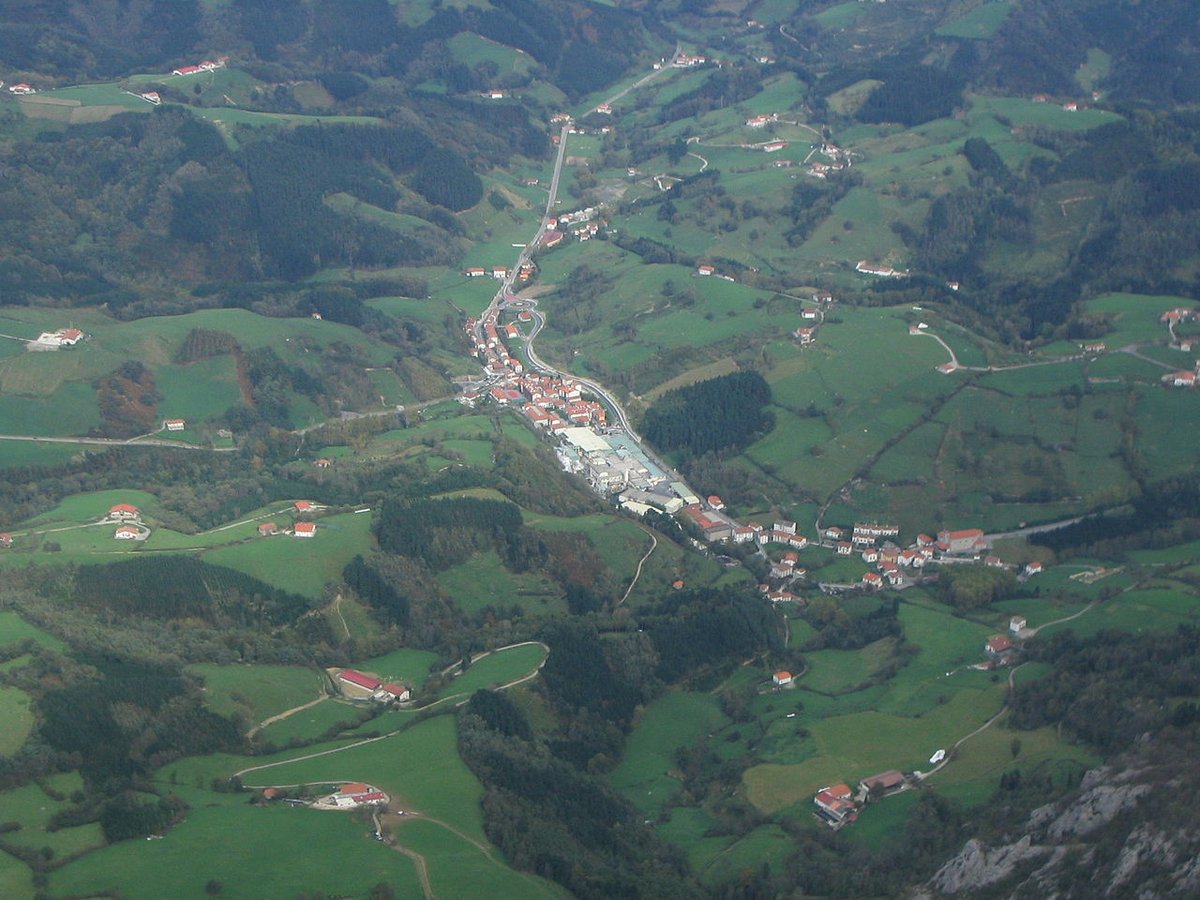
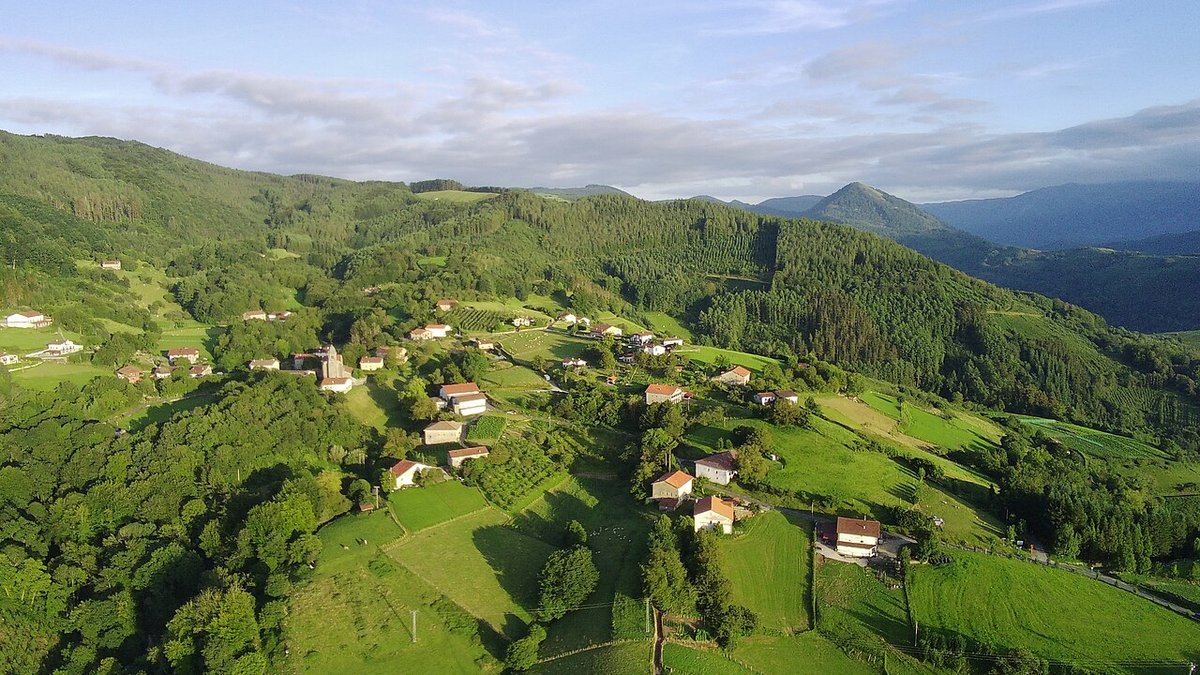
Orexa does not follow the layout many visitors might expect in towns across Gipuzkoa. There is no single main street where everything happens. Instead, houses sit apart from one another, scattered along the hillside. Narrow roads and agricultural tracks link them, rising and dipping between open pasture. In many places the woodland presses in so closely that it almost brushes the façades.
This dispersed layout shapes the whole experience of the place. Movement is slower, distances feel different, and the landscape is always present, never pushed to the edge.
The church on the slope
The church of San Esteban stands in one of the few slightly more open areas of the settlement. It is a simple stone building, with the restrained style common in rural churches across Gipuzkoa. Activity around it is limited for much of the day. A few nearby homes and the frontón, a traditional Basque pelota court, make up most of what surrounds it.
During the week, the space can feel completely empty. At times, the only interruption comes from the sharp echo of a ball striking the front wall when someone turns up to play.
From this point, the structure of Orexa becomes easy to grasp. Homes spread out across the hillside, paths fading into meadows, and the surrounding hills forming a constant backdrop. Nothing gathers into a centre in the usual sense; everything remains slightly apart.
Farmhouses and paths into the woods
The caseríos, traditional Basque farmhouses, show a familiar mix of materials. Ground floors are built with thick stone walls, while the upper sections often feature timber framing. Roofs are broad and practical, designed to cope with long, wet winters.
Many of these buildings are still tied to livestock farming. Tractors come and go along the narrow tracks, and dogs often keep watch from the entrances. The daily rhythm is shaped by this activity, even if it unfolds quietly.
Paths extend between the houses in all directions. Some begin as concrete tracks, others as dirt routes, and many gradually narrow into footpaths. A few cross open meadows where latxa sheep graze, a native Basque breed known for its presence in these landscapes. Others head straight into the forest.
When the ground is wet, which is common here, the soil darkens and turns sticky. Boots rarely stay clean for long. Mud is part of the experience rather than an exception.
On clear days, certain breaks in the woodland open up long views across the valleys of Tolosaldea. Higher peaks from the interior of Gipuzkoa appear in the distance, though they are often partially veiled by low cloud.
Walking without urgency
Getting around Orexa largely means walking. The aim is not so much to tick off sights as to move through a sequence of landscapes. A meadow leads to a small stand of beech trees, then perhaps to an isolated farmhouse where chickens wander freely across the track.
Local routes and agricultural paths climb towards nearby passes. These are not technical trails, but they involve steady inclines that shape the pace of any walk. Cyclists also make use of the narrow roads, although the short, steep slopes encourage a measured approach.
Rain changes conditions quickly. If it has rained the day before, extra time becomes necessary. Mud forms easily in shaded areas, and some descents turn slippery underfoot.
The experience remains consistent throughout: steady movement, close contact with the terrain, and an awareness that the landscape dictates the rhythm rather than the other way around.
Evening in the valley
As the day draws to a close, the light shifts quickly. Mist often settles back down over the meadows, softening outlines and reducing distances. The sound of water becomes more noticeable in the small streams that run through the valley.
At that time of day, subtle movement appears across the landscape. A roe deer may cross between trees, birds glide over small clearings, and sheep make their way back towards enclosures near the farmhouses.
Orexa is not a place defined by large viewpoints or sweeping panoramas. Its character works on a smaller scale. Much of what it offers can pass unnoticed if the pace is too fast. Attention tends to settle on details rather than grand scenes.
Before setting out
Orexa is a very small municipality, with just over a hundred residents. This becomes clear soon after arrival. There are no shops open throughout the day, and few services aimed at visitors passing through.
A practical approach is to organise the visit from Tolosa and arrive with water and something to eat, especially if planning to walk for several hours. Checking the weather also matters. When dense mist moves in, visibility on the local roads can drop considerably.
Footwear deserves a bit of thought. The intense green of the landscape comes with consistently damp ground for much of the year. Paths are easier to enjoy when that is taken into account from the start.
Orexa does not try to adapt itself to visitors. It keeps its own pace, shaped by terrain, weather, and long-standing rural activity. Those who adjust to that rhythm tend to find that the place reveals itself gradually, in quiet and often understated ways.