Full Article
about Barrika (Barrica)
Cantabrian Sea, cliffs and seafaring flavor in the heart of the Basque Country.
Hide article Read full article
Where the coast drops to the sea
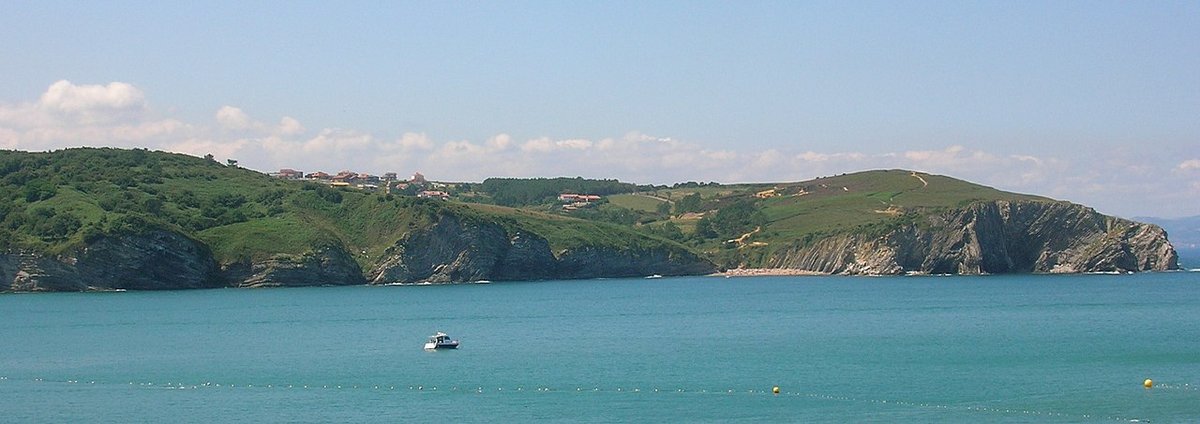
The day often begins with wind in Barrika. Early on, the Cantabrian Sea carries a heavy grey-blue tone, as if it has only just stirred. From the cliff edge, broad rock platforms stretch towards the water, long horizontal layers that the tide reveals and covers again each day.
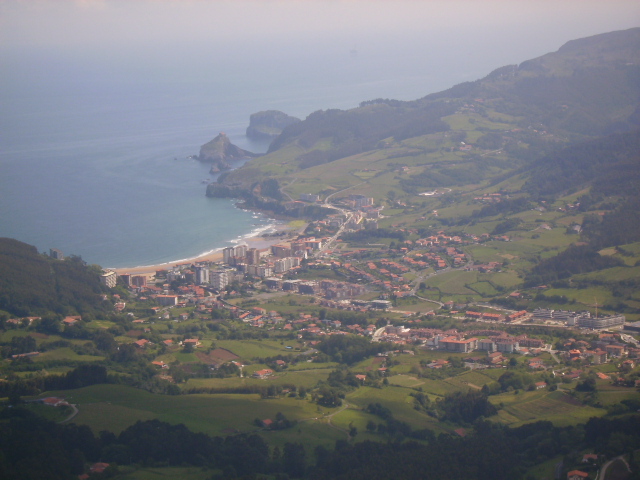
Barrika sits in Uribe Kosta, a short distance from Bilbao, yet the landscape shifts quickly on arrival. The ground falls away towards the sea and the coastline breaks into walls of rock where the wind tends to blow hard. When gulls pass, the sound arrives in two parts: first the air in their wings, then the удар of water against the slabs below.
The beach and its rock platforms
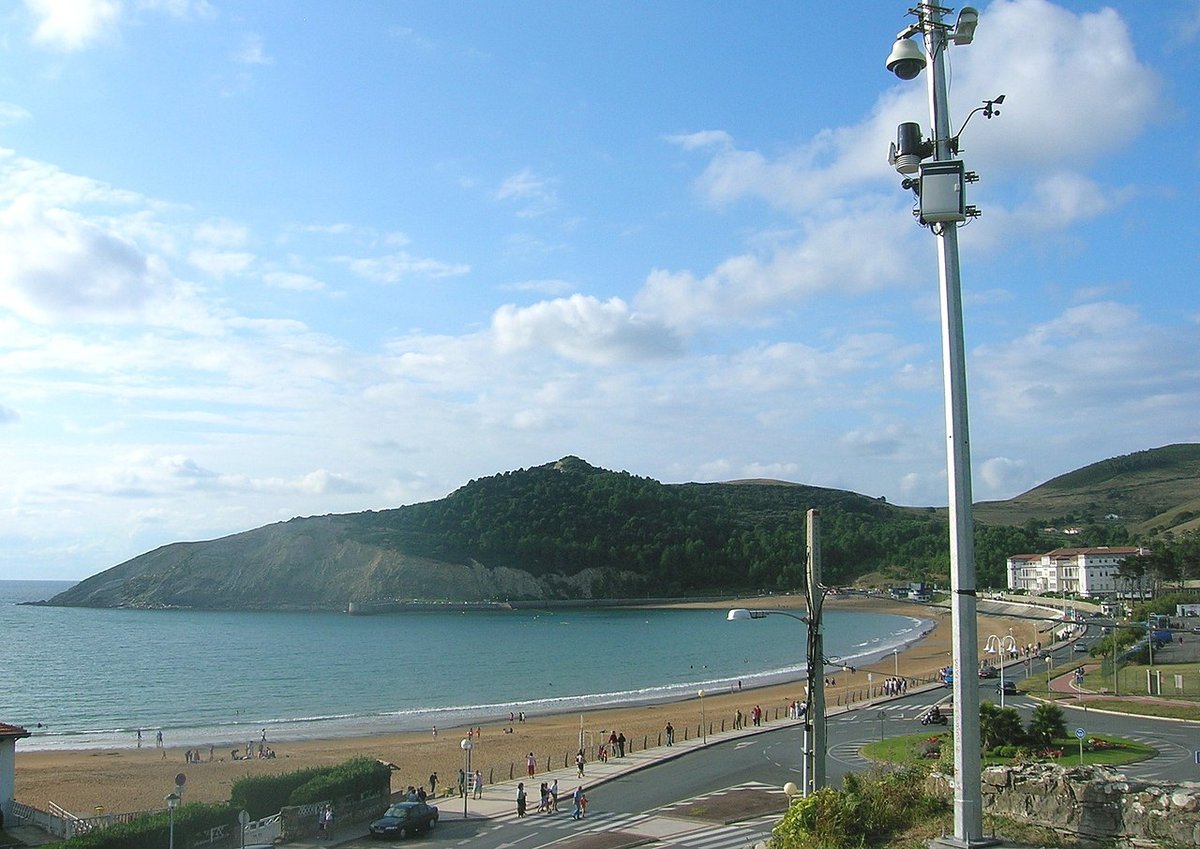
Barrika’s beach is narrow, set tightly between cliffs. At low tide, the rock surfaces appear and form the coastline’s most recognisable scene. These are smooth layers, sometimes scored by parallel grooves, at other times lifted into gentle ripples.
Walking here calls for care. Some areas are coated with algae and wet rock becomes slippery very quickly. Good footwear helps, and it is sensible to check the state of the tide before heading down.
When the sea pulls back far enough, the place changes completely. The platforms resemble natural paths leading out towards the water, while the waves break further away. In the cracks, small pools remain, with crabs moving through them and dark strands of seaweed left behind.
The flysch of Barrika
This stretch of coast forms part of the flysch, a sequence of sedimentary layers that can be seen here with unusual clarity. The lines lie like open pages, tilted towards the sea, shaped by millions of years of pressure and geological movement.
No background in geology is needed to notice the details. A slow walk reveals how each layer differs from the next. Some surfaces appear almost flat; others show soft folds or fractures that the water gradually widens.
At high tide, many of these structures disappear beneath the sea. That is why it is worth checking tide times before visiting the area.
A viewpoint at San Pelayo
Higher up, on an open section of cliff, stands the ermita de San Pelayo. The spot works as a natural balcony over the coast. On clear days, the line formed by Gorliz and Plentzia can be seen to the east.
The wind usually arrives clean from the sea and moves through the short grass along the path. People often sit here for a while without speaking, watching the light shift across the water.
Walking the cliff paths
Paths leave Barrika and follow the cliff edge towards nearby municipalities. They are not always wide, and some sections narrow or turn muddy after several days of rain.
The ground mixes earth, compacted sand and grass. In winter, it helps to allow extra time, as mud appears quickly in the most trodden areas.
Surfing is part of the scene as well. When the swell is right, boards can be seen waiting beyond the break, though the seabed here is rocky and demands experience.
When to go
Barrika changes noticeably over the course of a day. Early morning tends to be quieter, with less wind. By evening, low light brings out the relief of the rock and the sea darkens gradually.
In summer, the car park near the beach fills up easily, especially at weekends. Anyone who wants to walk calmly across the rock platforms should arrive early and aim for a falling tide.
After several days of rain, some paths become slippery. On those days, it is more sensible to stay at the cliff viewpoints.
A stretch of coast open to the wind
Barrika does not revolve around monuments or a large historic centre. Its focus lies in this strip of coastline, where the sea strikes the rock layers day after day.
Photographs seen online often show the flysch platforms from above, with lines running out into the water. Being there feels different. The constant wind, the dry удар of waves and the salt carried in the air all stand out more than any image.
Sometimes it is enough to walk a few minutes along the cliff edge and stop. The sea takes care of the rest.