Full Article
about Azkoitia (Azcoitia)
Between mountains and sea, Basque tradition and good food in every square.
Hide article Read full article
The taste that sets the tone
The smell of toasted maize reaches you before you even cross the first frontón. It comes from talo, a thick, griddle-cooked flatbread that people here treat as casually as bread. In Azkoitia it does not arrive styled for effect or dressed up for photographs. It is handed over wrapped in paper, usually filled with txistorra, a fresh Basque sausage, like an improvised sandwich. That is exactly what it is meant to be: practical, filling food rather than something designed to be admired.
This first impression says a lot about the place. Azkoitia does not try to perform for visitors. Daily life runs at its own pace, and food follows the same logic: straightforward, tied to habit, and rooted in what people actually eat rather than what might look good from afar.
Frontons, stone and a quiet sense of identity
Azkoitia has the kind of presence that does not need to announce itself. Basque pelota is not staged here as a cultural display for outsiders. It is part of everyday routine. Frontons, the courts where the game is played, are scattered across the town, and more importantly, they are used. Around midday it is common to see children playing quick matches, treating the space much like a school playground.
Local history also connects with a much better-known figure. The Torre Balda, a solid medieval tower that looks as though it belongs in a historical drama, was owned by the family of the mother of San Ignacio de Loyola. Azkoitia lies just a few kilometres from Azpeitia, where the saint was born, so the link to his family appears frequently when you start looking into the town’s past. It is not presented with grand gestures. It simply forms part of the background, another layer in a place where history and daily life sit side by side.
Santa María la Real and the weight of stone
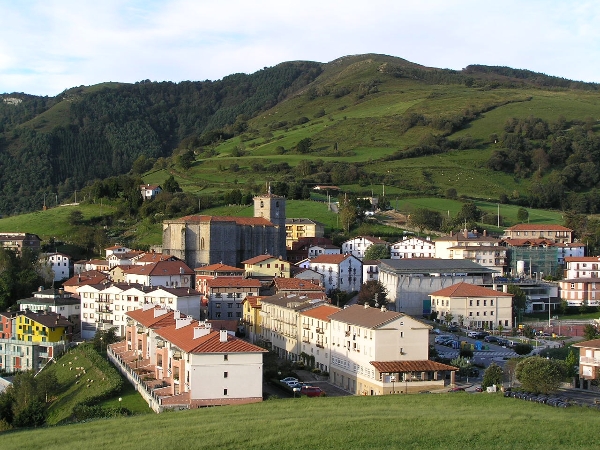
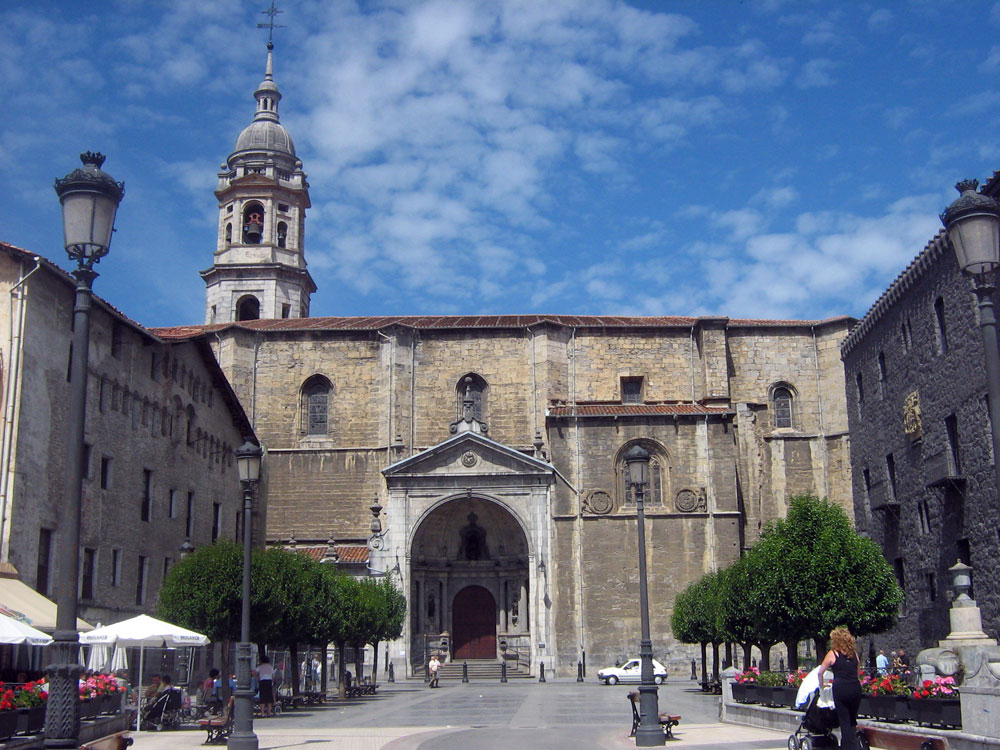
Santa María la Real is one of those churches that makes visitors lower their voice without being asked. The interior is built in heavy stone, with tall columns and a slightly dim atmosphere typical of many churches in Gipuzkoa. No specialist knowledge is needed to notice the sense of scale. The building imposes itself quietly.
Inside, the historic organ often draws attention. When it is played, whether during a rehearsal or a concert, the entire space shifts. Sound fills the stone interior in a way that changes how the church feels. If there is no music, the visit tends to be brief. It does not take long to walk through, and before long attention moves elsewhere.
That “elsewhere” is often the table. Many people come to Azkoitia for its food as much as for anything else. Txuleta, a large T-bone steak cooked over a grill, is almost an institution in this inland part of Gipuzkoa. The cut is thick, the outside well seared, the centre left red. It usually arrives with roasted peppers and very little else. There is no need for more when the main ingredient carries the weight of the dish.
Along the Urola, the valley’s old route
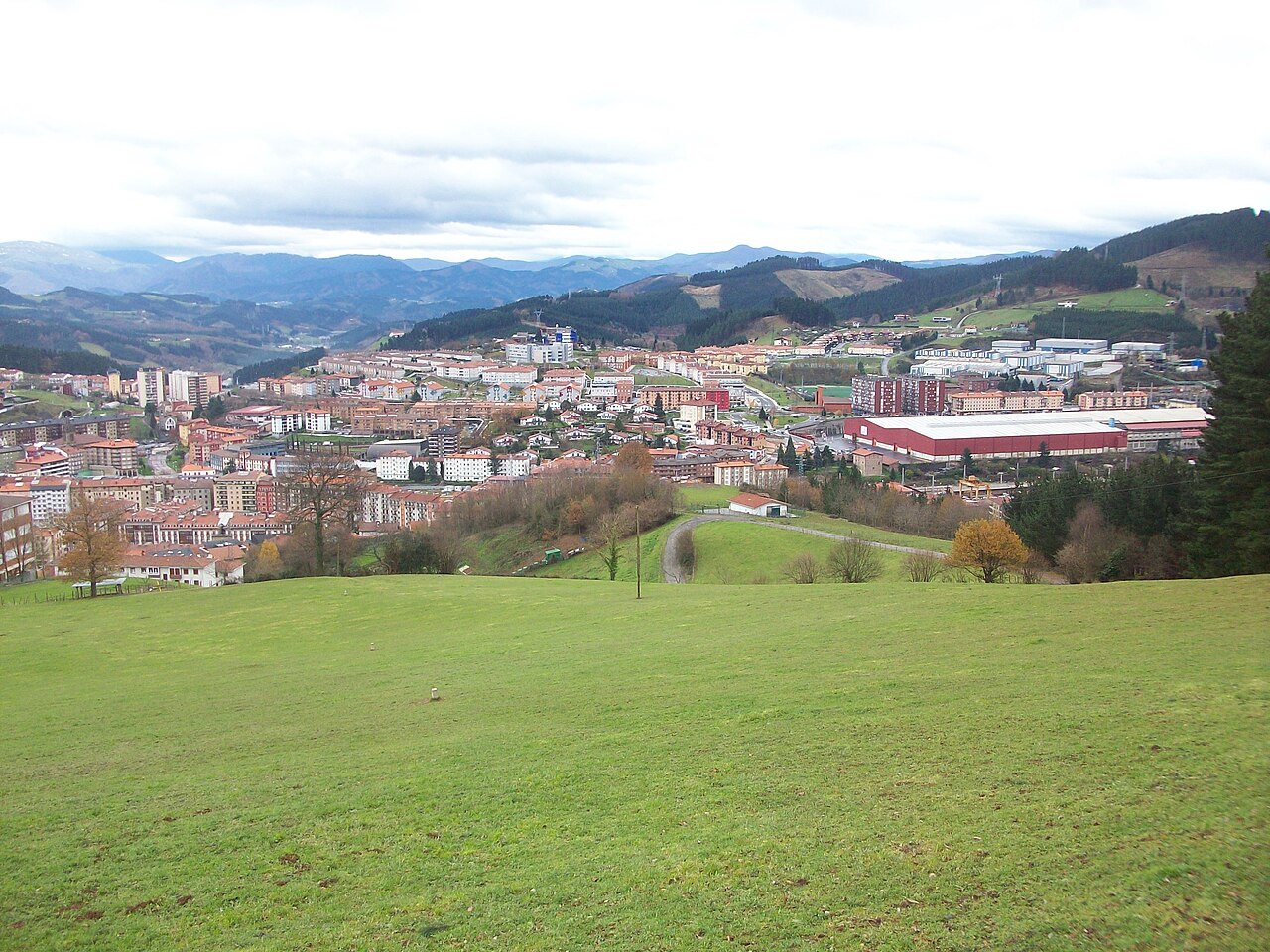
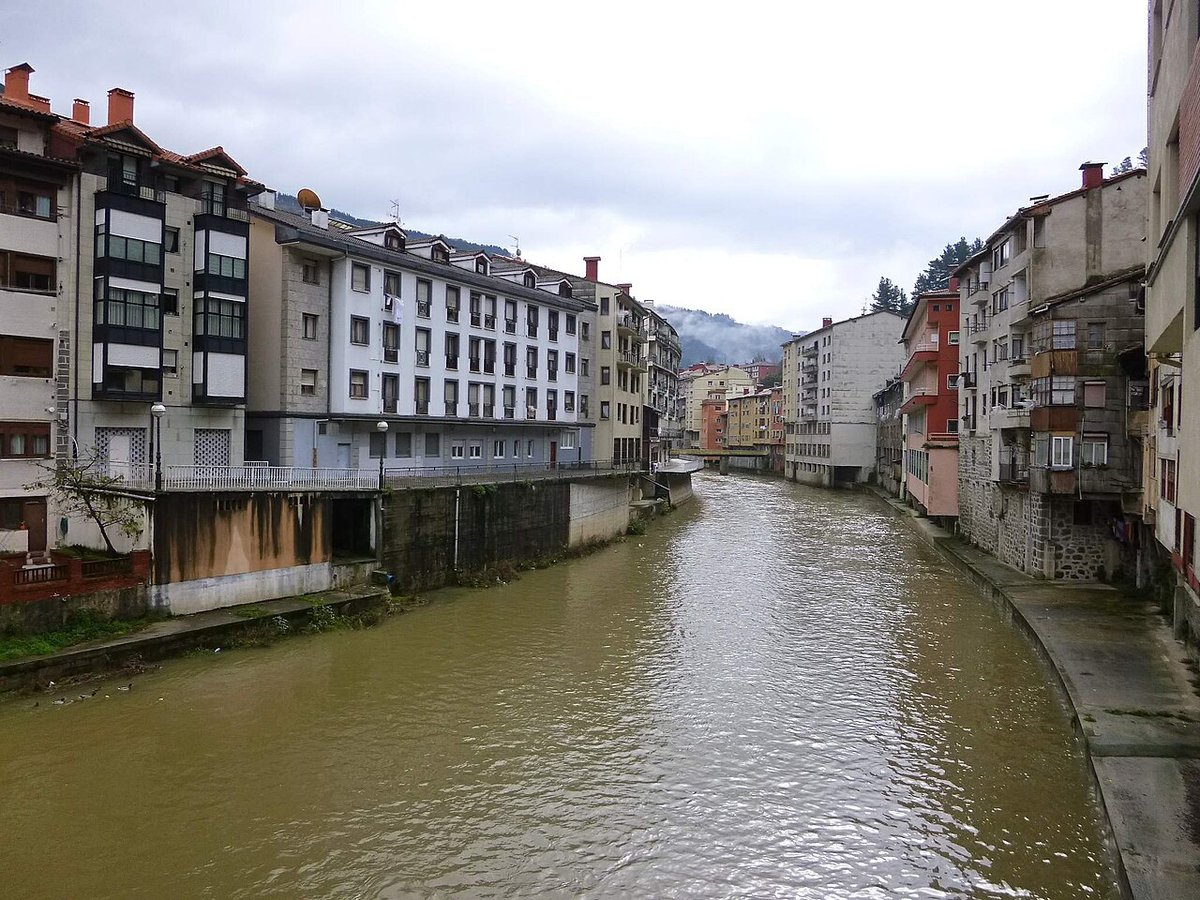
Before cars and modern roads reshaped movement through the area, the River Urola was a key route along the valley. Materials and goods travelled along this corridor, linking towns such as Azkoitia and Azpeitia. Today the river appears much calmer, but the path that follows it remains in use.
The route between the two towns is one that people return to again and again. It is comfortable enough for walking or cycling, without demanding too much effort. Along the way there are traces of the past: former industrial areas, a few mills, and scattered neighbourhoods that break up the landscape.
At some point, it is almost expected that someone older on an electric bicycle will glide past, climbing slopes with an ease that feels slightly unfair. It gives a sense of continuity. Many of the people using this route have spent their lives moving through the same valley, long before it became a place for leisure walks.
Industry, memory and the boina
One of the images many locals associate with Azkoitia is the old chimney of the former Jausoro beret factory. For decades, the production of boinas formed part of the town’s economy, as it did in other parts of Gipuzkoa. Industry shaped daily life in a way that is still remembered.
That industrial presence no longer has the same weight, yet the boina has not disappeared. It continues to appear in everyday scenes. During local festivities or community gatherings, it is not unusual to see older residents wearing one. There are even occasions dedicated to this symbol, reflecting how closely it remains tied to the area.
The connection is not presented as nostalgia alone. It sits somewhere between memory and habit, visible without being forced.
A simple way to approach Azkoitia
A morning visit works well for getting a sense of the town. The square by the Town Hall provides a natural starting point, a place to get oriented before walking through the urban centre at an unhurried pace.
From there, Santa María la Real is close enough to reach easily. A stop at one of the frontons adds another layer, especially if there is a game in progress. Watching how casually the space is used says more than any explanation could.
Food naturally finds its place in the plan. Choosing somewhere that handles the grill properly and ordering txuleta to share, even in a small group, fits with local habits. Portions here tend not to be restrained.
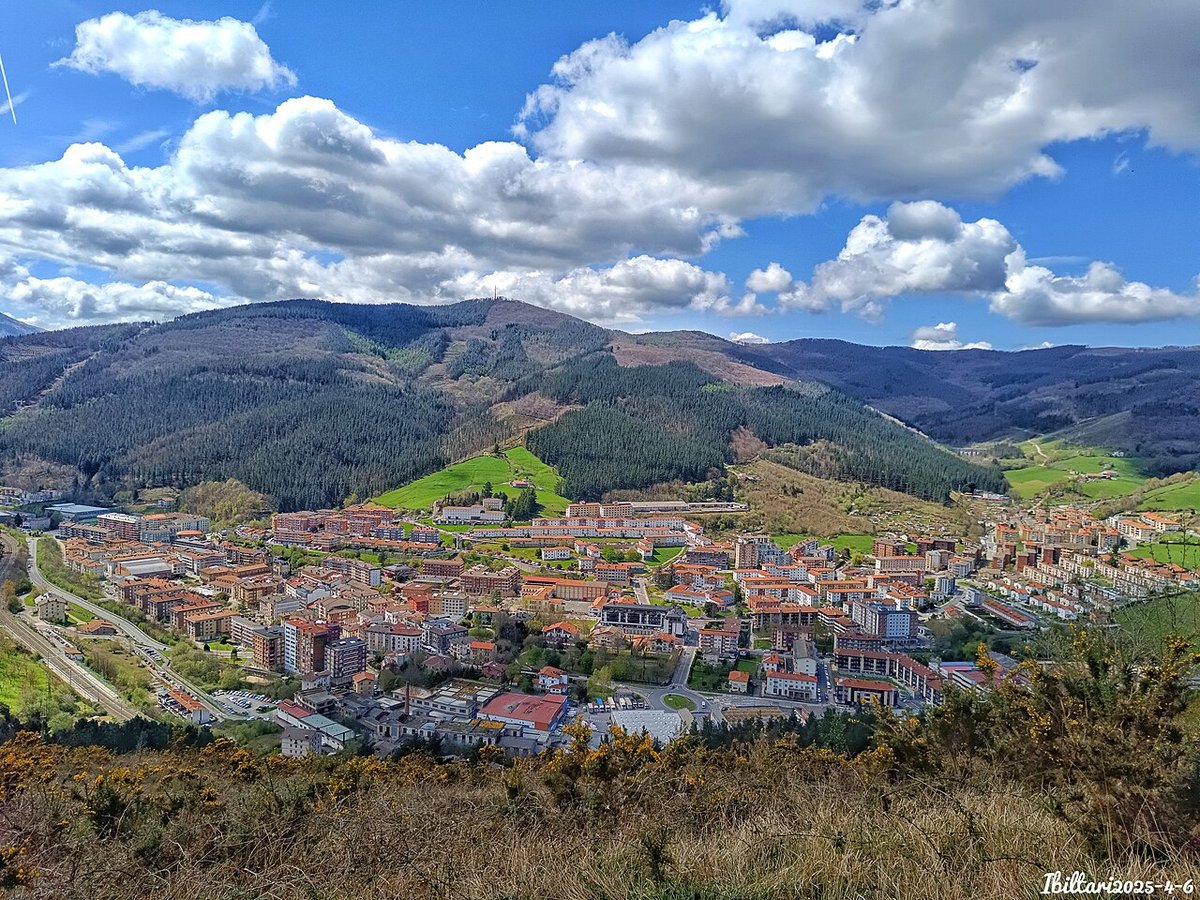
For those who feel like stretching their legs, the foothills of Izarraitz are nearby. There is no need to reach the summit. A short walk is enough for views of the valley to begin opening up.
Azkoitia is not the kind of place that reveals itself in a single glance. It works more like a town where everyone seems to know each other. You walk, observe everyday routines, hear the sharp echo of a pelota striking the frontón wall, and gradually understand the rhythm. It can be covered comfortably in half a day, yet it leaves the impression of having seen a part of Gipuzkoa that remains closely tied to how people actually live.