Full Article
about Getaria (Guetaria)
Cantabrian Sea, cliffs and seafaring taste in the heart of the Basque Country.
Hide article Read full article
A harbour that wakes before the light
Tuna reach the harbour before sunrise. At that early hour, when nearby Zarautz is still half asleep, activity is already underway in Getaria’s fish market. This is not something arranged for visitors. It is the reason this port on the Gipuzkoan coast has existed since the Middle Ages.
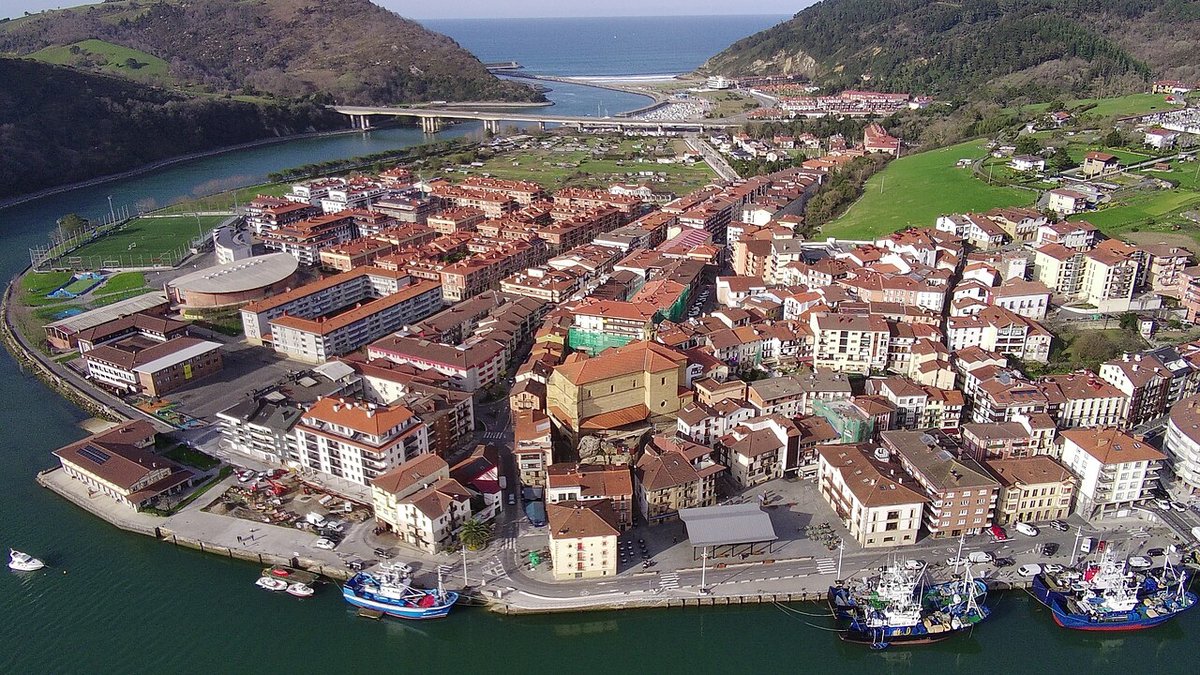
In the 13th century, Alfonso VIII granted a charter to the settlement growing beside Monte San Antón, the small island whose outline from a distance resembles a mouse resting on the Cantabrian Sea. From that moment, the town developed in close connection with the harbour, shaped by the demands of the sea rather than by outward appearance.
Streets between slope and water
When the charter was granted in 1209, the town had little room to expand. It settled into the narrow space between hillside and shoreline, and that constraint still defines the layout today. Parallel streets run along the old quarter, adapting to the incline with small detours and changes in level.
Walking through the historic centre makes the medieval structure easy to read. Stone houses stand in rows, their main façades facing the sea. For centuries, the sea was the town’s workplace.
In 1397, the General Assemblies of Gipuzkoa met in the church of San Salvador. At the time, the provincial government as it exists today had not yet taken shape. The choice of Getaria made sense. It was one of the main ports for an inland territory that produced iron and wheat, and ships departed from here towards northern Europe.
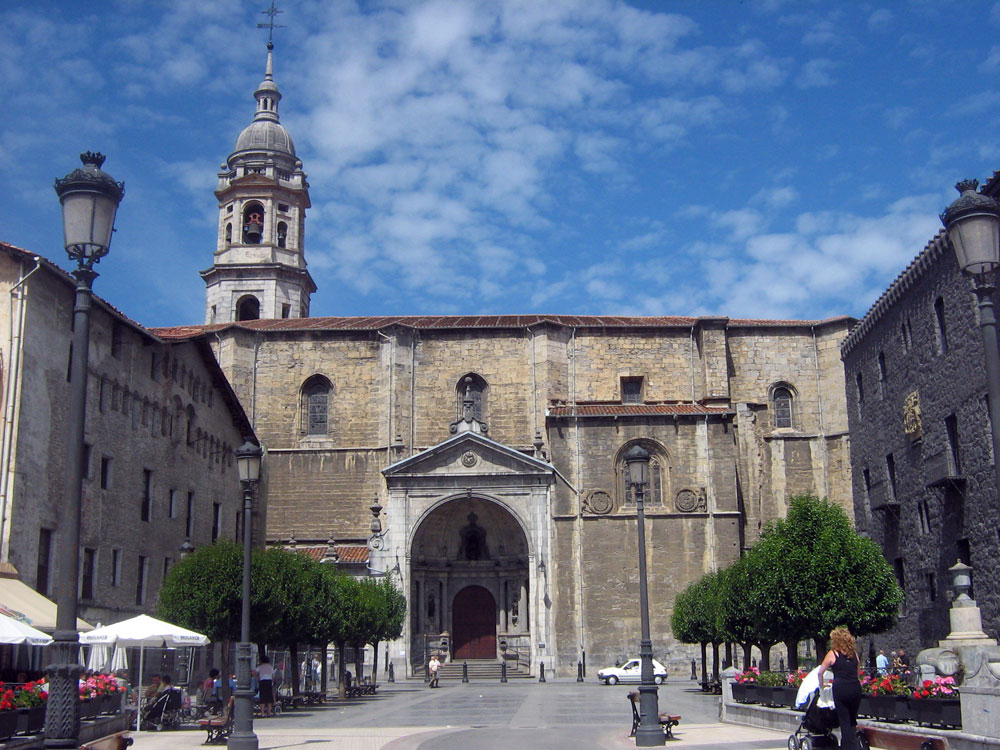
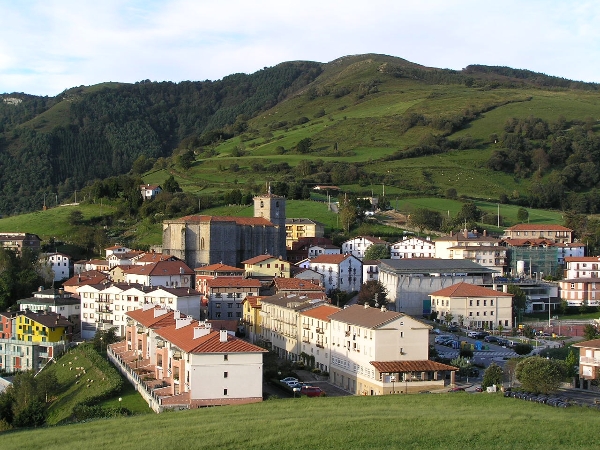
The church of San Salvador, built in the 14th century and later modified, has a solid, almost austere presence that feels unusual for a coastal setting. In the atrium, there is a reference to Juan Sebastián Elcano, who was born in Getaria and took part in the expedition that completed the first circumnavigation of the globe. Beneath the church begins the Katrapona, a passageway that descends towards the harbour. When the tide allows, it can still be used. Traditionally, it linked the quay with the church, a practical route between daily work and religious life.
Txakolí and anchovy
Wine has been part of this coastline for centuries. Documents from the 16th century already mention wines produced around Getaria. The txakolí made here today belongs to a denomination of origin established in the late 20th century to protect vineyards close to the sea.
The vines grow on well-oriented slopes and are raised above the ground on high trellises. This method helps to reduce humidity and limit the effect of salty sea air. The result is a light, acidic wine, typically poured from a height when served locally.
Anchovy completes the economic landscape of the town. During the bocarte season, fishing boats leave before dawn and return by mid-morning. The fish is cleaned, salted and left to mature for months before being packaged. The process is manual and has been passed down through generations.
In some streets near the harbour, the scent of curing fish is noticeable. It is part of everyday life here rather than something staged, a reminder that the town’s traditions are still active.
Up to Monte San Antón
Monte San Antón was once separate from the town. It became connected at the beginning of the 20th century, when a breakwater was built that now links it to the harbour. From there, a path leads upwards. The climb is short but steep enough to slow the pace.
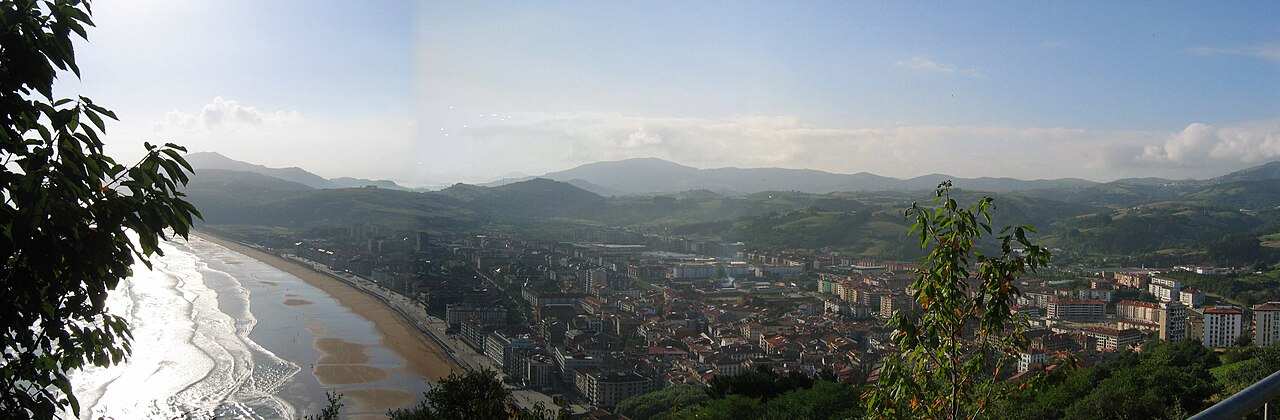
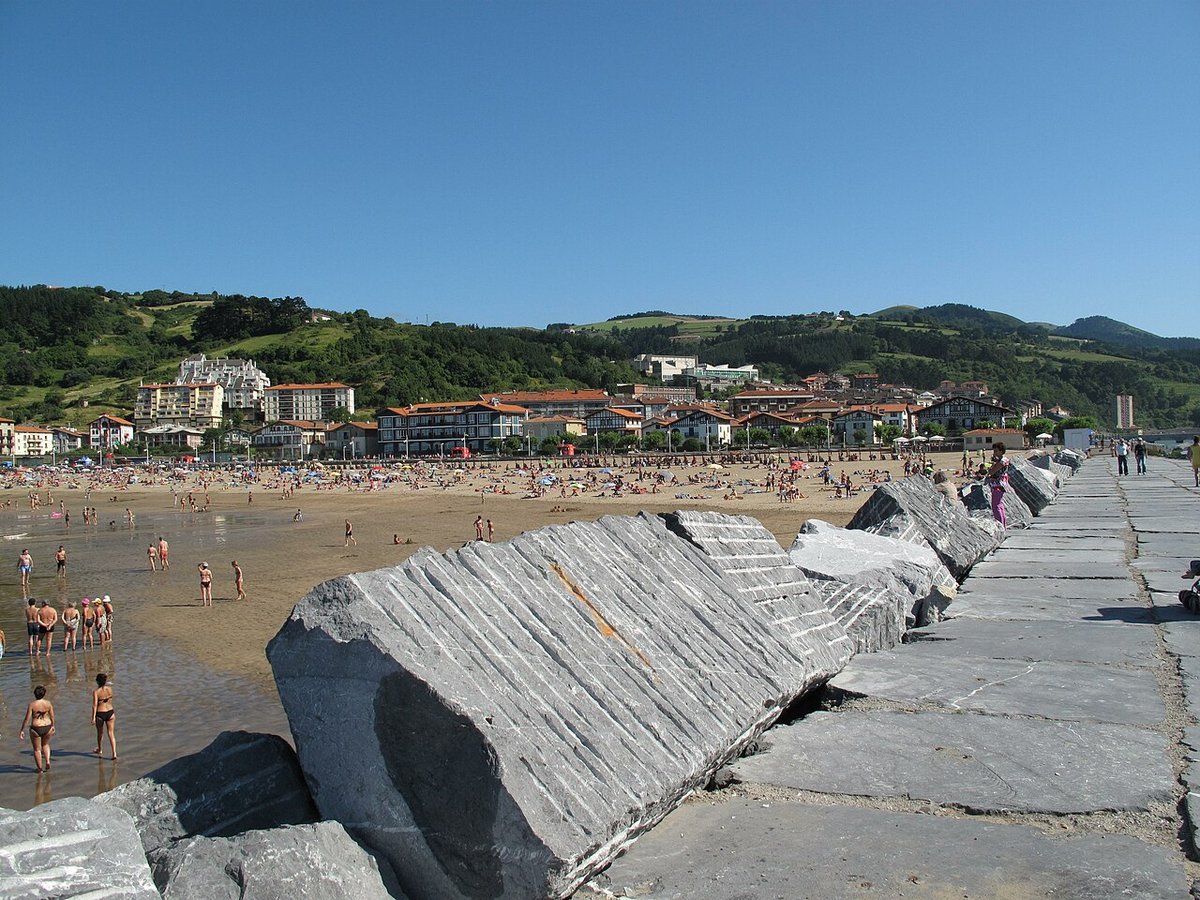
At the top are the remains of an old hermitage and a lighthouse that continues to mark this stretch of coast. The view helps make sense of Getaria’s shape: the historic centre compressed between slope and sea, the harbour sheltered by the breakwater, and to the west, the long beach of Zarautz.
A coastal path also begins in this area, running along the cliffs towards Zarautz. It is well known among people from the region and easy to follow.
Balenciaga and where he began
Cristóbal Balenciaga was born in Getaria in 1895, in one of the streets near the harbour. His background combined two worlds: his father was a sailor, his mother a dressmaker. That mix offers some insight into the path he later followed.
The museum dedicated to Balenciaga is housed in the Aldamar Palace, a historic residence located in the upper part of the town. Inside, the exhibition explores his work in haute couture and his connection to Getaria. It is more than a display of garments. It also shows how someone raised in a small coastal town came to influence European fashion in the 20th century.
Finding your way through Getaria
The historic centre is compact and easy to explore on foot. Calle Nagusia runs through the middle and connects several of the oldest buildings.
Many visitors leave their cars near the harbour and continue on foot into the old quarter. From there, it is possible to walk up to the church of San Salvador, head back down towards the quay and continue along the breakwater towards Monte San Antón.
Outside the summer months, the pace of the town shifts noticeably. In winter, the fishing character of the harbour becomes more visible, along with the routines of those who live here throughout the year.