Full Article
about Porcuna
Ancient Roman Obulco; it holds exceptional archaeological heritage and the Tower of Boabdil.
Hide article Read full article
A place that smells of olive oil
There is something you notice in Porcuna that rarely appears in guidebooks: the smell of olive oil. Not the mild scent from a supermarket bottle, but the dense, almost tangible aroma from an almazara, an oil mill, when production is underway. It lingers in the air during the harvest season. Anyone who has passed through a rural town in the Andalusian countryside in winter will recognise it straight away.
Porcuna sits within that landscape, shaped by olive trees in every direction. The setting is not dramatic in the usual sense. It is open, gently undulating, and defined by repetition. Yet that repetition explains the rhythm of life here far better than any monument.
The town that used to be a city
Today, Porcuna has around six thousand inhabitants. At first glance it feels like a place you could cross in a few minutes by car. Beneath that quiet surface lies a long history.
This was once Ipolca, an important Iberian settlement that continued into the Roman period. Remains from those times are scattered across the surrounding area, and objects have surfaced over the years that hint at how significant the settlement once was. The past does not present itself all at once, but it is there if you look closely.
The Torre de Boabdil is the most recognisable landmark. It is a tall stone tower, the kind that looks exactly like what a child would draw if asked to sketch a castle. From the top, the view stretches across the countryside. On clear days, distant mountain ranges are said to appear on the horizon. What dominates, however, is the vast expanse of olive groves, extending as far as the eye can follow.
The tower takes its name from a well-known episode in local history. Boabdil, the last Nasrid ruler of Granada, was held captive here for a time after his capture in the 15th century. The contrast is striking. A key historical figure connected to the fall of Granada once confined in a place that many people now overlook on the map.
When gazpacho means something else
Food in Porcuna reflects the habits of the countryside, and some dishes can be surprising at first encounter. Gazpacho porcunero, for instance, is not the cold tomato soup many expect. Here, the name refers to a hot dish made with cod, bread and spices. It arrives steaming, and the initial reaction tends to be confusion. Then the flavour makes its case, and the name begins to feel less important than the result.
Another staple is olla de tagarninas. Tagarninas are a wild plant that has long been part of the local diet. In this area they are usually cooked with pulses or added to slow, hearty stews. The dish sounds simple, and it is, but it reflects how people have eaten in the countryside for generations.
Sweets appear more prominently during celebrations. Pestiños with honey are closely associated with Semana Santa and family gatherings. Many households still prepare them in the traditional way, keeping methods that have been passed down over time.
Traditions that reshape the day
In May, the romería of the Virgen de la Alharilla takes place. On that day, a large part of the town heads out towards the sanctuary and the surrounding countryside. Carriages move along the रास्ता, families gather outdoors, and meals are shared over the course of the day. For a few hours, Porcuna itself seems to pause, as if life has shifted elsewhere.
Another tradition stands out for how fleeting it is. During Corpus Christi, residents create carpets on the ground using coloured salt and other materials. Patterns and images take shape across the streets. Then the procession passes over them, and the work disappears. Hours of careful preparation last only a short time, which is part of what gives the event its character.
Walking through the olive landscape
The area around Porcuna offers simple walking routes that cross the countryside. These are not mountain trails or dramatic hikes. The terrain is gentle, with low hills covered almost entirely in olive trees. Walking here gives a clearer understanding of how the region functions.
One route connects Porcuna with nearby towns such as Lopera, following old paths that have existed for generations. From certain higher points, the view opens wide enough to reveal how much of the surrounding territory can be seen at once. It becomes easy to understand why control of these positions once mattered.
Other paths run through the Alcores area, including circular routes. Along the way there are scattered farmhouses, the occasional tractor passing, and the steady sound of wind moving through the olive groves. The experience is quiet rather than dramatic, but it leaves a strong impression of place.
A house built over decades
The Casa de la Piedra is one of those stories that might sound invented, yet it is real. A local resident began building it in the 1930s and continued working on it for decades, placing each stone by hand. The result is a highly individual structure, closer to a personal project than a conventional home.
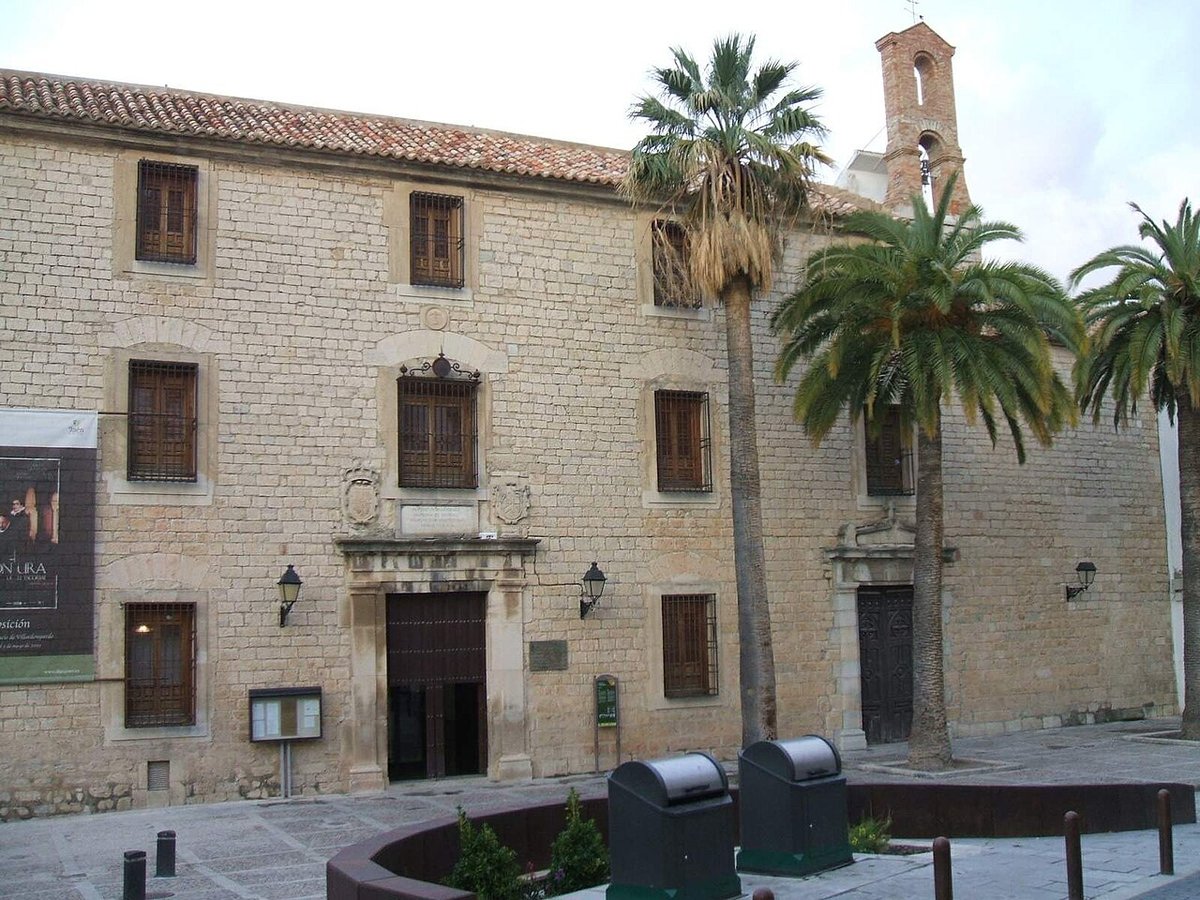
Another notable building is the former carnicerías reales. This historic space has served different purposes over time and now holds municipal archives and documentation. It shows how a building can change function repeatedly while still carrying traces of the past.
Taking Porcuna at its own pace
Porcuna does not aim to impress instantly, and it does not need to. Its appeal builds more gradually. A walk through the old centre, a climb up the Torre de Boabdil, or a pause in the main square can be enough to start noticing what makes it distinct.
The view from the tower stays with you: kilometres of olive trees, uninterrupted and consistent. Conversations often return to the land, to families who have worked the same fields across generations. Time feels less compressed here.
The best approach is simple. Spend a while wandering through the streets, take in the surroundings, then stop for a moment without rushing on to the next place. In Porcuna, that unhurried rhythm is part of what defines the experience.