Full Article
about Castilléjar
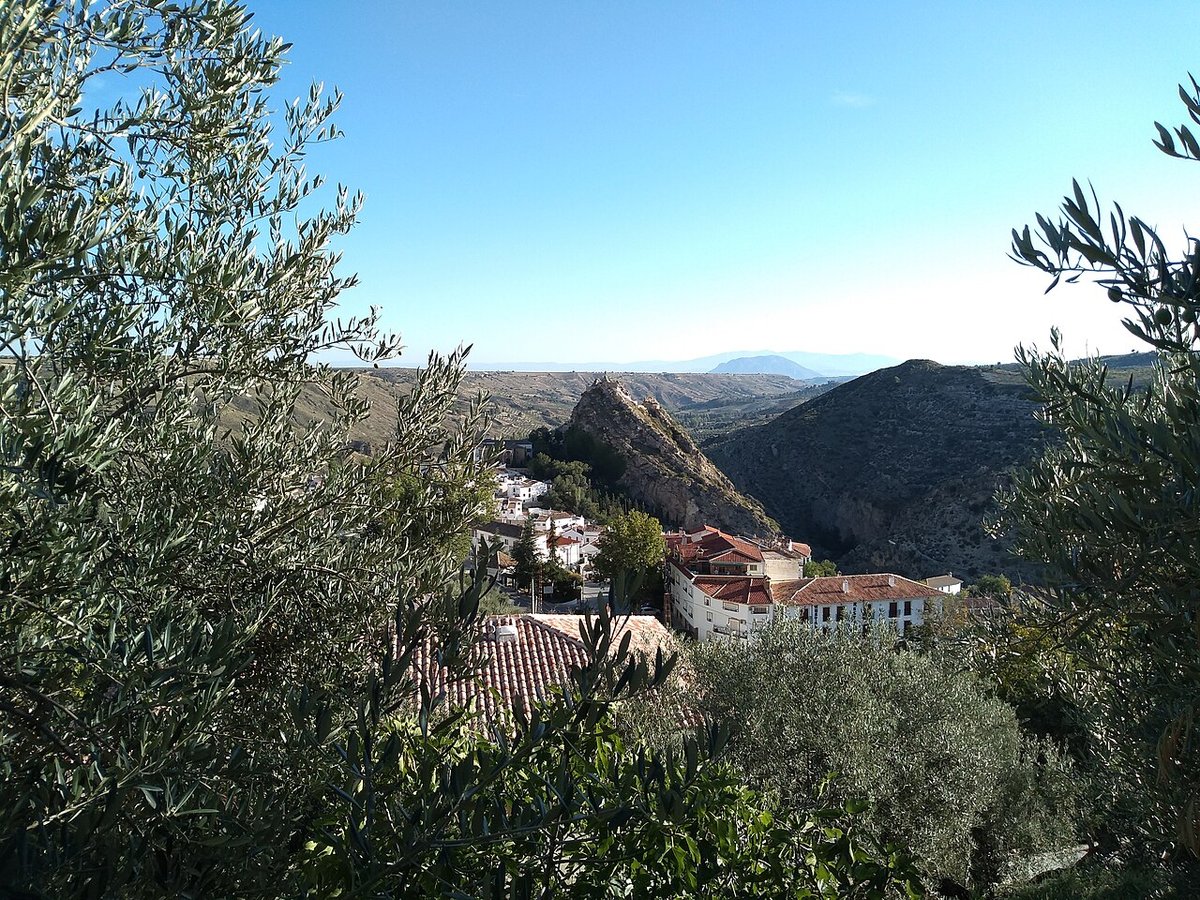
Set between the Guardal and Barbata rivers; known for its cave houses and the badlands that form a unique semi-desert landscape.
Ocultar artículo Leer artículo completo
The first thing you notice is the temperature drop. After the furnace-blast heat of the motorway from Granada, the car thermometer falls five degrees in the last fifteen minutes as you climb off the A-92 and weave towards Castillejar. At 766 metres, the village sits high enough for the air to thin and sharpen, carrying the scent of thyme and distant pine rather than diesel and dust.
Castillejar isn’t dramatic. No soaring cathedral, no castle keep intact enough for a fantasy film. What it has is space: a plateau that lets you see weather approaching half an hour before it arrives, and a lattice of cave houses whose chimneys poke discreetly from rock faces like punctuation marks in a long sentence. Roughly 1,200 people live here permanently, though numbers swell at Easter and during August fiestas when grandchildren of locals pitch tents on the edge of the football pitch rather than pay summer rents on the coast.
Cave life, without the damp
British visitors often arrive expecting subterranean gloom and leave surprised by how bright a living room carved from limestone can be. Owners of holiday caves such as Cuevas El Moral have knocked through internal walls, installed proper kitchens and run fibre-optic broadband through the rock. The thermostat stays stubbornly at 18–20 °C whatever the month, so bedrooms feel cool in July and the kitchen table is warm enough for tea and toast on a January morning. Bring a jumper even in August; nights can dip below 15 °C and the wind across the plateau has teeth.
Most caves face south-east, catching sunrise over the Hoya de Huéscar and sunset behind the Sierra de las Estancias. Terraces are tiny—room for two canvas chairs and a bottle of local tempranillo—but the view stretches forty kilometres, a rippling carpet of almond and olive groves that turns from silver-green to gun-metal grey as the light fades. Birders sit quietly here in spring migration: golden eagles use the thermals, and bee-eaters flash emerald against the sandstone.
Walking tracks that start at the front door
You don’t need to drive anywhere to begin a walk. From the upper calles, farm tracks head north-east towards the abandoned hamlet of El Alto de Castillejar, a steady 5 km loop that passes through cereal fields and sudden bursts of red poppies after rain. Serious hikers load rucksacks and continue into the Castril Natural Park—another 20 minutes by car to the visitor centre—where a 14 km gorge walk threads between limestone walls 300 metres high. Mountain-bike hire can be arranged through the petrol station in neighbouring Galera; they lend you a laminated map and insist you take two litres of water because “the next tap is twenty kilometres if you miss the turn”.
Winter brings a different landscape. January snow occasionally blocks the road from Huéscar for a morning, and the surrounding sierras wear a white mantle sharp enough to photograph for Christmas cards. Daytime highs still touch 12 °C, so you can walk in shirtsleeves at midday while the peaks glitter above you. The village’s small supermarket stocks firewood alongside sun-cream, a practical acknowledgement that seasons here actually change.
Food that tastes of altitude and distance
There are no Michelin ambitions. Saturday’s open-air market sets up around the Plaza de la Constitución from eight until two: one stall for goats’ cheese rubbed with rosemary, another for jamón serrano sliced so thin you can read through it, and a third piled with misshapen tomatoes that taste of soil rather of a greenhouse. Fill a rucksack and retreat to your cave kitchen; ovens are full-size and knives are sharp, a detail that makes self-catering feel like choice rather than compromise.
If you’d rather someone else cooks, Bar La Muralla does a three-course menú del día for €12 that might start with gazpacho viejo—a hot, paprika-stained soup thickened with bread and quail—followed by pork cheek that collapses at the touch of a fork. Wine is poured from a plastic jug and tastes better than it should. They close on Tuesdays, and if no one turns up by three the owner locks early; this is not a place that chases customers.
When the village parties, it parties late
Fiestas are rooted in the agricultural calendar rather than tourism spreadsheets. The Virgen de la Encarnación procession at the end of March is short—twenty minutes along the main street—but afterwards the plaza fills with trestle tables and free paella dished out from pans the size of satellite dishes. August feria starts with a foam party in the municipal pool (parents stand at the edge filming on phones) and ends at five in the morning with synchronised fireworks that bounce off the cave roofs like artillery practice. Visitors are welcome, but nobody choreographs anything for them; you’re simply absorbed into the crowd.
Semana Santa is quieter. The Thursday night procession slips through narrow streets lit only by candles; hooded nazarenos walk in silence broken only by a drumbeat that echoes off stone. British onlookers sometimes find the scene unnerving until they notice toddlers riding on grandparents’ shoulders, clutching the same plastic bags filled with caramelos thrown from the choir.
Getting here, and why a car matters
Granada airport is the nearer hub—easyJet from Gatwick, two hours on the road if you ignore the sat-nav’s attempt to send you through the city centre. Almería works too, adding ten minutes but sometimes saving £30 on the flight. Car hire is non-negotiable; the twice-daily bus from Huéscar is timed for doctors’ appointments, not sightseeing, and the last taxi back from Baza costs €60 if you miss it.
Roads are good but empty. After leaving the motorway you climb through badlands where eroded clay looks like dinosaur skin, then crest a ridge and drop into olive plantations that stretch to the horizon. Phone signal dies for five minutes—long enough to notice, not long enough to panic. Fill the tank in Huéscar; the village garage opens only when the owner’s son is around.
The honest verdict
Castillejar will not change your life. It offers no epiphany, no brag-worthy tick on a bucket list. What it does give is rhythm: mornings that start with bread delivered still warm, afternoons measured by the length of a shadow across the plaza, evenings that finish when the last bottle is empty rather than when the bar shuts. Come if you want to walk without meeting anyone for two hours, if you like the idea of a cave that smells of cedar rather than mould, or if you simply need reminding that Spain is wider than the Costa del Sol brochure implies. Pack layers, bring a decent knife for the tomatoes, and don’t expect fireworks unless it’s the third weekend in August. Sometimes that is exactly enough.