Full Article
about Fuenteguinaldo
Hide article Read full article
A place that reveals itself slowly
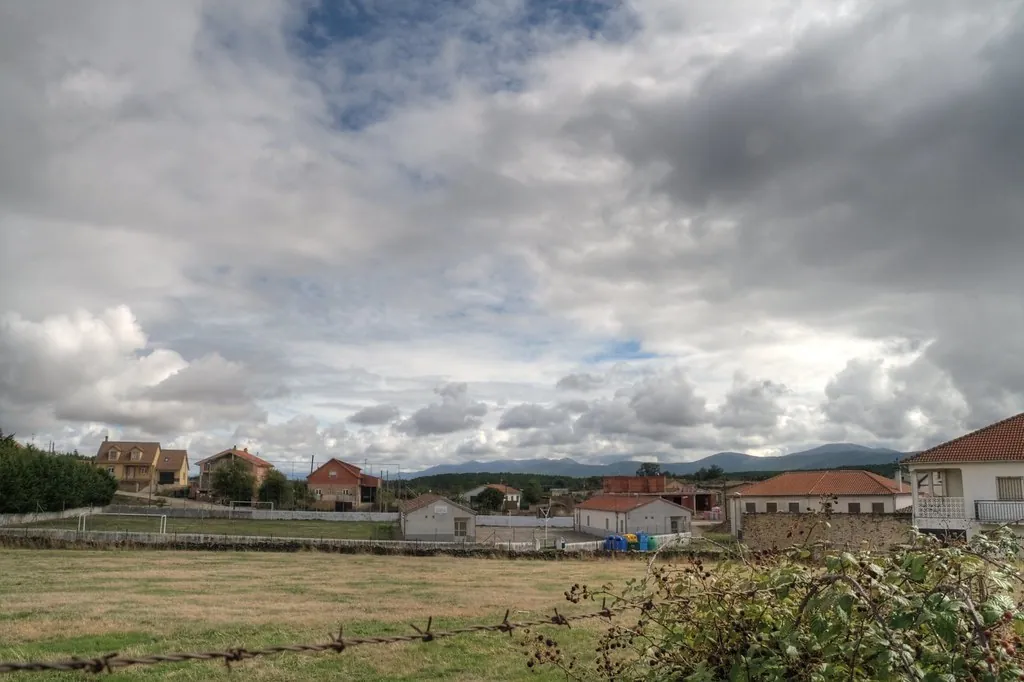
Some villages make sense within minutes. Others take a while, the kind of place you understand only after wandering without a plan. Tourism in Fuenteguinaldo works like that. You arrive, park near the square, walk a little, and gradually notice that life here moves at a different pace. Nothing is staged for visitors, and nothing tries to impress.
Fuenteguinaldo sits in the south-west of the province of Salamanca, very close to the border with Portugal. This is dehesa country, a landscape shaped by scattered holm oaks spaced as if deliberately arranged. At first glance it can feel almost too simple, especially if you are used to mountains. Give it time and the detail starts to emerge.
A village best explored on foot
The centre is compact. A relaxed walk is enough to cover it without effort. Houses are built in stone or rendered, with large gateways once designed for carts or livestock. There are small clues to the past throughout: old iron window grilles, coats of arms set into façades, inner courtyards barely visible from the street.
This is not somewhere that encourages a constant stream of photos. It rewards attention to quieter details. A worn doorway, the sound of someone sweeping outside their home, the particular silence of a place where traffic is rare. The atmosphere comes from everyday life rather than landmarks.
The church and the square
The parish church, dedicated to Santa María Magdalena, stands out with the solid appearance typical of this part of Salamanca. Thick walls, stone construction, and a restrained presence define it. Inside, there are altarpieces and elements from different periods, though it still feels very much like a working village church rather than a historic display.
Next to it, the square acts as the social centre. Mid-morning or towards evening, it is common to see neighbours talking or simply sitting for a while. These ordinary scenes say more about Fuenteguinaldo than any formal explanation could.
The surrounding dehesa
Beyond the village, the landscape opens up into dehesa. Holm oaks dominate, with some areas of oak woodland, and large estates linked to livestock farming. There are no dramatic climbs or mountain routes. Instead, wide dirt tracks cross open land in all directions.
It is good terrain for straightforward walking. Navigation can require a bit of care, as signposting is limited and many paths are used for agricultural work. A map or a downloaded track helps if you prefer to stay oriented.
Out on these paths, it is normal to come across grazing animals, birds of prey, or simply long stretches of quiet countryside. The scenery may seem repetitive at first, until the differences between one tree and another begin to stand out.
Rural traditions and home-style food
Life in this area remains closely tied to farming and livestock. The Iberian pig is an important part of the local economy, and the matanza, the traditional home slaughter and processing of the pig, continues to be an established custom in many families. For visitors unfamiliar with it, this is a longstanding rural practice that provides preserved meats for the year.
From this come cured products and substantial dishes, especially in winter. Legume stews, preserved meats, and recipes passed down through generations form the basis of the local cooking. It is practical food, made for cold weather and long working days rather than trends.
Autumn, mushrooms and changing fields
Autumn brings a different rhythm to the countryside around Fuenteguinaldo. People head out to look for mushrooms among the holm oaks and oaks. It is something taken seriously, and knowledge matters. Going with someone experienced is the safest approach.
The landscape also shifts with the season. Fresh grass appears, the skies feel lower, and the atmosphere contrasts with the dry summer typical of the dehesa. It is a quieter, more subdued version of the same terrain.
Festivities through the year
Local celebrations follow the village calendar, shaped by both religious and agricultural traditions. The festivities dedicated to Santa María Magdalena, held in summer, bring the most activity. There are open-air dances and gatherings, and many people who have moved away return for a few days.
Winter includes traditions linked to San Antón, historically associated with the protection of animals. Semana Santa is also observed, with simple processions that involve much of the local population. These are not large-scale events, but they reflect how the community continues to organise its year.
Is it worth the visit?
Fuenteguinaldo is not defined by major monuments or a packed list of attractions. It suits those already travelling through the south-west of Salamanca or those interested in understanding everyday life in border regions like this one.
The best approach is to take it slowly. Walk through the centre, then head out into the dehesa for a while. Expectations matter. If the aim is to tick off sights, it may feel limited. If the appeal lies in quiet landscapes and a village that carries on in its own way, then stopping here makes sense.