Full Article
about Arzúa
Hide article Read full article
A Natural Pause Before Santiago
The Camino Francés passes through Arzúa when the journey is already well advanced. After many days walking from the Pyrenees, pilgrims reach this small Galician town with Santiago de Compostela relatively close. For centuries, Arzúa has lived from that steady flow of travellers. It is not a finishing line or a major milestone, but a natural pause before the final stages.
That sense of transition shapes the place. Pilgrims arrive tired yet expectant, aware that the end of the route is within reach. The town’s rhythm reflects that in-between moment, offering rest without grand gestures.
Arzúa is also closely associated with Arzúa‑Ulloa cheese, one of Galicia’s best-known dairy products. The combination of damp meadows, cattle farming and small dairies forms part of the everyday landscape of the surrounding comarca. Here, agriculture is not a backdrop but a defining feature of local identity.
The Taste of a Landscape
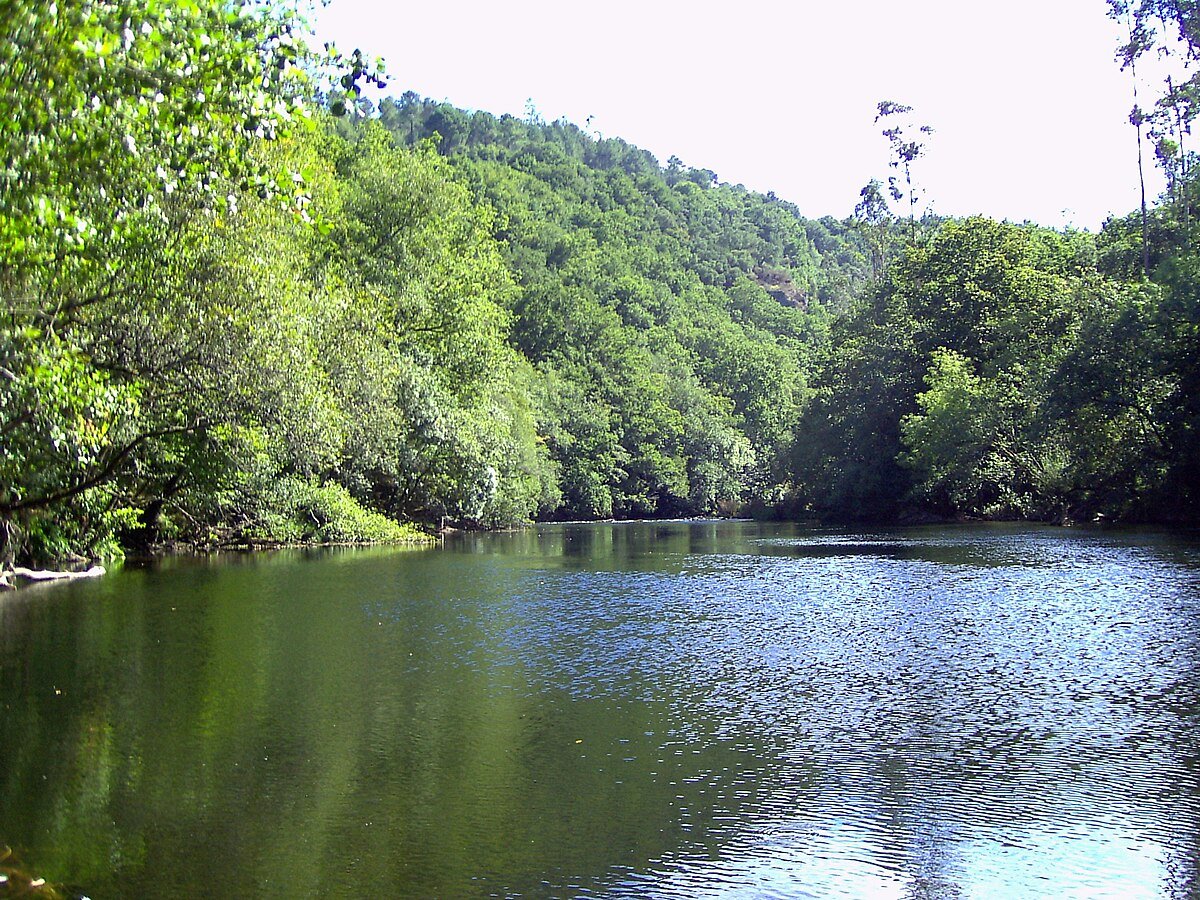
Geography helps explain this connection. Arzúa lies in an area of gentle hills, between the basins of the rivers Ulla and Tambre. The humid climate keeps the fields green for most of the year, and cattle farming dominates the countryside. From this setting comes Arzúa‑Ulloa cheese, a soft cheese with a thin rind, usually made from cow’s milk.
Although it is now protected by a denomination of origin, production was once far more varied at domestic level. For a long time, many households made their own cheese on a small scale, each with its own way of curdling and maturing the milk. Techniques were passed down informally, and differences from one family to another were part of the norm.
In early spring, the town usually hosts a festival dedicated to the cheese, bringing together producers from the comarca and other parts of Galicia. For a few days, the main square fills with stalls and Arzúa‑Ulloa becomes quite literally the centre of local life. The event reflects both pride in the product and the continuing importance of small-scale agriculture in the area.
Traces of the Medieval Camino
The principal historic building in the town centre is the Capela da Magdalena. It once formed part of an Augustinian convent founded in the Middle Ages, linked to the care of pilgrims. Of the original complex, only this chapel remains, with its very simple lines and masonry walls.
The presence of the convent makes sense when recalling that Arzúa was already a recognised stop on the medieval Camino. The Codex Calixtinus, a 12th-century guide to the pilgrimage to Compostela, mentions in this area a settlement called Vilanova on the stage leading towards Santiago. The reference places the region firmly within the long history of the route.
A few kilometres from the centre, in Ribadiso, the Camino crosses the river Iso by a bridge of medieval origin. Its pointed arches and granite construction point to considerable age, probably connected to the movement of pilgrims. On one side stand the remains of what was once a hospital for travellers, now reused for other purposes. Even in fragmentary form, the ensemble suggests how organised and structured the pilgrimage network once was.
Everyday Arzúa
Arzúa’s urban centre is relatively compact and easy to explore on foot. The main streets are arranged around the axis followed by the Camino and the road that connects Santiago with the interior of the province. Movement through the town tends to follow these lines, blending pilgrims and local traffic.
The town hall square occupies a central place in daily life. It regularly hosts the traditional fair, still referred to by many residents simply as “a feira”, using the Galician term. Local producers come with cheese, honey, vegetables or small farm animals, in a dynamic that recalls rural markets across Galicia. The fair is both commercial and social, a meeting point that reinforces ties within the comarca.
Near one of the exits from the town stands the Fonte da Quenlla, a 19th-century stone fountain with several basins. For a long time it was a habitual place to collect water. Today it often draws the attention of walkers because of the small accumulation of coins at the bottom. They are the result of the widespread custom of leaving a wish behind before continuing the route.
Beyond the Pilgrim Route
The surroundings of Arzúa offer several paths that allow visitors to step away from the immediate atmosphere of the Camino and see the comarca at a slower pace. Some of these routes circle the Portodemouros reservoir, passing through pine woods and meadows where cattle graze. It is not a dramatic landscape, but it is highly representative of inland A Coruña: rolling ground, managed woodland and farmland shaped by generations of agricultural work.
Another short excursion leads to the castro of Curbín, an Iron Age settlement located on a small rise. Today the structures are barely distinguishable among the vegetation, yet the site makes clear how such hilltop communities controlled natural routes through the territory. Even with limited visible remains, the position of the castro helps in understanding the strategic logic behind these early settlements.
These outings place Arzúa within a much longer timeline than the Camino alone. From Iron Age communities to medieval pilgrims and modern dairy farmers, the area has long been defined by movement across its landscape.
When to Go
Arzúa lies a short distance from Santiago de Compostela and is well connected by road. Most visitors arrive on foot along the Camino Francés, usually on the stage that follows Melide.
The town remains active throughout the year, though spring and summer see more movement due to the steady flow of pilgrims. In autumn and winter the pace is calmer, with frequent rainy days and a more local atmosphere. It is during these quieter months that another side of Arzúa becomes clearer. Beyond the Camino, it continues to function as an agricultural town closely tied to its surrounding comarca.
That dual identity defines Arzúa. It is a place of passage and a place of production, shaped by centuries of travellers and by the steady routines of cattle farming. For those approaching Santiago, it marks the beginning of the end of the journey. For the people who live there, it remains simply their town, rooted in green pastures between the Ulla and the Tambre.