O Pino - Flickr
el Buho nº30 · Flickr 5
Galicia · Magical

O Pino

The road from Arzúa to Santiago climbs a gentle ridge and then, without ceremony, drops into O Pino. One moment the dashboard shows open moorland; ...

4,589 inhabitants · INE 2025
m Altitude

Why Visit

Best Time to Visit

summer

Full Article
about O Pino

Ocultar artículo Leer artículo completo

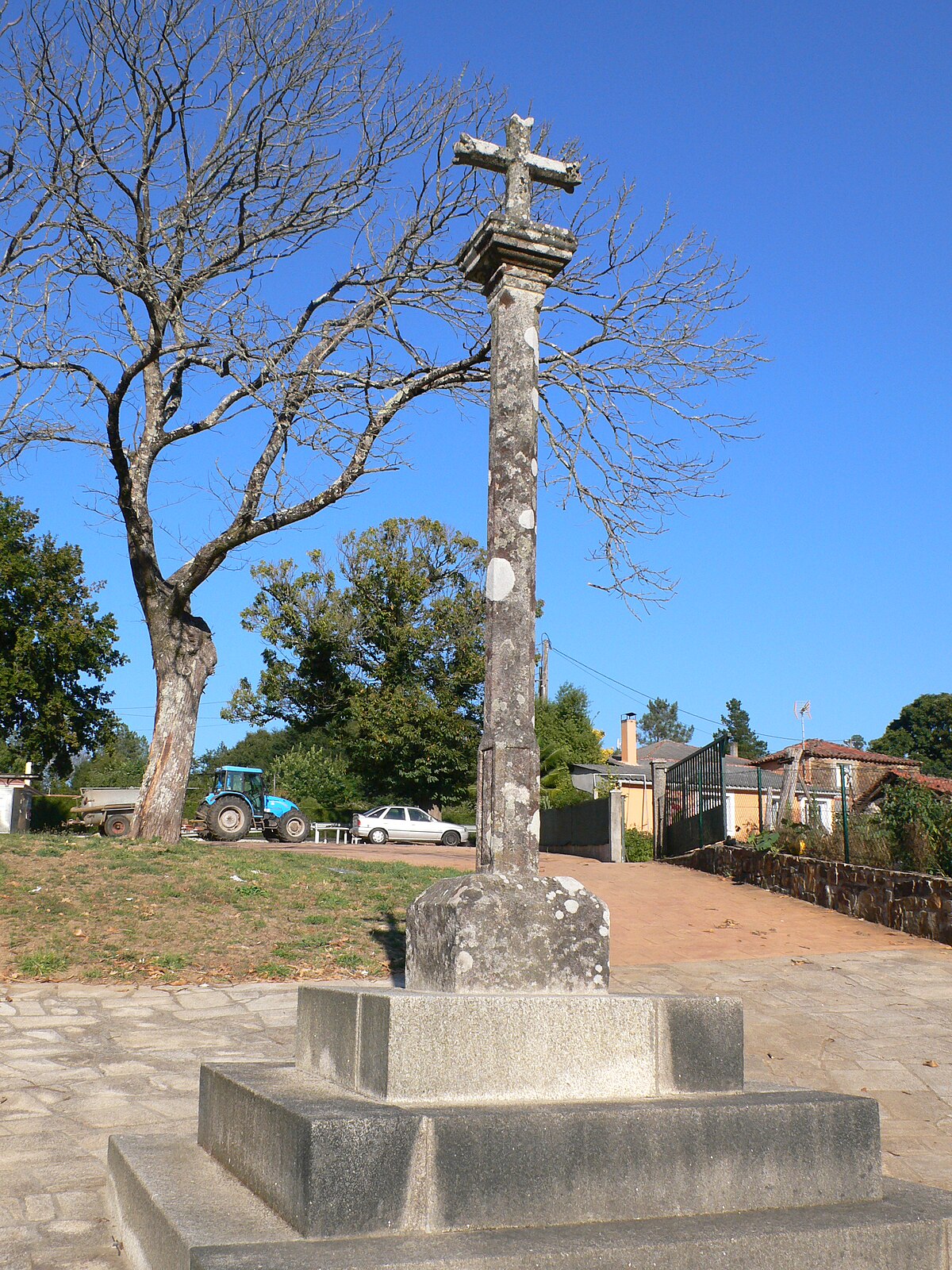
The road from Arzúa to Santiago climbs a gentle ridge and then, without ceremony, drops into O Pino. One moment the dashboard shows open moorland; the next, stone crosses appear every few hundred metres and the verges fill with rucksacked figures walking three abreast. They are not hiking for the view—they are 18 km from the cathedral and their stride has the brittle urgency of people who can smell the finish line. That sudden switch, from empty highway to slow-moving human column, is the quickest way to understand this parish-heavy municipality: it exists because the Camino Francés needs somewhere to sleep, eat and confess before the last push.

A Parish Map Rather Than a Town

O Pino has no high street, no Plaza Mayor, no postcard-ready ensemble you can circle in twenty minutes. Instead it offers a scatter of hamlets—Ois, Arca, San Breixo, Castrofeito—each glued to its own church, granaries and roadside crucifix. Driving the LU-613 feels like flicking through loose pages: every bend reveals another stone bell tower above oak trees, another hórreo on stone stilts, another farmer loading hay into a turquoise tractor trailer. The council’s own road map lists 36 separate parishes; even locals shrug when asked where the exact centre lies. Accept the sprawl and the day loosens. Try to “do” the whole municipality before lunch and you will spend the morning doubling back on narrow lanes that look identical on the sat-nav.

The best tactic is to pick two stops and walk the bits in between. Leave the car beside the 12th-century church of San Martiño de Ois, follow the yellow arrows north for forty minutes, then turn around when the path enters eucalyptus shade. You will pass stone water troughs, a boarded-up forge and, almost certainly, a German pilgrim arguing with his wife about blister tape. Nothing is staged; the heritage is simply still there, still used. If the iron gate to the church porch is locked (it often is), ring the number taped to the door—Don Manuel usually arrives within ten minutes, wiping flour from his hands because he has come straight from baking bread.

What the Camino Left Behind

The pilgrimage trail functions as O Pino’s spine, but the amenities that have grown beside it are refreshingly low-key. Bars do not display “John Wayne ate here” posters; they offer €3 menús del día and let you fill your water bottle without buying an energy drink. In O Pedrouzo, the largest nucleation, you can still find the original wash-house where village women scrubbed shirts until the 1980s. It sits opposite a café whose terrace smells of strong coffee and diesel from passing farm traffic. Sit long enough and someone will point out the house where the priest stored confiscated Civil War typewriters—history delivered as neighbourhood gossip rather than museum caption.

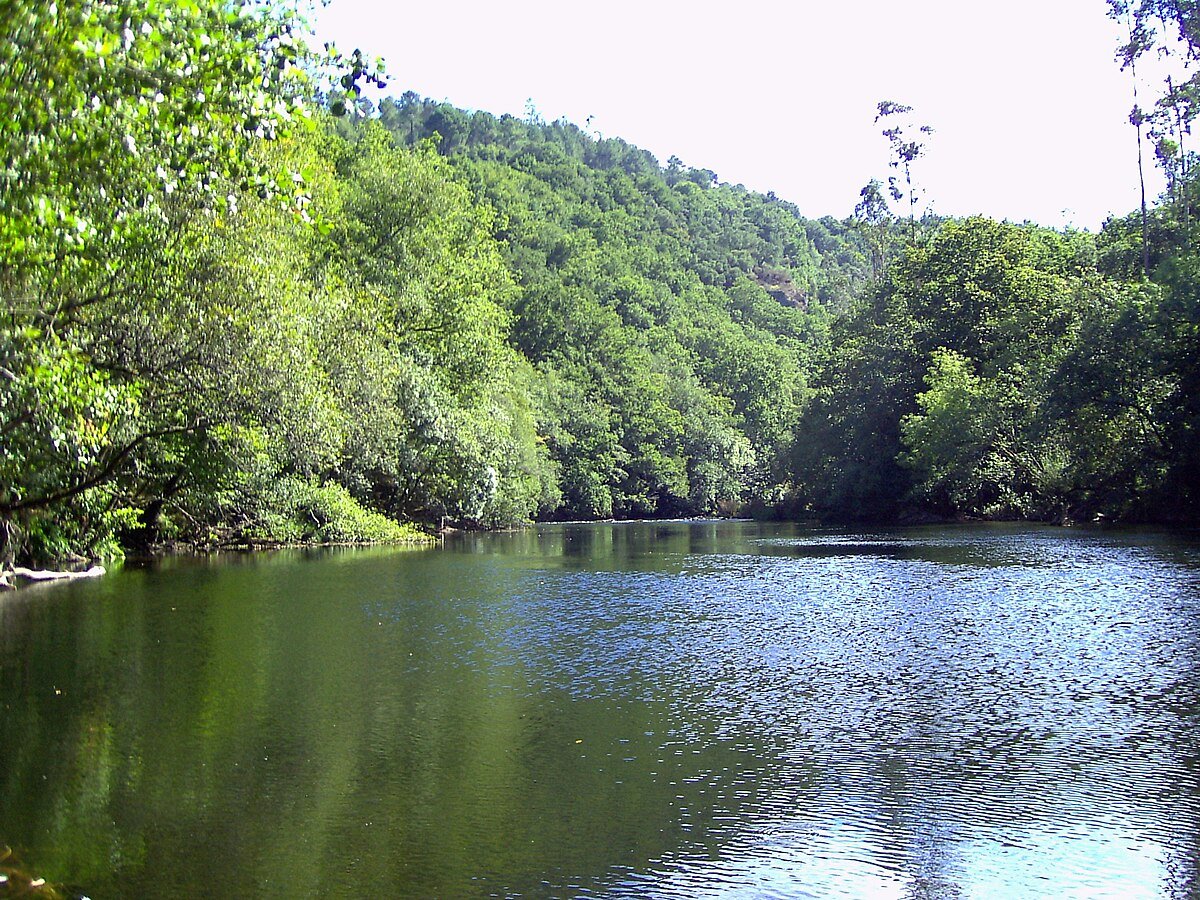
Outside the villages the trail is quieter. Between A Rúa and O Amenal the Camino follows an old freight railway cut through granite. Blackberries force their way through the ballast; morning light filters into tunnels of broom and gorse. You will meet the occasional cyclist wheezing uphill, but for twenty minutes it is possible to believe the route belongs to locals walking dogs rather than to international pilgrimage PLC. Carry on another 3 km and you reach the Capela de San Alberte, a single-cell stone shelter whose visitors’ book records gratitude in fifteen languages. Most entries end with the same sentence: “Almost there.”

Eating Without the Fanfare

O Pino sits inside the Arzúa-Ulloa cheese DOP, a small-protected zone that produces a mild, creamy cow’s milk wheel with a yellow wax rind. You will see it served simply: a wedge on a wooden board, maybe a dab of quince paste if the owner feels fancy. Order it at Bar Central in O Pedrouzo together with a plate of pimientos de Padrón and you have lunch for under €10. The same bar opens at 06:00 to dish out tortilla to pilgrims who started walking in the dark; if you arrive after 10:00 the tortilla is usually gone and the owner switches to slow-cooked beef cheek.

For something more formal, drive five minutes north to the hamlet of San Xurxo where Casa Sexto occupies a stone farmhouse. The set dinner (around €28) brings lacón con grelos, local veal shoulder and the sort of tarta de Santiago that is heavy on ground almond and light on cinnamon. Booking is wise at weekends; half of Santiago drives out for Sunday lunch. Vegetarians should ask for the vegetable empanada—cabbage, pepper and tomato baked in a lard crust. It is still Galician farmhouse cooking, just without the meat.

Getting It Right (and Wrong)

The biggest mistake is to treat O Pino as Santiago’s car park. Coaches now stop at Monte do Gozo, the hill just inside city limits, disgcharging 50 pilgrims at a time who march the last 4 km shoulder-to-shoulder. Between 11:00 and 15:00 the final stretch of trail feels like the M25 in hiking boots. If you want a calmer taste, come early. At 07:30 the dew is still on the grass and the only sound is the click of trekking poles. By 09:00 the first shuttle buses arrive; by noon the queue for selfies at every wayside cross stretches twenty deep.

Weather matters more than in the city. Atlantic fronts slide inland and stall over the ridge, so a sunny morning can collapse into horizontal drizzle by lunchtime. Pack a decent jacket even in June; locals judge outsiders by their footwear and will happily direct a muddy stranger to the nearest taxi if they think the next field is about to swallow an ankle. Winter walking is possible—temperatures rarely drop below 5 °C—but paths turn to ochre clay that cakes boots like wet cement.

Public transport exists but requires patience. Monbus runs three daily services from Santiago bus station to O Pedrouzo (35 min, €2.10). From there a local dial-a-ride minibus will drop you at San Martiño if you phone the day before; otherwise expect a 4 km walk on a lane with no pavement. Hiring a car at Santiago airport is easier: take the N-547 east, turn off at O Pedrouzo and you are inside the municipality in 25 minutes. Parking is free beside most churches; just do not block field gates—farmers leave polite notes the first time, less polite ones after that.

How Long, How Much, How Slow

A half-day works: one short Camino section, one church interior, one cheese-heavy lunch. Stretch it to a full day by adding the riverside path from Castrofeito to Boavista where 19th-century mills rot gently among alder trees. Overnight options are thin. Hotel O Pino is a modern, 28-room place on the main road (doubles €70–85, pilgrim singles €45) with a decent breakfast but no restaurant after 22:00. Casa de Alderete, a converted manor in Ois, has four attic rooms under slate eaves (€90 with breakfast) and will lend wellies if you fancy a muddy wander round the owner’s vegetable plot.

Expect to spend €25–30 per person for food and coffee if you stick to local bars; add another €15 if you want dinner wine. Entrance to churches is free, though the San Martiño key-keeper appreciates a €2 coin “for the candles.” The only paid attraction is the small ethnographic shed in O Pedrouzo (€1.50) which displays old threshing boards and a 1940s radio the size of a sideboard. It is worth it for the curator’s stories, delivered in a mixture of Spanish and mime if your Galician fails.

Leaving the Last Stamp

Most visitors pass through O Pino without realising they have done so; their Camino credential carries a rubber stamp from “O Pedrouzo” or “Arca” and memory blurs into the final 20 km dash. Pause instead at the tiny chapel of Santa Irene, half-hidden below the main road, and watch the interaction between locals and pilgrims: old women in housecoats lighting candles for grandchildren, a Danish father helping his daughter write “Dad we made it” on the visitors’ beam. That brief overlap—rural Galicia meeting restless Europe—explains the place better than any guidebook paragraph. Then walk 200 metres uphill, turn your back to the eucalyptus and look west. The cathedral towers are still invisible, but the traffic hum of Santiago drifts on the wind, reminding you that the end is close enough to taste and far enough to keep walking.

Key Facts

Region
Galicia
District
Arzúa
INE Code
15066
Coast
No
Mountain
No
Season
summer

Livability & Services

Key data for living or remote work

2024
ConnectivityFiber + 5G
HealthcareHospital 7 km away
EducationElementary school
Housing~5€/m² rent · Affordable
Sources: INE, CNMC, Ministry of Health, AEMET

Planning Your Visit?

Discover more villages in the Arzúa.

View full region →

More villages in Arzúa

Traveler Reviews