Full Article
about Poio
Hide article Read full article
Poio, el pueblo que tiene un récord (aunque no vengas por eso)
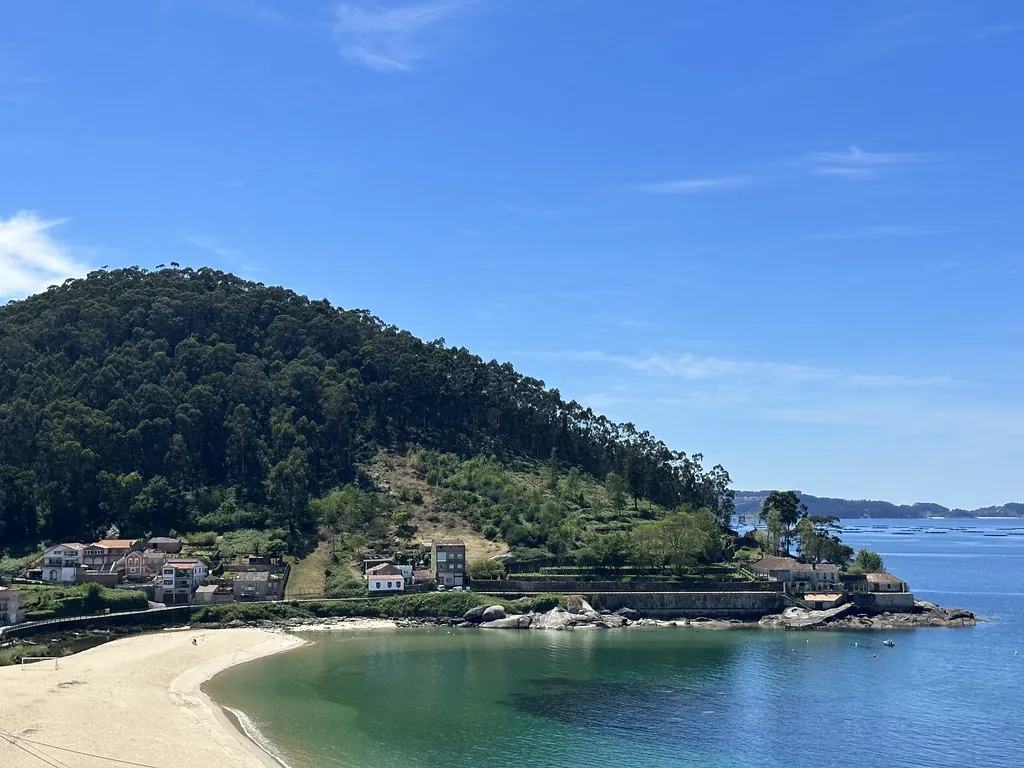
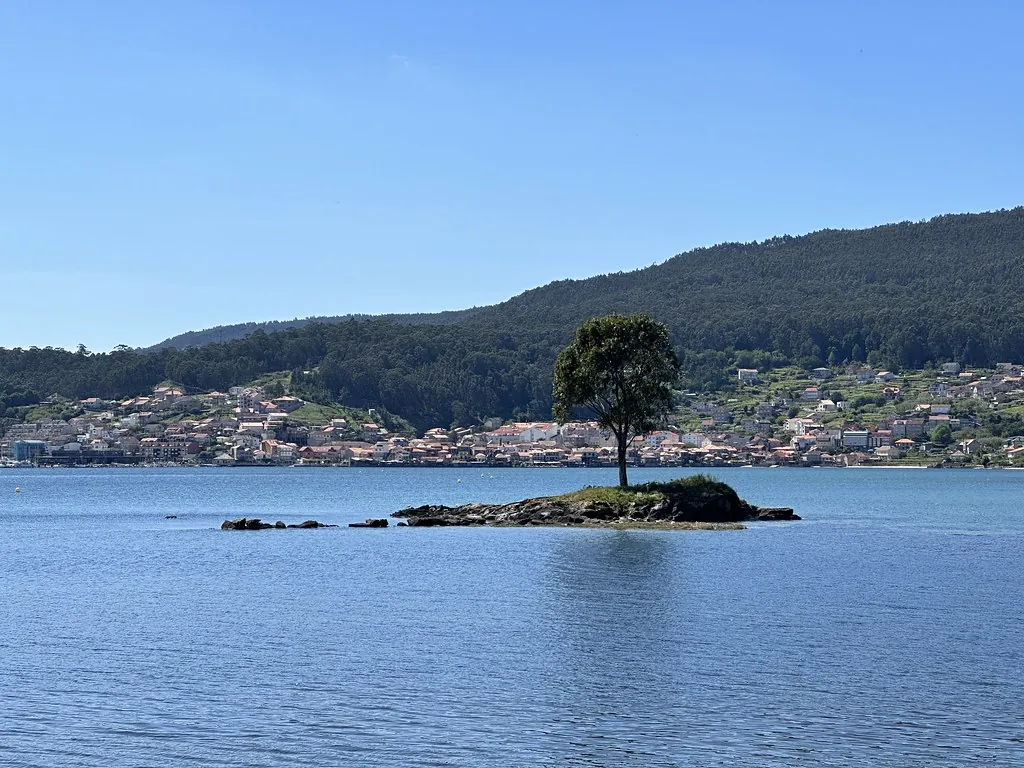
Poio está en la Ría de Pontevedra. Tiene playas y vistas abiertas al agua. Son agradables, pero casi todos vienen por lo mismo: el monasterio y su hórreo descomunal.
Un hórreo es un granero gallego tradicional. Se eleva sobre pilares de piedra. El del Monasterio de San Xoán de Poio es otro nivel. Mide más de cien metros. Es una línea alargada de piedra suspendida en el aire. Parece que encajaron varios hórreos hasta decir basta.
Su longitud no era un capricho. Almacenaba el grano de varias parroquias. Tenía un propósito práctico claro. Aún así, su impacto visual te hace parar y mirar un rato.
Dentro del monasterio hay otra cosa que suele dejar a la gente en silencio. En el claustro, un mosaico enorme del Camino de Santiago cubre una pared entera. Está hecho con miles de trozos de piedra. La gente entra callada. En minutos buscan el ángulo para una foto. Su escala pide esa reacción.
La teoría conspirativa local (mejor que muchas series)
Si charlas un rato por aquí, sale otro tema. En Poio defienden una teoría: Cristóbal Colón podría ser gallego. Dicen que nació en Portosanto.
La idea circula desde el siglo XIX. Tiene sus defensores acérrimos. Muestran documentos y coincidencias de apellidos. También tiene lagunas, eso sí. Es una de esas historias que el lugar ha adoptado como parte de su identidad.
En Portosanto hay una casa museo sobre esta teoría. Presenta el material detrás de la hipótesis. Invita a los visitantes a tomársela en serio. La curiosidad es el punto de partida. Te convenza o no, la idea se te queda después. Al menos ves que el caso está montado con cuidado.
Para quien no conoce el debate, añade una capa inesperada a este municipio costero. Poio no son solo monasterios y vistas al mar. También es un signo de interrogación histórico que se resiste a desaparecer.
Combarro y los hórreos frente al mar
Si Poio fuera un grupo de chat, Combarro sería el que siempre manda fotos. Es la parte del municipio que más sale en postales y redes. El motivo es simple: los hórreos alineados junto al agua.
Hay decenas y decenas, muchos casi dentro de la ría. La imagen es distintiva. Casas marineras de piedra se mezclan con los graneros. Cruceiros marcan las calles estrechas. Barcas están amarradas a pocos metros.
Dicen que es la mayor concentración de hórreos de Galicia sea cierto o no, hay una cantidad impresionante reunida en un sitio El efecto no es un monumento único, sino la repetición Uno tras otro crean un ritmo junto a la orilla
Pasear por el barrio antiguo lleva poco tiempo En media hora tranquila lo recorres todo La clave es no ir con prisa Los detalles premian la atención Escudos tallados en las fachadas Cruceiros del siglo XVIII Puertas que se abren directamente al mar La escala es compacta Pero el entorno le da presencia
La relación de Combarro con el agua se siente inmediata La ría nunca está lejos La línea entre tierra y mar parece más fina de lo normal
Lo que llega del agua a la mesa
La Ría de Pontevedra define lo que se come en Poio Marisco pescado y moluscos vienen de estas aguas o de lonjas cercanas La conexión entre puerto y cocina es directa
Los chocos son comunes en los menús locales También mejillones y berberechos de las bateas Los sabores son sencillos y reconocibles Se prioriza el buen producto sin complicaciones innecesarias
Las empanadas de maíz rellenas de pescado o marisco son otra vista familiar Aquí son algo cotidiano Parte del día a día Fuera de Galicia son uno esos platos que luego echas en falta
Un consejo simple ayuda a atar cabos Pasea por el puerto de Combarro a media mañana o al final dela tarde A veces coincide con barcos descargando la pesca No siempre pasa Pero cuando ocurre ves el origen dela cocina local en cuestión d minutos
Cuando llega el verano
En verano Poio cambia su ritmo La población crece Las zonas costeras d Raxó Samieira o San Xoán se llenan d gente qu pasa e día o las vacaciones junto al mar
Las playas no son inmensas pero funcionan para una tarde d agua Cuando aprieta e calor e agua d e ría suele estar calmada Nadar resulta agradable E entorno siente manejable no abrumador
A mediados d julio Combarro suele acoger e procesión marinera d e Virgen dl Carmen Barcas decoradas llevan e imagen por e ría E puerto s anima con espectadores y participantes Es una d esas celebraciones ligadas a tradición marinera Donde fe y mar se encuentran forma muy visible
Hacia finales d agosto atención vuelve al monasterio para romería d Santa Trahamunda Una romería mezcla devoción comida fiesta E encuentro atrae mucha gente Crea ambiente religioso festivo vez
Al final Poio funciona solo como destino playero ni como parada cultural Es más bien combinación Una mañana puede empezar monasterio Seguir bajando Combarro Continuar comida vista ría Terminar paseo tranquilo mientras baja luz Las distancias cortas Transiciones fáciles
Ese equilibrio entre claustros piedra agua salada Entre tradición antigua vida costera diaria Define Poio más qu cualquier récord teoría