Full Article
about Pradejón
National leader in mushroom and fungi production; a modern, dynamic town.
Hide article Read full article
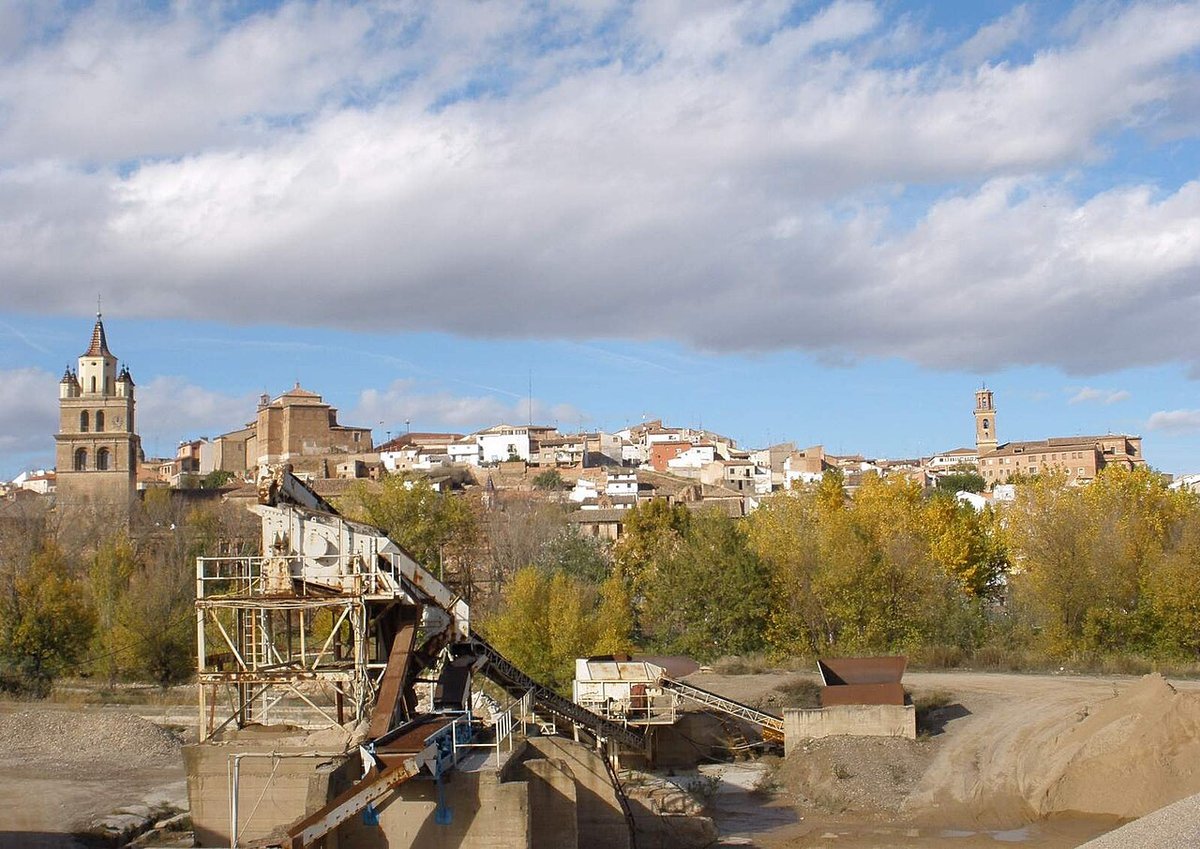
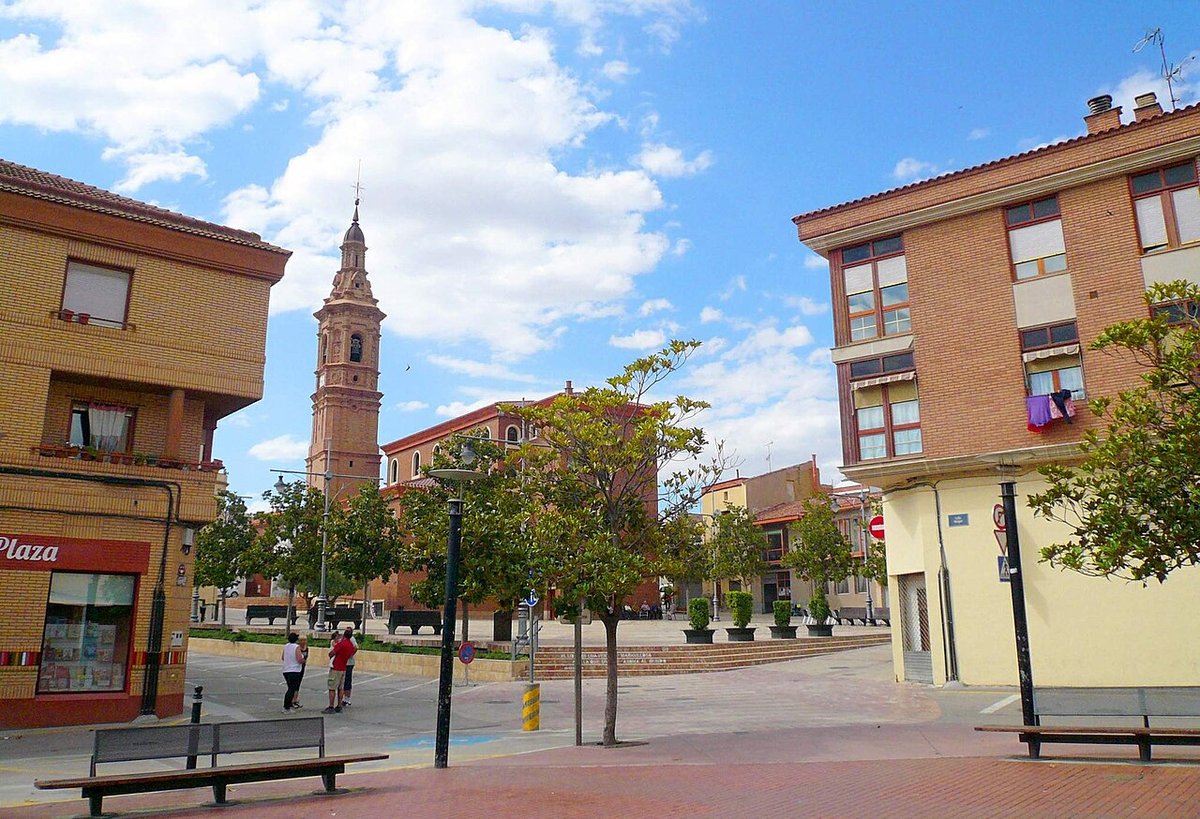
The smell arrives before the sign announcing the village. Damp earth and wood smoke drift through the car window on an October morning, around half past seven, as the road from Calahorra cuts through fields of red peppers that glow like small flames in the mist. Pradejón comes into view all at once: first the white greenhouses, then low blocks of flats, and behind them the bell tower that survived when the old church disappeared. Even on dry days there is a scent that lingers in the air here. It is the smell of champiñón, the white button mushroom that defines this corner of La Rioja.
The Scent That Leads the Way
Walking through Pradejón means following an earthy trail that drifts out from the industrial sheds on the edge of the village. It is neither pleasant nor unpleasant, simply the smell of damp substrate, of something cultivated without light. For decades the growing of champiñón and other mushrooms has set the rhythm of daily life. The cold nights of the Ebro valley and the enclosed spaces of former agricultural warehouses turned Pradejón into one of the places where this product is most intensively worked in La Rioja.
The connection runs through conversations and straight into the kitchen. Champiñón appears on many bar counters in the village, grilled with garlic, folded into revuelto, or tucked inside tortillas that arrive soft and glossy at the centre. Ask about the recipe and the answer is usually simple: what matters is that they come from here.
This is not a decorative association dreamed up for visitors. It shapes the working day, the pace of the streets and the smells that drift between buildings. In autumn especially, the link between village and crop feels immediate.
The Tower That Remained
In the main square stands the Baroque tower of the former church, alone, as if it were a fragment that outlasted the rest of the building. Its ochre stone shifts with the light. Late in the day it turns golden and from a distance seems taller than it really is.
It is sometimes possible to go inside if it happens to be open or if someone from the town hall is around with a key. A narrow spiral staircase curls upwards, footsteps echoing against the wall. At the top there is usually wind. From here the layout of Pradejón becomes clear: fairly straight streets, low houses, and behind them small orchards and plots blending into the irrigated land of the Ebro valley. To the north, lines of poplars mark the course of the river.
Some residents remember when the bells structured the entire day. The current bells are more recent, yet they are still rung by hand during certain celebrations. The sound carries across the rooftops and out towards the fields, linking the square with the agricultural landscape that surrounds it.
The tower acts as a constant point of return. However far you wander along the straight streets or out towards the edge of the village, it reappears, anchoring the view.
Art on the Walls
Several streets in Pradejón are home to large murals painted across entire façades. One of the most striking shows a face covered in mushrooms, eyes closed, filling almost the whole wall. There is no marked route. The best approach is to turn down side streets and let the images appear without warning.
Near the school a mechanical bird spreads its wings across a wall. On another corner, a field of oversized mushrooms rises up in bright colours. Elsewhere, a child floats above an agricultural landscape, a basket in his hands. Together they do not form a conventional open air museum, yet they noticeably alter the look of certain blocks.
While someone was taking photographs of one mural, a woman watering the geraniums on her balcony made a simple comment: “Before, this wall was grey.” There was no nostalgia in her voice, only a matter of fact recollection of how the place looked before someone decided to paint it.
The murals sit comfortably alongside everyday life. Laundry hangs from balconies, cars are parked beneath painted faces, and the smell of mushrooms drifts past mechanical birds and giant fungi. Art here does not separate itself from work or routine.
When Night Falls
In autumn, particularly at weekends, the scent in some streets shifts as evening arrives. It sometimes wafts from open garages or interior courtyards: cured embutido hanging to dry, a soft thread of wood smoke, long conversations around a table.
The agricultural setting shows itself on balconies when pepper season comes round. Strings of red peppers hang out to dry in the open air, small garlands that sway in the valley breeze. The colour echoes the fields outside the village, tying private spaces to the wider landscape.
If a celebration linked to the champiñón happens to coincide with a visit, usually organised in autumn, the square fills up and the bar counters work without pause. The product sets the tone and is cooked in many different ways, generally served as simple, steaming portions. The atmosphere centres on the ingredient that has shaped the village for decades.
There is nothing theatrical about these gatherings. They feel like an extension of daily life, brought outdoors and shared more widely.
Before You Go
Pradejón is not a village of medieval lanes or neatly aligned stone houses arranged for photographs. It is, above all, a working place: warehouses, agricultural sheds, wide streets and a daily routine that begins early.
In August it can seem almost too quiet, with many shutters lowered during the day. By contrast, September and October bring more movement around the fields and in the areas where champiñón is processed. The agricultural calendar is easy to read if you pay attention to who is out and about.
Morning is a good time to arrive, when the village is just getting going and the air from the Ebro valley is often cool. Parking is usually straightforward in the streets near the centre. From there, the simplest plan is no plan at all. Distances are short and sooner or later every walk loops back to the tower.
If a small frying pan is sizzling on a bar counter with freshly cooked champiñón, that is as good a starting point as any. The scent will do the rest, guiding you through Pradejón in its own unhurried way.