Full Article
about Canales de la Sierra
Mountain town with manor-house architecture and a unique historic theater; capital of Alto Najerilla.
Hide article Read full article
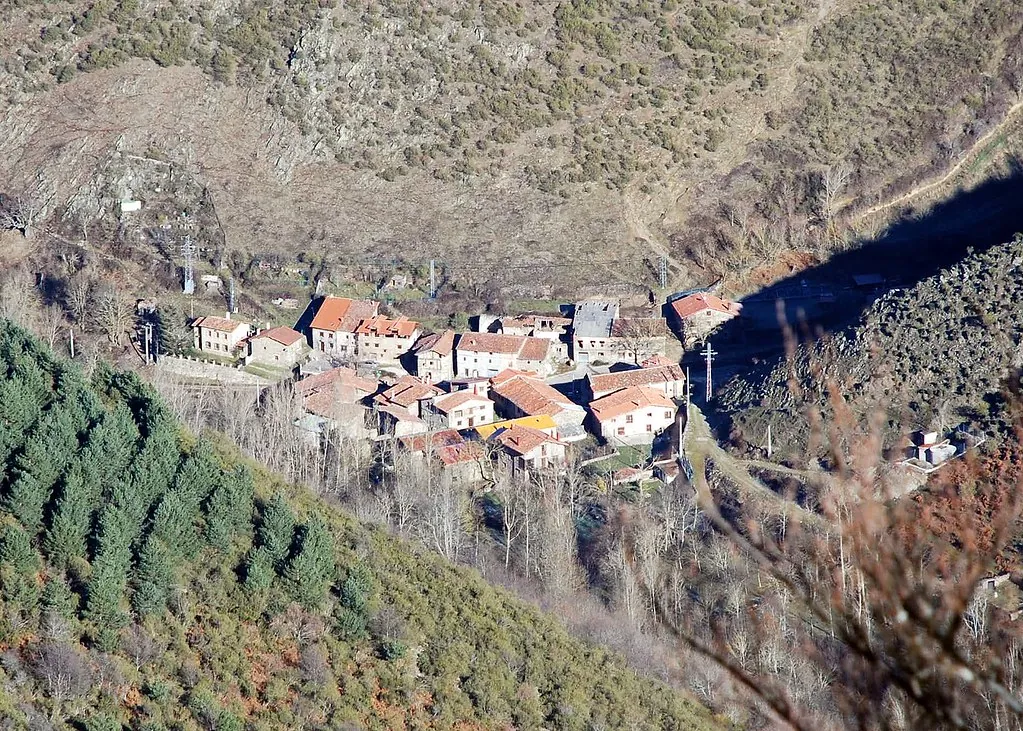
Early in the morning, when cold air drifts down from the Sierra de la Demanda and no cars have yet passed along the road, the centre of Canales de la Sierra sits in a very clear silence. The smell is of damp firewood and mountain earth. This small village in the Ezcaray area, with around 80 residents, stands at over a thousand metres above sea level. Pine and oak woods surround it, changing markedly with the seasons.
Stone and timber houses cluster together without strict alignment, as if they had gradually taken their place on the slope over time. Nothing feels imposed. The layout follows the land.
Stone Streets and Deep Shade
The village centre is compact and best explored slowly. Streets are narrow, with stretches where winter sunlight barely reaches the ground. The stone façades shift in tone depending on moisture and age: bluish grey, ochre, sometimes almost black. Many doorways still hold dark wooden doors, worn smooth by years of use.
Near the centre stands the church of San Miguel Arcángel. It is a solid building with thick walls and the sense of having endured many consecutive winters. It is sometimes open during the day, though not always. If it happens to be closed, a short walk around it reveals how the village opens out towards the surrounding slopes.
Nearby there are also fountains and an old washhouse. They are modest features, easily overlooked, yet they help conjure daily life from a time when Canales de la Sierra was busier than it is now. The presence of water in these small public spaces hints at routines that once shaped the rhythm of the place.
Paths Straight into the Forest
There is no need to drive anywhere to start walking. From the last houses, tracks and footpaths head directly into the woods. Within half an hour, the village has disappeared behind the trees. What remains is the sound of branches shifting and, at times, water running between stones.
The surrounding hills mix pine, beech and oak. In autumn the ground is covered in leaves and the smell of damp lingers, especially after rain. This is also mushroom season, a practice strongly associated with the wider Ezcaray area. Foraging is taken seriously here. It is best done with proper knowledge or in the company of someone who has it, as local people tend to be cautious about what they collect.
The landscape does not present dramatic landmarks or marked viewpoints. Its appeal lies in gradual immersion. A short walk is enough to feel removed from roads and routines. The sounds carry clearly: wind in the pines, the occasional movement of water, little else.
When the Village Fills Again
The main festivities revolve around San Miguel, at the end of September. During those days the village gathers former residents and relatives who return for a short stay. The atmosphere shifts noticeably. There are more conversations in the street and cars parked where there is usually ample space.
Summer also brings a modest increase in activity. Many houses that remain closed for much of the year are opened during these months. In the afternoons, voices carry from doorways or from small groups chatting outside.
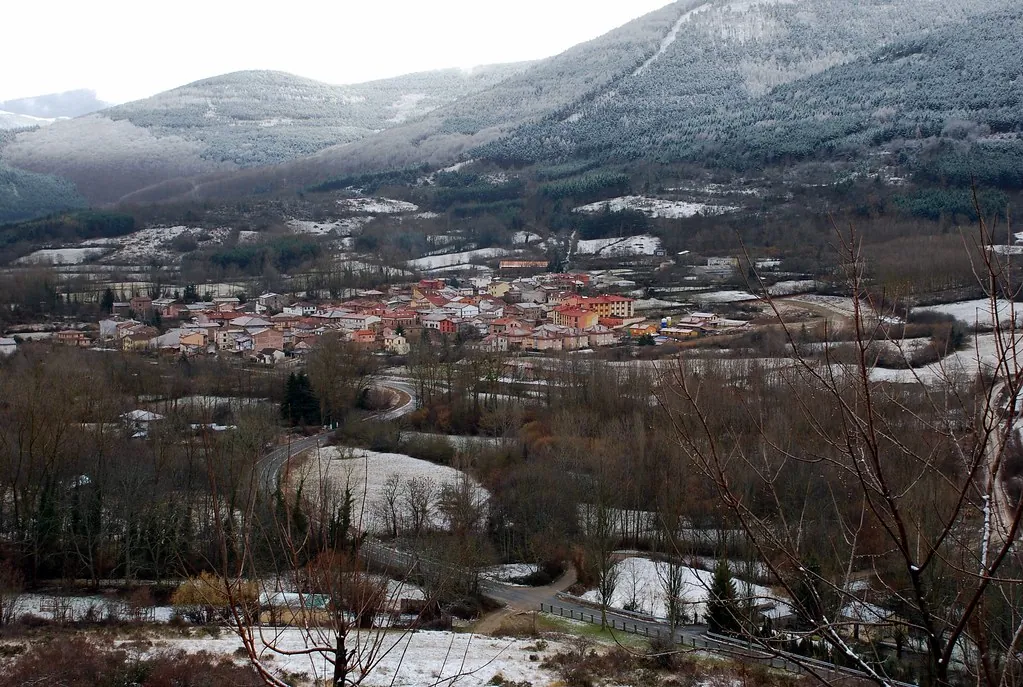
Winter is very different. The cold is dry, chimneys are lit, and it is rare to pass anyone in the street. The village contracts into itself, shaped by temperature and altitude. Snow and ice can appear on the road, and fog sometimes closes in over the valley, reducing visibility considerably.
A Short Walk Around the Centre
If time is limited, wandering through the centre without a fixed route is enough to gain a sense of the place. Slightly crooked wooden balconies lean over the street. Large gates, once intended for carts, break up the line of façades. Small vegetable plots sit close against the houses.
Several short paths begin near the church and circle the village. Within ten or fifteen minutes, the walk reaches meadows and the edge of the forest. It is an easy way to step beyond the stone streets without committing to a long hike. From here, the valley can be heard more than seen: a distant cowbell, wind moving through the pines, little more.
The scale of Canales de la Sierra makes it manageable in any season. There are few services, and the village remains quiet for much of the year. It rewards unhurried exploration rather than a checklist approach.
Practical Notes and the Road Up
Summer tends to be mild thanks to the altitude, though evenings cool down considerably. Autumn brings rapid changes in colour across the hills, alongside rain that can make forest paths slippery. Winter may bring snow and ice to the road, something worth checking before heading up into the sierra. On foggy days the valley becomes enclosed and visibility drops.
From Logroño, the usual route heads first towards Santo Domingo de la Calzada and then continues to Ezcaray. From there, a road climbs to Canales de la Sierra. The final stretch is around fifteen kilometres of gentle bends through woodland. It is best taken at an unhurried pace, particularly towards dusk or on cold days.
The village is small and has limited services. It makes sense to arrive prepared if planning to stay for several hours, with water, some food and enough fuel for the return journey.
Canales de la Sierra asks for little beyond time and quiet. Here, the mountain still sets the tone.